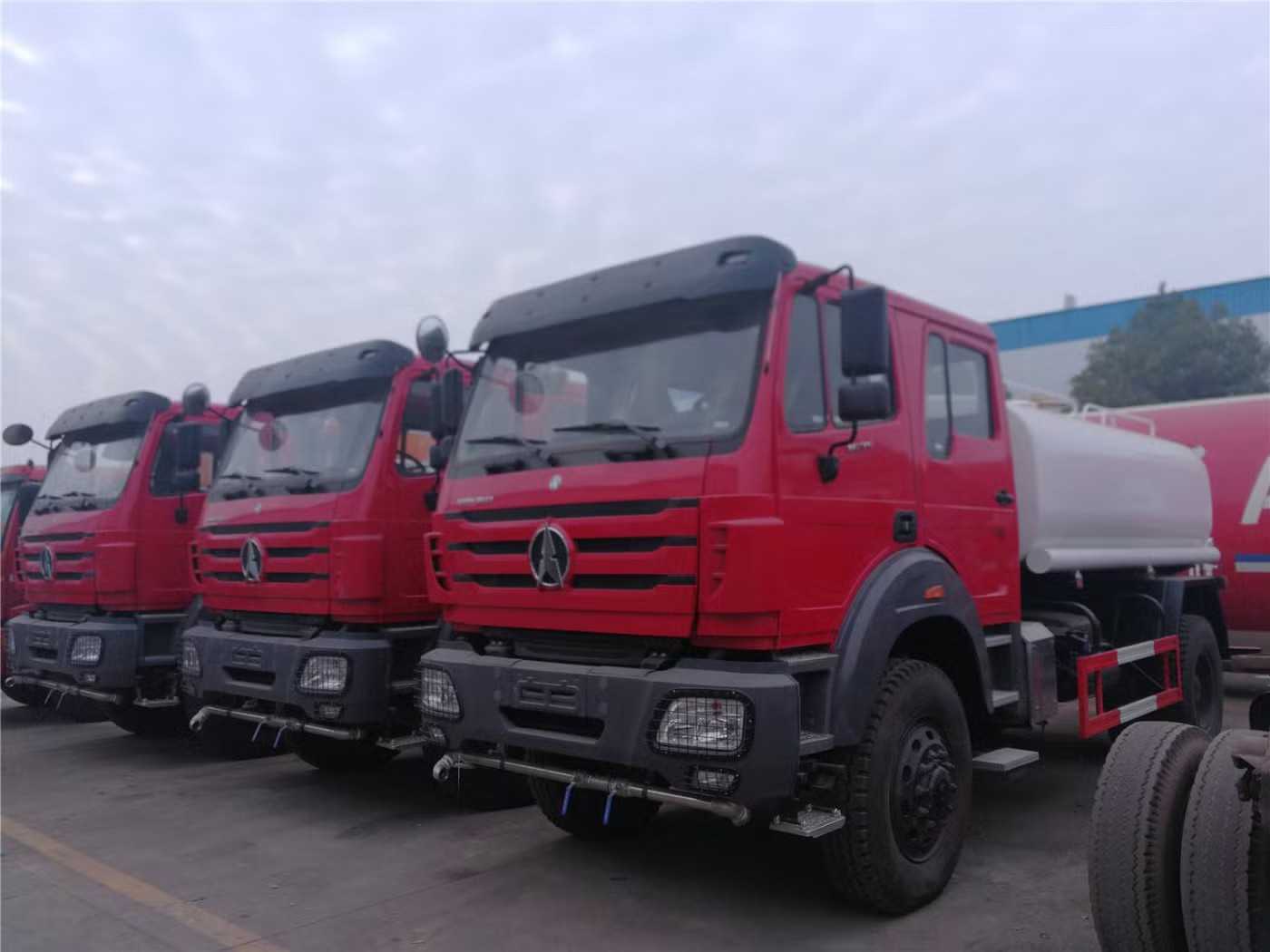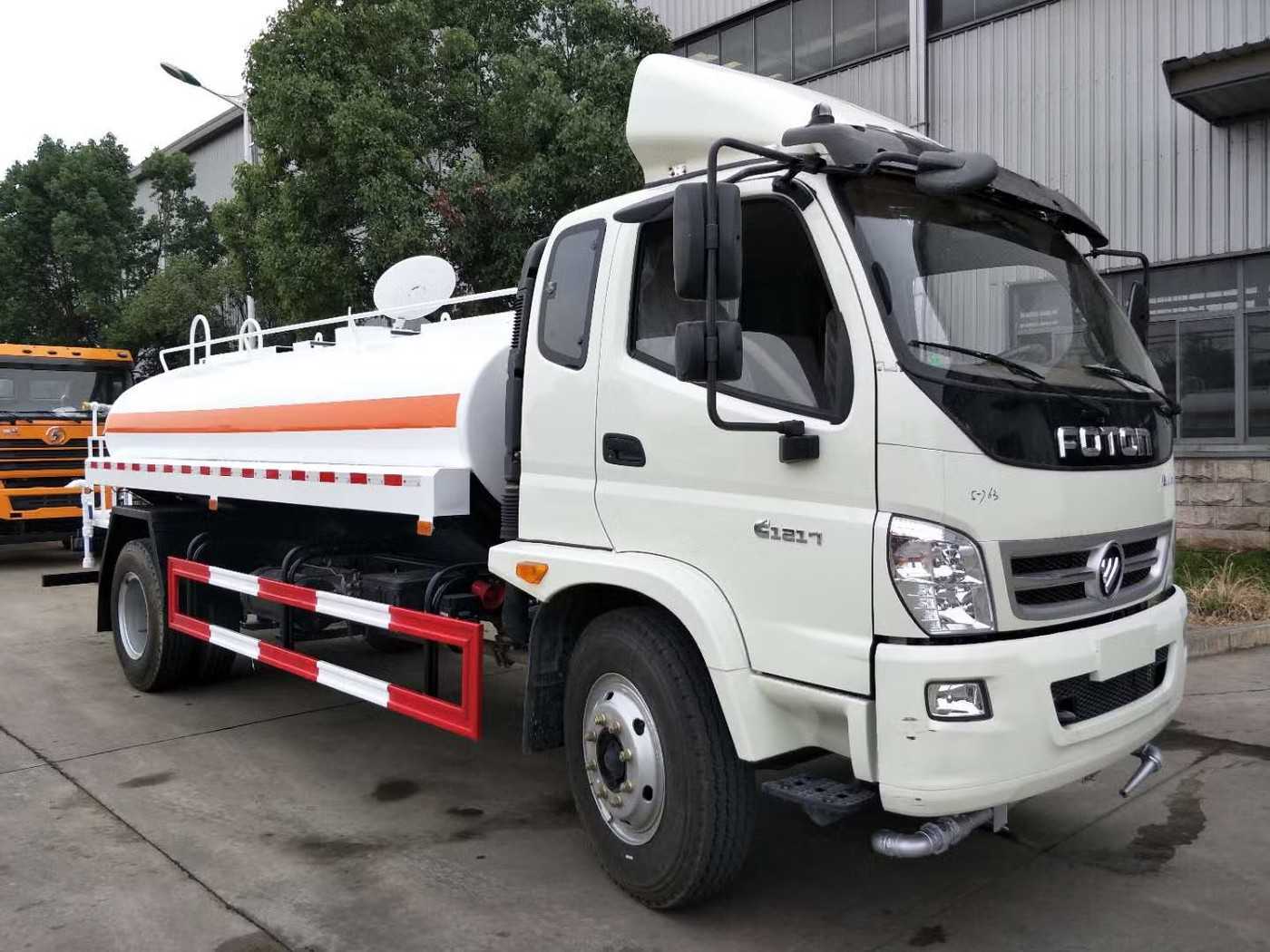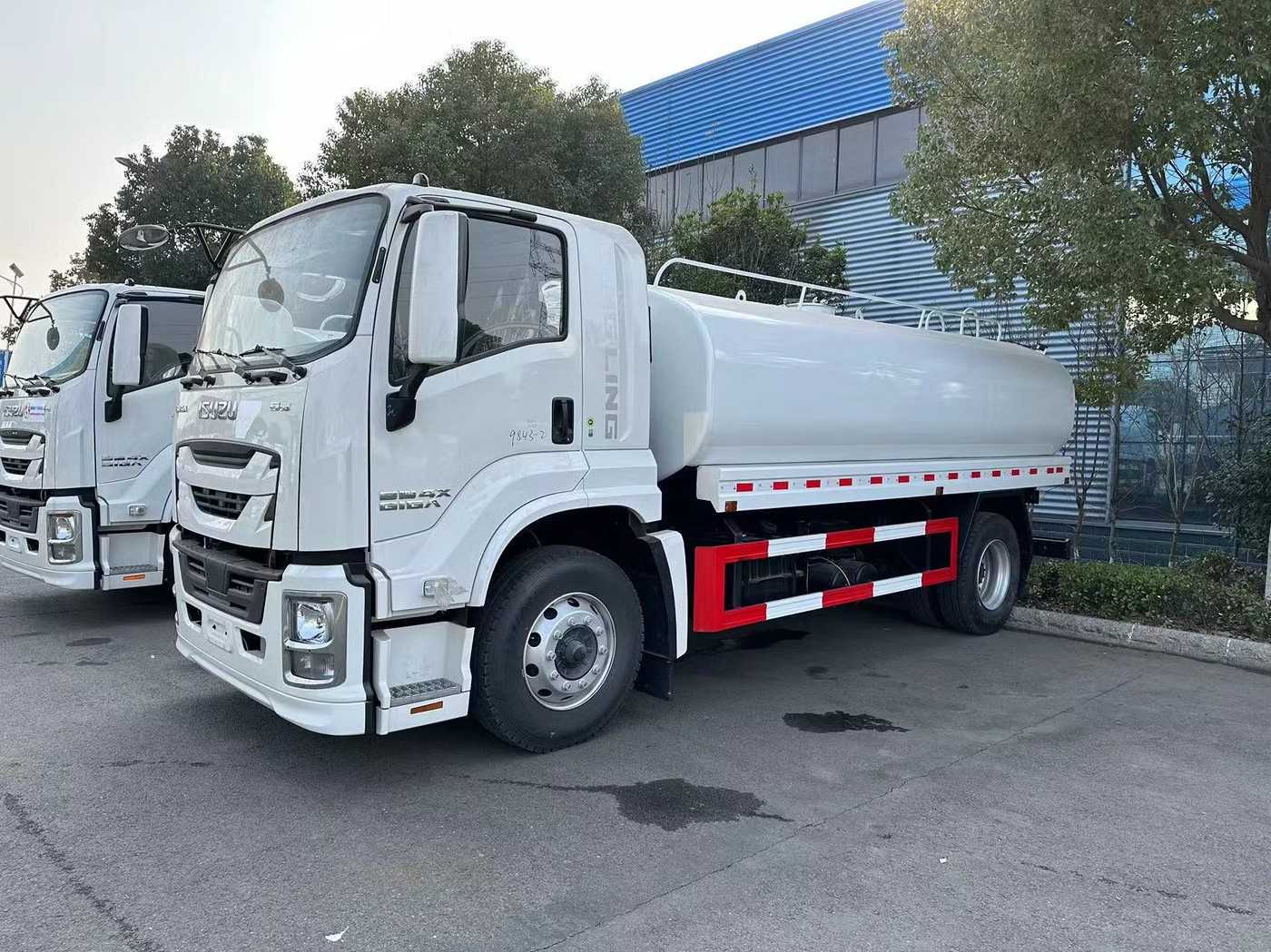
When African civil contractors, municipal utilities, and commercial haulers budget for a water bowser truck, the hardest task is rarely finding quotes—it is understanding why two trucks with the same tank volume carry very different numbers. A 10,000-litre potable tanker built for Nairobi or Kampala estates has a completely different bill of materials than a dust-suppression bowser hauling river water across roadworks in Nigeria, Ghana, or Zambia.
Rather than relying on headline estimates that unravel once steering side, steel grade, and sea freight are added, fleet buyers achieve reliable budgets by examining the factory-to-port cost architecture. This guide explains what drives a water tanker price across Africa's three core capacity tiers—5,000L, 10,000L, and 20,000L—so you can benchmark specifications accurately and avoid landed-cost overruns.
What Actually Drives Water Tanker Prices in Africa?
Every factory-direct quotation rests on four core cost blocks. Knowing their proportional weight clarifies where smart specification choices save capital—and where shortcuts trigger cracked welds, overheating, or customs delays.
| Cost Block | Typical Cost Share | Primary Engineering Levers | African Field Impact |
|---|---|---|---|
| Commercial Truck Chassis | 55%–62% | Drivetrain (4x2, 4x4, 6x4), horsepower, emission tier (Euro II–V), axle rating, gearbox, cab A/C | Governs unpaved gradeability, spare-parts access, and weighbridge compliance |
| Tank Body & Lining | 18%–22% | Q235B carbon steel (4–6 mm) vs. 304 stainless steel, internal wave baffles, epoxy coating | Determines weld life on corrugated gravel roads and drinking-water hygiene |
| Pump, PTO & Spray Gear | 8%–12% | Self-priming pump flow (40–90 m³/h), PTO torque rating, rear cannon reach, cab pneumatic valves | Controls borehole/river fill times, spray coverage, and operator safety |
| LHD/RHD, Tropical Spec & Freight | 12%–18% | Factory LHD/RHD cab, oversized radiator, cyclone pre-cleaner, Ro-Ro CBM freight, PVOC/SONCAP | Ensures import eligibility, stops overheating, and sets final CIF budget |
Because the chassis absorbs over half of factory FOB value, two quotes for the same tank volume usually diverge on chassis brand, engine displacement, and axle rating. Mounting a 10,000L tank on a light urban 4x2 frame looks cheaper upfront than specifying a heavy medium-duty frame with reinforced leaf springs and a high-torque six-cylinder diesel—yet on rural sites, an undersized frame rapidly suffers spring fatigue and sub-frame cracking.
The remaining 40% to 45% reflects tank fabrication, pumping gear, and export adaptation. Final pricing always follows a written factory quotation matched to your exact chassis model, metallurgy, steering side, emission tier, and destination port.
Cost Tiers by Tank Capacity: 5,000L vs. 10,000L vs. 20,000L
Water weighs one metric ton per cubic meter (1,000 kg per 1,000 litres). Crossing key capacity thresholds forces immediate step-changes in axle count, frame strength, horsepower, and ocean-freight cubic meters.
| Comparison Dimension | 5,000L (5 m³) Tanker | 10,000L (10 m³) Tanker | 20,000L (20 m³) Tanker |
|---|---|---|---|
| Axle & Drive Layout | 4x2 light-duty (or 4x4 off-road) | 4x2 heavy medium-duty chassis | 6x4 heavy tandem-axle chassis |
| Typical Engine Output | 115–160 HP | 180–230 HP | 290–380 HP |
| Loaded GVW Profile | ~8.5–10.5 t (city-agile) | ~16–18 t (single-axle legal) | ~29–32 t (tandem corridor spec) |
| Daily African Use Cases | Urban potable vending, park irrigation, narrow rural lanes | Commercial water hauling, feeder-road compaction, municipal supply | Highway sub-base watering, quarry dust control, bulk utility transfer |
| Primary Price Levers | 4x4 drivetrain option, 304 stainless tank, compact wheelbase | Chassis tier, square vs. elliptical profile, cab pneumatic valves | 6x4 hub-reduction axles, 5–6 mm heavy shell, 60–90 m³/h high-flow pump |
| Relative Budget Index | Entry Tier (1.0x baseline) | Commercial Mid-Tier (~1.35x–1.65x) | Heavy Fleet Tier (~2.1x–2.6x) |
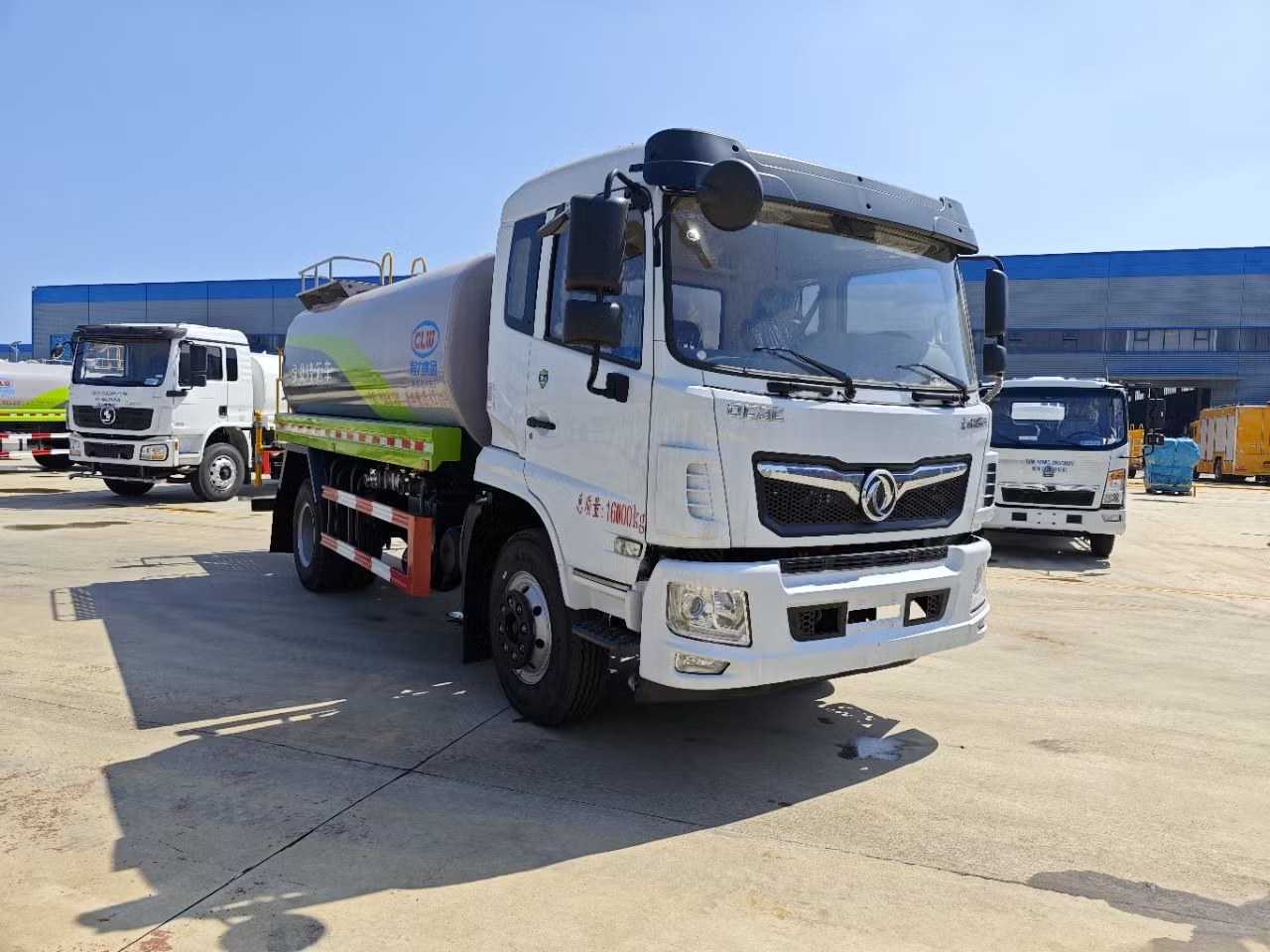
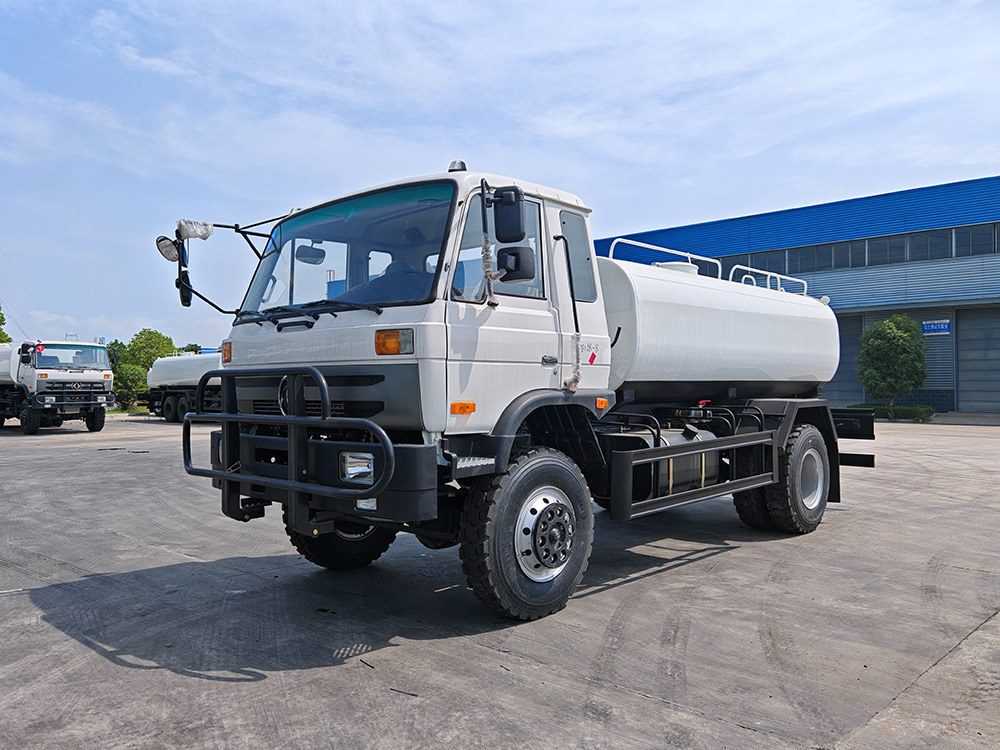
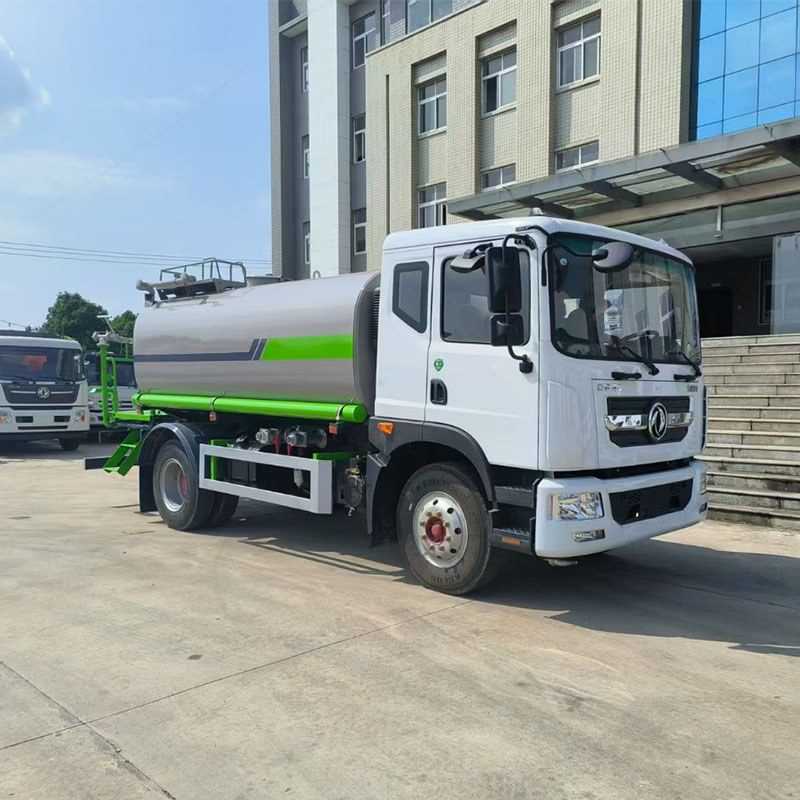
| Reference CLW Builds | 4X4 Potable Water Tank Truck | DFAC D9 Water Truck · Dongfeng Tianjin Square Water Cannon | Dongfeng D17 Water Truck · CL5290TQ96ZQ Potable Tanker |
5,000L Water Tanker: Agile Urban & Off-Road Entry
Buyers checking a 5000 litre water tanker price typically serve dense residential estates in Nairobi, Kampala, Accra, or Lagos, water municipal medians, or deliver borehole water to rural clinics. On a standard 4x2 platform, a 5,000L bowser offers the lowest capital entry, tight turning radius in narrow compounds, and low stop-start fuel burn.
Where routes cross muddy laterite, sand, or ungraded rural tracks, upgrading to an all-wheel-drive chassis such as the CLW 4X4 Potable Water Tank Truck adds front-drive-axle and transfer-case cost upfront, but keeps deliveries running through the rainy season without recovery delays.
10,000L Water Tanker: Africa's Highest-ROI Commercial Tier
Across East and West Africa, inquiries for a 10000 litre water tanker price outpace every other capacity. A 10 m³ bowser doubles per-trip revenue over a 5,000L truck without entering the tire count, fuel burn, and three-axle capital bracket of a 6x4 rig.
Built on a heavy two-axle chassis—like the CLW DFAC D9 Water Truck for all-round contractor service, or the CLW Dongfeng Tianjin Square Water Cannon Truck for lower center-of-gravity stability and long-reach cannon spraying—a 10,000L unit stays cleanly inside East African Community (EAC) and ECOWAS two-axle weighbridge limits.
20,000L Water Tanker: Bulk Haulage & Highway Infrastructure
When daily demand exceeds 100,000 litres—common on highway earthworks, quarry haul roads, industrial estates, and municipal transfers—a 20,000L bowser lowers delivered cost per cubic meter by halving driver shifts and standpipe queues. Carrying 20 metric tons of liquid safely requires a 6x4 tandem-axle chassis with double-reduction axles, heavy bogie springs, and 290–380 HP.
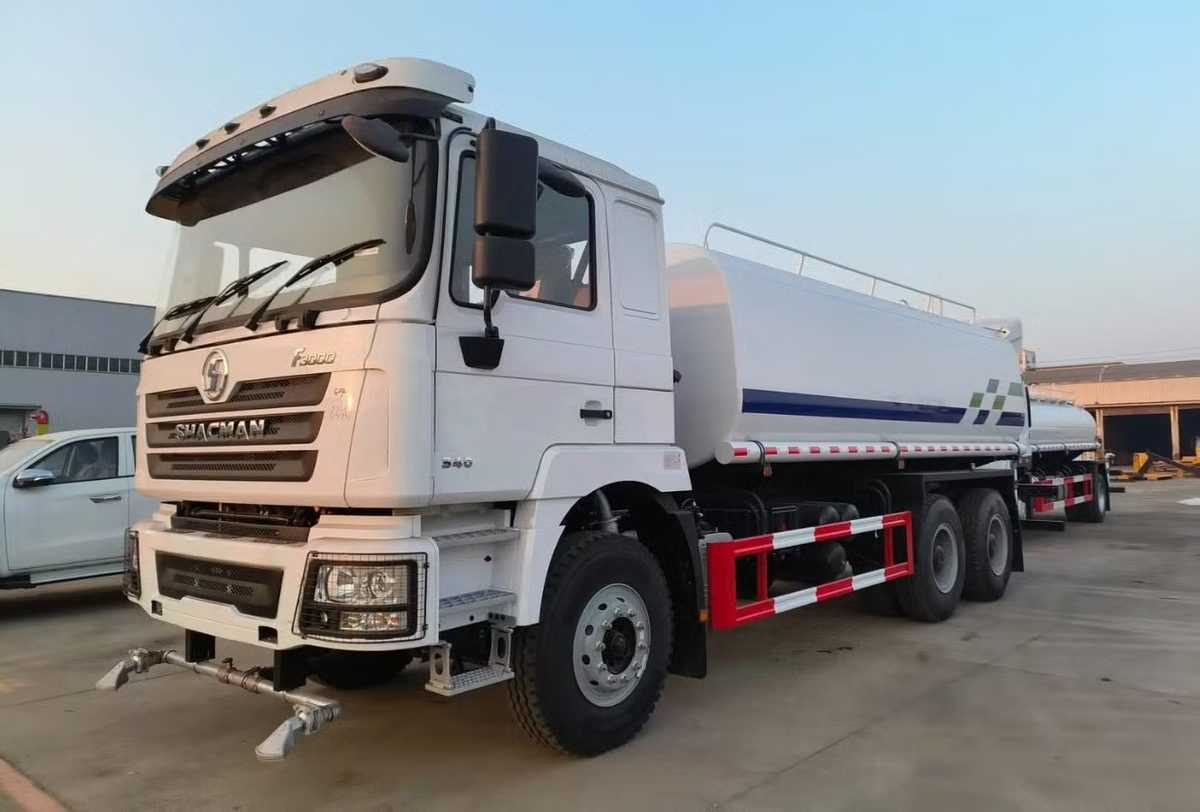
Whether your tender specifies raw site watering or bulk drinking-water haulage, builds such as the CLW Dongfeng D17 Water Truck and high-volume potable units like the CLW CL5290TQ96ZQ Potable Water Tanker balance tandem axle loads cleanly across Mombasa–Nairobi–Kampala, Dar es Salaam–Lusaka, and Abidjan–Lagos weighbridges.
Hidden Cost Variables African Buyers Often Miss
Ultra-low quotes almost always omit vital engineering items that surface only at port arrival or during the first dry season. Audit these four variables before approving any proforma invoice.
1. Epoxy-Lined Carbon Steel vs. 304 Stainless Steel
Construction bowsers normally use Q235B carbon steel—4 mm shell plates with 5 mm dished heads on 5,000L–10,000L builds, stepping up to 5 mm shell and 6 mm heads on heavy 20,000L off-road trucks. Sandblasting plus multi-coat epoxy lining curbs rust economically, though pumping abrasive river silt eventually requires periodic interior recoating.
For municipal drinking-water tenders, hotels, bottled-water haulers, and WASH programs, food-grade 304 stainless steel prevents rust staining, resists chlorinated water without peeling, and delivers a decade-plus tank life. It raises tank-body cost notably while protecting hygiene compliance and resale value.
2. Self-Priming Pump Flow & Rear Water Cannon Controls
A 40–60 m³/h PTO-driven self-priming centrifugal pump fills a 10,000L tank in 10 to 15 minutes from a standpipe or 6-meter river/dam suction lift. On 20,000L tankers, a 60–90 m³/h high-flow pump saves hours per shift. Confirm hardened mechanical seals for silty water, rear platform guardrails, a 360-degree water cannon (28–38 m reach), and cab pneumatic butterfly valves so operators trigger front duckbill flushers and rear spray bars from inside an air-conditioned cab.
3. LHD/RHD Chassis, Tropical Cooling & Fuel-Matched Emissions
Right-hand drive (RHD) governs Kenya, Uganda, Tanzania, Zambia, Malawi, Mozambique, Zimbabwe, Botswana, and South Africa, while left-hand drive (LHD) governs Nigeria, Ghana, Côte d'Ivoire, Senegal, Cameroon, Ethiopia, DRC, and Angola. Ordering factory-native LHD or RHD chassis options avoids unreliable aftermarket steering conversions and ensures registration compliance.
Combine native steering with tropical dust-proof upgrades—oversized radiators, heavy cooling fans, oil-bath or cyclone pre-cleaners, and reinforced multi-leaf springs—plus the right emission tier (Euro II, III, IV, or V) matched to regional diesel sulfur levels so fuel injectors survive upcountry diesel.
4. Ro-Ro Per-CBM Ocean Freight & Port Compliance
Complete water tankers ship primarily via Roll-on/Roll-off (Ro-Ro) vessels or bulk carriers to African ports including Mombasa, Dar es Salaam, Apapa/Tin Can Island (Lagos), Tema, Durban, Beira, and Walvis Bay. Because Ro-Ro carriers bill by cubic meter (Length × Width × Height), bulky bolt-on catwalks or tall cannon mounts inflate chargeable CBM without adding payload. Always budget for mandatory pre-export conformity checks (such as East Africa PVOC or Nigeria SONCAP/Form M covered in our import compliance guide), marine insurance, terminal handling, and customs duties.
Low-ball quotes often drop carbon-steel walls to 3 mm or skip full-height internal wave-breaker baffles. When a half-full 10,000L or 20,000L bowser brakes sharply on sloped gravel, unbaffled surge slams the end-caps, cracks sub-frame welds, and threatens rollover stability. Always confirm plate thickness (mm), baffle count, and reinforced sub-frame mounting pads in writing.
Tiered Fleet Pricing and Phased Batch Deliveries
While single-truck buyers pay standard factory FOB pricing, contractors and utilities ordering 3–5+ units—or 10–30 truck tender fleets—unlock clear per-unit savings:
- OEM Chassis Batch Rebates: Identical LHD/RHD wheelbase slots secure tiered fleet chassis pricing and uniform engine/axle spare-parts commonality.
- Tank Fabrication Efficiency: Nested CNC plate cutting, dedicated welding jigs, and continuous blasting/epoxy-curing runs lower per-tank labor hours.
- Consolidated Ro-Ro & Inspection Fees: Multi-unit vessel bookings spread third-party inspection overhead and lock sharper per-CBM sea-freight rates.
- Phased Mobilization Batches: Large EPC projects often schedule staggered arrivals to align with site cash flow and driver onboarding—as executed in our Shacman 15–20 CBM water bowser batch delivery.
For government tenders, EPC contractors, and NGOs, CLW supplies itemized compliance sheets and batch delivery plans through our tender support team.
Upcountry downtime rarely comes from major engine failure—it is usually a worn pump mechanical seal, camlock gasket, clogged filter, or broken spray nozzle awaiting air-courier parts. Packing a 12-month wear-parts kit (pump seals, impellers, PTO gaskets, filters, V-belts, and nozzles) inside each truck's lockable toolbox adds minimal marginal cost and ships at zero extra ocean freight.
How to Prepare a 5-Point Brief for an Accurate FOB/CIF Quote
A vague inquiry like "price for 10,000L water truck" forces factories to guess your drive side, steel grade, emission class, and discharge port—yielding wide estimates. Review our step-by-step buying process and share five operational parameters upfront to receive a sharp, itemized FOB and CIF quotation on the first reply. Before wiring any deposit, verify official banking coordinates against our anti-fraud verification notice.
Frequently Asked Questions
1. What is the difference between FOB and CIF pricing when importing a water tanker?
FOB (Free On Board) covers the completed truck, hydrostatic testing, export clearance, and vessel loading at a Chinese port (Shanghai, Tianjin, Qingdao, or Lianyungang). CIF (Cost, Insurance & Freight) adds Ro-Ro or bulk ocean freight and marine insurance to your African port (Mombasa, Dar es Salaam, Lagos, Tema, or Durban). Requesting both lets your clearing agent benchmark freight rates cleanly; see our payment and shipping guide for Incoterms details.
2. How long is the production and shipping lead time for a custom water bowser?
Factory build time typically runs 30 to 45 days for standard 5,000L and 10,000L trucks on stock chassis, and 45 to 90 days for 20,000L 6x4 heavy builds, 304 stainless potable tankers, dedicated RHD chassis slots, or multi-unit batches. Add 25 to 45 days for Ro-Ro transit across East, Southern, or West African routes.
3. What payment terms and pre-shipment inspections apply to factory-direct orders?
Standard terms are 30% T/T deposit to start chassis allocation and tank fabrication, with 70% balance before vessel loading (irrevocable Letters of Credit are supported for qualified institutional tenders). Before balance payment, buyers inspect completed trucks via live video tests—covering hydrostatic leak checks, pump priming, cannon reach, and VIN matching—or appoint SGS, Bureau Veritas, or Intertek. While our factory maintains ISO management-system certifications shown on our certificates page, destination-country vehicle conformity inspections (such as PVOC or SONCAP) are arranged separately per national import rules.
4. Should I buy a 10,000L 4x2 or a 20,000L 6x4 water tanker for mixed work?
Choose a 10,000L 4x2 bowser for urban streets, estate vending, or feeder roads under 50,000 litres daily—it offers lower tire and fuel bills plus fast resale. Upgrade to a 20,000L 6x4 bowser when highway compaction, quarry dust suppression, or bulk utility transfers exceed 100,000 litres daily.
Send Your 5-Point Brief for an Itemized Water Tanker Quotation
Share five quick parameters and our Africa export engineers will prepare a factory-direct FOB and CIF cost breakdown with chassis drawings and delivery schedule:
- Capacity & Water Type: 5,000L, 10,000L, or 20,000L—raw construction water (epoxy carbon steel) or potable water (304 stainless steel).
- Steering & Terrain: Left-Hand Drive (LHD) or Right-Hand Drive (RHD), and paved urban routes vs. unpaved rural or 4x4 tracks.
- Chassis & Emission Spec: Preferred brand (Dongfeng, Shacman, SINOTRUK HOWO, FAW, Isuzu) and emission tier (Euro II, III, IV, or V).
- Pump & Spray Package: River/borehole self-priming suction, rear cannon, front/rear spray bars, and cab pneumatic valve controls.
- Quantity & Destination Port: Single unit or multi-truck batch size, plus discharge port (Mombasa, Dar es Salaam, Lagos, Tema, Durban, or Beira).