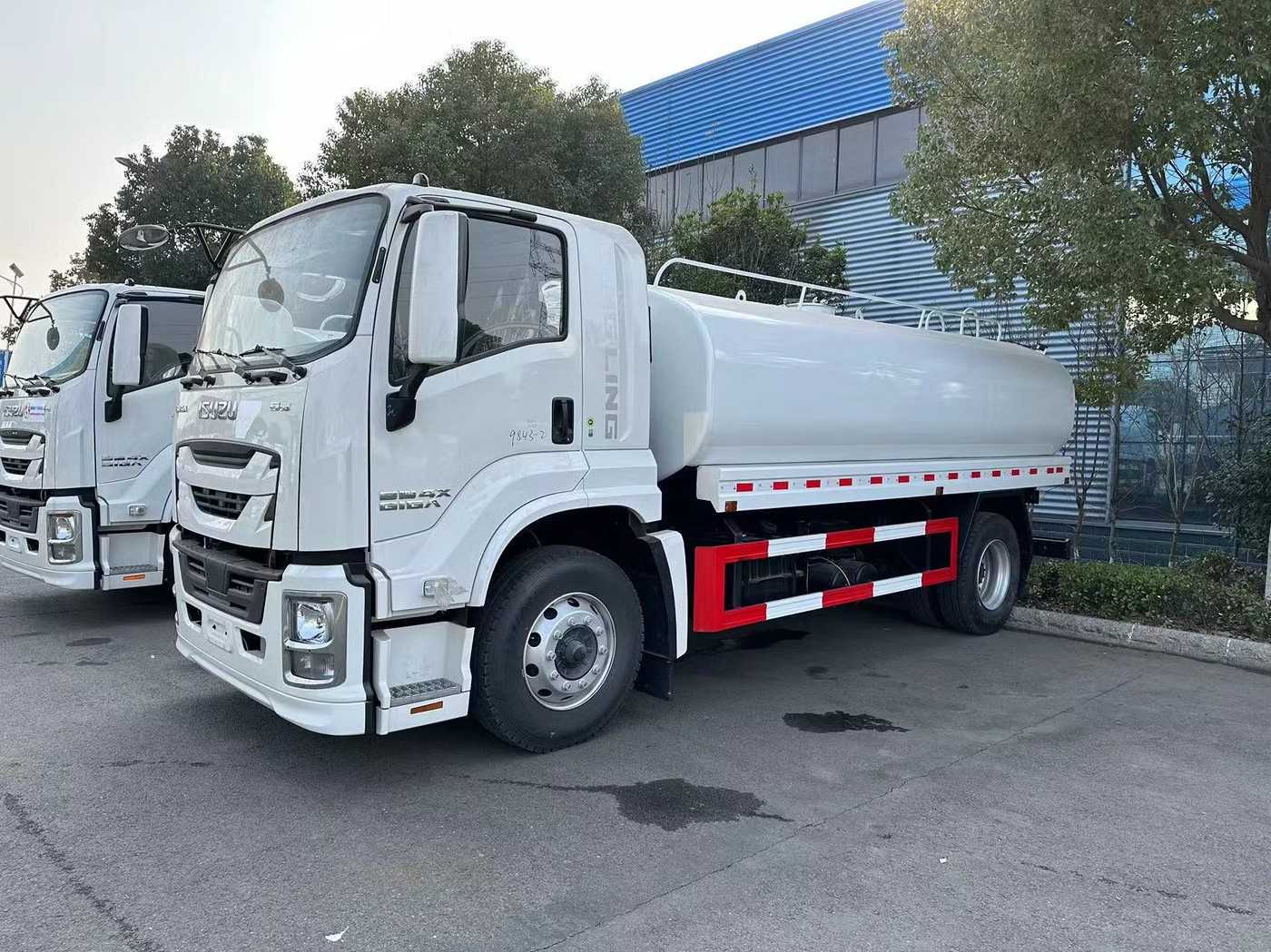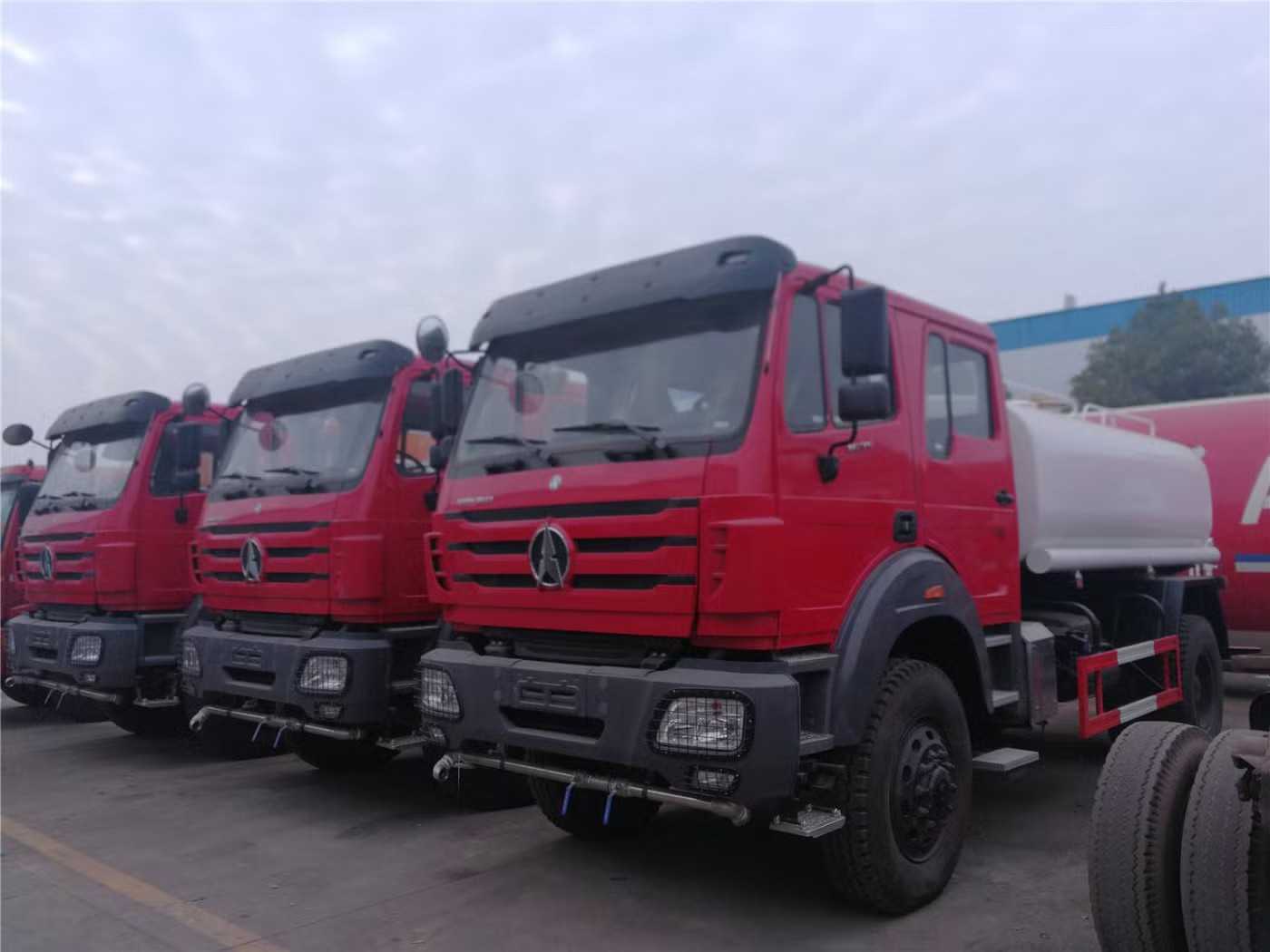
Choosing the wrong water tanker size quickly drains margins on an African construction, mining, or municipal contract. Undersize the tank and drivers spend half the shift queuing at boreholes and burning diesel on empty return runs while compaction stalls. Oversize the chassis and you face weighbridge detention on public highways, damaged rural culverts, or a truck that cannot turn inside a congested estate.
Whether you are sourcing your first water bowser truck or expanding a regional fleet across East, West, Central, or Southern Africa, capacity selection should follow site math. This guide compares 5,000L, 10,000L, 15,000L, and 20,000L water tanker capacity across cycle calculations, vehicle dimensions, weighbridge axle limits, anti-surge baffling, and landed-cost ROI.
Start With Daily Water Volume & Round-Trip Distance
Before comparing chassis brands or horsepower, calculate the minimum tank volume required to keep your site watered across a standard 8-to-10-hour shift. Every haul cycle consists of four blocks: filling at the water source, loaded travel, spraying or unloading, and empty return.
- Step 1 — Effective trips per shift: Divide productive shift hours (usually 8 hours after inspection, fueling, and breaks) by total round-trip cycle time in hours.
- Step 2 — Required tank volume: Divide daily site water demand (liters) by effective trips per shift, then add a 15% buffer for queue delays, traffic, or pump priming.
Example A — Urban Civil Works (Nairobi or Lagos): A road crew needs 40,000L daily for moisture conditioning and curing. With a hydrant 7 km away in traffic, each round trip takes 1.6 hours (5 trips per 8-hour shift). At 8,000L per load plus a 15% buffer, a single 10000 litre water tanker fits cleanly.
Example B — Quarry & Highway Earthworks (Ghana or Zambia): A 6 km unpaved haul road needs 120,000L per shift for dust control and compaction. With a dam 12 km away over laterite averaging 25 km/h (1.5-hour cycle, 6 trips per shift), you need 20,000L per trip—one 20,000L 6x4 bowser or two staggered 10,000L 4x2 trucks.
A low-yield rural borehole pumping 15 m³/h takes 80 minutes to fill a 20,000L tank—idling a heavy 6x4 truck at the standpipe. If water supply is slow, install an overhead 30,000L–50,000L buffer tank with a 3-inch gravity drop pipe, or draft directly from a river or retention dam using a 60–90 m³/h PTO self-priming pump.
Side-by-Side Spec Matrix: 5,000L, 10,000L, 15,000L & 20,000L
Water weighs exactly 1.0 metric ton per 1,000 liters. That fixed density drives axle count, chassis frame thickness, braking capacity, and legal highway payload across the four primary African tanker classes.
| Specification | 5,000L (5 CBM) | 10,000L (10 CBM) | 15,000L (15 CBM) | 20,000L (20 CBM) |
|---|---|---|---|---|
| Drive & Axles | 4x2 (2 axles) | 4x2 (2 axles) | 6x4 (3 axles) | 6x4 (3 axles) |
| Engine Output | 115–150 hp | 180–245 hp | 290–371 hp | 336–400 hp |
| Loaded GVW | 9.5–11.5 t | 16.0–18.0 t | 24.0–26.0 t | 29.5–32.0 t |
| Approx. L × W × H | 6.0–6.9 × 2.15 × 2.6 m | 7.6–8.4 × 2.48 × 3.0 m | 8.8–9.5 × 2.50 × 3.2 m | 9.5–10.3 × 2.55 × 3.4 m |
| Min. Turning Radius | 7.0–8.0 m | 8.5–9.5 m | 9.5–10.8 m | 10.5–11.8 m |
| Pump Flow Rate | 40–60 m³/h | 60 m³/h | 60–90 m³/h | 60–90 m³/h |
| Primary Site Role | Narrow urban lanes, landscaping, estate potable supply | Municipal fleets, general construction, urban roadwork | Long-haul earthworks, bulk potable transport, quarries | Mining dust suppression, highway projects, major dams |
| CLW Reference Models | Dongfeng D6 Water Cannon Truck; BJ5048XLC-FM3 Potable Tanker | Dongfeng D7 Water Truck; Dongfeng D17 Water Truck | 14Tons Potable Water Truck; Shacman 15–20 CBM Batch | Shacman 15–20 CBM Water Bowser (6x4 heavy spec) |
Tank Steel vs Stainless Steel & Pump Geometry
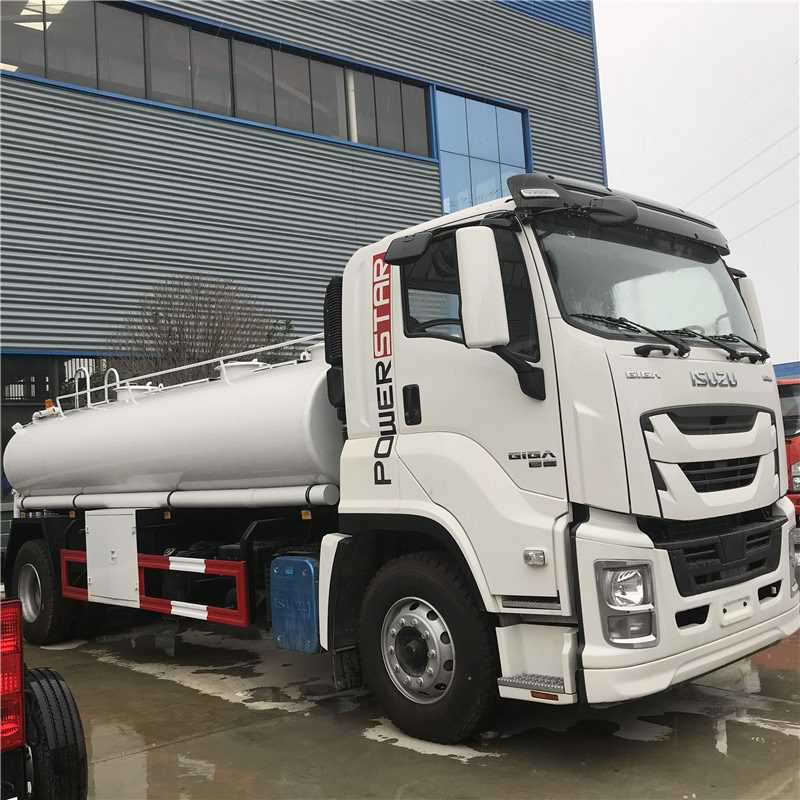
For dust control, road washing, and concrete batching, a 4–5 mm Q235B carbon steel tank with shot-blasted, epoxy-lined internals balances durability with easy local weld repair. Commercial drinking water delivery, hospitals, and NGO camps require food-grade SUS304 stainless steel tanks, hygienic welds, and stainless valves to eliminate rust contamination—as built on the BJ5048XLC-FM3 Potable Water Tanker and the higher-volume 14Tons Potable Water Truck.
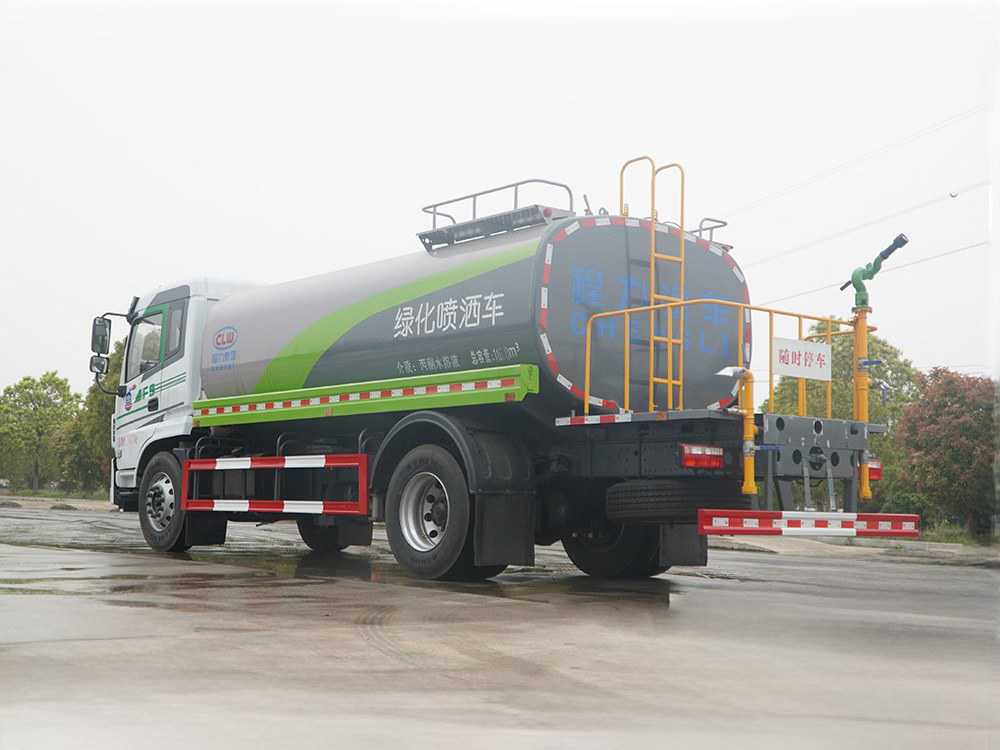
Match pump capacity to body size: PTO-driven self-priming centrifugal pumps (65QZ-40/45 or 80QZ-60/90 series) suction water from rivers up to 6–7 meters below grade and power front flush jets (14+ m width), rear fan sprinklers, side watering nozzles, and an elevated rear 360-degree water cannon throwing 28–35 meters for slope dampening or emergency fire support.
Urban Roads vs Quarry & Highway Dust Control
Aligning water tanker capacity with road width, surface traction, and turning clearance prevents costly dispatch bottlenecks.
Narrow Urban Streets & Peri-Urban Estates: 5,000L 4x2
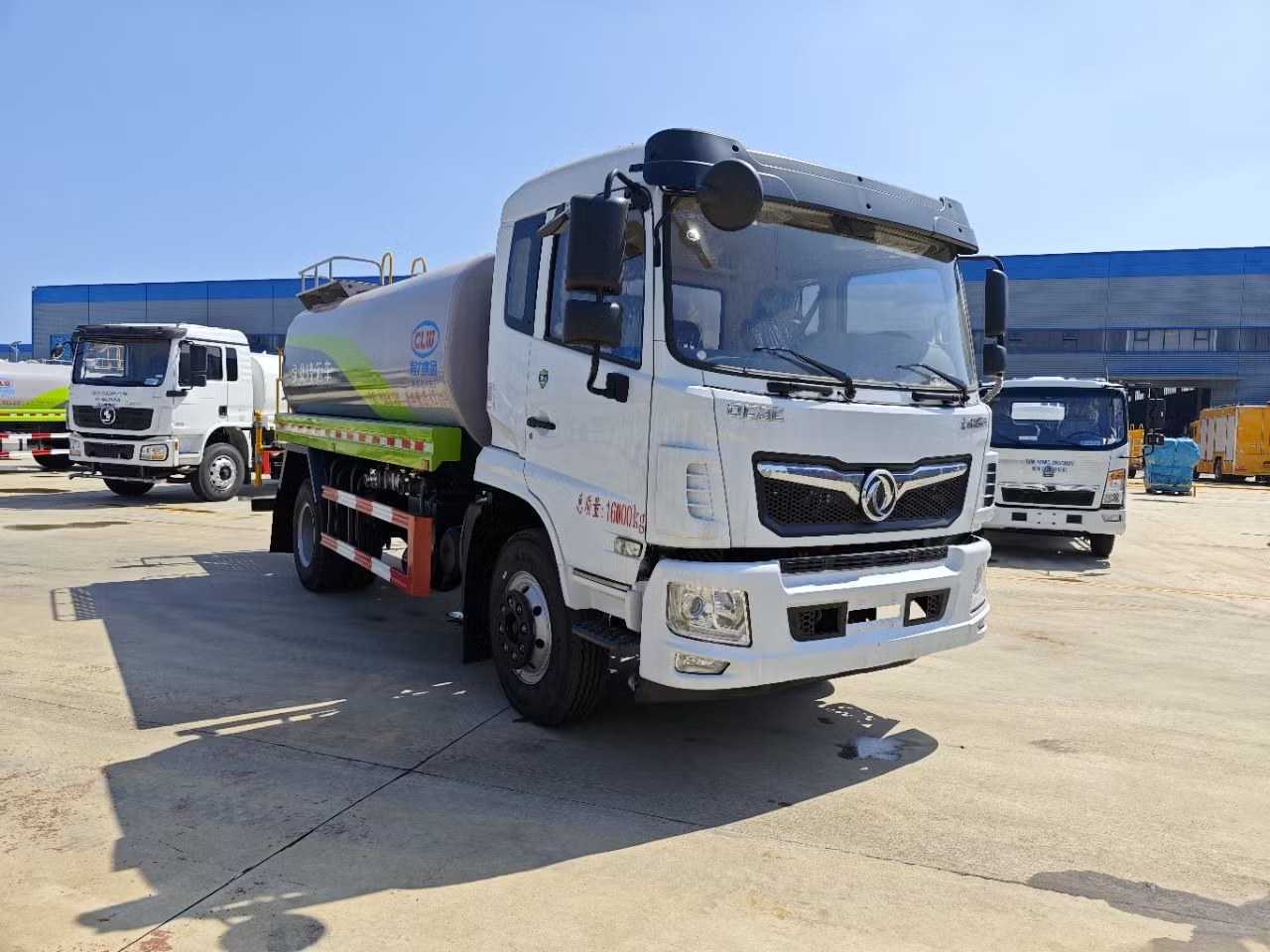
Older city districts and fast-growing suburbs in Lagos, Accra, Nairobi, Kampala, and Dar es Salaam often narrow below 3.5 meters, lined with parked cars, low cables, and light drain covers. A compact 5000 litre water tanker on a 4x2 chassis offers a 2.15 m width and 7–8 m turning radius for tight gates and municipal parks. Units like the Dongfeng D6 Water Cannon Truck combine compact urban agility with full front-flush and rear-cannon spray capability.
Municipal & Mid-Size Site Workhorse: 10,000L 4x2
Across Kenya, Nigeria, Uganda, and Tanzania, the 10000 litre water tanker is the highest-volume workhorse. Running on a medium-duty 4x2 chassis with six running tires plus one spare (6+1), it keeps tire replacement costs, tolls, and driveline maintenance well below 10-wheeler 6x4 trucks. Contractors running urban road upgrades or commercial water vending frequently standardize on proven 4x2 models like the Dongfeng D7 Water Truck and Dongfeng D17 Water Truck to deliver strong daily throughput while staying within two-axle road limits.
Quarries, Mines & Highway Corridors: 15,000L–20,000L 6x4
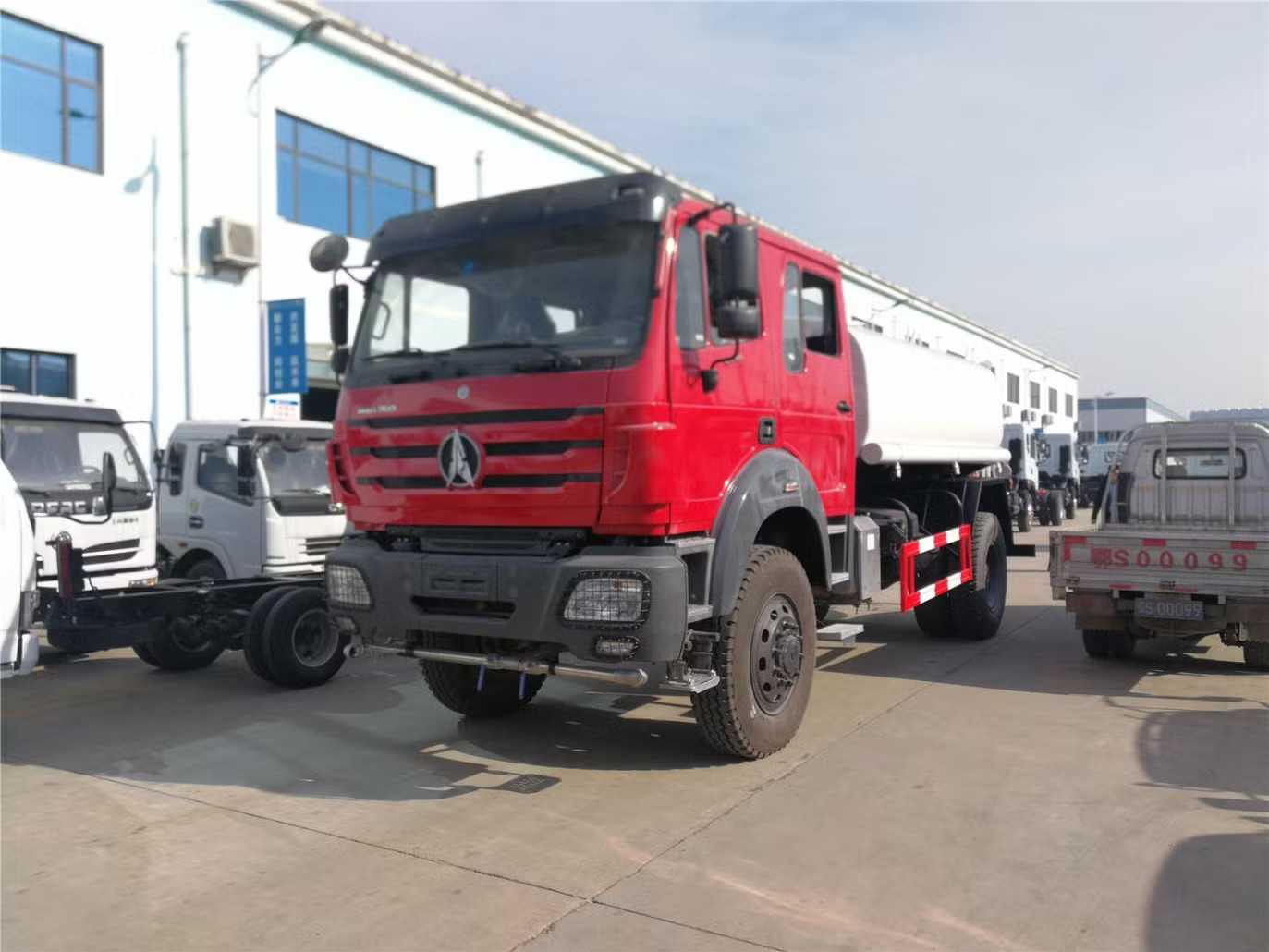
Steep 8%–12% quarry ramps, wet laterite haul tracks, and 50 km highway corridors quickly overwhelm 4x2 trucks. Tandem rear drive axles (6x4) with inter-wheel and inter-axle differential locks plus 336–400 hp engines keep heavy loads moving reliably. A 15,000L–20,000L bowser lowers cost per cubic meter on long hauls and supports pneumatic cab-controlled spray bars so drivers toggle zones without stopping. As seen in our Shacman 15–20 CBM Water Bowser Trucks Batch delivery, heavy off-road units should include tropical dust-proof design upgrades—enlarged radiators, oil-bath air pre-cleaners, high-mount intakes, and heavy-duty A/C—to prevent overheating during slow spraying in 42°C dust clouds.
Axle-Load Limits, Baffles & Suspension Choices on Unpaved Roads
Water tankers experience heavier regulatory scrutiny and dynamic stress than dry cargo trucks. Two engineering checks—weighbridge axle compliance and liquid-surge control—must be verified before manufacturing.
African Weighbridge Rules by Region
- East Africa (EAC — Kenya KeNHA, Tanzania TANROADS, Uganda UNRA): Standard highway caps sit near 8.0t steering axle, 10.0t single dual-tire drive axle, and 18.0t tandem drive axle—yielding ~18t legal GVW for a 4x2 and ~26t for a 6x4 rigid truck.
- West Africa (ECOWAS / UEMOA — Nigeria, Ghana, Côte d'Ivoire, Senegal): Harmonized corridor limits cap single drive axles around 11.5t and tandem drive axles around 21t, strictly checked at port-exit and interstate weighbridges.
- Southern Africa (SADC — South Africa, Mozambique, Zambia, Zimbabwe): Steering axles typically cap at 7.7–8.0t, single dual-tire drive axles at 9.0–10.0t, and tandem drive groups at 18.0t.
Check the payload math: 10,000L of water (10.0t) plus tank, baffles, and pump (1.8–2.2t) plus a 4x2 chassis tare (4.6–5.4t) totals 16.4–17.6t GVW—legally compliant across most African highways. Stretching a 4x2 chassis to 12,000L–14,000L for public roads pushes the single rear axle over 12–13t, risking weighbridge fines, cracked spring brackets, and rear tire blowouts. Above 10,000L–11,000L on public roads, step up to a 6x4 chassis—or confine full 20,000L operations strictly inside closed mine and quarry sites.
A half-full water tanker is far more rollover-prone than a full one. During sudden braking for potholes, livestock, or speed bumps on laterite roads, unrestrained water surges forward and sideways, shifting the center of gravity instantly. Always specify internal dished or corrugated baffle plates every 1.2–1.5 meters with staggered flow holes, top air vents, and bottom drain slots—mounted on full-length subframe runners over rubber anti-vibration pads.
Suspension, Steering Side & Emission Compatibility
For corrugated unpaved haul roads, specify multi-leaf reinforced steel springs (10+8 or 12+10 heavy packs on 6x4 models), 13–16t hub-reduction rear axles for quarry duty, and widely stocked radial tires (11.00R20, 12.00R20, or 315/80R22.5). Also confirm two regional compliance essentials early:
- LHD vs RHD Steering: Match destination law—LHD for Nigeria, Ghana, Côte d'Ivoire, Cameroon, DRC, Senegal, Ethiopia, and Angola; RHD for Kenya, Tanzania, Uganda, Zambia, Zimbabwe, Malawi, Mozambique, and South Africa. See our LHD & RHD options guide.
- Fuel & Emission Tier: High-sulfur diesel quickly fouls Euro V/VI exhaust sensors. Where allowed, specify Euro II or Euro III engines with dual-stage fuel-water separators; review our emission and chassis options overview before ordering.
Total Landed Cost, Shipping & Operational ROI Trade-Offs
Factory price is only one part of total ownership cost. Ocean freight from China to Mombasa, Dar es Salaam, Apapa/Tin Can Island, Tema, Durban, or Beira is priced largely by cubic meter (CBM) on Ro-Ro vessels or flat-rack slots, meaning vehicle dimensions directly shape CIF cost alongside customs duties and pre-shipment conformity inspections (PVoC, SONCAP, or TBS).
| Cost & Logistics Factor | 5,000L (4x2) | 10,000L (4x2) | 15,000L (6x4) | 20,000L (6x4) |
|---|---|---|---|---|
| Sea Freight Mode | Ro-Ro or 40HQ container (minor knockdown) | Ro-Ro vessel or 40ft Flat Rack | Ro-Ro vessel or Flat Rack / Bulk | Ro-Ro vessel or Break-Bulk |
| Freight CBM Footprint | Lowest (~35–42 CBM) | Moderate (~55–65 CBM) | High (~70–80 CBM) | Highest (~82–95 CBM) |
| Tire Count (incl. Spare) | 6 + 1 (7.50R16 / 8.25R16) | 6 + 1 (9.00R20 / 10.00R20) | 10 + 1 (11.00R20 / 12.00R20) | 10 + 1 (12.00R20 / 315/80R22.5) |
| Operating Cost Profile | Lowest hourly fuel & service cost | Balanced fuel burn; widest local spare overlap | Higher diesel & brake wear; lower cost per m³ | Highest fixed spend; lowest cost per m³ long-haul |
| Fleet Redundancy | Ideal for multi-zone urban dispatch | Strongest resale liquidity across Africa | Flexible heavy civil & regional haulage | Max volume per driver on mining & highway runs |
Consider fleet redundancy carefully: for a 60,000–80,000L/day road job spread across multiple work fronts, two 10,000L 4x2 trucks often beat one 20,000L 6x4 because a single tire puncture or routine service still leaves 50% watering capacity online. On long 15 km mine haul runs where driver headcount and escort permits dominate expenses, a 20,000L 6x4 cuts cost per cubic meter dramatically.
Because final FOB and CIF budgets depend on chassis brand, carbon steel vs SUS304 stainless build, LHD/RHD configuration, pump specification, and live Ro-Ro port tariffs, final pricing always follows a formal written quotation. Check our payment and shipping workflow, import compliance checklist, and step-by-step buying guide to plan landed costs and inspection lead times cleanly.
Quick Selection Flowchart & Buyer FAQ
Use this five-step checklist during specification review:
- Tank material: Epoxy-lined Q235B carbon steel for dust control and construction; food-grade SUS304 stainless steel for drinking water.
- Daily volume & distance: Under 25,000L/day in tight cities → 5,000L; 30,000–70,000L/day mixed sites → 10,000L; 80,000L+/day or 10+ km unpaved hauls → 15,000L–20,000L 6x4 (or two 10,000L units).
- Weighbridges & access: Narrow lanes and light culverts favor 4x2; public-road payloads above 11 tons need 6x4 axles.
- Regional compliance: Lock in LHD/RHD steering, Euro II/III rules, reinforced leaf springs, and locally supported tires and engines.
- Durability & spares: Require anti-surge baffles, tropical cooling, oil-bath air pre-cleaner, rear water cannon, and a 1-year consumables kit in-cab.
Can a 10,000L 4x2 water tanker legally run on East and West African public highways?
Yes, when properly balanced. Ten cubic meters of water weighs 10 metric tons, bringing loaded GVW on a matched 4x2 chassis to roughly 16.5–17.8 tons—within the 18-ton EAC two-axle ceiling and ECOWAS single-drive-axle limits. Confirm axle-load distribution on the factory GA drawing before fabrication.
Should I order carbon steel or SUS304 stainless steel for a water bowser?
Use 4–5 mm Q235B carbon steel with internal anti-corrosion epoxy lining for dust suppression, compaction, and street flushing to save budget and simplify local welding repairs. Use SUS304 food-grade stainless steel whenever transporting drinking water for municipalities, camps, or NGOs.
Is it better to buy two 10,000L trucks or one 20,000L 6x4 tanker?
Two 10,000L 4x2 tankers provide backup uptime, simultaneous coverage on two work zones, and stronger resale liquidity. One 20,000L 6x4 truck wins on long 10–25 km hauls, steep muddy quarry ramps needing tandem traction, or sites with strict vehicle-count limits.
What pre-shipment inspections apply when importing a water tanker to Africa?
Alongside commercial invoice, packing list, bill of lading, and certificate of origin, many ports require third-party conformity inspection (such as Kenya PVoC, Nigeria SONCAP/Form M documentation, or Tanzania TBS) plus verified LHD/RHD steering and emission compliance. Confirm destination rules before production to align with Ro-Ro vessel cut-offs.
Get an Engineering-Matched Water Tanker Quotation
Share five quick project parameters and our Africa export engineers will prepare an itemized FOB or CIF proposal with GA drawings, axle-load calculations, and spare parts list:
- Capacity & Water Grade: 5,000L, 10,000L, 15,000L, or 20,000L — dust control (carbon steel) or potable water (SUS304 stainless).
- Country, Steering & Port: LHD or RHD and discharge port (e.g., Mombasa, Dar es Salaam, Apapa, Tema, Durban, or Beira).
- Site Terrain: Urban paved streets, public highways with weighbridges, or unpaved quarry/mining haul roads.
- Preferred Chassis & Emission: Dongfeng, Shacman, SINOTRUK HOWO, Foton, or factory recommendation (Euro II / Euro III).
- Quantity & Target Schedule: Units needed and desired delivery window.