
Fleet enquiries for Africa[email protected]

TROPICAL & DUST-PROOF DESIGN

Specify for heat, dust and the working day.

Build the truck brief around the route and the work: slow site travel, repeated stops, pumping, loading or long road journeys. Review cooling, filtration, chassis duty and service access as one configuration.

Explore the configuration guide
DESCRIBE THE DUTYHEATDUSTWORK HOURS

Location · Route · Load · Working equipment

A PRACTICAL STARTING POINT

Give the engineering discussion a real job.

A municipal refuse route, a mine-site fuel bowser and a road-spraying truck place different demands on a vehicle. Send the operating details so the proposed package can be reviewed against your actual duty.

Environment
Operating location, expected temperature range, altitude and dust conditions.
Work cycle
Daily distance, engine hours, time stationary with equipment running and frequency of stops.
Route & load
Road surface, gradients, access, payload and time travelling fully loaded.
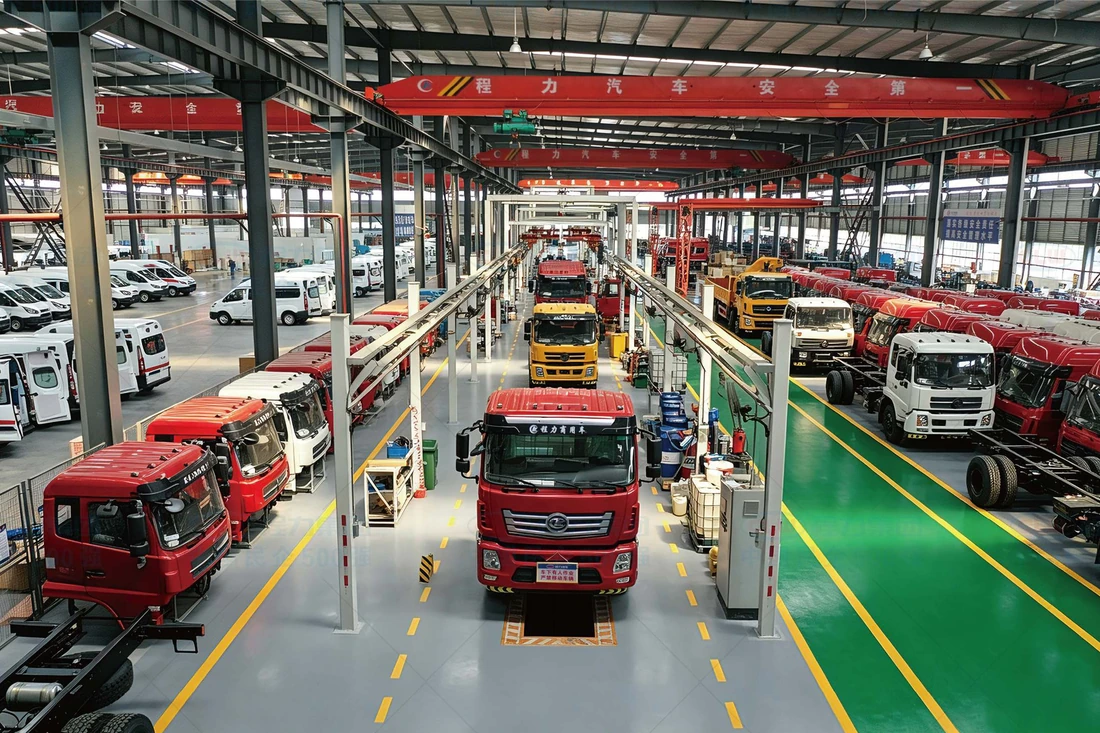
Commercial-vehicle assembly at Chengli.

CONFIGURATION FIELD GUIDE

Four systems to discuss.

01

Cooling under the actual duty

Describe high ambient temperature, altitude, low-speed travel and stationary power-take-off operation. Ask for the cooling arrangement to be reviewed against that combination.

Include in the brief
Engine and working-equipment duty, load, travel speed and hours per shift.
Agree in the proposal
The selected cooling package, fluid requirements, access for cleaning and relevant operating limits.
02

Air intake and dust management

Discuss the intake location, filter housing, sealing and any suitable pre-cleaner for the selected chassis. Keep the maintenance method linked to the engine and filter instructions.

Include in the brief
Dust intensity, road surface, exposure time and the workshop’s filter supply.
Agree in the proposal
Filter identification, intake arrangement, applicable restriction indication and the service instructions.
03

Loaded route and body interfaces

Match axle loads, tyres, suspension and body mounting to the loaded route. Describe repeated rough-road travel, ramps, turning space and the working equipment.

Include in the brief
Payload, liquid or material carried, route photographs and any access or dimension limits.
Agree in the proposal
The chosen chassis and body interface, load limits and any specified protection or reinforcement.
04

Maintenance that fits the fleet

Review access to service points, daily inspection items and parts identification. Identify the workshop, tools and consumables needed for the selected vehicle.

Include in the brief
Available technicians, diagnostic equipment, service locations and replenishment arrangements.
Agree in the proposal
Manuals, parts references, agreed training and the initial consumables or spare-parts scope.

SERVICE PLANNING

Keep dust control in the maintenance plan.

Use the service instructions for the exact engine, intake and filter assembly. Where a restriction indicator is specified, use it with the manufacturer’s limits and service procedure. A filter’s appearance alone is not a replacement criterion.

Air-filter service guidance from Donaldson ↗
  • 01Record the filter and consumable part numbers.
  • 02Plan clean handling and correctly sealed replacement elements.
  • 03Agree the engine and body-equipment inspection schedule.
  • 04Keep service records and a replenishment route for the fleet.

Turn the operating conditions into a specification.

Send the country, truck type, capacity, expected temperature range, route conditions and working hours. Add photographs of access roads or loading areas where they explain the job. The agreed vehicle specification should identify the equipment actually included.

Discuss your operating conditions

BUYER QUESTIONS

A few details to settle before ordering.

Does “tropical” define a fixed temperature rating?

The page describes configuration topics. A temperature limit or performance claim must be tied to the selected vehicle, working duty and applicable technical evidence.

Is every truck fitted with the same dust-protection package?

The proposed intake, filtration, sealing and service arrangement depends on the chassis and application. Record the equipment actually included in the technical specification.

What makes a rough-road enquiry useful?

Provide the loaded weight, road surface, gradients, operating speed and access restrictions. Photographs and route details help the chassis and body teams assess the vehicle together.