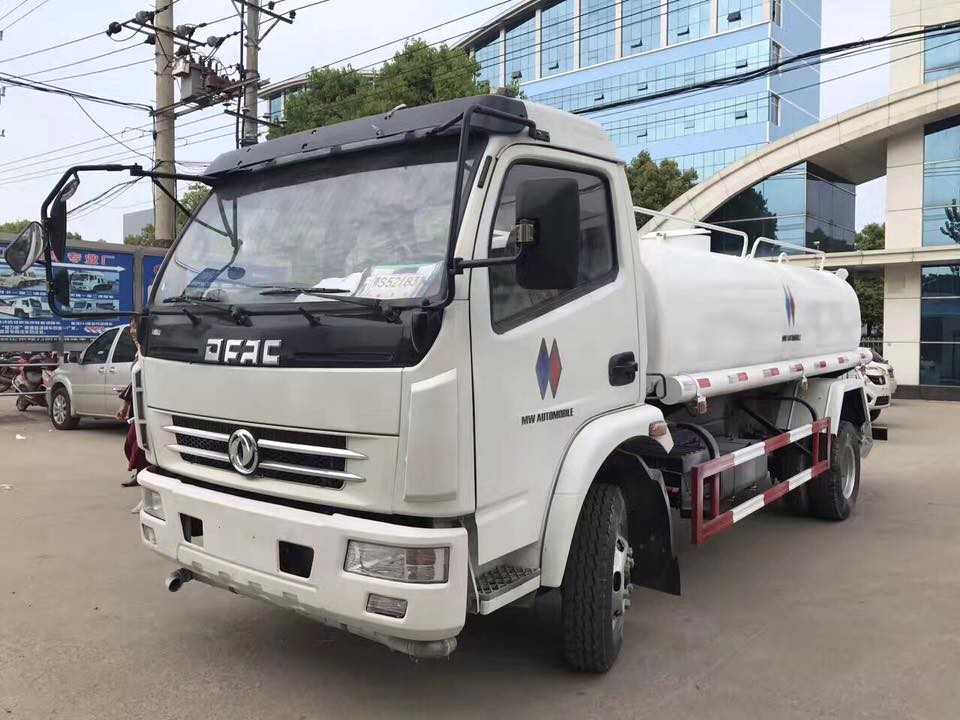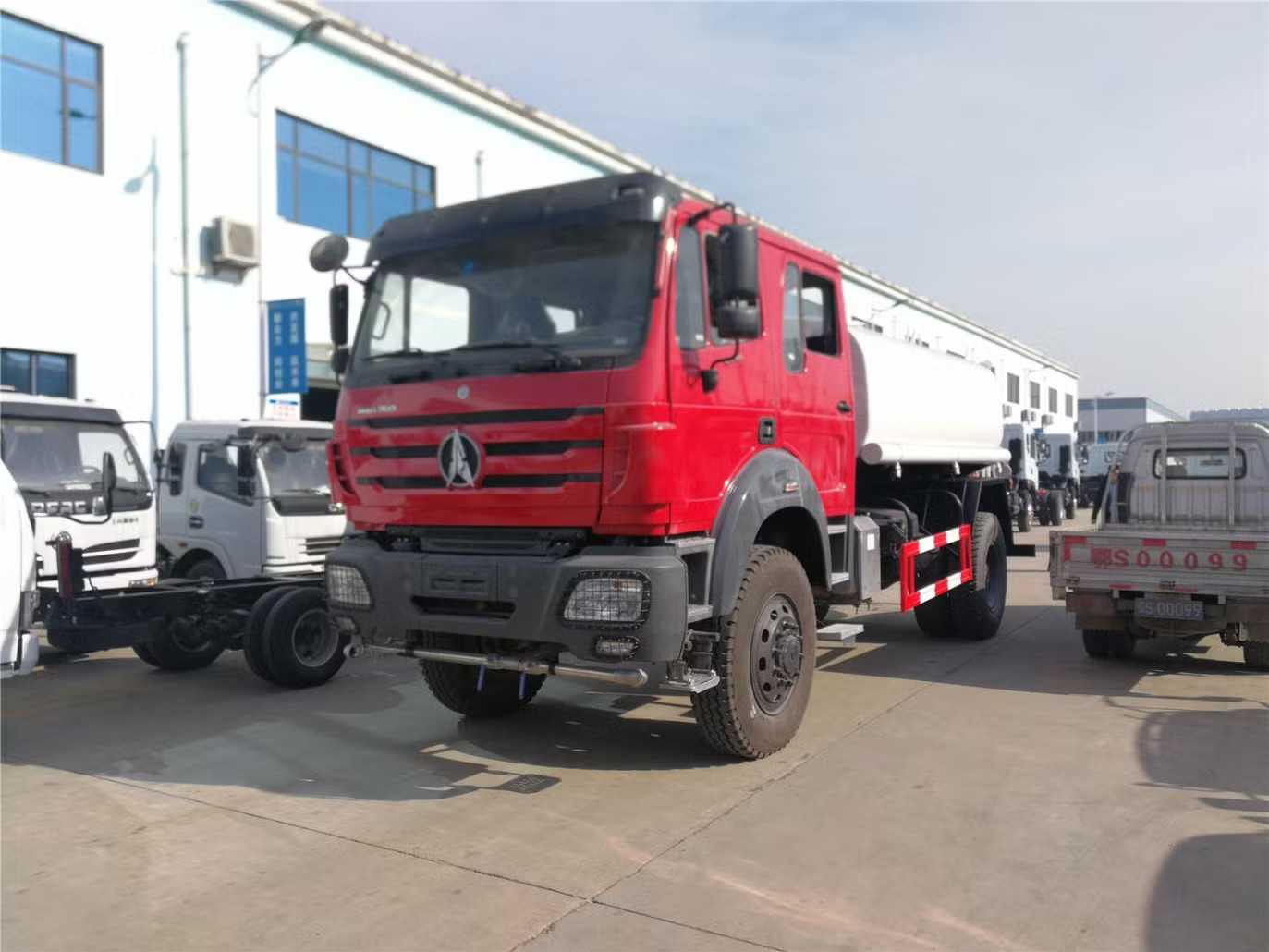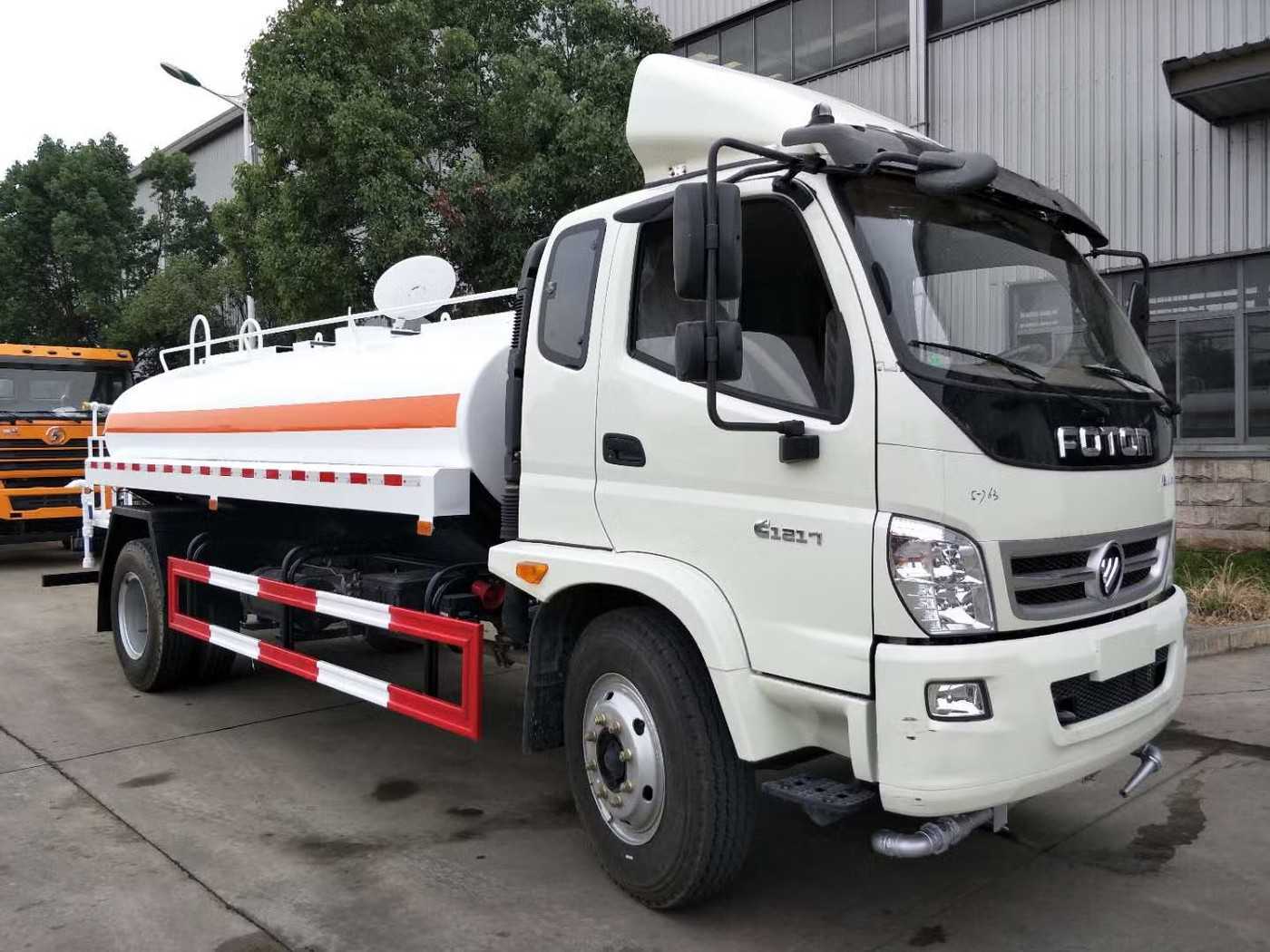
Across dense residential estates in Nairobi, peri-urban compounds around Lagos and Accra, commercial farms in Harare, and growing townships in Uganda, full-size 10,000L to 20,000L bowsers often create more friction than value. Narrow compound gates, light culverts, low overhead cables, and modest daily delivery volumes turn oversized trucks into fuel-heavy liabilities.
That is why demand for a compact 1000 litre water tanker, an agile 2000 litre water tanker, or a 3,000L light-commercial unit keeps rising across Africa. Built on proven mini- and light-truck chassis in native left-hand drive (LHD) or right-hand drive (RHD), compact tankers handle domestic supply, irrigation, and municipal greenery at low operating cost. Below, we examine where small tankers beat full-size bowsers, how to pair tank volume with chassis payload, integrated vs. skid-mounted builds, 40HQ container freight savings, and real price drivers.
When a 1,000L–3,000L Compact Water Tanker Beats a Full-Size Bowser
Water-truck sizing starts with route geometry and turnaround cycle rather than tank volume alone. Heavy 15–20 CBM bowsers—like those delivered in our Shacman 15–20 CBM water bowser batch project—excel on highway compaction and mine haul roads. On tight urban or agricultural routes, compact units deliver faster payback.
Narrow Estates & Emergency Domestic Delivery
In high-density suburbs across Kenya, Nigeria, Ghana, and Zimbabwe, access lanes often narrow below 3.0 metres, with tight 90-degree gates and buried septic slabs unable to bear a 10-tonne rear axle. A 1,000L or 2,000L mini-truck tanker measures roughly 1.60–1.85 m wide with a sub-5.5 m turning radius, pulling straight up to ground cisterns or storage tanks without dragging 50 metres of hose across public lanes.
Farm Irrigation, Nurseries & Greenhouse Watering
Horticultural farms, poultry operations, and tree nurseries need frequent small-batch transfers along unpaved tracks between boreholes and field blocks. A 2,000L or 3,000L tanker crosses light bridges and wet red-soil rows without compacting root zones. With a self-priming pump and 25 m hose reel, one operator drafts from an earthen dam and pressurizes drip-line header tanks directly.
Municipal Landscaping & Low-Cost Urban Maintenance
Town councils, campuses, resorts, and industrial parks use compact bowsers for median watering, pavement washdown, and localized dust suppression. Compared with medium-duty units in our full water bowser truck lineup, a 2,000L–3,000L build burns less than half the fuel per shift, requires only a light-commercial license in most markets, and avoids daytime heavy-truck city restrictions.
Once round-trip haul distances exceed 15 km or daily demand tops 30,000 litres, however, medium-duty models—such as the DFAC D9 water truck, the Dongfeng Tianjin square water cannon truck, or the larger Dongfeng D17 water truck—lower delivered cost per cubic metre.
Capacity vs Chassis Matrix (1,000L / 2,000L / 3,000L / 5,000L)
One thousand litres of water weighs 1,000 kg before counting the steel tank, baffles, pump, piping, and sub-frame. Under-specifying chassis payload causes snapped leaf springs and premature rear-axle bearing failure on rough roads. A 3,000L tanker carries 3,000 kg of water plus roughly 700–850 kg of bodywork, so the chassis needs at least 3.8–4.2 tonnes of true payload margin.
| Capacity | Chassis Class | GVW & Rear Axle | Engine & Gearbox | Width & Turning Radius | Est. Fuel Burn | Best African Use Cases |
|---|---|---|---|---|---|---|
| 1,000L (1 CBM) | Mini Truck (Single Cab, 4x2) | 2.8–3.5 T GVW; single or dual rear tires | 1.5L–1.8L petrol or 2.0L–2.2L diesel; 5MT | 1.60–1.70 m; ~5.0 m radius | 8–11 L / 100 km | Gated estates, tight residential lanes, resort grounds |
| 2,000L (2 CBM) | Heavy Mini / Light Truck (Single Cab, 4x2) | 4.2–4.5 T GVW; dual rear tires advised | 2.2L–2.8L diesel; 5MT | 1.75–1.88 m; ~5.6 m radius | 10–13 L / 100 km | Peri-urban vending, poultry/dairy farms, schools |
| 3,000L (3 CBM) | Light Truck (Single Cab, 4x2 or 4x4) | 5.5–6.5 T GVW; heavy dual rear tires, multi-leaf | 2.8L–3.8L turbo diesel; 5MT/6MT | 1.90–2.05 m; ~6.2 m radius | 12–15 L / 100 km | Township distribution, orchards, clinics, road patching |
| 5,000L (5 CBM) | Medium-Light Truck (4x2 or 4x4) | 8.0–9.5 T GVW; reinforced axle, air brakes | 3.8L–4.2L turbo diesel (95–130 hp); 5MT/6MT | 2.10–2.25 m; ~7.0 m radius | 15–19 L / 100 km | Municipal spraying, estate bulk supply, brickyard dust control |
Dual Rear Tires, Brakes & Regional Specs (LHD/RHD & 4x4)
Single rear tires suffice for a 1,000L paved-road unit, but any 2000 litre water tanker or 3,000L build should run dual rear tires and helper leaf springs to curb body roll when partially loaded. At 3,000L and up, air or air-over-hydraulic brakes with an exhaust brake provide safer control on escarpment grades around Kigali, Addis Ababa, or the Rift Valley.
Always order native factory steering via our LHD and RHD options guide—RHD for Kenya, Uganda, Tanzania, Zambia, Zimbabwe, Malawi, and South Africa; LHD for Nigeria, Ghana, Senegal, Côte d'Ivoire, Cameroon, and DRC—never aftermarket steering conversions. Pair mechanical Euro II or simplified Euro III diesels from our emission and chassis guide with upgraded radiators, oil-bath air cleaners, and dual fuel-water separators from our tropical dust-proof design package to handle high-sulfur fuel and dry-season dust. On muddy rural tracks or steep plantations, an all-wheel-drive platform like our 4x4 water tank truck preserves year-round traction.
Truck-Mounted Tank vs Skid-Mounted Tank on a Flatbed
Budget-conscious buyers often weigh a dedicated water tanker against bolting a removable poly or steel skid tank onto a dropside pickup or flatbed. While skids offer seasonal cargo versatility, daily commercial water hauling exposes major safety and durability gaps.
| Factor | Integrated Truck-Mounted Water Tanker | Skid-Mounted Tank on Flatbed |
|---|---|---|
| Center of Gravity | Low; mounted on a dedicated sub-frame directly over chassis rails for safer cornering | Higher; sits above flatbed cross-members, raising rollover risk on cambered murram roads |
| Slosh & Baffling | Elliptical steel shell with welded internal anti-wave baffles every 1.0–1.2 m | Poly tanks and basic skids rarely have structural baffles; braking surge wears brakes and clutches |
| Pump Drive | Gearbox PTO-driven centrifugal pump; continuous duty with no second engine to fuel | Separate 5.5–7 hp petrol/diesel trash pump; extra pull-start wear and fuel pilferage risk |
| Frame Lifespan | Full-length sub-frame with elastic front pads spreads dynamic load evenly (8–12+ years) | Point loads crack flatbed floor joists and fatigue light-truck rails within 1–3 rough seasons |
| Versatility | Dedicated water delivery, spraying, and washdown | Removable by crane or forklift to haul produce or bagged cement off-season |
Strapping an unbaffled 2,000L or 3,000L polyethylene tank onto a 4x2 flatbed is a leading cause of single-truck rollovers on corrugated African feeder roads. Under hard braking at 60 km/h, a half-full 2,000L load throws over 1.2 tonnes of dynamic water surge forward and sideways—enough to snap straps or tip a narrow mini truck. If you require a removable skid, specify a baffled steel frame bolted directly through chassis rails with shear stops.
Carbon Steel vs. 304 Stainless Steel for Drinking Water
For irrigation, landscaping, and dust control, 4 mm Q235B carbon steel with two-coat marine epoxy interior lining delivers the strongest cost-to-durability ratio. For commercial drinking-water delivery to estates, schools, clinics, or NGO camps, specify food-grade AISI 304 stainless steel with sanitary internal welds, lockable dust-proof manholes, and stainless-steel wetted pump parts. Browse our potable water tanker range—including heavy-duty sanitary builds such as the CL5290TQ96ZQ potable water tanker—for food-grade piping and hygiene configurations.
Container Shipping Advantage for Small Water Tankers
Ocean freight often makes or breaks the landed economics of small special-purpose trucks. Large 10,000L–20,000L bowsers exceed container dimensions and must ship via Roll-on/Roll-off (Ro-Ro) vessels or flat-racks, where per-CBM tariffs and sparse sailings inflate delivered costs.
By contrast, 1,000L–3,000L tankers built with container-friendly height (under 2.55 m with upper handrails or mirrors temporarily unbolted) load cleanly into standard 40-foot High Cube (40HQ) sea containers (approx. 12.03 m × 2.35 m × 2.69 m internal space). Consolidating two units—or one tanker plus a full spare-parts and pump-kit order—inside a single 40HQ container slashes per-unit shipping expenses.
| Logistics Factor | 2× Compact Tankers in One 40HQ Container | Single Unit via Ro-Ro Vessel |
|---|---|---|
| Fitment & Cost | Splits one 40HQ rate across two 1,000L–2,000L (or compact 3,000L) units, cutting sea freight per truck by ~30%–45% | Billed on full exterior CBM (22–32 CBM) plus minimum B/L fees, raising per-unit freight |
| African Port Reach | Weekly container sailings to Mombasa, Dar es Salaam, Apapa/Tin Can, Tema, Durban, Beira, and inland dry ports | Fewer Ro-Ro port calls; landlocked buyers face long cross-border drive-away transit |
| Cargo Security | Sealed steel box shields pumps, hoses, batteries, and mirrors from salt spray and port pilferage | Open quay handling requires locking all loose accessories inside the cab |
| Destination Prep | 1–2 hours with hand tools to refit mirrors, bumper, or top rail | Drive-off after battery reconnect and fluid check |
For landlocked fleets in Uganda, Rwanda, Malawi, Zambia, or Zimbabwe, 40HQ containers also travel seamlessly by bonded rail or flatbed from Mombasa, Dar es Salaam, Beira, or Durban to inland container depots without putting 1,200 km of highway wear on a brand-new mini truck. Review our payment and shipping options and import compliance guide early to schedule destination pre-shipment inspections (KEBS/TBS/UNBS PVoC, SONCAP, or ZIMRA valuation) before container stuffing.
Pricing Factors & Quick Inquiry Checklist
Buyers comparing a water tanker 1000 liter price or water tanker 3000 ltr price see wide quote spreads because every unit is configured around chassis tier, tank metallurgy, pump hardware, and destination port. Final pricing always follows a written factory quotation rather than a generic list figure. Six main variables shape your quote:
- Chassis Tier & Drivetrain: Petrol 4x2 micro-trucks sit in the entry price tier; turbo-diesel Dongfeng, Foton, Isuzu-platform, or SINOTRUK HOWO Light chassis with dual rear tires and air brakes cost more upfront yet deliver higher uptime and stronger African resale value. Adding 4x4 raises chassis cost further.
- Tank Capacity & Metallurgy: Stepping from 1,000L to 3,000L upgrades both steel tonnage and chassis GVW. Switching from epoxy-lined Q235B carbon steel to food-grade 304 stainless steel typically adds 25%–40% to tank-body cost.
- Pump & Spray Hardware: A gravity-only ball valve is the lowest-cost setup. Adding a gearbox PTO self-priming centrifugal pump, front flush jets, rear fan sprinklers, suction hoses, and a rear working deck with a 28 m water cannon adds moderate hardware cost for far broader utility.
- Steering & Emission Spec: Native RHD production slots and Euro III/IV fuel-injection packages vary slightly in lead time and pricing versus LHD Euro II export builds.
- Spare Parts Pack: Bundling first-year pump mechanical seals, impellers, filters, belts, and nozzles inside the cab or container avoids costly air-freight downtime later.
- FOB vs. CIF Incoterms: FOB China port covers build, wet pump testing, and export clearance; CIF adds 40HQ container or Ro-Ro sea freight and marine insurance to your nominated African port, while local duties and VAT clear at destination.
Before wiring any deposit, review our step-by-step buying workflow, check our manufacturing credentials on the certificates page (ISO management certificates attest to factory quality systems and are separate from destination-country vehicle road approvals or PVoC inspection certificates), and verify official bank accounts against our anti-fraud notice. Municipal and NGO procurement teams can also request spec sheets and compliance packs through CLW tender support.
Frequently Asked Questions on Small Water Tankers
Can a 1,000L or 2,000L water tanker pump uphill to rooftop estate tanks?
Yes. A PTO-driven self-priming centrifugal pump rated at 25–40 m³/h with 25–40 m head easily lifts water into elevated tower or rooftop tanks 10–25 metres high through a 50 mm or 65 mm hose, and self-drafts from boreholes or sumps up to 6–7 metres deep.
How fast does a 3,000L compact water tanker fill and discharge?
With a standard 65 mm PTO centrifugal pump, a 3,000L tank fills from a ground reservoir or hydrant in 5–8 minutes and empties into customer tanks in 5–10 minutes depending on elevation head. Gravity-only discharge takes 15–25 minutes.
Are spare parts for Chinese mini and light water trucks available locally in Africa?
Yes, when you choose mainstream diesel engines (Quanchai, Yuchai, Yunnei, or Isuzu-architecture 4JB1/4KH1 platforms) and standard 40QZ/65QZ water pumps. Filters, belts, brake linings, and pump seals are stocked across Nairobi, Kampala, Dar es Salaam, Lagos, Accra, and Harare, and CLW packs matched service kits with every shipment.
Should a tight-budget buyer pick a 2,000L or 3,000L water tanker?
Match drop size and haul distance. For 1,000L–2,000L deliveries within 5 km of your borehole on very tight lanes, a 2,000L dual-rear-wheel unit minimizes fuel and purchase cost. If drops average 2,500L–3,000L or exceed 10 km round trip, a 3,000L tanker typically recovers its price step within 4–6 months by cutting daily trips by one-third.
Get a Factory-Direct Quote for Your 1,000L–3,000L Water Tanker
Send five quick project details so our export engineers can match the right compact chassis, tank build, and 40HQ container or Ro-Ro freight plan to your route:
- Capacity & Quantity: 1,000L, 2,000L, 3,000L, or 5,000L—plus whether you want 2 units consolidated in one 40HQ container.
- Water End-Use: Drinking water (304 stainless steel) or irrigation, estate dust suppression, and landscaping (epoxy-lined carbon steel).
- Steering & Drive: LHD or RHD, and 4x2 road chassis or 4x4 off-road chassis.
- Pump & Spray Kit: Gravity valve only, PTO pump with hose reel, or full sprinklers and rear water cannon.
- Destination Port & Terms: Nominate your port (Mombasa, Dar es Salaam, Apapa, Tema, Durban, Beira, etc.) and FOB or CIF preference.