Fleet enquiries for Africa[email protected]

Potable Water Tanker CLW

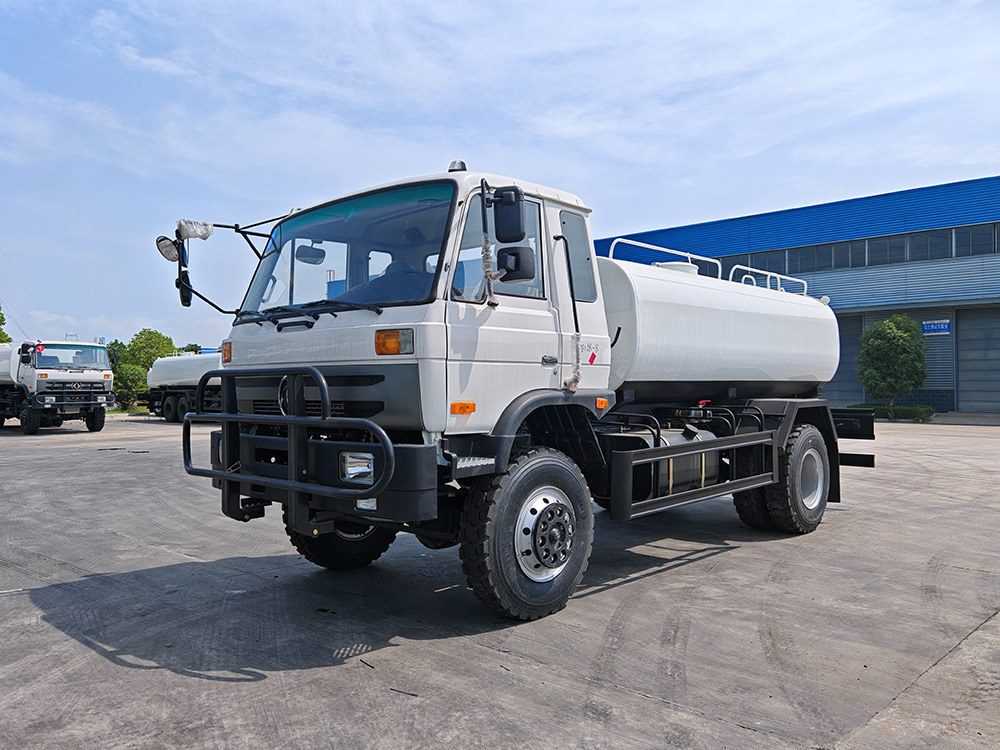
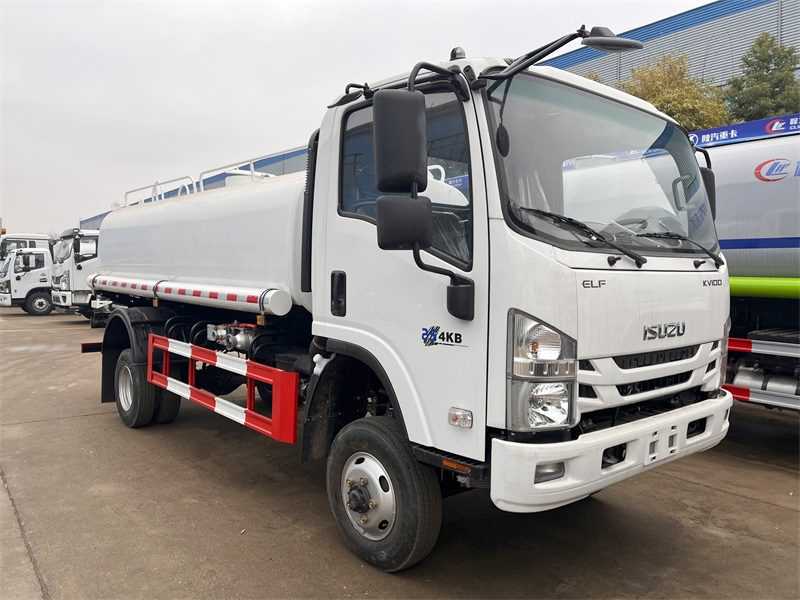
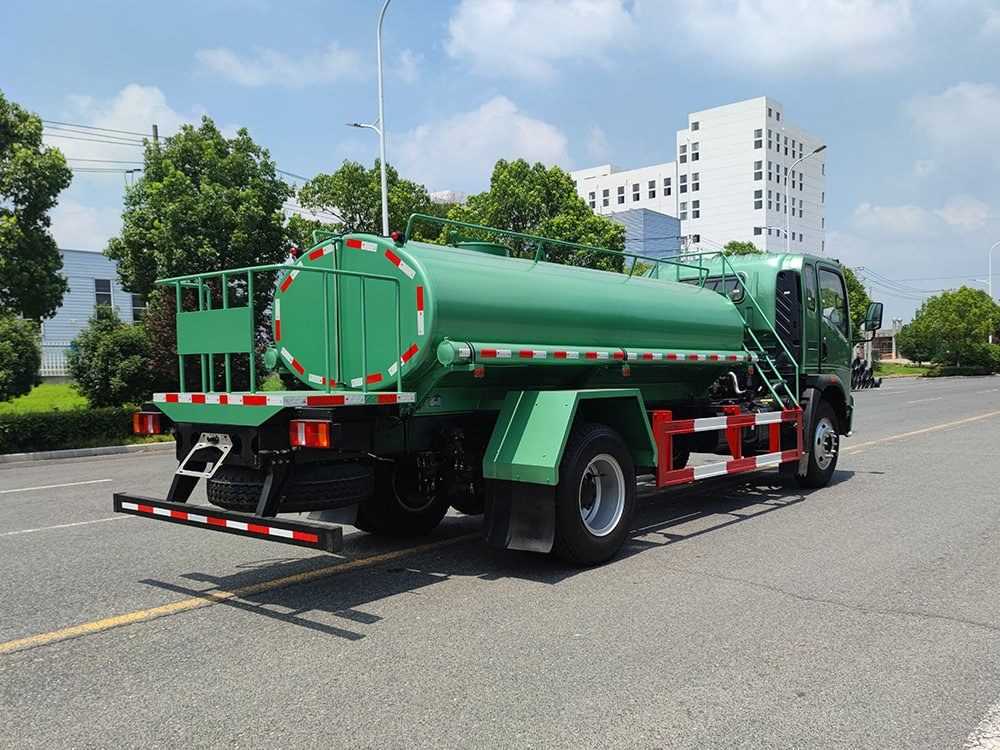
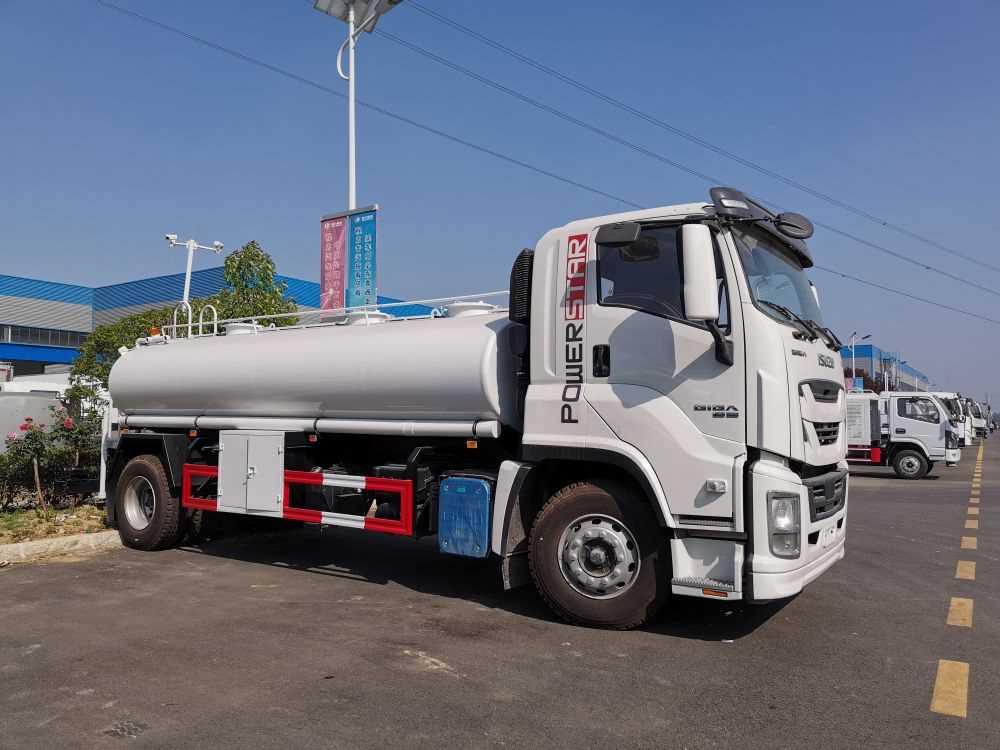
4×4 8,000 L Potable Water Tanker for Off-Road Rural Relief & Remote Field Camps

An all-terrain 4×4 8,000 L (8 m³) diesel potable water tanker on a 14,000 kg GVW chassis with a 5.9 L 125 kW (170 HP) engine and 11.00R20 radial tires, built for African NGOs, remote exploration camps, and rural water agencies delivering clean drinking water over muddy, sandy, and ungraded tracks.

01 / Capability

Understand what the specification means.

Unpaved & Rainy-Season Reach

4×4 driven axles with 11.00R20 radial tires and 3,950 mm wheelbase

Maintains uninterrupted drinking-water deliveries to isolated rural clinics and camps when 4×2 tankers are cut off by mud or sand.

Operating conditions
Assumes engaged 4×4 drivetrain and moderated fill mass suited to soft unpaved surfaces and creek approaches.
What affects the result
Soil saturation, tire tread pattern and deflation practice, approach/departure clearance, and driver off-road skill.

Compact Field Maneuverability

7,430 × 2,550 × 2,900 mm overall footprint with 8,000 L tank

Turns cleanly inside rural borehole compounds, village market squares, and narrow bush tracks without damaging fences or overhead wires.

Operating conditions
Based on the 3,950 mm two-axle wheelbase and moderate 2,900 mm total vehicle height.
What affects the result
Turning-circle terrain roughness, tree canopy clearance, and rear platform or tap-bar overhang.

Hygienic Community Water Supply

8,000 L (8 m³) batch capacity with food-grade stainless-steel tank option

Delivers clean daily rations for a rural settlement or remote drill camp in one controlled trip—roughly 400 twenty-litre jerrycans at full fill.

Operating conditions
Assumes clean potable water loaded within the 14,000 kg GVW envelope (adjusting fill volume on steep or soft off-road grades).
What affects the result
Off-road axle safety margin, dispensing time per household, and chlorination/sanitization protocol between trips.

02 / Specification

The vehicle, system by system.

The CLW 4X4 8,000 L Potable Water Tanker is designed for humanitarian relief agencies, remote mineral-exploration camps, and rural district water offices operating beyond paved roads. While standard 4×2 road tankers stall on washed-out rainy-season laterite, sandy Sahel tracks, or steep rural borehole approaches, this true 4×4 platform combines all-wheel-drive traction with a compact 7,430 × 2,550 × 2,900 mm footprint and 3,950 mm wheelbase to keep drinking water moving year-round.

All-Terrain Chassis and Food-Grade Tank Adaptability

Driven by a 5.9 L diesel engine rated at 125 kW (170 HP) paired with a rugged manual gearbox and configurable Euro 2 through Euro 6 emission calibrations, the 14,000 kg GVW chassis rides on 4.5-ton front and 9-ton rear axles shod with six heavy-duty 11.00R20 radial tires. The 8 m³ (8,000 L) liquid tank supports potable drinking-water and food-grade hygienic transport, with stainless steel or anti-corrosion coated carbon steel builds configured to match operational water-quality requirements. A three-seat cab accommodates driver plus field water-distribution crew.

Remote Field Reliability and Fleet Procurement

  • Built for unimproved tracks: Manual drivetrain, high-profile 11.00R20 radial tires, and balanced 7,880 kg curb weight provide confident footing on muddy feeder roads and dry-bed crossings.
  • Self-reliant village offloading: Configurable with pumped transfer, gravity tap manifolds, and auxiliary 12–16 m spraying for camp dust control or washdown when required.
  • Flexible fleet supply: Available from 1 vehicle with tiered pricing—the more units ordered, the lower the unit price—and multi-truck NGO or government relief tenders support phased batch delivery.

Chassis & powertrain
Vehicle Model
4X4 Water Tank Truck
Drive Layout
4×4 All-Wheel Drive (2 Axles)
Engine Displacement & Output
5.9 L Diesel, 125 kW / 170 HP
Emission Calibration
Euro 2 / 3 / 4 / 5 / 6 (Market-Matched)
Transmission
Manual
Wheelbase & Overall Size
3,950 mm Wheelbase; 7,430 × 2,550 × 2,900 mm
Weights & Axle Ratings
14,000 kg GVW / 7,880 kg Curb; 4.5 t Front / 9 t Rear
Body & tank
Tank Capacity
8,000 L (8 m³)
Liquid Service Class
Potable Drinking Water / Food-Grade Liquid Capable
Tank Material Options
Food-Grade Stainless Steel or Anti-Corrosion Carbon Steel
Cab Seating Capacity
3 Persons (Driver + Field Crew)
Exterior Finish
Custom Humanitarian, Fleet, or Utility Paint on Request
Working equipment
Primary Transfer Role
Potable Water Transportation, Pumped Transfer & Gravity Discharge
Auxiliary Functions
Configurable Road/Camp Spraying & Washdown Hardware
Auxiliary Spraying Band
12–16 m Coverage (When Equipped with Spray Bar)
Operating performance
Engine Power Output
125 kW (170 HP) from 5.9 L Diesel
Off-Road Envelope
Compact 7,430 mm Length on 3,950 mm 4×4 Wheelbase
Safety equipment
All-Wheel-Drive Traction
4×4 Front & Rear Driven Axles for Wet Mud & Loose Sand
Heavy-Duty Tire Package
6 × 11.00R20 Radial Tires (Spare Tire Carrier Option)
Low-Height Center of Gravity
2,900 mm Overall Height for Unpaved Cross-Slope Stability
Configuration options
Food-Grade 304 Stainless Tank
Full 304 Stainless Steel Tank, Sanitary Pump & Lockable Manhole
Steering Configuration
Left-Hand Drive (LHD) or Right-Hand Drive (RHD)
Humanitarian Tap Manifold
Multi-Tap Gravity Distribution Bar for Rural Community Filling
Remote Recovery & Field Kit
Spare 11.00R20 Wheel, Rear Hose Reel & Self-Priming Suction Strainer

03 / Applications

Choose for the work ahead.

Suitable duties

  • NGO and UN drought-relief water trucking into off-grid Sahel, East, and Southern African villages
  • Remote mining, seismic, and geotechnical exploration camps connected only by dirt bush tracks
  • Rainy-season rural health-center and boarding-school water replenishment on unsealed feeder roads
  • National park, forestry, and agricultural estate operations needing clean water over rough terrain
  • Fleet operators prioritizing mechanical 5.9 L diesel durability and 11.00R20 tire toughness

Outside the intended duty

  • High-volume paved-highway bulk water shuttles where a 20,000 L 6×4 tanker lowers cost per cubic meter
  • Budget-constrained paved-city sprinkling where 4×4 front-drive hardware adds unnecessary capital and fuel cost
  • Ultra-narrow urban lanes under 2.2 m wide that require a compact 2.0 m-wide light-duty water truck
  • Transport of aggressive industrial chemicals incompatible with potable stainless or coated steel tanks

04 / Procurement

A clearer brief. A better fleet fit.

  • Target operating terrain (deep sand, wet clay mud, rocky highland tracks) and tire-tread preference
  • Required tank construction (food-grade 304 stainless steel vs. coated carbon steel) and sanitary pump spec
  • Destination African country, LHD or RHD steering side, and required emission tier (Euro 2–6)
  • Preferred offloading method (pumped bladder refill, multi-tap village bar, or suction from rural boreholes)
  • Custom fleet color or humanitarian white livery requirements
  • Fleet quantity and phased batch shipping milestones for multi-region relief programs
Why does the 4X4 8,000 L Potable Water Tanker cost more than a 4×2 road tanker of higher volume?

A true 4×4 chassis incorporates a front-drive axle, transfer case, reinforced off-road suspension, and heavy-duty 11.00R20 radial tires engineered for mud, sand, and ungraded tracks where standard 4×2 road tankers cannot operate reliably.

Can this 4×4 tanker haul drinking water safely under harsh rural conditions?

Yes. The 8 m³ tank platform is built for hygienic liquid transport and can be specified in full food-grade 304 stainless steel with lockable dust-proof manholes, a stainless steel transfer pump, and a multi-tap gravity bar for clean village dispensing.

How should operators manage tank fill levels against the 14,000 kg GVW rating?

With a 7,880 kg curb weight, 14,000 kg GVW, and 4.5 t front / 9 t rear axle ratings, operators running on public highways or steep muddy slopes should size partial or near-full loads within the 14,000 kg GVW envelope to preserve braking, axle, and off-road traction margins.

Do multi-truck humanitarian or rural-district orders qualify for tiered pricing and phased delivery?

Yes. Orders start from 1 unit at the reference FOB China price range, with tiered pricing lowering unit cost on larger quantities. Multi-vehicle relief and government orders can also be delivered in phased batches aligned with regional deployment.

Buying guide

Plan the right specification.

Your fleet. Your requirements.

Let’s configure your next vehicle.

Share the duty, destination and quantity. Include the details below so CLW can prepare a configuration and quotation for your project.

[email protected] ↗