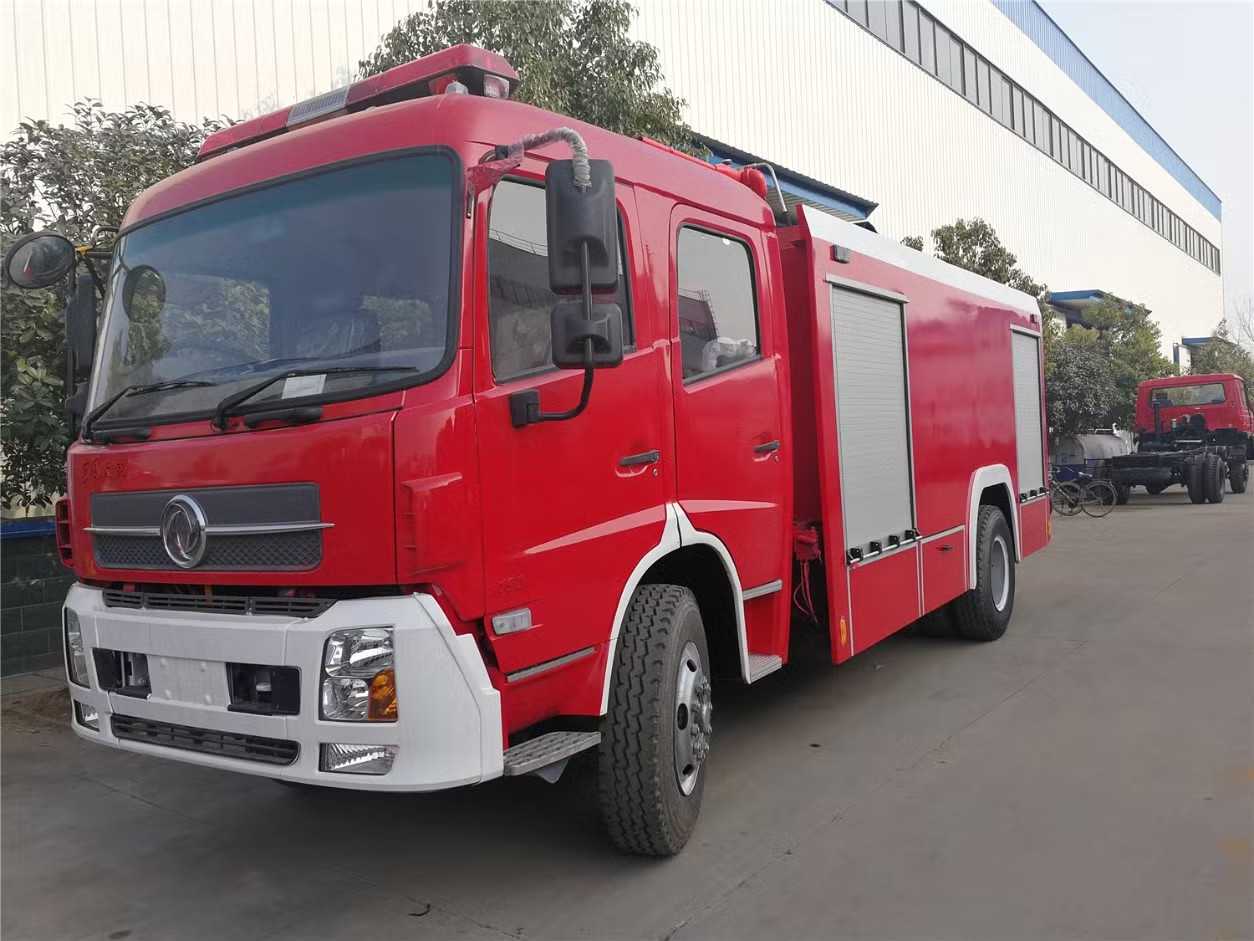
Specifying the wrong fire truck is costly for African fire brigades, oil depots, and industrial estates. A standard water tender cannot suppress a burning diesel bund, while a heavy 6x4 crash tender cannot enter narrow market alleys in Lagos, Kumasi, or Kampala. Matching fire truck types, tank metallurgy, pump flow, and chassis drivelines to local African conditions is vital for dependable emergency response.
This guide explains onboard capacities, the four core fire tender categories, pump and crew cab specs, our 86-unit bulk export case study, and landed-cost checkpoints for municipal, oil-depot, and airport buyers.
Do Fire Trucks Carry Their Own Water? Understanding Fire Tender Capacities
Yes—every frontline fire engine and fire tender built for African deployment carries an onboard water tank, typically from 2,500 liters on agile urban trucks up to 12,000 liters or more on heavy 6x4 tankers. Unlike European brigades that rely on high-pressure street hydrants within seconds of arrival, African crews frequently encounter dry, obstructed, or low-pressure hydrant mains under 1.5 bar. Onboard water capacity therefore decides whether responders achieve rapid knockdown before flashover.
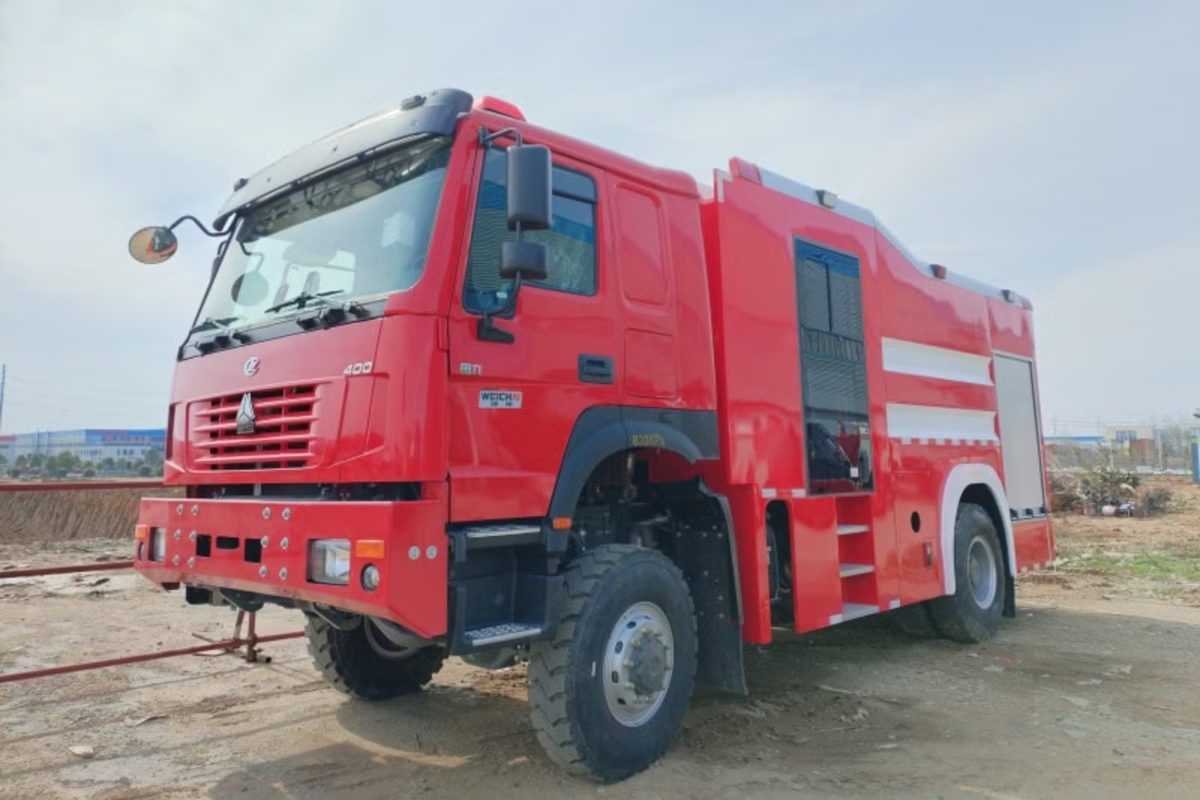
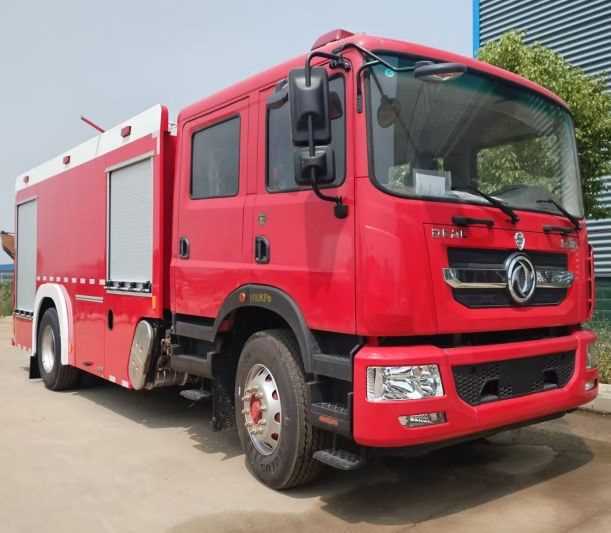
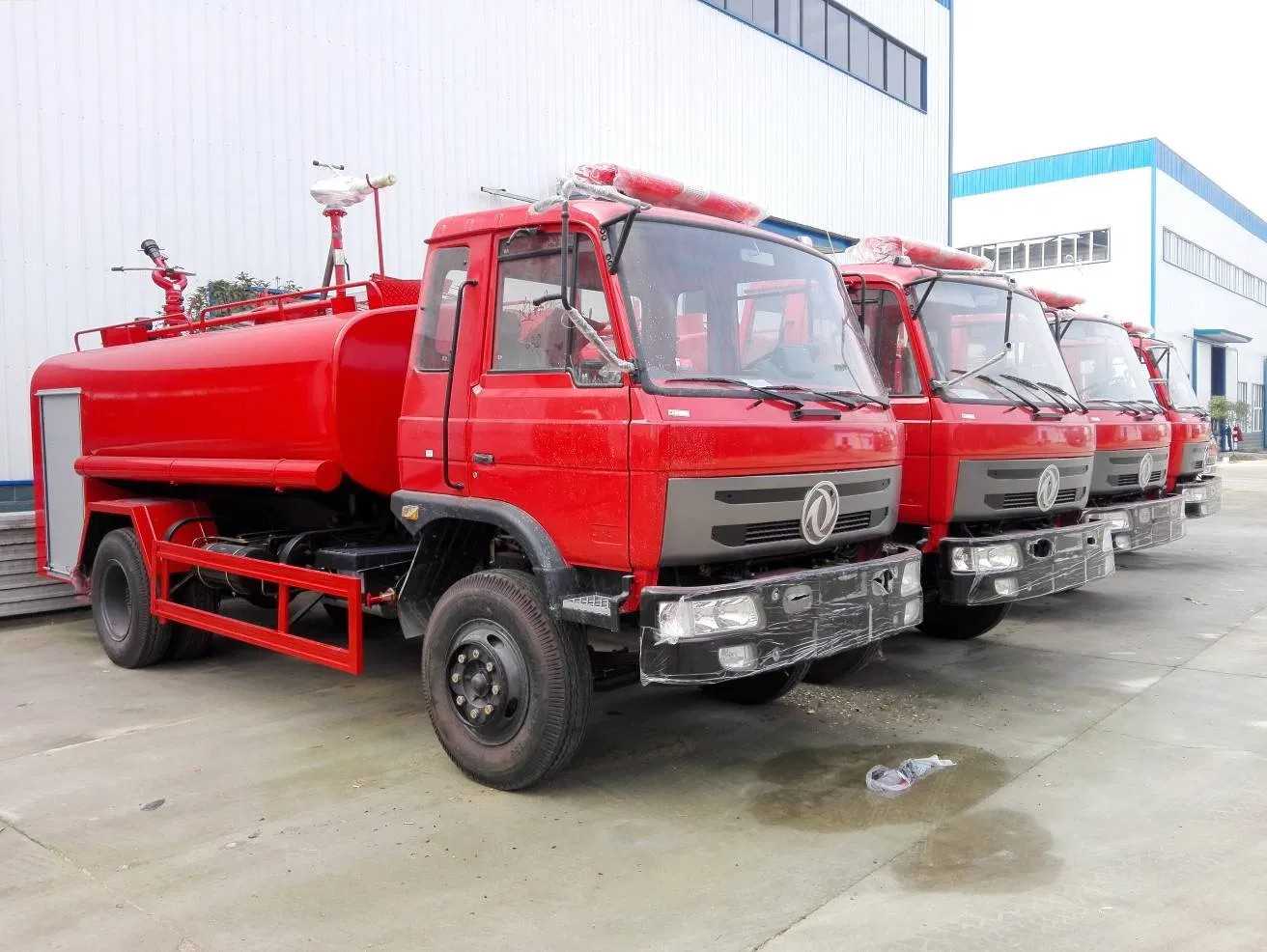
- Compact Rapid-Attack Tenders (2,500L–3,000L): Short-wheelbase 4x2 trucks such as the CLW 2500L Dongfeng Fire Truck and CLW 2600L Foton Fire Truck turn cleanly inside crowded markets, narrow alleys, and gated estates where 18-ton trucks cannot fit.
- Standard Municipal & Industrial Tenders (5,000L–8,000L): Heavy 4x2 workhorses like the CLW 4x2 8CBM 7000L Water 1000L Foam Fire Truck sustain a high-pressure handline attack for over 10 minutes or run the roof monitor while relay units arrive.
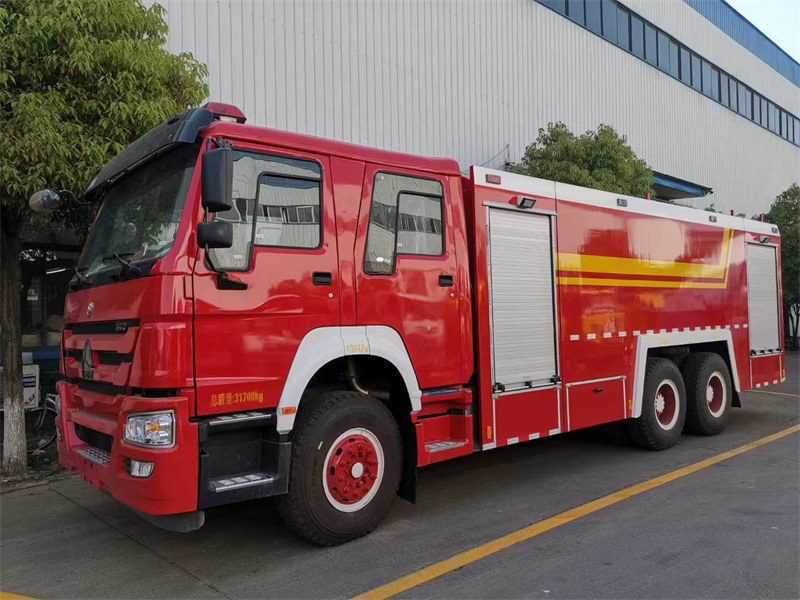
- Heavy Water Tankers & Relay Units (10,000L–12,000L+): Built on 6x4 chassis for highway corridors, rural counties, timber yards, and bulk fuel depots, drafting from rivers or static sumps to feed frontline engines.
Liquid payload demands disciplined chassis engineering. Water weighs 1 kg/L and foam roughly 1.03 kg/L, so an 8,000L tank adds over 8 tons of shifting mass. Quality tanks weld transverse and longitudinal anti-surge baffles to curb slosh during hard braking on cambered roads. Buyers must also meet regional weighbridge rules: EAC and ECOWAS axle caps sit near 10–11.5 tons on single drive axles and 18 tons on tandems, meaning an overloaded 4x2 frame causes spring fatigue, brake fade, and hub failure.
Standard municipal tanks use 4 mm Q235B carbon steel with marine epoxy primer. Where fleets refill from mineral-rich borehole or coastal brackish water—or carry AFFF/AR-AFFF foam—specify 304 stainless steel for the foam compartment (or full tank) to stop weld corrosion and rust scale from clogging pump impellers.
4 Core Fire Truck Types for African Operations
Fleet planners reviewing our full CLW fire truck lineup typically classify tenders into four operational categories aligned with site fire hazards.
1. Water Tender (Water Tanker Fire Engine)
Built for Class A solid-combustible fires—homes, market stalls, warehouses, timber, and bushfires—the water tender prioritizes maximum water payload, straightforward controls, and open-water drafting. A versatile platform like the CLW Fire Fighting Truck combines a rear or mid-ship centrifugal pump, roof water monitor, and suction hoses to serve both frontline attack and long-duration nurse-tanker relay.
2. Foam Tender (Water & Foam Fire Truck)
Water alone worsens Class B hydrocarbon fires (petrol, diesel, jet fuel, crude oil) by floating and spreading burning fuel across drains. A foam tender pairs a main water tank with a 304 stainless-steel foam concentrate tank (commonly 7:1 to 5:1 water-to-foam) and a 3% or 6% proportioner. Discharged via air-aspirating branchpipes or a dual-purpose roof monitor, the foam blanket smothers flammable vapors while cooling tank shells.
3. Dry Powder & Combined Multi-Agent Fire Truck
LPG bottling plants, petrochemical manifolds, chemical warehouses, and high-voltage substations present pressurized Class C gas fires and energized Class E electrical hazards where conductive water causes electrocution or violent boil-over. Dry powder tenders carry 500 kg–4,000 kg of BC or ABC powder pressurized by nitrogen cylinders to feed a roof powder gun and hose reels. Many African industrial parks choose combined tri-agent tenders uniting water, foam, and a 500–1,000 kg powder module on one 6x4 chassis.
4. Aerial Ladder & Elevating Platform Rescue Truck
High-rise commercial towers and apartments across Nairobi, Lagos, Accra, Dar es Salaam, and Lusaka exceed the effective reach of ground monitors above four floors. Aerial ladders and hydraulic platforms (18 m–54 m working height) use computerized H-type outriggers, telescopic booms, piped elevated waterways, and 300–500 kg rescue baskets to evacuate occupants and direct high-angle streams onto upper stories or refinery pipe racks.
| Fire Truck Type | Fire Class | Typical Agent Capacity | Drive & Steering | Core Suppression System | Best African Use Case |
|---|---|---|---|---|---|
| Water Tender | Class A (solids, buildings) | 2,500L – 12,000L water | 4x2 or 6x4 (LHD / RHD) | 20–60 L/s pump, roof monitor, suction lines | Municipal stations, markets, rural relay |
| Foam Tender | Class A & B (fuel, oil) | 5,000L–10,000L water + 1,000L–3,000L foam | 4x2 heavy or 6x4 | 30–60 L/s pump, 3%/6% proportioner, 304 SS foam tank | Oil depots, refineries, port terminals |
| Dry Powder / Combined | Class B, C (gas) & E (electrical) | 500–4,000 kg powder (+ optional water/foam) | 4x2 heavy or 6x4 | Nitrogen bank, pressure vessel, powder monitor & reel | LPG plants, substations, chemical yards |
| Aerial Ladder / Platform | High-rise rescue & elevated fires | 18m – 54m reach (+ optional 2,000L–3,000L tank) | 4x2 heavy, 6x4 or 8x4 | Hydraulic outriggers, boom, cage, elevated waterway | CBD towers, hotels, refinery pipe racks |
Pump Flow Rate, Fire Monitor Range & Crew Cab Seating
Beyond tank size, three mechanical subsystems determine real-world performance during multi-hour African fire incidents.
Centrifugal Fire Pump, Priming & PTO Cooling
Standard firefighting centrifugal pumps (CB10/20 through CB10/60 classes, or tender-specified European brands) deliver 20 L/s to 60 L/s (1,200–3,600 L/min) at 1.0 MPa (10 bar), with optional 4.0 MPa high-pressure stages for mist lines. African conditions test thermal margins severely: ambient temperatures above 40°C and high-altitude plateaus (Nairobi ~1,795 m, Lusaka ~1,280 m, Harare ~1,480 m) reduce cooling efficiency and atmospheric suction lift.
Always specify a full-power sandwich PTO with an auxiliary water-cooled heat exchanger so extended pumping never overheats gearbox oil. Confirm a vacuum primer rated for a 7-meter suction lift in 35–50 seconds for river drafting, paired with tropicalized radiators and dual-stage dust filtration for Harmattan dust and unpaved access.
Roof Fire Monitor Range & Remote Control
Roof monitors (PL24–PL64) deliver 50 to 70 meters of water throw and 45 to 60 meters of foam range with 360-degree rotation. Manual monitors simplify rural maintenance, while oil depots and airports favor cab-mounted electric joystick controls that shield operators from radiant heat.
Double-Row Crew Cab, SCBA Brackets & Chassis Compliance
Four-door integral crew cabs seat 6 (2+4) or 8 (2+6) firefighters, with quick-release SCBA (Self-Contained Breathing Apparatus) brackets in rear seatbacks so crews mask up en route. Anodized aluminum roller shutters with LED lights and floor drains keep equipment dry and mud-free.
Lock steering and emission specs before build: West/Central Africa (Nigeria, Ghana, Côte d'Ivoire, Senegal, DRC) mandates LHD, while East/Southern Africa (Kenya, Uganda, Tanzania, Zambia, Zimbabwe) mandates RHD. Check our LHD and RHD chassis options and Euro II, Euro III, and Euro V emission options so engines match local diesel sulfur levels without SCR/DPF derating.
| Technical Benchmark | Compact Urban Engine (2,500L–3,000L) | Standard Water/Foam Tender (6,000L–8,000L) | Heavy Industrial Tender (10,000L–12,000L+) |
|---|---|---|---|
| CLW Reference Build | 2500L Dongfeng / 2600L Foton | 4x2 8CBM (7000L + 1000L Foam) | 6x4 CLW Fire Fighting Truck |
| Drive & Output | 4x2, 130–170 HP diesel | 4x2 heavy, 210–290 HP diesel | 6x4, 336–430 HP diesel |
| Pump Flow (1.0 MPa) | 20 – 30 L/s (1,200–1,800 L/min) | 30 – 40 L/s (1,800–2,400 L/min) | 50 – 60 L/s (3,000–3,600 L/min) |
| Monitor Throw | 45 – 55 m (water) | 55 – 60 m (water) / 45 – 50 m (foam) | 60 – 70 m (water) / 50 – 60 m (foam) |
| Crew Seating | 5–6 crew (2+3 or 2+4) | 6 crew (2+4, 4 SCBA brackets) | 6–8 crew (2+4 / 2+6, 4–6 SCBA) |
| Tank Material | Epoxy Q235B carbon steel | Carbon water + 304 SS foam (or full SS) | Full 304 stainless steel recommended |
Proven Bulk Delivery: 86 Isuzu FTR Fire Trucks on One Ocean Vessel
National fire ministries and state emergency agencies procuring multi-unit fleets face a major operational risk: inconsistent specifications and fragmented spare-parts inventories across regional stations. Our landmark 86 Isuzu FTR fire trucks bulk export shipment demonstrates how factory-direct standardization solves that risk—delivering all 86 identical fire tenders through unified wet-pump QC onto a single dedicated ocean vessel.
- Fleet-Wide Spare Parts Commonality: Standardizing on one globally supported chassis such as the Isuzu FTR allows regional workshops to stock uniform filters, brake linings, PTO bearings, pump mechanical seals, and hose couplings—maximizing uptime across a 10- to 15-year lifecycle.
- Structured Pre-Shipment Inspection: Batch manufacturing streamlines third-party inspections (SGS, Bureau Veritas, Intertek under SONCAP, PVoC, TBS, or ZABS rules) for VIN verification, pump flow testing, and LHD/RHD checks prior to port gate-in.
- Dedicated Ro-Ro & Break-Bulk Ocean Shipping: Consolidating units onto scheduled Ro-Ro or chartered vessels into Apapa/Tin Can Island, Tema, Mombasa, Dar es Salaam, Durban, or Beira lowers per-unit freight exposure and simplifies customs release.
For public tenders and EPC bids, our tender documentation team supplies CAD layouts, pump curves, and compliance schedules. CLW manufactures under audited ISO 9001, ISO 14001, and ISO 45001 management systems—detailed on our factory certificates page—while country-level customs clearance is supported through destination-specific import compliance and pre-shipment conformity packs.
Matching Fire Tender Type to Municipal, Oil Depot or Airport Risk
- Municipal Brigades & Market Districts: Deploy a two-tier fleet combining agile 2,500L–3,000L first-attack trucks for congested alleys with 7,000L–8,000L water/foam tenders (covering both structural fires and roadside fuel spills) plus 10,000L–12,000L relay tankers.
- Oil Depots, Tank Farms & Chemical Plants: Specify 50–60 L/s foam tenders with at least 2,000L–3,000L of 304 stainless-steel foam storage, 3% AR-AFFF or fluorine-free foam (F3) proportioners, cab-remote monitors, and complementary dry-powder trucks for pressurized gas manifolds.
- Regional Airports & Mining Airstrips: Select ARFF-configured 4x4 or 6x6 tenders aligned with ICAO airport categories, featuring high power-to-weight acceleration, pump-and-roll foam discharge, and complementary dry powder.
Cost Structure & Hidden Landed-Cost Drivers
Evaluate total CIF landed cost and lifecycle uptime rather than stripped base quotes. FOB factory cost tiers scale across five choices: chassis brand (value-focused Dongfeng, Foton, Sinotruk HOWO, and Shacman vs. Japanese-platform Isuzu FTR or European-component builds), tank metallurgy (carbon steel vs. 304 stainless steel), pump flow class, remote monitor/proportioner upgrades, and loose firefighting gear (hoses, couplings, ladders, SCBA sets, rescue tools).
CIF landed cost adds Ro-Ro or break-bulk ocean freight (priced by cubic meter), marine insurance, pre-shipment inspection, and port clearance. Municipal fire tenders often qualify for duty waivers with a ministerial exemption letter—best initiated early during payment and shipping planning via our factory-direct ordering process. Exact pricing follows a written quotation tailored to chassis, tank volume, steering, accessories, and port.
Before balance payment or vessel booking, require a timestamped factory wet-test video showing 7 m priming, 1.0 MPa pump pressure, monitor throw, and foam proportioning—plus photos of stamped VIN, steering side, and local couplings (BS336 instantaneous in Nigeria, Kenya, Ghana, Uganda, and Tanzania; Storz or Guillemin in Francophone markets). Verify beneficiary banking details against our official anti-fraud notice.
Frequently Asked Questions on Fire Truck & Tender Procurement
How long can a fire truck spray before its onboard tank runs empty?
An 8,000-liter tender running one 65 mm handline (~450 L/min) sprays for over 17 minutes. Running the roof monitor at full 40 L/s (2,400 L/min) output empties 8,000 liters in roughly 3.3 minutes—which is why African stations with weak hydrants pair attack tenders with large water tankers or confirm 7-meter open-water drafting.
Should African fleets buy carbon steel or stainless steel tanks?
Epoxy-lined 4 mm Q235B carbon steel works well for clean municipal water when flushed regularly. If the truck carries foam concentrate or refills from salty coastal or iron-rich borehole water, specify 304 stainless steel for the foam tank—or the entire tank—to avoid internal rust scale damaging pump seals.
Can CLW build both LHD and RHD fire trucks for African regulations?
Yes. Compact 2,500L engines, 8,000L water/foam tenders, and heavy 6x4 units are available on factory-original LHD chassis (West/Central Africa) or RHD chassis (East/Southern Africa), matched to local Euro II/III/V fuel standards and BS336, Storz, or Guillemin couplings.
What firefighting tools and spare parts ship with a new fire tender?
Standard deliveries include suction hoses with strainer, delivery hoses, water and foam branchpipes, dividers, hydrant wrenches, extension ladder, fire axe, and crowbar. We also recommend packing a 2-year service kit (engine filters, belts, pump mechanical seals, primer vanes, gauges, and spare SCBA cylinders) inside the lockers before shipment.
Request a Factory-Direct Fire Truck Spec & CIF Quotation
Send five project details to our Africa fire-fleet engineers for matching CAD drawings, pump curves, and a formal written FOB or CIF quote:
- Operating Risk: Municipal fire service, oil depot/refinery, industrial estate, or airport ARFF.
- Agent & Volume: Water liters, foam liters, dry powder kg, or aerial working height.
- Steering & Emission: LHD or RHD plus local Euro II / Euro III / Euro V diesel spec.
- Chassis Tier & Couplings: Dongfeng, Foton, HOWO, Shacman, or Isuzu, and BS336 / Storz / Guillemin couplings.
- Order Quantity & Port: Single or bulk tender quantity and destination port (Apapa, Tema, Mombasa, Dar es Salaam, Durban, or Beira).