Procuring fire tenders for African municipalities, port authorities, mines, and fuel depots rarely fails on a single line item. Budgets break when committees compare bare water tankers against equipped foam rescue trucks—or confuse municipal fire units with high-acceleration airport crash tenders. Across West, East, and Southern Africa, total fire truck costs reflect four layers: commercial chassis, tank metallurgy, fire pump and proportioning hardware, and onboard rescue gear, plus freight and compliance.
This checklist explains how a 3,000L to 12,000L fire truck is priced from factory build to port delivery, clarifies the municipal versus Airport Rescue and Fire Fighting (ARFF) budget gap, and provides an eight-point Factory Acceptance Test (FAT) checklist before final payment.
What Determines Fire Truck Pricing Across Capacities?
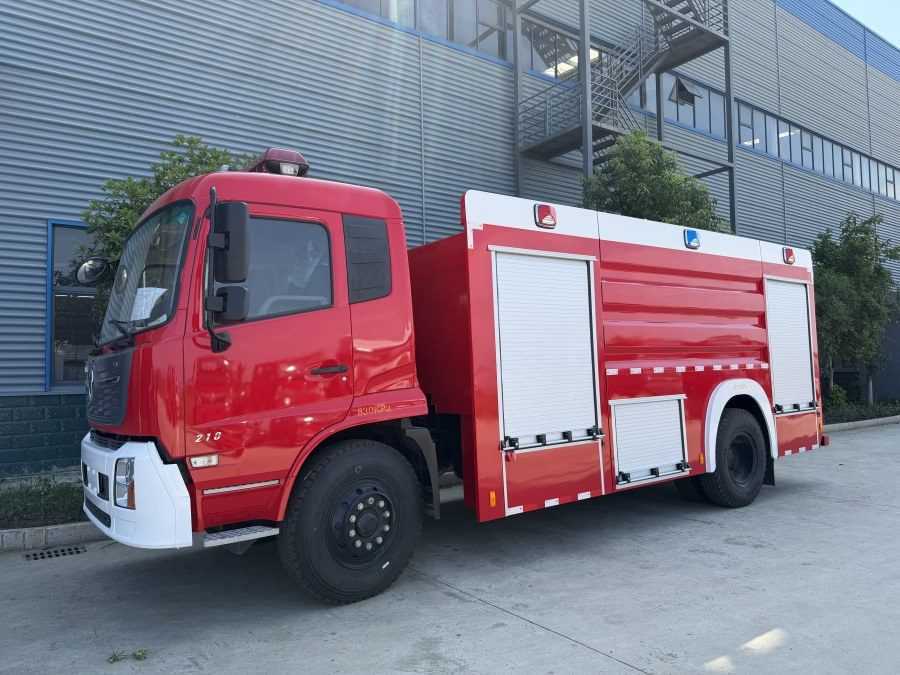
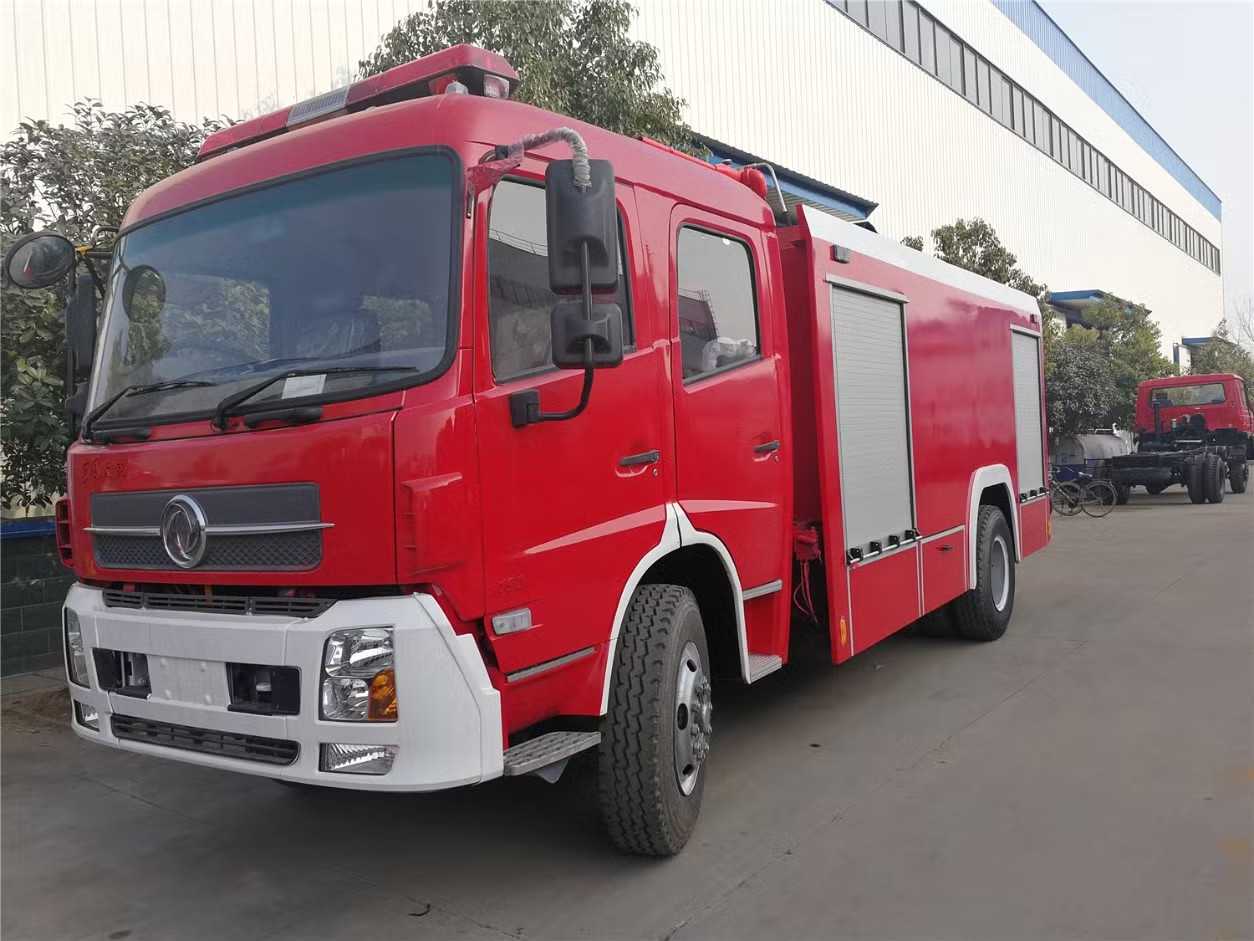
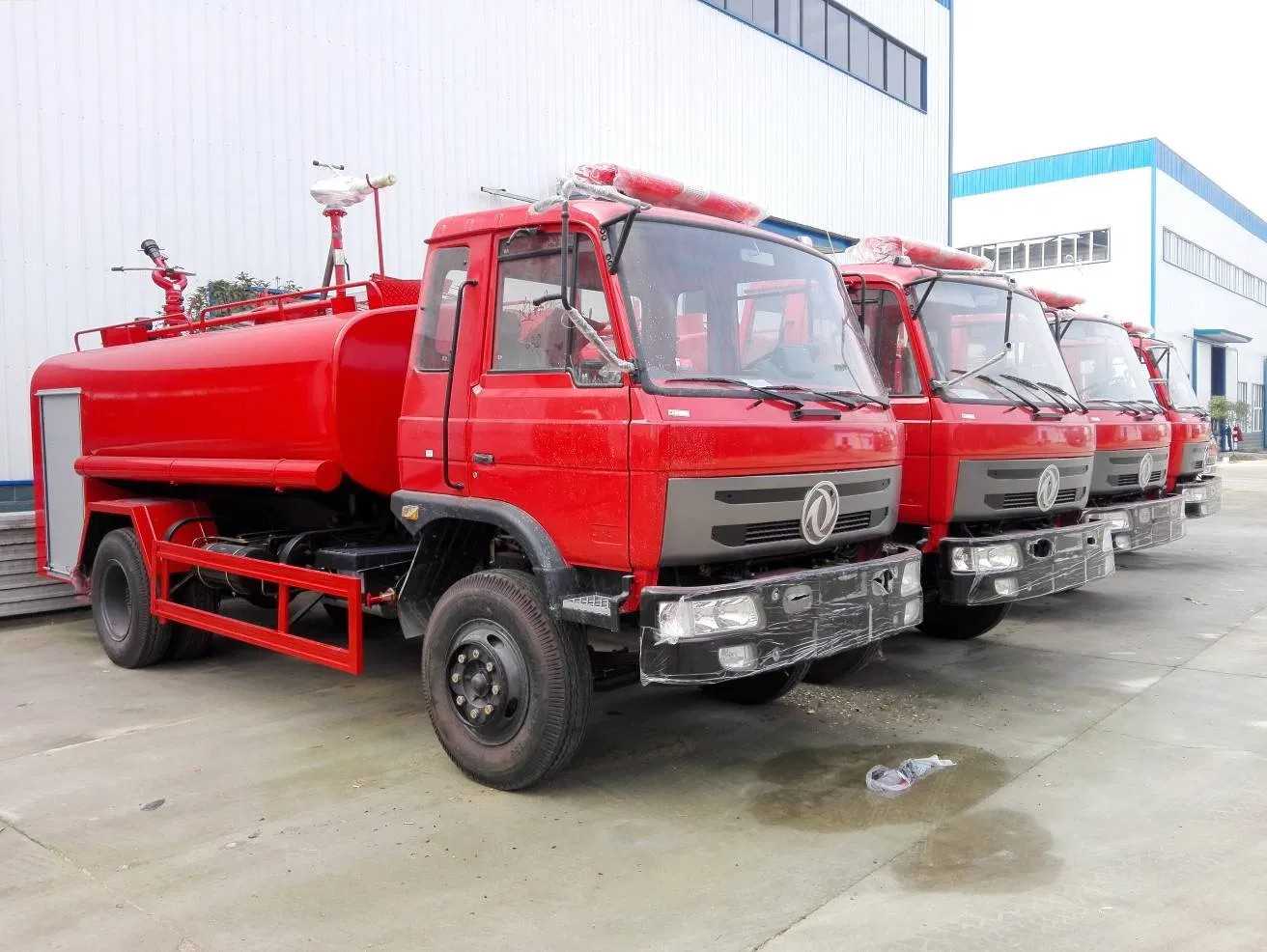
A fire tender is a mobile pumping station built onto a reinforced commercial chassis. Two trucks with identical 8,000-liter tanks can vary widely in fire fighting truck price once chassis origin, steering layout, pump brand, foam metallurgy, and rescue lockers are defined. Final pricing is always issued in a written factory quotation matched to chassis brand, body specification, steering hand, and destination port.
Chassis Brand, Drive Configuration, Steering & Emission Tier
The commercial chassis accounts for roughly 40% to 55% of ex-works build cost on a municipal unit. African buyers typically select across three capacity tiers:
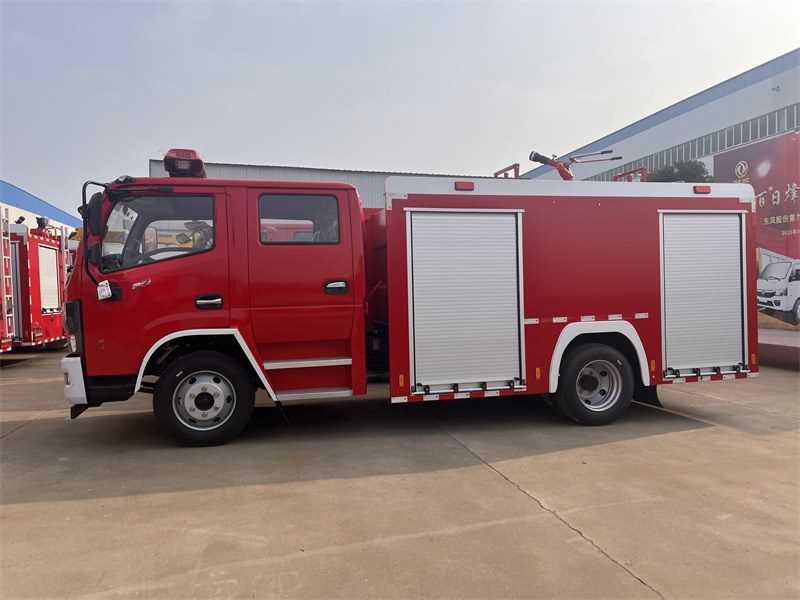
- Compact urban 4x2 (2,600L–4,000L): Agile Foton, Isuzu, or Dongfeng frames—such as a 2600L Foton fire truck—built for tight market lanes and rapid first-response stations.
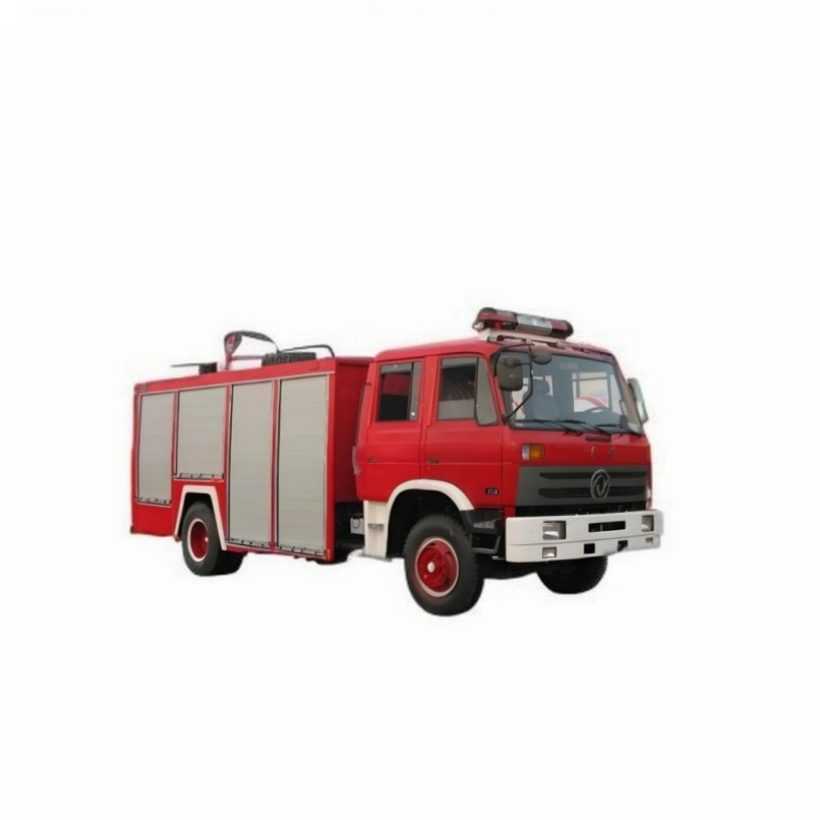
- Core municipal 4x2 (6,000L–8,000L): Heavy 4x2 Dongfeng, Isuzu FTR/FVR, or SINOTRUK HOWO frames. Units like a 6300L Dongfeng fire truck, 7000L Dongfeng fire sprinkler truck, or 4x2 8CBM 7000L water 1000L foam fire truck balance street agility, single-axle service economy, and strong knockdown volume.
- Heavy 6x4 industrial tenders & bulk tankers (10,000L–20,000L): Tandem-axle HOWO, Shacman, or Isuzu FVZ chassis carrying 10,000L–12,000L water/foam bodies, or a 5,000 gallon fire tanker (~19,000L) supplying relay water in hydrant-free districts.
Regional rules shape chassis selection. Nigeria, Ghana, Senegal, Ivory Coast, and Cameroon require Left-Hand Drive (LHD), while Kenya, Tanzania, Uganda, Zambia, Zimbabwe, and South Africa mandate Right-Hand Drive (RHD)—detailed in our LHD and RHD guide. Matching local diesel sulfur is equally vital: sensitive Euro V SCR systems often derate remotely, so municipal fleets favor proven Euro II or Euro III engines with local parts support (emission and chassis options). Oversized radiators, dual-stage air cleaners, and reinforced springs protect uptime in 45°C heat (tropical dust-proof design), while pre-build axle checks keep trucks legal at Mombasa–Nairobi, Dar es Salaam–Lusaka, and Lagos–Ibadan weighbridges.
Tank Metallurgy: Anti-Corrosion Carbon Steel vs 304/316L Stainless Steel
Q235B carbon steel with multi-coat marine epoxy primer is the economical baseline for inland municipal water tanks. However, Class B AFFF and AR-AFFF foam concentrates corrode unprotected carbon steel, creating rust scale that clogs proportioners.
For foam chambers—and coastal cities like Lagos, Mombasa, Dar es Salaam, Tema, or Durban—304 or 316L stainless steel eliminates premature relining despite higher plate cost. Some industrial fleets evaluate polypropylene (PP) tanks for weight savings, though remote workshops repair steel faster. Every tank needs full-penetration welds, anti-slosh baffles, inspection manholes, and an external pump-panel level gauge.
Fire Pump, PTO Drive, Monitor & Foam Proportioning System
Fire pump origin shifts project budgets substantially. Domestic Chinese centrifugal pumps (such as CB10/30, CB10/40, and CB10/60 delivering 30–60 L/s at 1.0 MPa) provide dependable performance, straightforward seal replacement, and economical spare parts. Refineries, port oil jetties, and donor-funded tenders sometimes specify imported European or North American pumps (Hale, Waterous, Godiva, or Rosenbauer), increasing unit cost and production lead time.
- Full-power sandwich PTO with cooling loop: Stationary pumping for two to four hours in tropical heat requires a water-cooled heat exchanger tied into the pump discharge to prevent engine and PTO overheating.
- Vacuum drafting capability: Where street hydrants are dry or absent, specify a piston or rotary-vane primer rated for 7-meter vertical suction lift from rivers or static tanks in 35 to 50 seconds.
- Foam proportioning & roof monitors: Manual around-the-pump eductors and manual roof monitors (45–65 m range) keep municipal budgets lean, while balanced-pressure proportioners and electric joystick monitors suit petrochemical hazards.
Onboard Rescue, Forcible Entry & Firefighter PPE Packages
Never leave "standard firefighting equipment" undefined in a tender. A baseline kit covers suction hoses with strainer, delivery hoses, nozzles, hydrant wrenches, axes, ladders, and foam pickup tubes. Adding hydraulic rescue combi-tools, SCBA sets with spare cylinders, thermal cameras, aluminized proximity suits, ventilation fans, and portable pumps can raise total package cost by 15% to 35%. Always specify local hose couplings—British Standard BS 336 Instantaneous, Storz, or NH—so new tenders match existing brigade hydrants.
| Tender Class & Capacity | Typical Chassis | Pump & Tank Profile | African Deployment | Budget Tier & Reference Unit |
|---|---|---|---|---|
| Urban Compact 2,600L–3,500L Water |
4x2 Foton, Isuzu, Dongfeng | 20–30 L/s pump; epoxy carbon tank; basic hose & ladder kit | Dense markets, estates, rapid first-strike stations | Entry Municipal — 2600L Foton Fire Truck |
| Municipal Water / Sprinkler 6,000L–7,000L Water |
4x2 Dongfeng, Isuzu FTR, HOWO | 30–40 L/s pump; epoxy or 304 SS tank; 45–55 m roof monitor | District halls, highway response, brush & perimeter fires | Core Municipal — 6300L Dongfeng Fire Truck & 7000L Dongfeng Sprinkler |
| Municipal Water & Foam 8,000L (7,000L + 1,000L) |
4x2 Isuzu FVR, Dongfeng, HOWO | 40–60 L/s pump; 304/316L SS foam tank; around-the-pump mixer | City brigades, fuel stations, port warehouses | Mid-High Municipal — 4x2 8CBM 7000L Water 1000L Foam |
| Heavy Industrial Foam 10,000L–12,000L |
6x4 HOWO, Shacman, Isuzu FVZ | 60–80 L/s pump; full 304/316L SS tanks; remote monitor; heavy rescue | Refineries, tank farms, chemical plants, oil jetties | High Industrial — custom 6x4 build quoted to spec |
| Bulk Water Relay Tanker ~19,000L (5,000-Gallon) |
6x4 / 8x4 HOWO, Shacman, FAW | 60 L/s fire/transfer pump; baffled tank; quick-dump valves | Hydrant-free towns, mines supplying frontline pumpers | High-Volume Support — lower cost per liter |
Always budget from ex-works to landed delivery at Apapa, Tema, Mombasa, Dar es Salaam, Durban, or Beira. Total landed cost includes Ro-Ro or breakbulk freight (verify monitor height to avoid over-height fees), marine insurance, destination conformity inspections (SONCAP, KEBS/PVoC, or TBS where required), customs clearance, and a two-year commissioning spare-parts kit (pump seals, primer valves, gauges, filters, gaskets). See our payment and shipping guide and import compliance overview before finalizing budgets.
Municipal Water/Foam Tender vs High-Spec Airport ARFF Budget Gap
Procurement stalls when aviation or mining-airstrip teams benchmark an airport fire truck price against municipal budgets. Though both carry water, foam, and roof monitors, an ICAO Annex 14 / NFPA 414 Airport Rescue and Fire Fighting (ARFF) crash tender sits in a separate engineering class—typically costing four to eight times more than a commercial-chassis municipal unit of equal capacity.
- Full-load acceleration & off-runway mobility: ICAO rules demand 0–80 km/h in 25 to 35 seconds at full GVW, requiring 500–750+ HP powerpacks, automatic or twin-engine drives, and purpose-built 4x4, 6x6, or 8x8 AWD chassis for soft verges.
- True pump-and-roll discharge: Municipal trucks stop and engage PTO; ARFF tenders discharge full-pressure foam from roof and bumper turrets while driving beside burning aircraft.
- Complementary agents & protection: ARFF builds add pressurized dry chemical powder (DCP), under-truck deluge nozzles for Jet-A1 pools, heat-shielded cabs, and optional piercing booms.
For regional or mine airstrips under lower ICAO categories, over-specifying a 6x6 ARFF unit drains capital budgets, while a street water truck fails aviation audits. Matching exact aerodrome categories—and separating terminal/fuel-farm municipal foam trucks from runway rapid-intervention units—protects safety and public funds.
| Engineering Factor | Municipal Water/Foam (3,000L–12,000L) | Industrial / Petrochemical Foam | Airport ARFF Crash Tender |
|---|---|---|---|
| Chassis | 4x2 or 6x4 commercial frame | Heavy 6x4 or 8x4 commercial frame | Purpose-built 4x4, 6x6, or 8x8 AWD |
| Acceleration | Standard highway gearing | High-torque industrial road gearing | 0–80 km/h in ≤25–35 s at full GVW |
| Pump Mode | Stationary PTO (30–60 L/s) | High-output stationary (60–100 L/s) | Full pump-and-roll (80–150+ L/s) |
| Foam & Agents | 500L–2,000L foam; eductor mixer | 2,000L–4,000L AR-AFFF; balanced mix | High-flow AFFF + DCP + under-truck deluge |
| Relative Cost Tier | 1× Municipal Baseline | ~1.4×–2.2× Municipal Baseline | ~4×–8×+ Municipal Baseline |
Awarding a low-pressure road-watering sprinkler truck to cut upfront fire truck costs fails when hazards involve petrol stations, oil depots, or transformer yards. Agricultural sprinkler pumps cannot sustain the 1.0 MPa pressure needed to aspirate stable Class B foam blankets or reach upper floors, and unlined carbon steel tanks corrode rapidly if filled with foam concentrate.
8-Point Pre-Shipment Factory Acceptance Test (FAT) for Fire Trucks
Whether your ministry sends inspectors to Suizhou or appoints SGS, Bureau Veritas, or Intertek alongside live video witness testing, verify these eight checkpoints before balance payment:
- Continuous Full-Load Pump Endurance: Run at rated flow and 1.0 MPa for 60–120 minutes, verifying steady pressure, safe coolant and PTO temperatures, and zero mechanical-seal drip.
- Dry Vacuum Priming & Suction Lift: Draft from an unpressurized pit at 3–7 m vertical lift, confirming dry priming to steady discharge within 35–50 seconds.
- Foam Proportioning & Flush Check: Test 3% and 6% mixing across varying flows, confirm check valves stop foam backflow, and verify the fresh-water flush circuit.
- Roof Monitor Range & Stability: Verify 50–65+ m throw distance, smooth 360-degree rotation, elevation locks, and mounting rigidity under full recoil.
- Tank Hydrostatic & Coating Audit: Fill water and foam tanks to overflow for zero-weep seam checks; confirm epoxy dry-film thickness on carbon steel or weld passivation on stainless steel.
- Locker Shutters, Trays & Dust Seals: Cycle aluminum roller shutters one-handed, hose-test gasket seals, and verify loaded slide-out trays latch cleanly for rough roads.
- Electrical Load & Warning Audit: Run LED lightbars, strobes, siren, compartment LEDs, and scene floodlights simultaneously while checking alternator charge stability.
- Laden Road, Axle-Weight & Identity Check: Test full-GVW braking and steering, weigh axles against highway limits, and verify VIN, engine serial, LHD/RHD layout, and safety placards against shipping papers.
Tender Documentation, Drawings & Factory Inspection Support
Government fire services and EPC contractors need audit-ready engineering dossiers before bid submission or Letter of Credit opening. Confirm your supplier delivers:
- Dimensioned General Arrangement (GA) CAD drawings detailing dimensions, wheelbase, turning radius, locker layout, and laden axle-weight calculations.
- Pump curves, schematics, and steel material certificates verifying plate grades and hydraulic output.
- Bid credentials & manuals: Manufacturer Authorization Letters (MAL), warranties, spare-parts schedules, English/French manuals, and factory quality-system records (certificates overview—noting ISO management certificates verify factory quality processes, while destination vehicle homologation and pre-shipment conformity follow each importing country's rules).
- Bulk-delivery proof: Completed fleet exports like CLW's 86 Isuzu FTR fire trucks bulk export shipment prove batch production consistency, standardized FAT sign-off, and port marshalling.
Coordinate with our tender support desk for compliance matrices and GA drawings, or book an on-site or live-video factory tour to inspect welding bays and pump test pits firsthand.
Frequently Asked Questions on Fire Truck Costs & Procurement
What drives the cost gap between a 3,000L, 8,000L, and 5,000-gallon fire tanker?
Each capacity step upgrades chassis and pump class. Moving from a 3,000L light 4x2 to an 8,000L water/foam tender adds heavier axles, a 40–60 L/s pump, and a stainless foam tank. A 5,000-gallon (~19,000L) bulk tanker requires a 6x4 or 8x4 chassis, though pure relay tankers cost less per liter than equipped foam pumpers.
Should African fire brigades choose carbon steel or stainless steel tanks?
Inland water-only trucks run economically on epoxy-lined Q235B carbon steel. Any compartment storing AFFF/AR-AFFF foam—and any unit stationed in coastal ports like Lagos, Mombasa, Tema, Dar es Salaam, or Durban—benefits from 304 or 316L stainless steel to prevent corrosion and blocked proportioners.
Can a standard municipal foam fire truck serve as an airport ARFF vehicle?
Not for regulated runways requiring ICAO Annex 14 or NFPA 414 certification. Commercial municipal chassis cannot meet 0–80 km/h full-load acceleration, off-runway AWD mobility, or high-output pump-and-roll rules. Municipal tenders fit terminal buildings and fuel depots; runways require category-matched ARFF specs.
How are fire trucks shipped to African ports and what inspections apply?
Most 3,000L–12,000L tenders ship via Ro-Ro or breakbulk to Apapa, Tema, Mombasa, Dar es Salaam, Durban, or Beira, with monitors lowered if height optimization cuts freight. Mandatory destination conformity checks (SONCAP, PVoC, or TBS) and FAT reports finish before loading to avoid demurrage.
Fire Tender Quotation Request Template
Structured inquiries cut engineering turnaround time and prevent apples-to-oranges supplier quotes. Send these five details to receive a written FOB or CIF quotation, GA drawing, and recommended spare-parts list.
Prepare Your 5-Point Fire Truck Inquiry Brief
Share these operational parameters to receive an itemized factory quotation and preliminary GA layout for your tender or fleet budget:
- Capacity & Tank Material: Water and foam split (e.g., 3,000L water, 7,000L water + 1,000L foam, 12,000L industrial foam, or 5,000-gallon relay tanker) plus epoxy carbon steel or 304/316L stainless steel preference.
- Chassis, Drive & Steering: Brand (Isuzu, Dongfeng, Foton, HOWO, Shacman), 4x2/6x4/4x4 drive, LHD or RHD steering, and local emission tier (Euro II–V).
- Pump, Monitor & Couplings: Target flow (30, 40, 60, or 80+ L/s), Chinese vs. imported pump, manual vs. remote monitor, and local coupling standard (BS 336, Storz, or NH).
- Crew Cab & Rescue Gear: Double-cab seating (2+4 or 3+3) and whether to quote baseline hose/nozzle gear or full SCBA, hydraulic rescue tools, and PPE.
- Port, Quantity & Inspection Terms: Unit count, FOB China or CIF destination port (Apapa, Tema, Mombasa, Dar es Salaam, Durban, Beira), required FAT/PVoC/SONCAP certificates, and target tender deadline.