Fleet enquiries for Africa[email protected]

Fire Truck CLW

Dongfeng 2,500L Fire Truck for Narrow Urban Streets & Market Districts

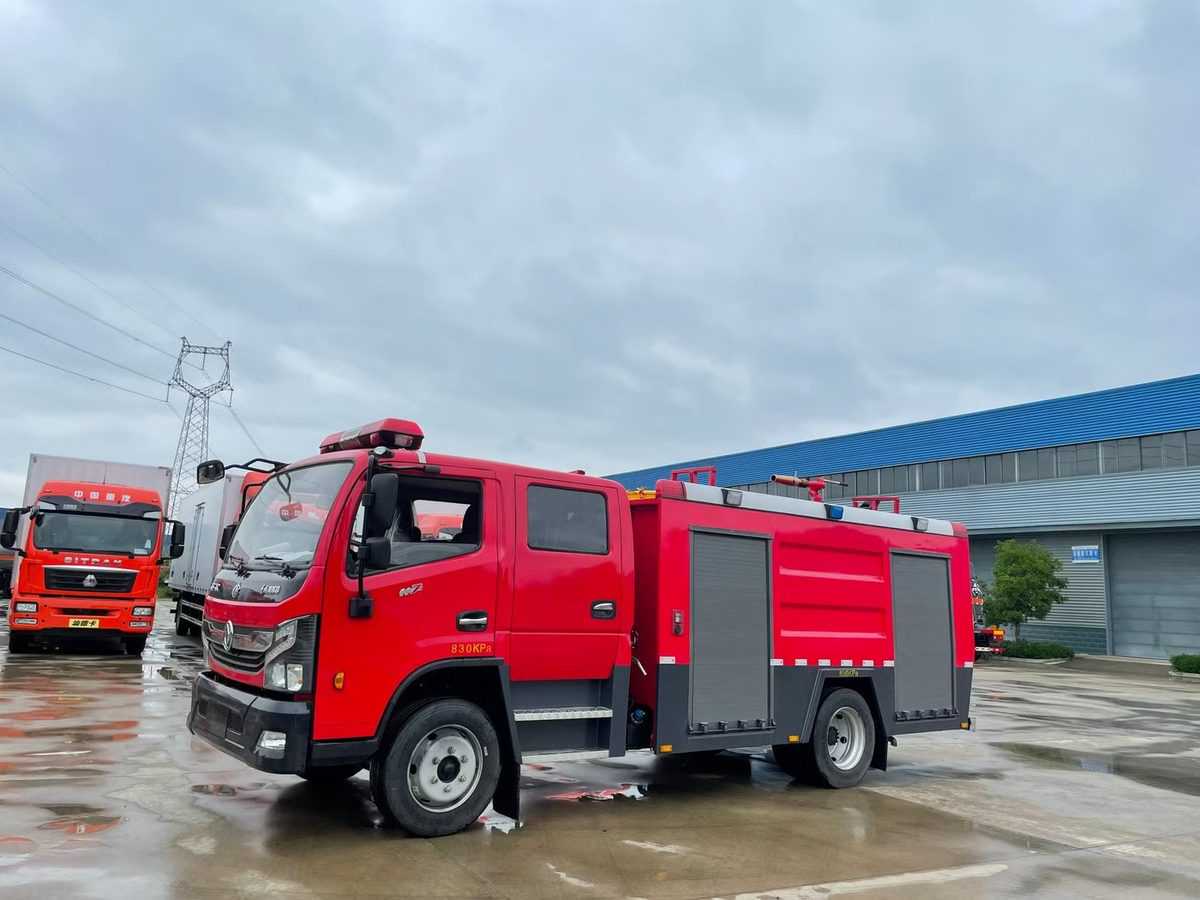
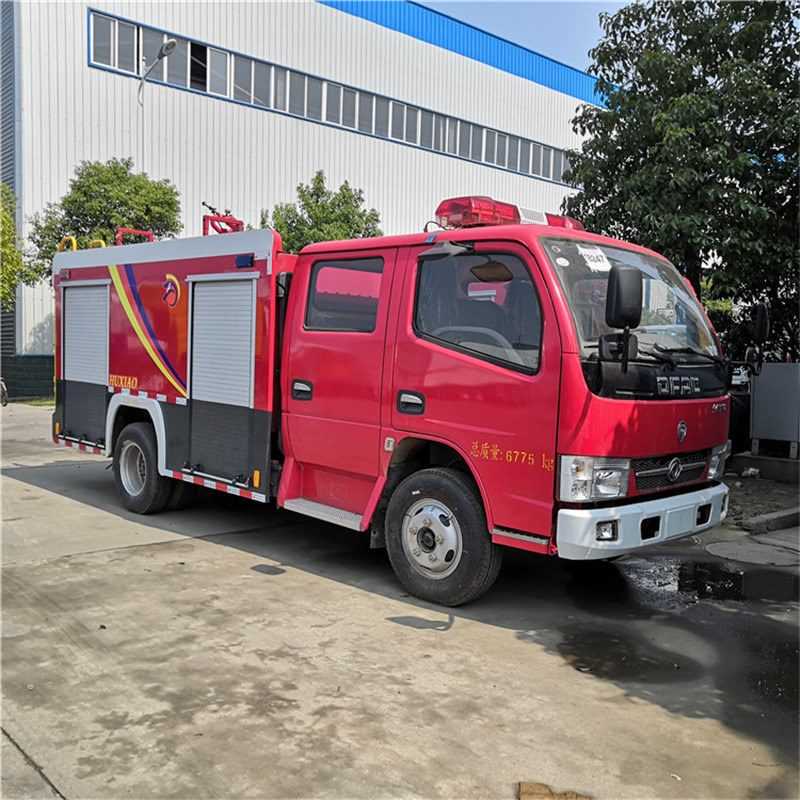
Built on the narrow 1,980 mm Dongfeng EQ1075DJ3CDF 4×2 chassis, this 2,500 L rapid-intervention fire fighting truck reaches congested African market lanes, old-town alleys, and dense peri-urban neighborhoods where full-size tenders cannot pass. Its 7.1-ton GVW and onboard fire pump enable fast first-strike water knockdown.

01 / Capability

Understand what the specification means.

Tight-Alley Dimensional Footprint

6,040 × 1,980 × 2,830 mm on a 3,308 mm wheelbase

Navigates narrow market passages, tight 90-degree township corners, and low-clearance residential gates.

Operating conditions
Applies to the standard CLW5070GXFSG25/DF body with 1,040 mm front and 1,692 mm rear overhang.
What affects the result
Street-side encroachment, turn-in obstacles, curb height, and driver familiarity with urban clearance.

First-Strike Water Reserve

2,500 L water tank (approx. 2.5–5.0 minutes attack at 8–16 L/s)

Suppresses incipient kiosk, stall, and single-room structure fires immediately upon arrival before flashover spreads.

Operating conditions
Estimated from the 2,500 L nominal water capacity operating a single rapid-attack hose line or light monitor.
What affects the result
Pump discharge setting, nozzle fog/jet pattern, intermittent vs. continuous application, and hydrant refill proximity.

Fast Sub-Station Dispatch

Up to 100 km/h max speed at 7,135 kg GVW

Reaches dispersed township callouts quickly while remaining light enough for neighborhood bridges and unpaved aprons.

Operating conditions
Based on paved road travel with the <150 hp Yuchai/Quanchai diesel engine and manual transmission.
What affects the result
Traffic density, road surface condition, slope gradients, and local urban response speed limits.

02 / Specification

The vehicle, system by system.

Across many fast-growing African cities, fire trucks lose critical minutes because full-width heavy tenders cannot squeeze past market stalls, parked minibuses, and tight township corners. The CLW Fire Fighting Truck (CLW5070GXFSG25/DF) solves that first-strike bottleneck on a light-duty Dongfeng EQ1075DJ3CDF 4×2 chassis measuring just 6,040 mm long and 1,980 mm wide on a tight 3,308 mm wheelbase.

Narrow-Street Agility & First-Strike Readiness

With a 7,135 kg gross vehicle weight and 4,260 kg curb weight, this rapid-intervention unit carries 2,500 L of water in a compact 2,060 × 1,000 × 1,270 mm tank without stressing neighborhood culverts or unpaved side alleys. A sub-150 hp Yuchai or Quanchai diesel engine with a manual gearbox delivers brisk urban acceleration and up to 100 km/h transit speed on ring roads, while standard 7.00R16 / 7.00R16LT 14PR tires keep replacement costs low.

  • Market & Old-Quarter Access: The sub-2.0 m body width threads through narrow commercial lanes and high-density residential compounds where larger 2.5 m fire trucks stall.
  • Immediate Water-Pump Attack: Equipped with an onboard fire pump and roof fire monitor to contain incipient structure, kiosk, and roadside fires before they spread across adjacent roofs.
  • Budget-Efficient Fleet Expansion: Entry-level FOB pricing makes it practical to station multiple rapid-response units across district sub-posts, with tiered volume discounts and phased batch delivery for municipal programs.

Before ordering, stations specify steering side (LHD or RHD), Euro 2–6 emission compliance, coupling standard, and auxiliary strobe lighting to match local brigade operations.
Chassis & powertrain
Vehicle Model No.
CLW5070GXFSG25/DF
Chassis Model
Dongfeng EQ1075DJ3CDF (4×2)
Engine Brand & Output
Yuchai / Quanchai Diesel, <150 hp
Emission Standard
Euro 2 / 3 / 4 / 5 / 6 configurable
Transmission
Manual
Wheelbase
3,308 mm
Front / Rear Overhang
1,040 / 1,692 mm
Tire Specification
7.00R16 / 7.00R16LT 14PR
Body & tank
Body Type
Compact Water Tank Fire Truck (Tanker)
Overall Dimensions (L×W×H)
6,040 × 1,980 × 2,830 mm
Water Tank Capacity
2,500 L (2.5 m³)
Tank Dimensions
2,060 × 1,000 × 1,270 mm
Locker Architecture
Narrow-body side equipment bays with rear pump access
Working equipment
Primary Firefighting Hardware
Onboard Fire Pump and Roof-Mounted Fire Monitor
Extinguishing Agent
Water
Power Take-Off
Manual transmission PTO drive for fire pump
Attack Configuration
Roof water monitor plus ground-level hose outlets for narrow-lane entry
Operating performance
Gross Vehicle Weight (GVW)
7,135 kg
Curb Weight
4,260 kg
Rated Payload
2,500 kg
Maximum Road Speed
100 km/h
Safety equipment
Visual Warning Package
Emergency roof beacon bar with optional red strobe lights
Load-Rated Light Truck Tires
7.00R16LT 14PR heavy-ply radial tires suited to 7.1-ton loaded stability
Compact Overhang Geometry
1,040 mm front and 1,692 mm rear overhang reduces tail-swing in narrow lanes
Configuration options
Red Strobe Lights
Optional auxiliary red LED strobes for crowded urban traffic
Steering Side
Left-hand drive (LHD) or right-hand drive (RHD)
Rapid-Attack Hose Reel
Optional high-agility small-bore hose reel for alley entry
Suction Hose & Strainer Set
Optional draft kit for drawing water from open tanks or ponds

03 / Applications

Choose for the work ahead.

Suitable duties

  • High-density urban markets, informal retail clusters, and historic narrow-lane quarters
  • Decentralized neighborhood fire sub-stations needing affordable rapid-attack units
  • Townships with narrow culverts, speed bumps, and tight residential entrances
  • First-responder brigades operating alongside larger municipal water-supply tankers
  • Fleets seeking widely stocked 7.00R16 tires and simple Yuchai/Quanchai diesel servicing

Outside the intended duty

  • Sustained multi-building or large warehouse fires without external hydrant or tanker relay
  • Flammable liquid pool fires at fuel depots requiring dedicated onboard foam tanks
  • Muddy, deeply rutted rural bush trails requiring 4×4 all-wheel drive
  • Heavy industrial hazard protection requiring 10,000+ L water-foam volume

04 / Procurement

A clearer brief. A better fleet fit.

  • Destination country, port, and steering side (LHD/RHD)
  • Local fuel quality and required Euro 2–6 emission tier
  • Minimum street width and station doorway clearance constraints
  • Hose diameter, coupling standard, and drafting suction depth needs
  • Number of sub-station units and preferred phased shipping batches
Why is the 1,980 mm width important for African urban fire brigades?

Most medium and heavy fire trucks measure 2,350 to 2,550 mm wide, which often blocks access into traditional markets and dense residential alleys. At 1,980 mm wide on a 3,308 mm wheelbase, this truck reaches the seat of the fire directly instead of laying hundreds of meters of hose from a main road.

How is a 2,500 L fire truck typically deployed in a municipal fleet?

Brigades and fire departments typically deploy 2,500 L units as fast first-attack vehicles stationed close to congested markets or townships, extinguishing early-stage fires immediately or holding the fire line until a 7,000–16,000 L relay tanker arrives.

Can these compact fire trucks be shipped economically in batches?

Yes. Their compact 6,040 × 1,980 × 2,830 mm dimensions make multi-unit export efficient via RO-RO, bulk vessel, or flat-rack shipping, and Chengli provides tiered volume pricing and phased batch delivery for multi-station orders.

Buying guide

Plan the right specification.

Your fleet. Your requirements.

Let’s configure your next vehicle.

Share the duty, destination and quantity. Include the details below so CLW can prepare a configuration and quotation for your project.

[email protected] ↗