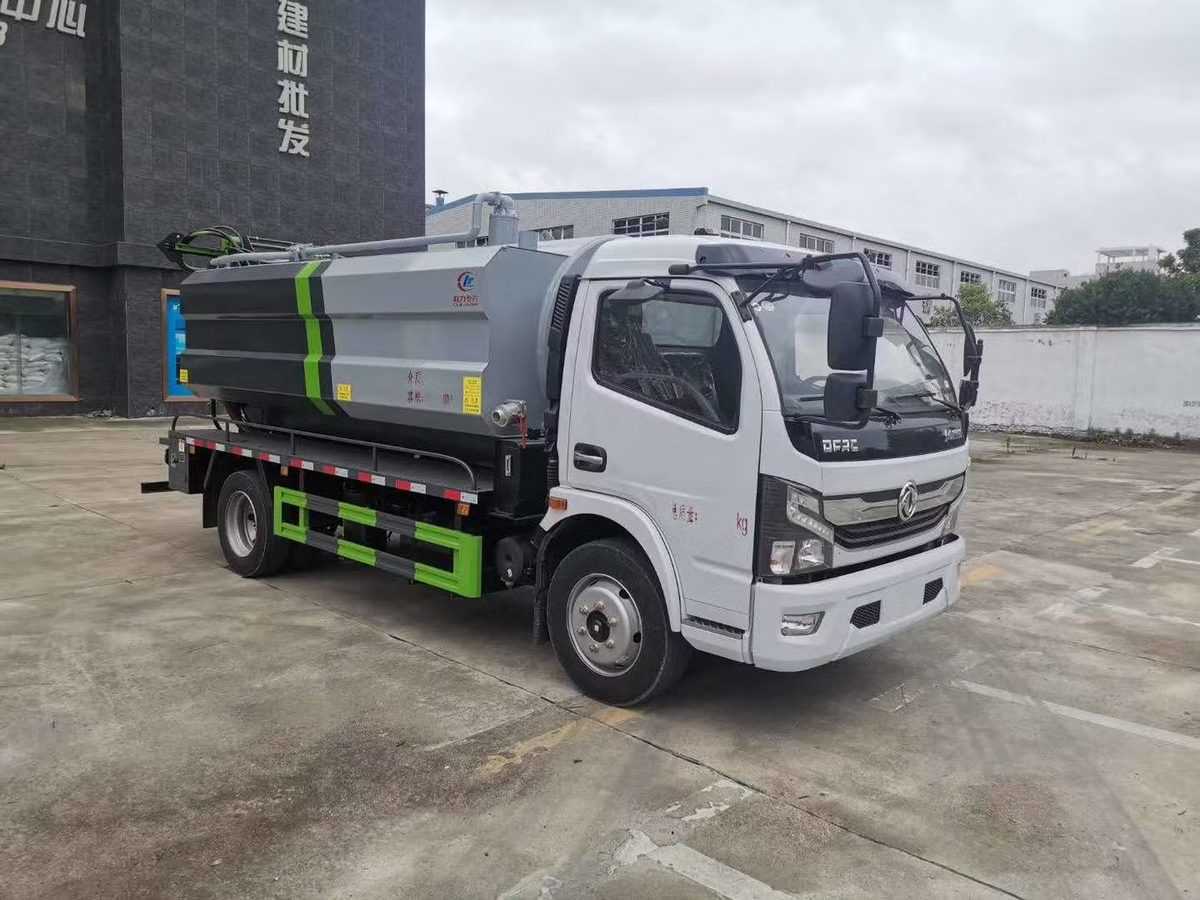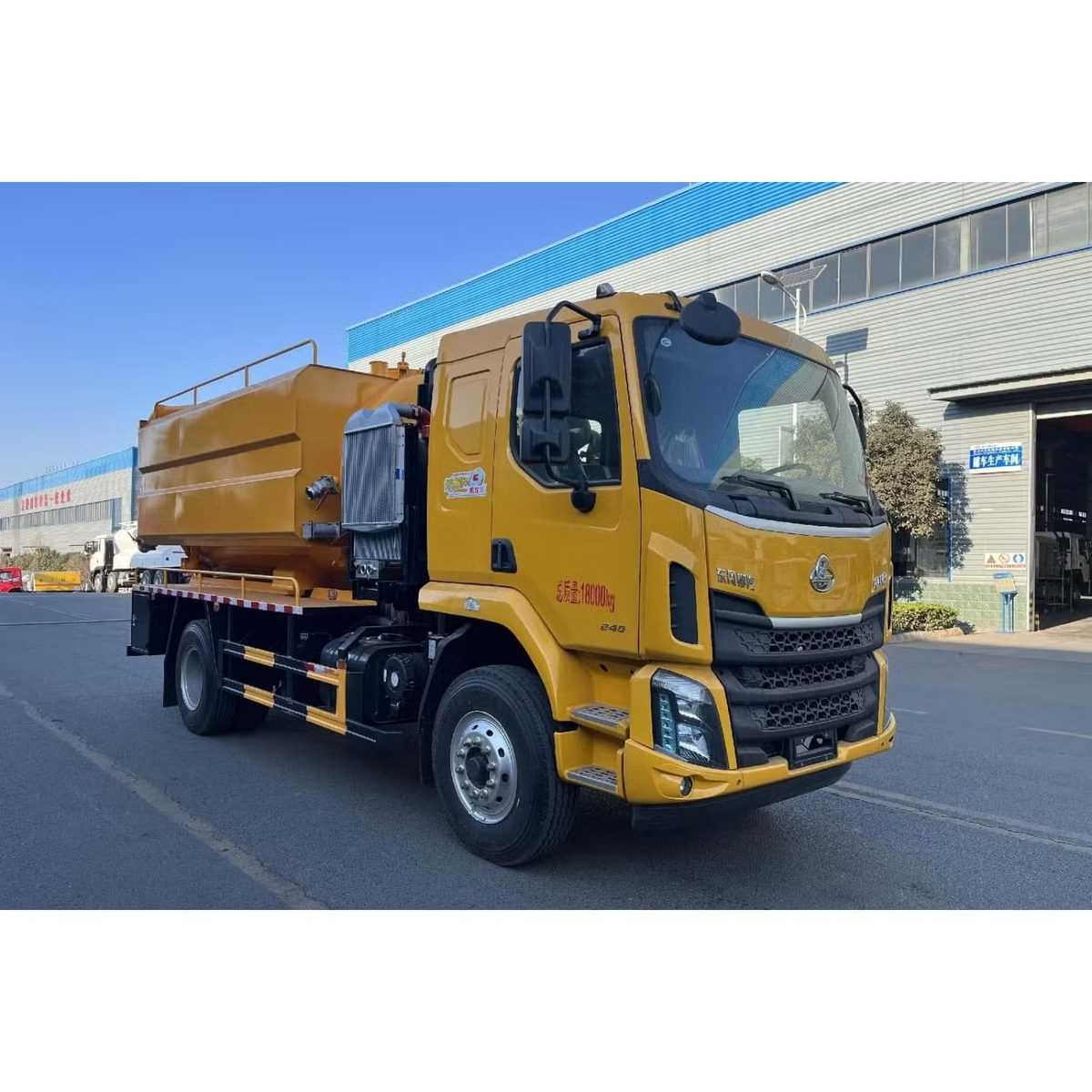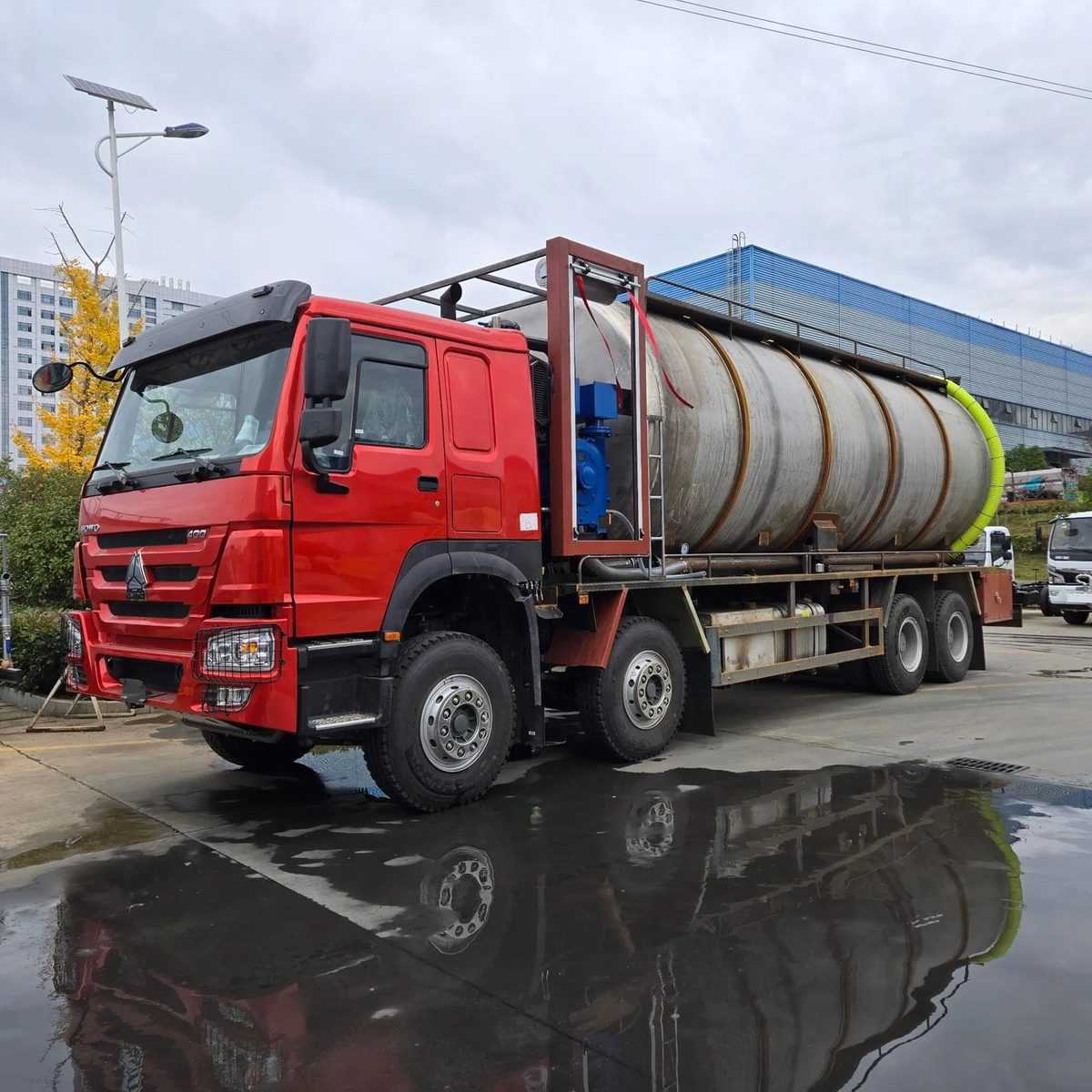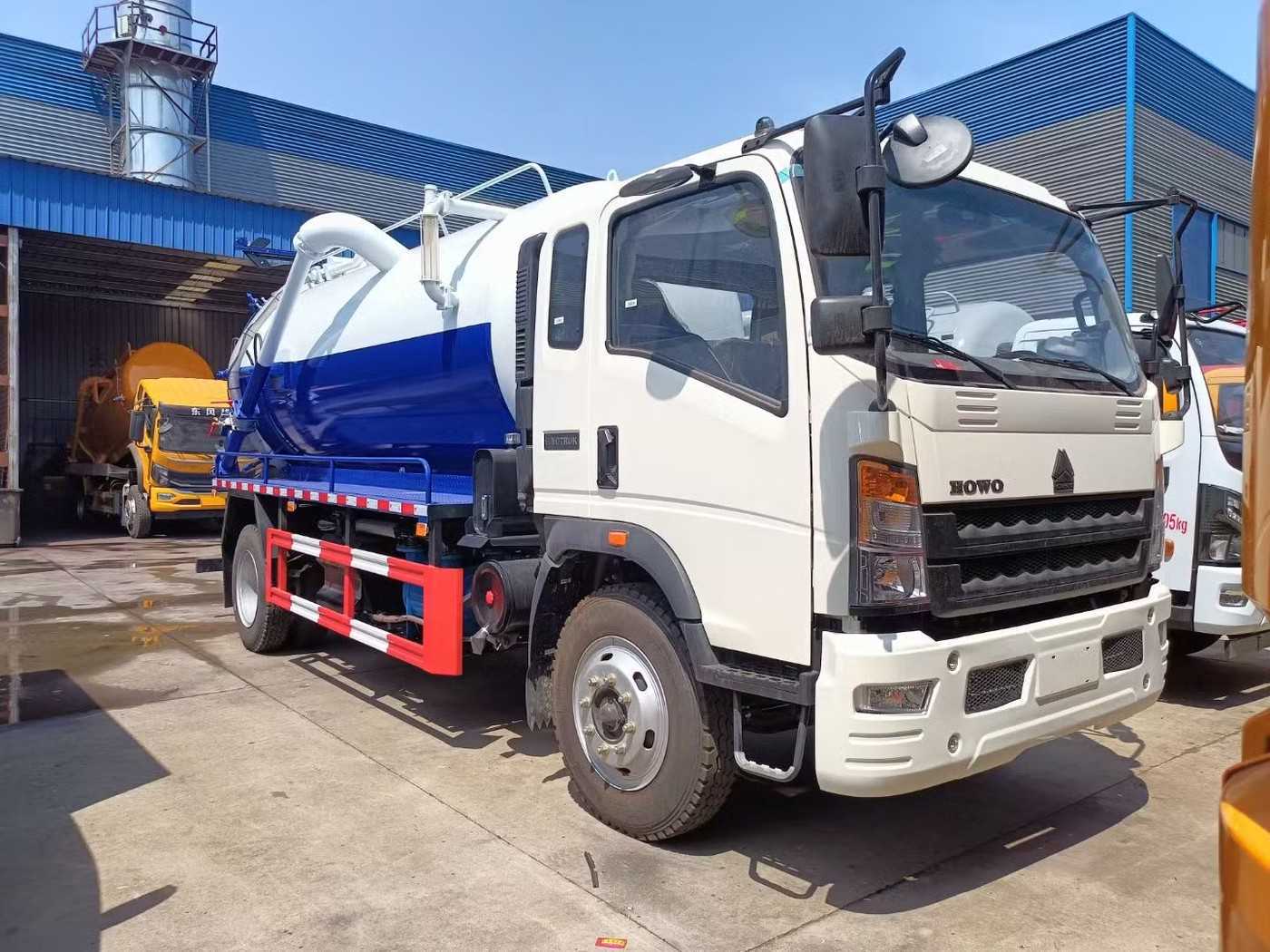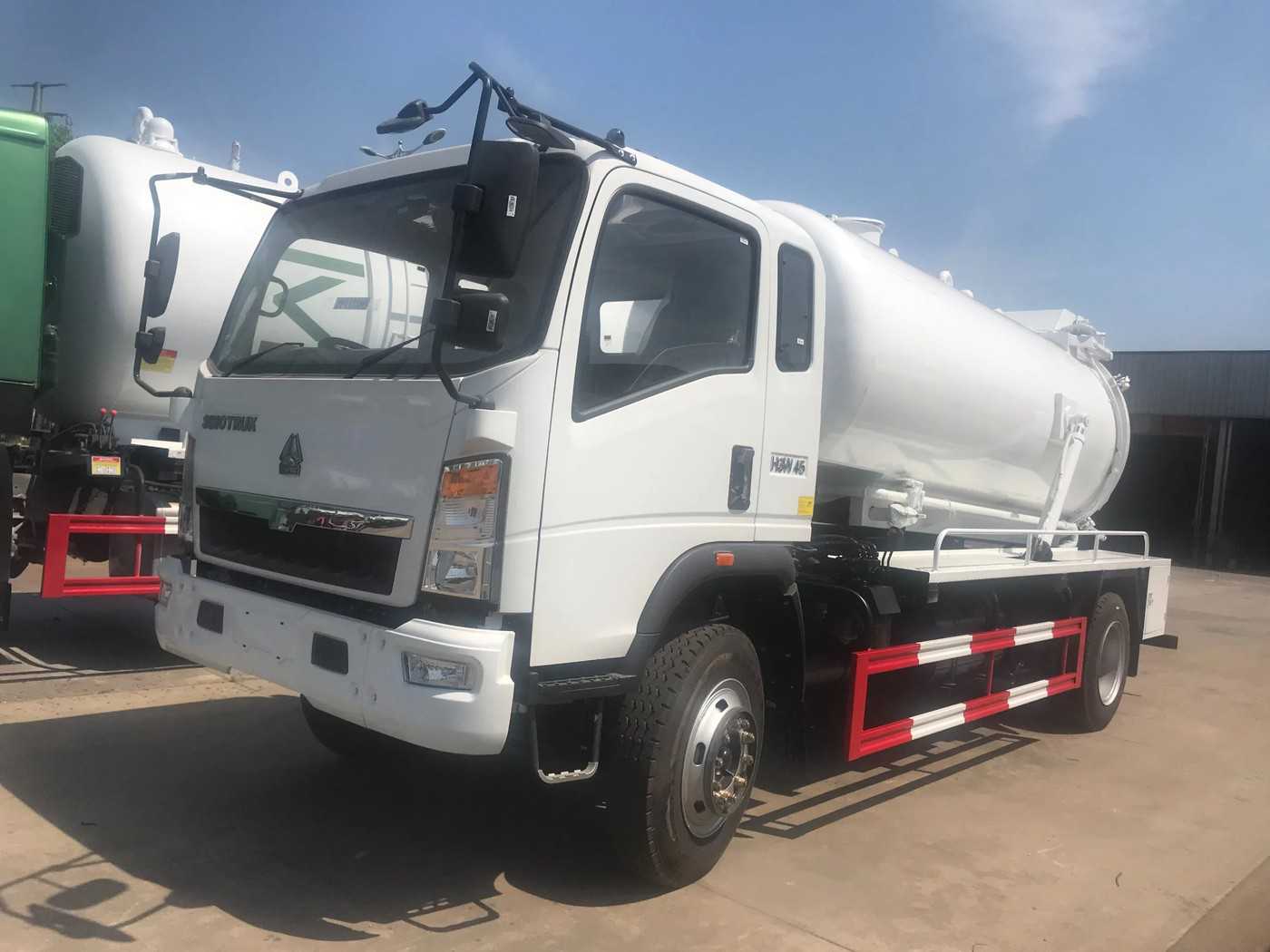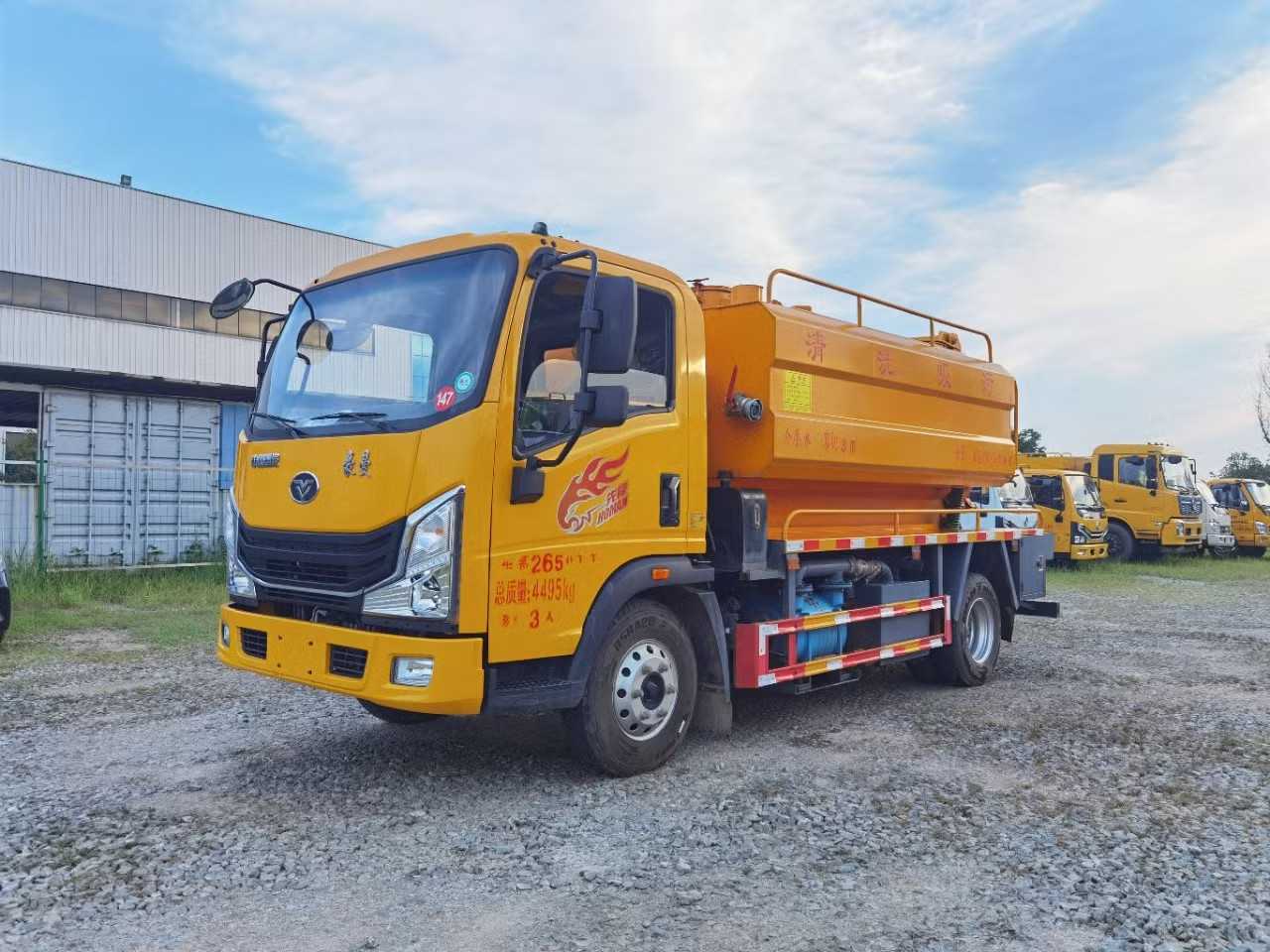
Every rainy season across Lagos, Accra, Nairobi, Dar es Salaam, Kampala, and Lusaka, water utilities and drainage contractors face blocked catch basins, silted box culverts, and surcharging manholes. When planning a sanitation fleet purchase, the key engineering choice is between a standard vacuum suction truck—often called a gully sucker or cesspool emptier—and a combined high-pressure water jetting and vacuum unit, widely known across Africa as a vactor truck or sewer jetting truck.
Mismatched equipment drains budgets quickly. Sending a vacuum-only tanker to storm drains packed with hardened laterite sand forces crews to dig blockages by hand, while using a combined jetting truck solely for liquid septic tanks underutilizes expensive pumping hardware. Below is a practical engineering and procurement comparison built for African operating conditions.
Standard Sewage Suction Truck vs Combined Jetting-Vac (Vactor) Truck
Both vehicles mount a cylindrical pressure-rated tank on a commercial truck chassis, yet their internal plumbing, drive layout, and daily workflows target very different waste streams.
Standard Vacuum Suction Truck (Gully Sucker)
A unit from our sewage suction truck lineup pairs a single sludge tank with a PTO-driven rotary-vane or liquid-ring vacuum pump. Evacuating air from the sealed drum draws liquid sewage, pit-latrine slurry, and wet mud through a 100–150 mm flexible suction hose. Heavy units like the CLW5310GQW sewage suction truck add a hydraulic full-opening rear door and dual tipping cylinders to dump thickened sludge cleanly at treatment lagoons. Because 100% of tank volume carries waste and the single-PTO driveline stays simple, fuel burn and workshop upkeep remain low.
Combined Sewer Jetting (Vactor) Truck
A combined vactor truck integrates high-pressure water jetting and heavy vacuum recovery onto one chassis. The tank splits into clean-water and sludge chambers (or uses side clean-water saddle tanks), while a split-shaft transfer case or twin-PTO drive runs both a triplex plunger water pump and a vacuum pump or blower.
On site, operators feed a thermoplastic jetting hose from a rear hydraulic reel into a blocked line. Rearward water jets propel the nozzle up to 100 meters while slicing hardened grease, sand cakes, and roots. Rewinding the reel flushes debris back to the manhole where the vacuum boom recovers the slurry simultaneously. For unpaved peri-urban routes, off-road drivetrains can also be engineered along the lines of our UN Dongfeng 6x6 all-wheel-drive tank truck deployments.
| Engineering Parameter | Standard Vacuum Truck (Gully Sucker) | Combined Jetting-Vac (Vactor) Truck |
|---|---|---|
| Tank Layout | Single sludge tank (100% waste volume) | Split clean-water + sludge tank (30/70 or 40/60) |
| Pump Drive | Single PTO + rotary-vane or water-ring pump | Split-shaft transfer case / dual PTO + HP water + vacuum pump |
| Target Waste | Liquid septage, pit latrines, wet grease traps | Compacted silt, hardened culverts, blocked sewer mains |
| Water Dependency | None during suction; optional small wash tank | Requires filtered water refills for jetting tank |
| On-Site Crew | 1 driver + 1 hose handler | 1 operator + 1–2 reel/manhole assistants |
| Maintenance | Low: belts, oil, seals, relief valves | Moderate-high: HP plungers, unloader valves, reel, nozzles |
| Chassis Range | 4x2 (4–10 m³), 6x4 (12–16 m³), 8x4 (18–22 m³) | 4x2 (6–10 m³), 6x4 (12–16 m³), 8x4 (18–20 m³) |
When a Combined Jetting Truck Saves Money and Manpower
Many African municipalities start with pure vacuum tankers to minimize upfront spend, then hit a physical wall during peak rains. Vacuum suction lifts liquids and loose slurry effectively, but negative air pressure cannot break dry, stratified sediment.
Across coastal West Africa and East African cities, open shoulders wash dense laterite silt, polythene bags, and cooking oils into catch basins and culverts. Baked by dry-season heat, that deposit hardens like weak mortar. Sending a standard gully sucker either pulls off only the top water layer—leaving 80% of the sand untouched—or forces dispatch of a second water bowser plus manual laborers with iron bars and buckets.
Manual entry into deep manholes brings serious hydrogen sulfide (H2S) gas risks, prolonged traffic closures, and slow daily output. A combined sewer jetting truck breaks, flushes, and vacuums blockages from street level in one pass, replacing a two-truck convoy and multiplying cleared meters per shift.
High-ROI African Applications
- Municipal Stormwater & Trunk Sewers: Pre-rainy-season desilting of 300–1,200 mm concrete pipes and box culverts across flood-prone districts.
- Ports & Logistics Terminals: Clearing container-yard trenches and oil-water interceptors at Apapa, Tema, Mombasa, Dar es Salaam, Durban, and Beira so flooding never stalls cargo.
- Industrial Estates & Food Plants: Cutting saponified fat, brewery solids, and sediment inside factory effluent lines where manual rodding fails.
- Highway & Airport Culverts: Rehabilitating long underground runs without trench excavation or daytime lane closures.
Most African utilities achieve the lowest cost per cubic meter removed by pairing both truck types. Deploy high-volume suction models like the CLW5310GQW heavy vacuum tanker for routine septic emptying, and dedicate combined vactor units to blocked trunk sewers, market gullies, and silted storm drains.
Critical Specs: High-Pressure Pump (bar & L/min), Clean/Sewage Tank Split & Jetting Nozzles
Two combined trucks with identical tank volume perform very differently depending on pump matching, tropical cooling, tank steel, and axle loading. Verify five specifications before signing an order.
1. High-Pressure Water Pump: Pressure (bar) vs Flow (L/min)
High pressure cuts hardened crusts, while high water flow (L/min) creates the sweeping current needed to move heavy gravel back to the suction manhole.
- 160–180 bar at 170–215 L/min: Suited for 150–450 mm residential laterals, estate manholes, and grease-line flushing on 4x2 trucks.
- 200–240 bar at 250–330 L/min: Built for 500–1,200 mm municipal trunk lines, silted culverts, and port drains on 6x4 or 8x4 chassis.
Require continuous-duty pump ratings, ceramic plungers, forged-brass or stainless manifolds, an adjustable unloader valve, and an inline stainless Y-strainer protecting plungers from gritty refill water.
2. Vacuum Pump Cooling for Tropical Heat and Dust
- Rotary-Vane Pumps: Compact and economical with deep vacuum (85–90%) for residential septage, requiring disciplined oil checks and enhanced cooling fins in 40°C+ ambient heat.
- Water-Ring Vacuum Pumps: Circulating water seals and cools the impeller continuously, preventing thermal seizure during long shifts and tolerating wet vapor carryover.
- Roots Positive Displacement Blowers: Mounted on heavy vactor units to deliver 2,500–4,500+ m³/h airflow that conveys semi-dry sand and stones out of deep manholes.
Always specify primary and secondary anti-overflow float shutoffs, a cyclone separator, and tropicalized engine cooling aligned with our tropical and dust-proof truck design standards.
3. Clean/Sewage Tank Split and Shell Metallurgy
A 30% clean water / 70% sludge split fits cities with nearby hydrants, maximizing waste payload per trip. A 40% clean water / 60% sludge split—or side saddle tanks—extends jetting autonomy where water points are scarce. Specify Q235B or Q345B carbon steel (6–8 mm shell thickness) with external stiffening rings and heavy internal epoxy lining, or 304 stainless steel for acidic industrial and saline coastal wastewater.
4. Jetting Hose Reel, Hydraulic Boom & Nozzle Kit
Order a rear hydraulic reel holding 60–100 m of 19 mm or 25 mm abrasion-resistant thermoplastic jetting hose with variable-speed rewind and level-wind guide, paired with a 180°–270° rotating suction boom. Include a multi-nozzle kit: a chisel penetrator for solid plugs, a rear-thrust flushing nozzle, a radial/chain cutter for roots and grease, and a bottom-crawler sand sled for silted culverts.
5. Steering, Fuel Quality & Axle Weighbridge Limits
Wet sand weighs 1.6–1.8 tons/m³—much heavier than water. Over-sizing a tank onto a light 4x2 chassis cracks leaf springs and triggers fines at ECOWAS, EAC, and SADC weighbridges (typically 10 t single drive axle, 18 t tandem bogie). Confirm LHD (West/Central Africa) or RHD (Kenya, Tanzania, Uganda, Zambia, Southern Africa) via our LHD and RHD options, and match Euro II, III, or IV engines to local diesel sulfur levels using our African emission and chassis guide.
| Fleet Tier & Chassis | Clean / Sludge Split | HP Pump (bar & L/min) | Vacuum & Suction Lift | Reel & Boom | Reference CLW Platform |
|---|---|---|---|---|---|
| Medium Municipal 4x2 (8–10 m³) | 3 / 5 m³ or 3.5 / 6.5 m³ | 160–180 bar 170–215 L/min | Rotary-vane or water-ring 7–8 m lift | 60 m x 19 mm reel; rear suction valve | CLW Suction Series (49751) |
| Heavy Mainline 6x4 (12–16 m³) | 4–5 / 8–11 m³ | 200–220 bar 215–270 L/min | Water-ring or heavy vane 8–9 m lift | 80 m x 25 mm reel; top swivel boom | CLW5310GQW Heavy (49749) |
| Trunk & Port 8x4 (18–22 m³) | 6–8 / 12–14 m³ | 220–240 bar 270–330 L/min | Roots blower / dual ring 9 m+ lift | 100 m x 25 mm reel; telescopic boom | CLW High-Capacity (49752) |
Budget Comparison, Landed Cost Drivers & Maintenance Planning
On an identical chassis and total tank volume, a combined vactor truck generally sits 40% to 75% higher in ex-factory capital cost than a standard vacuum gully sucker, reflecting the split-shaft transfer case, triplex high-pressure pump, hydraulic hose reel, pressure baffle, and boom assembly. Final pricing always follows the written factory quotation for your chosen chassis (Sinotruk HOWO, Dongfeng, FAW, Shacman, or Isuzu), emission grade, pump origin, tank steel, steering orientation, and destination port.
Three landed-cost drivers also shape delivered African budgets:
- Ocean Freight Geometry: Folding top suction booms keep total height within standard Ro-Ro vessel limits serving Apapa, Tema, Mombasa, Dar es Salaam, Durban, and Beira, avoiding out-of-gauge flat-rack surcharges.
- Pre-Shipment Inspection: Markets requiring SONCAP, PVoC, KEBS, TBS, or ZABS need timely conformity paperwork to prevent port demurrage—see our import compliance guide and payment and shipping workflow.
- Customs Tariff Treatment: Special-purpose municipal sanitation vehicles typically classify under HS 8705, where municipal end-user letters can streamline clearance compared with standard cargo trucks.
Spare-Parts Kit & Preventive Maintenance
Most African jetting-truck downtime stems from grit-worn consumables rather than major chassis faults. Pack a 12-to-24-month factory wear-part kit inside the side tool locker before shipping: ceramic plungers, water-seal kits, unloader cartridges, ceramic nozzle inserts, vacuum vanes or shaft seals, rear-door gaskets, sight tubes, and pressure gauges. Carrying spares onboard eliminates multi-week airfreight delays during peak rains.
Avoid cheap conversions driving both a high-pressure water pump and heavy vacuum pump from one light gearbox side PTO—the gearbox will overheat and shear shafts. Insist on a split-shaft transfer case drawing, pre-shipment wet pressure/vacuum test video, and verify official factory payment channels via our anti-fraud notice before remitting deposits.
Municipal Tender Spec Checklist for Combined Sewer Trucks
Use this five-point checklist when drafting tenders alongside our municipal tender support service:
- Chassis & Axle Compliance: Specify LHD or RHD cab, Euro II/III/IV fuel match, reinforced leaf springs, tropicalized cooling, and stamped axle-load sheets proving legal GVW with full water and wet-sludge tanks.
- Tank & Safety Fittings: Require 6–8 mm carbon steel or 304 stainless steel, clean/sludge ratio, hydraulic rear door with heavy clamps, tipping angle (≥45°), dual anti-overflow float shutoffs, relief valves, and level sight gauges.
- Verified Pumping Output: Mandate continuous-duty jetting curves (bar and L/min), vacuum airflow and 7–9 m lift depth, 60–100 m hydraulic reel, multi-nozzle set, and washdown gun.
- Wet Testing & Quality Records: Require pre-shipment video showing live jetting pressure, vacuum pull-down, hydraulic tipping/door tests, and leak checks. Review our factory quality certificates clearly: ISO certificates cover factory management systems, while destination-country import inspections are issued per shipment.
- Manuals & Spares: Bundle English or French manuals, hydraulic/electrical schematics, a 12-month wear-part kit, and commercial terms matching our factory purchasing guide.
Frequently Asked Questions
Can a combined vactor truck refill clean water from a river or borehole when hydrants fail?
Yes, if fitted with a self-priming transfer pump and multi-stage 50–100 micron filtration. Feeding unfiltered water directly into a triplex plunger pump quickly scores ceramic plungers, so always specify dual inline strainers for off-grid refills.
How deep can a vacuum suction or combined jetting truck lift thick sludge?
Standard rotary-vane and water-ring pumps lift liquid sewage reliably from 7 to 9 meters. For dense sand at 8–10 meters, crews either fluidize the bottom layer with the jetting nozzle or specify a high-airflow Roots blower.
Which vacuum pump suits hot, dusty African cities better: rotary vane or water-ring?
Rotary-vane pumps are cost-effective for short septic cycles. For continuous multi-hour municipal drain shifts in 40°C+ heat—especially on combined trucks already carrying clean water—water-ring pumps run cooler and resist thermal wear far better.
Should a city buy one large 8x4 combined truck or two smaller 4x2 units?
Match street geometry. In dense markets with tight turns and low cables, two agile 8–10 m³ 4x2 trucks deliver higher uptime and redundancy. Reserve 18–22 m³ 8x4 units for wide boulevards, ports, highway culverts, and long disposal hauls.
Configure Your Vacuum Suction or Combined Jetting Truck
Share five project details with our engineering team for a matched chassis drawing, pump curve, axle-weight sheet, and CIF quotation to your port:
- Truck Type & Volume: Pure gully sucker or combined vactor truck, target capacity (6–22 m³), and clean/sludge split.
- Country, Port & Steering: Destination port (Apapa, Tema, Mombasa, Dar es Salaam, Durban, Beira) plus LHD or RHD cab.
- Drainage Conditions: Domestic septic pits, compacted storm-drain silt, or industrial effluent, and maximum manhole depth.
- Chassis & Emission Spec: Preferred brand (Sinotruk HOWO, Dongfeng, Shacman, FAW, Isuzu) and Euro II, III, or IV diesel grade.
- Tender & Spares Scope: Bidding drawings, pre-shipment inspection support, and 12-month factory wear-part kit requirements.