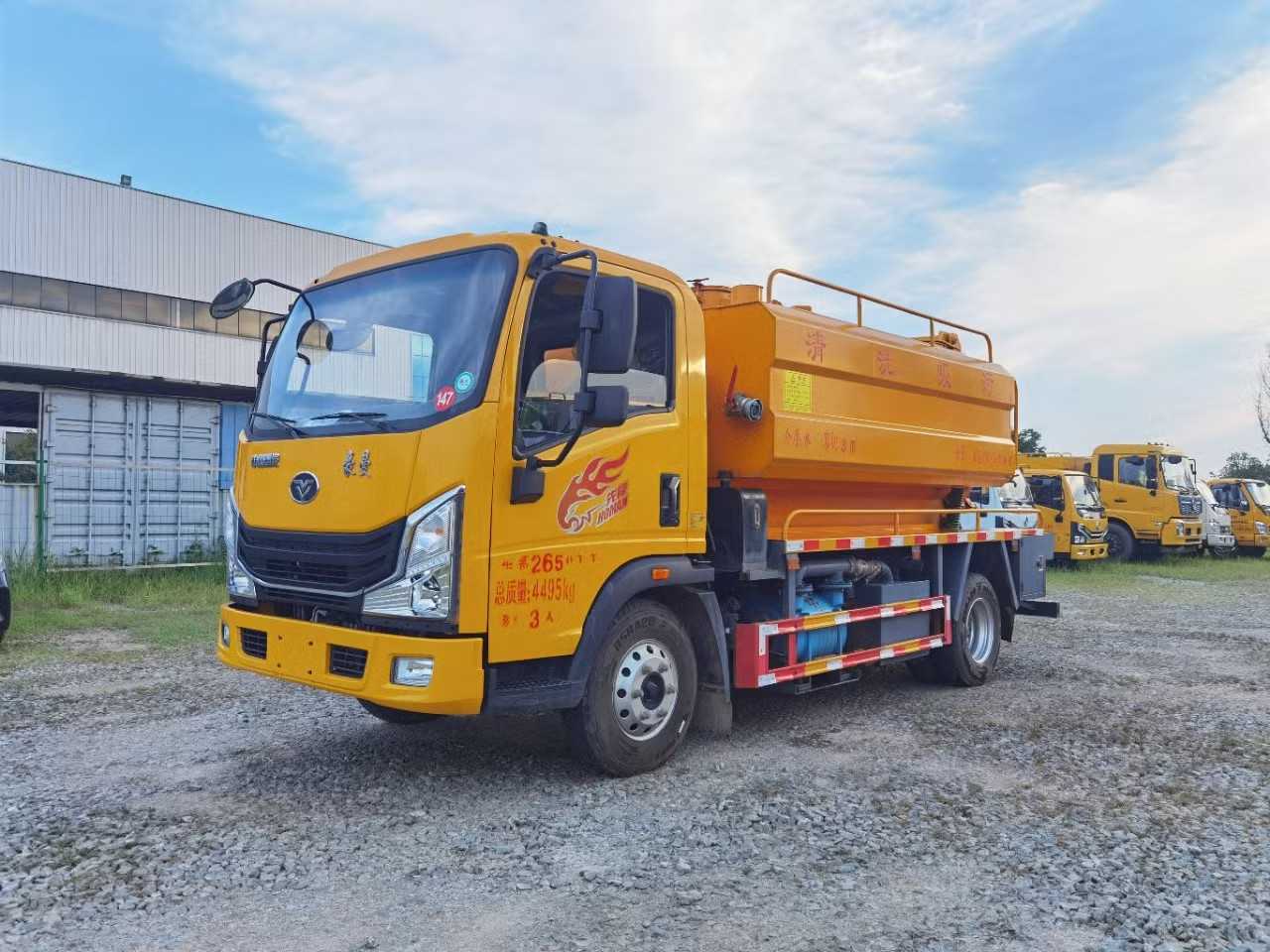
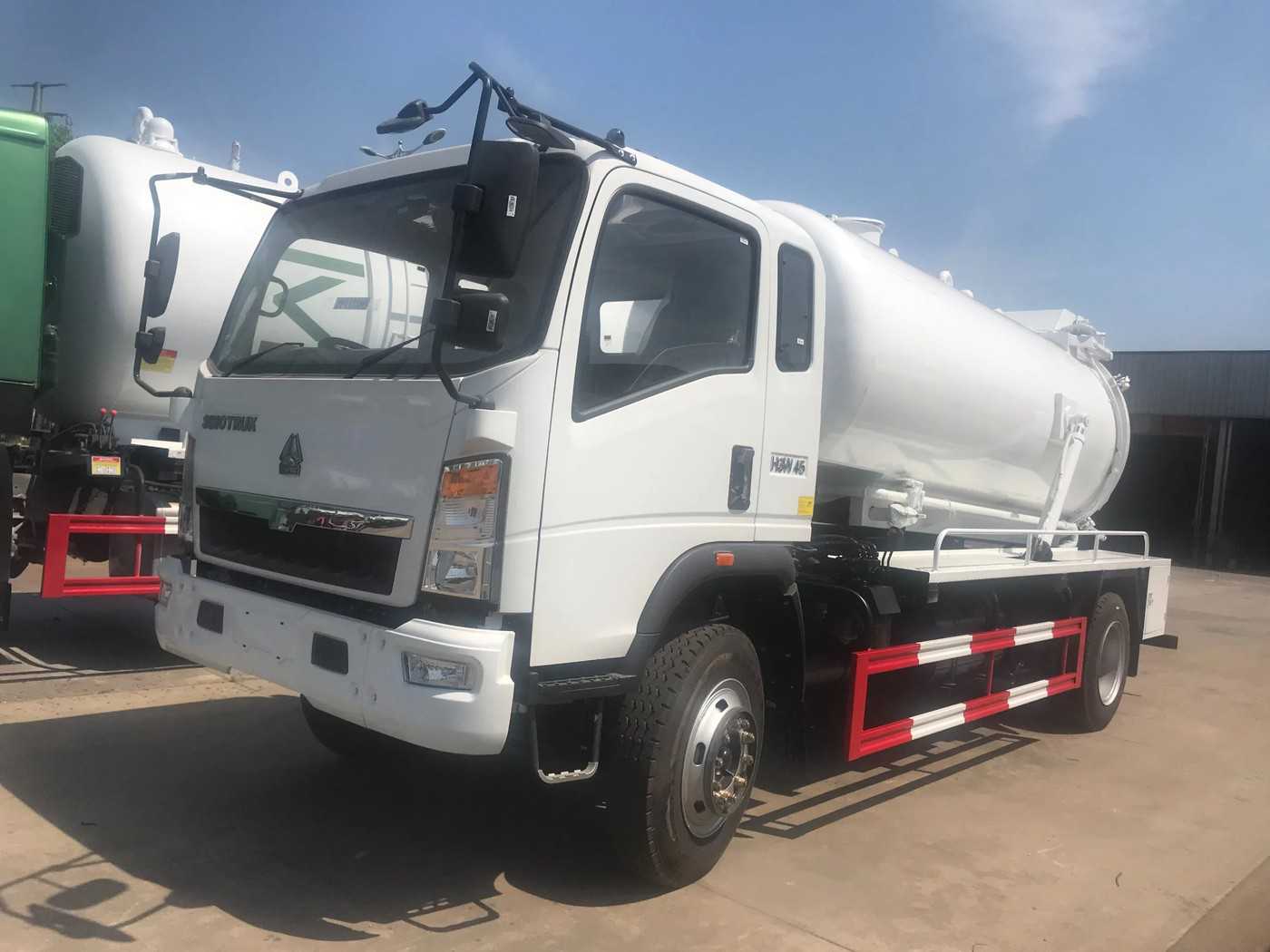
Whether you run a private honey-sucker fleet across Nairobi's satellite estates, manage desludging contracts in Lagos and Abuja, or procure municipal sanitation trucks for Accra and Kumasi, evaluating true exhauster truck pricing requires looking beyond a headline factory quote. Two sewage tankers with identical litre ratings can vary sharply in five-year uptime depending on chassis drivetrain, steel thickness, vacuum pump cooling, anti-corrosion lining, and port compliance.
This guide explains how sewage tanker price tiers work across 5,000L, 10,000L, and 16,000L+ builds, which engineering specs separate reliable African trucks from cheap builds, and how RHD and LHD ordering rules govern Mombasa, Apapa, and Tema deliveries.
Why Exhauster Trucks Are a High-Demand Business Across African Cities
Across Kenya, Nigeria, and Ghana, urban construction consistently outpaces central sewer networks. Fast-growing belts—including Ruaka, Syokimau, Ongata Rongai, and Kitengela around Nairobi; Lekki, Ibeju-Lekki, and Ogun corridors outside Lagos; and East Legon, Kasoa, and Spintex in Greater Accra—rely on septic tanks, biodigesters, soakaways, and institutional pits. Hotels, apartments, hospitals, boarding schools, industrial parks, and construction camps need year-round desludging, creating steady demand.
Because clients pay per load or under estate retainers, buyers comparing exhauster trucks for sale in Kenya, Nigeria, or Ghana track payback by daily trips rather than annual mileage. Running three to six urban trips daily generates reliable cashflow—provided the truck stays working. Downtime from a seized pump, clogged four-way valve, or cracked spring immediately erodes revenue and risks losing retainers.
Municipal water and sewerage utilities face similar uptime pressure when clearing grit-heavy storm drains, cesspits, and transfer stations on multi-shift schedules. Purpose-built CLW sewage suction trucks combine ruggedized chassis engineering—proven in tough African fleet operations like CLW's Dongfeng all-wheel-drive tank truck deployments—with heavy-duty vacuum superstructures built for sustained daily duty.
Price Breakdown by Capacity: 5,000L, 10,000L & 16,000L Exhausters
Smart fleet buyers assess exhauster budgets through capacity tiers and cost structure rather than generic online numbers that ignore steering side, emission rules, or ocean freight. On a typical factory-direct build, the truck chassis represents roughly 55% to 65% of the FOB vehicle value, while the vacuum tank, PTO-driven pump, hydraulic tipping system, valves, and suction hoses represent 35% to 45%. Final pricing always follows a written quotation tailored to your chosen chassis, body specification, steering side, and port of discharge.
5,000L–8,000L Compact 4x2 Exhausters (Entry Commercial Tier)
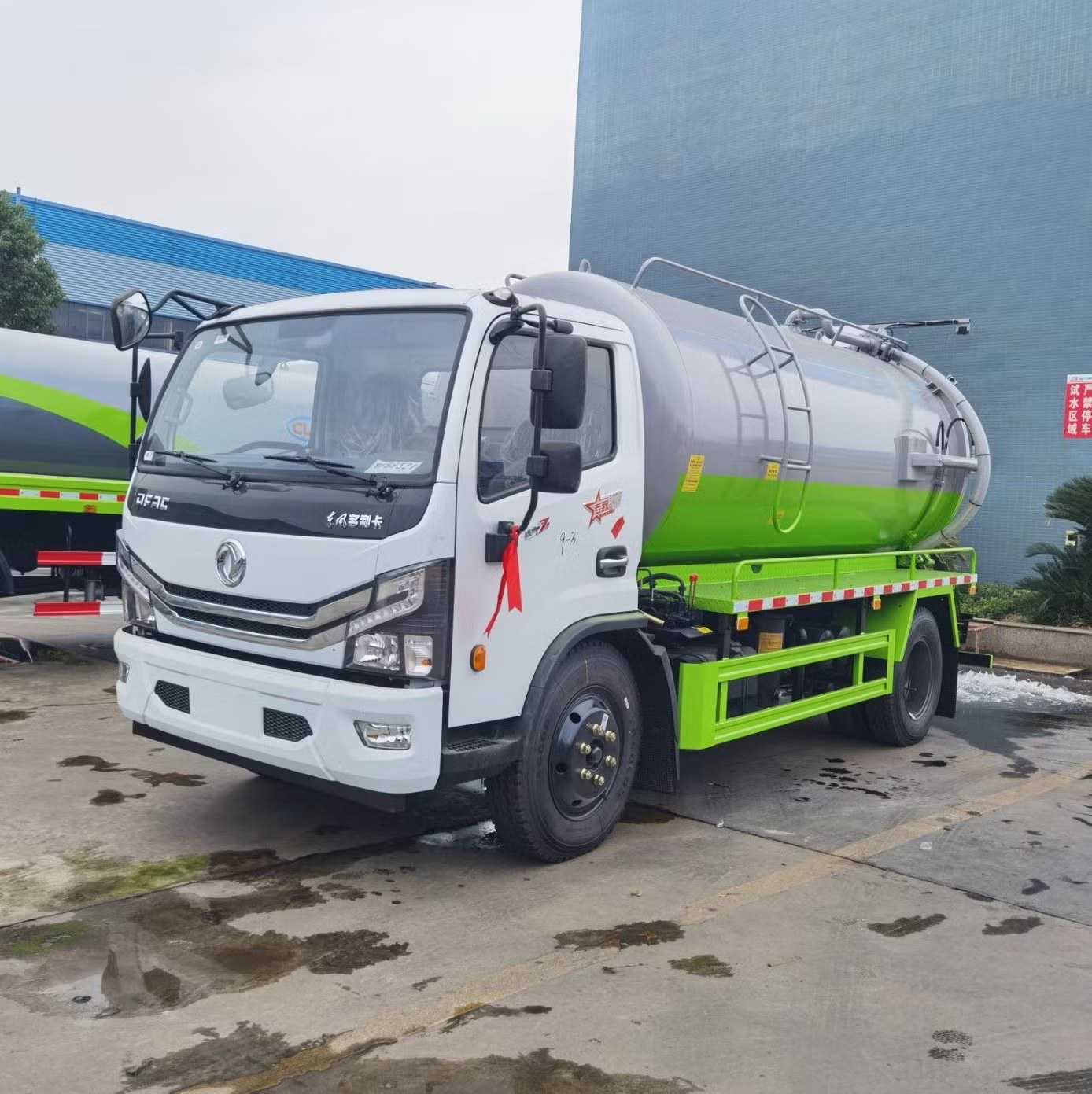
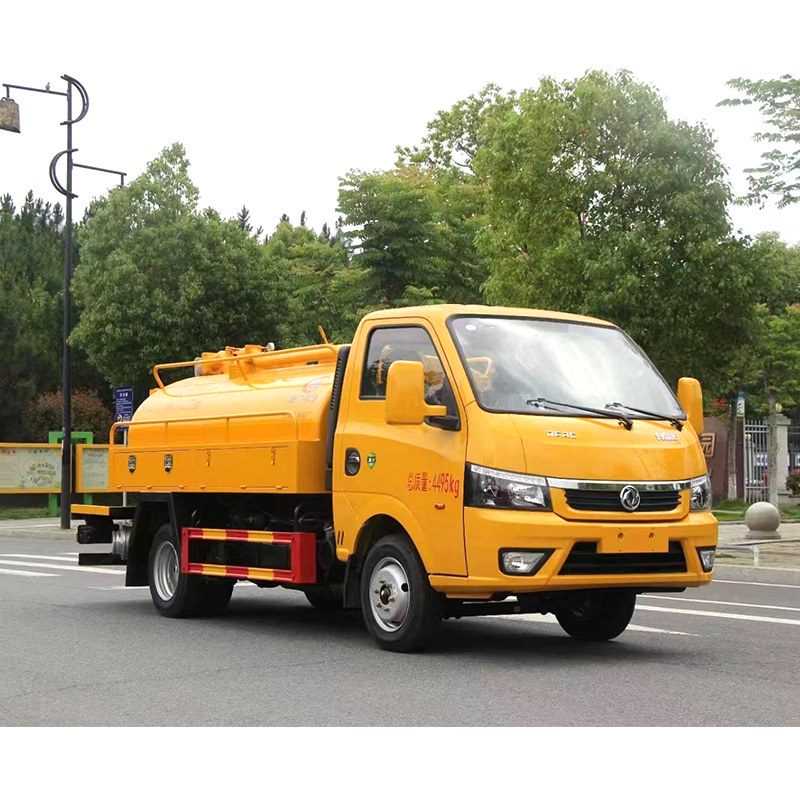
Compact 4x2 tankers—such as the agile CLW5080GXE sewage suction truck—sit in the lowest capital-cost bracket. A short wheelbase and tight turning radius let drivers reverse into narrow residential gates, steep murram lanes, and crowded inner-city alleys inaccessible to larger trucks. They suit startup private operators, estate managers, and small municipalities, keeping fuel and tyre costs low, though smaller tank volume reduces efficiency if legal discharge lagoons lie 25–35 km away.
10,000L–12,000L Mainstream Workhorse Exhausters (Core ROI Tier)
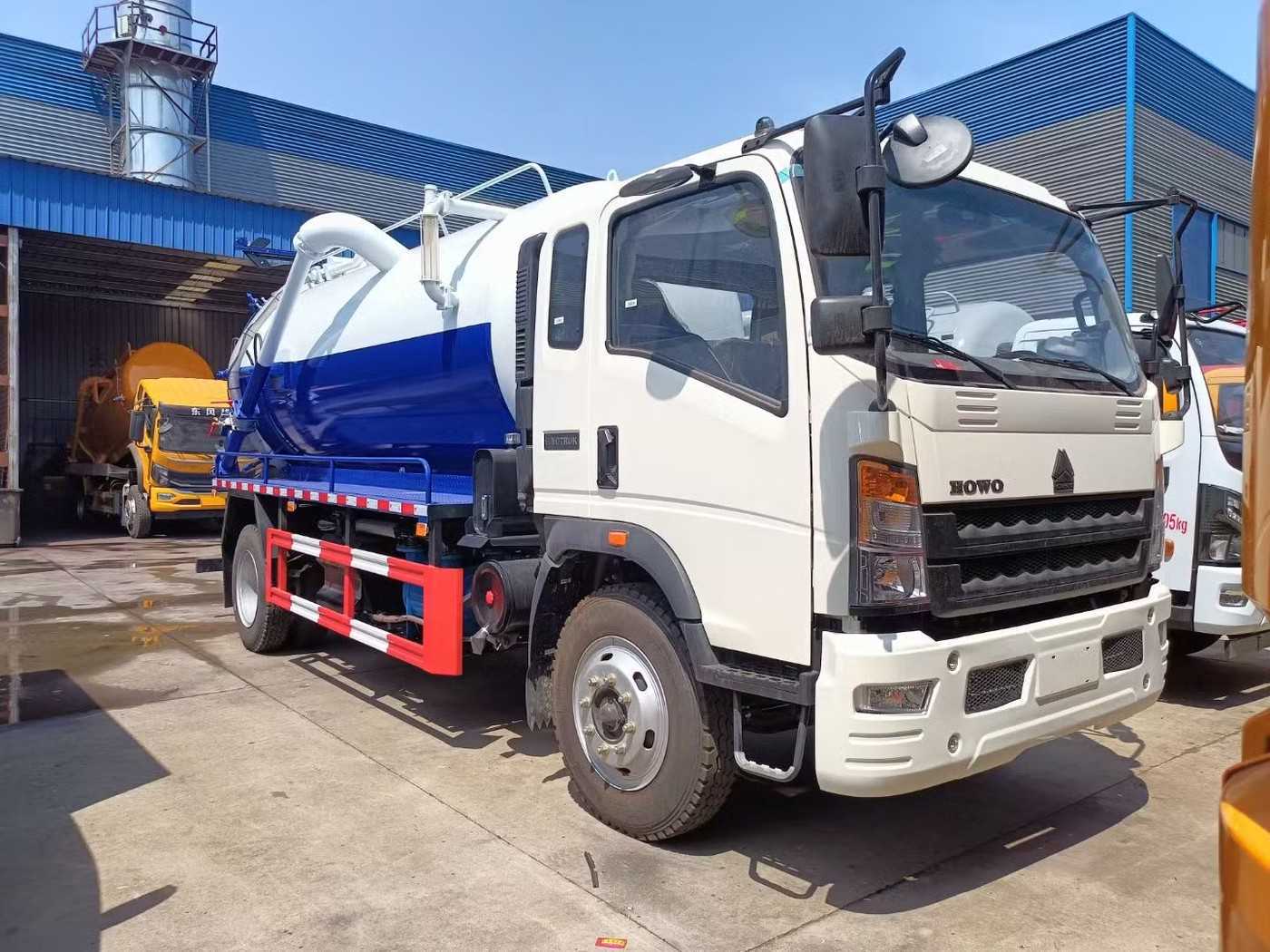
For commercial contractors in Nairobi, Mombasa, Lagos, Port Harcourt, and Accra, 10,000L to 12,000L is the core profit tier. Offered on heavy-duty 4x2 or light 6x4 chassis—including CLW's medium-heavy vacuum cleaning and waste collection exhauster and high-capacity urban sewage suction tanker—this class clears standard apartment and residential septic tanks in one trip while staying manoeuvrable on secondary roads.
Choosing between 4x2 and 6x4 in this bracket hinges on sludge weight and weighbridge enforcement. Dense septic sludge mixed with sand weighs 1.15 to 1.30 kg/L—heavier than clean water. Overloading an under-spec'd 4x2 rear axle causes broken leaf springs, differential wear, and fines at KeNHA/EAC weighbridges in Kenya, FRSC checkpoints in Nigeria, or Ghana Highway Authority axle-load stations. Upgrading to a reinforced heavy 4x2 axle or 6x4 tandem bogie adds moderate upfront chassis cost while safeguarding structural life and legal compliance.
16,000L–20,000L+ Heavy 6x4 & 8x4 Exhausters (Municipal & Bulk Tier)
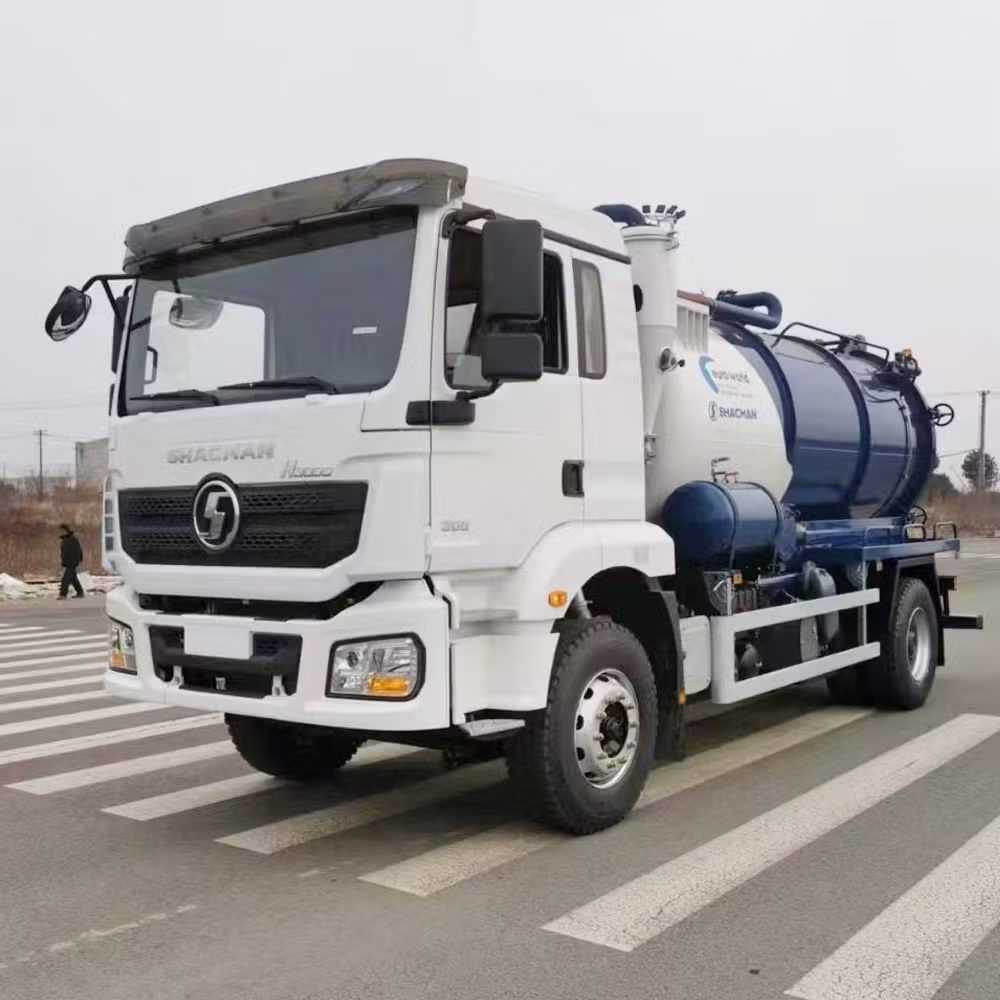
Heavy 6x4 and 8x4 platforms—represented by the CLW5310GQW heavy sewage suction truck—occupy the upper investment tier. Built for municipal utilities, industrial effluent contractors, and long-haul sludge transfer, they pair thicker 6mm carbon steel tanks with high-displacement pumps and 290–380 HP drivetrains. Upfront vehicle and ocean freight costs are higher, yet operating cost per cubic metre hauled drops sharply on long transfer routes and institutional contracts.
| Capacity Tier | Chassis Drive | Tank Steel & Lining | Typical Pump Class | Best African Application | Main Cost Driver | CLW Model Reference |
|---|---|---|---|---|---|---|
| 5,000L – 8,000L (Entry Commercial) | Compact 4x2 | 5mm Q235B shell; 6mm ends; epoxy primer | Mid-flow rotary vane or compact water-ring | Tight estates, hotels, startup private fleets | Lowest FOB & ocean CBM; rapid payback | CLW5080GXE |
| 10,000L – 12,000L (Core ROI Tier) | Heavy 4x2 or light 6x4 | 5mm–6mm Q235B; anti-slosh baffles; coal-tar epoxy | High-flow rotary vane or SK/2BV water-ring | Commercial contractors, apartments, schools | Axle rating & pump grade; weighbridge safety | CLW Vacuum (49756) & CLW Tanker (49757) |
| 16,000L – 20,000L+ (Heavy Municipal) | Heavy 6x4 or 8x4 | 6mm Q235B shell; 8mm ends; external stiffeners | Industrial high-displacement water-ring | Municipal boards, industrial parks, long hauls | Heavy chassis, pump & freight; lowest cost/m³ | CLW5310GQW |
Compare supplier quotes on identical Incoterms. An FOB China port quote covers manufacturing, factory testing, and vessel loading. A CIF Mombasa, Apapa, or Tema quote adds Ro-Ro or bulk ocean freight and marine insurance. Your road-ready landed cost then adds customs duty, VAT/levies, port handling, pre-export conformity inspection fees, clearing charges, and local registration. Always check whether quotes include 5mm–6mm steel plate, hydraulic rear-door tipping, and spare suction hoses—see our payment and shipping guide for full breakdown planning.
Key Specs That Separate Reliable Exhausters From Cheap Builds
The lowest quote on paper often hides cost-cutting that destroys fleet profitability within 18 months: thin tank walls, unlined mild steel, undersized PTO shafts, and heat-starved pumps. Verify four critical engineering areas before ordering.
1. Water-Ring vs. Oil-Cooled Rotary Vane Pumps in African Heat
When daytime temperatures hit 35°C–42°C alongside abrasive dust, vacuum pump architecture dictates daily reliability:
- Oil-Cooled Rotary Vane Pumps: Popular on 5,000L–10,000L builds for rapid vacuum pull-down, compact packaging, and economical upfront cost. Paired with oversized oil-gas separators, heat-resistant oil, and clean cooling airflow, they handle standard septic cycles well. Cheap vane units, however, overheat and wear rapidly during prolonged 20-minute deep-pit pulls if oil maintenance slips.
- Water-Ring Vacuum Pumps: Using circulating water as both seal and coolant, SK/2BV/2BE-class water-ring pumps dominate 10,000L–20,000L+ heavy-duty units. With no sliding metal-on-metal vane friction, they resist thermal seizure during continuous high-heat suction on thick sludge and 30–50m hose runs, tolerating moisture carryover far better. Crews simply refill clean circulation water and descale periodically in hard-water regions.
Combine either pump with upgraded radiators, multi-stage air filtration, and heat-shielded hoses as detailed in CLW's tropical and dust-proof design package.
2. Four-Way Valve, Anti-Overflow Valve & Moisture Separator
Raw sewage flooding the vacuum pump during tank overfill is the leading cause of costly exhauster breakdowns. Reliable builds integrate three safeguards: a cast-iron four-way changeover valve (switching instantly between vacuum suction and low-pressure tank blow-back to clear blocked hoses), a top-mounted primary float-ball anti-overflow valve that shuts automatically at full capacity, and a secondary moisture/oil-gas separator with a quick drain cock to trap mist before the pump intake—backed by an audible full-tank buzzer beside the curbside gauge.
3. Tank Plate Thickness, Sight Glass & Hydraulic Rear-Door Tipping
Sewage tanks endure daily external atmospheric vacuum loads alongside corrosive hydrogen sulfide (H2S) gas. Specifying 5mm–6mm Q235B carbon steel shells, 6mm–8mm dished end heads, internal anti-slosh baffles, and multi-coat coal-tar epoxy lining protects structural integrity. Equally vital is rapid sludge discharge: cheap fixed-head tanks force crews inside hazardous vessels to shovel compacted sand and kitchen grease. A full-opening hydraulic rear door with heavy wing-bolt clamps, oil-resistant nitrile rubber gasket, and a 40°–45° hydraulic tipping cylinder empties heavy grit cleanly in minutes. Complete the deck with clear sight-glass level windows, a hand-wash tank, and wire-reinforced 100mm/150mm suction hoses in lockable trays.
4. Emission Tier & Local Spare Parts Availability
Complex Euro V/VI SCR and DPF systems can trigger costly sensor downtime where diesel sulfur levels fluctuate or AdBlue is scarce upcountry. Choosing proven Euro II or Euro III drivetrains matched to national fuel and import rules simplifies maintenance. Building on widely supported African chassis—Dongfeng, Sinotruk HOWO, Shacman, Foton, or Isuzu platforms—ensures fast parts sourcing across Nairobi's Industrial Area, Lagos's Ladipo/Apapa markets, and Accra's Abossey Okai. Review matching drivelines in our emission and chassis options guide.
| Subsystem | Cheap Economy Build | Africa-Ready CLW Heavy-Duty Build | 3–5 Year Fleet Impact |
|---|---|---|---|
| Tank & Coating | 3.5mm–4mm steel; basic primer; no baffles | 5mm–6mm Q235B; 6mm–8mm ends; baffles + coal-tar epoxy | Prevents vacuum implosion & H2S rust-through |
| Vacuum Pump | Undersized vane pump; tight airflow | Matched heavy rotary vane or SK/2BV water-ring + tropical cooling | Sustains fast suction on thick sludge in 40°C heat |
| Overflow Guard | Lightweight plastic float only | Primary float-ball valve + secondary separator + full-tank alarm | Stops sewage from flooding and seizing the pump |
| Discharge System | Fixed rear head; small drain valve | Full-opening hydraulic rear door + 45° tipping cylinder | Dumps compacted sand/grease without manual entry |
| Hoses & Valves | Thin PVC hose; light alloy couplings | Wire-reinforced 100mm/150mm hose; forged camlocks; cast 4-way valve | Zero mid-job hose collapse or valve leakage |
| Chassis & Parts | Niche driveline; sensitive sensors | Proven Euro II/III chassis; heavy leaf springs; dust filtration | Easy local parts in Nairobi, Lagos & Accra |
Hydrogen sulfide corrodes unprotected mild steel at roughly 0.5mm to 1.0mm per year in warm climates. Once a thin 4mm tank weakens past structural limits, a single full-vacuum pull can buckle or implode the shell in under 24 months. Always verify 5mm–6mm steel gauge, internal epoxy lining, and factory pre-shipment vacuum-tightness and tipping test videos before balance payment.
RHD (Kenya & East Africa) vs. LHD (Nigeria & Ghana) Ordering Notes
Steering side governs legal registration, curbside operator safety, and resale value. CLW supplies factory-original steering configurations directly off the chassis line—see full options on our LHD and RHD vehicle options page.
- Kenya & East Africa (Strictly RHD): Kenya, Tanzania, Uganda, Zambia, and Zimbabwe require Right-Hand Drive (RHD) trucks. Never accept converted LHD-to-RHD units; modified steering linkages and spliced harnesses fail KEBS Pre-Export Verification of Conformity (PVoC) and NTSA inspection. Factory-original RHD exhausters shipped via Ro-Ro or bulk vessel into Mombasa (or Dar es Salaam for regional corridors) place valves, vacuum gauges, and hose trays on the left-hand curbside away from traffic.
- Nigeria & Ghana (Strictly LHD): Nigeria and Ghana mandate Left-Hand Drive (LHD) vehicles. Nigerian shipments typically enter Apapa or Tin Can Island (Lagos) or Onne (Port Harcourt) under Form M, SONCAP/PC, and PAAR customs procedures. Ghanaian units discharge at Tema Port (or Takoradi) for ICUMS clearance, Ghana Standards Authority (GSA) compliance, and DVLA registration. Controls and work lamps sit on the right-hand curbside for safe roadside operation.
Confirm destination inspection requirements before production finishes. Our export team prepares invoices, packing lists, bills of lading, certificates of origin, and third-party inspection scheduling—outlined in our import compliance guide and tender support service. Factory management credentials on our certificates page verify manufacturing quality systems at our Suizhou plant, while destination conformity and registration follow each country's statutory import procedures.
Frequently Asked Questions on Buying Exhauster Trucks in Africa
What capacity exhauster truck gives the fastest ROI in Nairobi, Lagos, or Accra?
Most commercial contractors achieve the best return with a 10,000L–12,000L exhauster, balancing load billing and street access. Narrow-estate operators often start with a 5,000L–8,000L 4x2 unit, while utilities hauling long distances to lagoons gain lowest cost per cubic metre from 16,000L–20,000L 6x4 builds.
Should I pick a water-ring pump or an oil-cooled rotary vane pump?
Pick an oil-cooled rotary vane pump for lower upfront cost and rapid pull-down on 5,000L–10,000L residential jobs. Pick a water-ring pump for 35°C–42°C heat, thick sludge, 30–50m hoses, or 12,000L–20,000L multi-shift municipal routes requiring continuous cooling stability.
How do FOB factory quotes differ from CIF delivery and final landed cost?
FOB covers the truck loaded aboard vessel in China. CIF to Mombasa, Apapa, or Tema adds ocean freight and marine insurance. Final landed cost adds destination duty, VAT, port handling, conformity inspection fees (such as PVoC or SONCAP), clearing, and local registration.
Can CLW build factory-original RHD trucks for Kenya and LHD trucks for Nigeria and Ghana?
Yes. CLW builds factory-original RHD chassis for Kenya and East/Southern Africa alongside factory-original LHD chassis for Nigeria, Ghana, and West Africa, both fitted with 5mm–6mm carbon steel tanks, hydraulic rear doors, tipping cylinders, and tropicalized cooling.
5 Details to Include for a Fast Exhauster Quote
A vague inquiry asking simply for an exhauster price slows down accurate engineering quotes because capacity, steering side, pump type, and destination port directly govern build cost and vessel booking. Following our how-to-buy process and sending five details upfront lets CLW engineers return a tailored specification, drawing, and FOB/CIF quotation within 24 hours.
Request Your Factory-Direct Exhauster Specification & Quote
Share these five details so our export engineers can match the right chassis, vacuum pump, steel gauge, and shipping route on the first reply:
- Capacity & Drive: Specify 5,000L–8,000L (4x2), 10,000L–12,000L (heavy 4x2 or 6x4), or 16,000L–20,000L (6x4/8x4), plus hydraulic tipping and rear-door requirements.
- Country, Port & Steering: Confirm RHD (Mombasa / Dar es Salaam) or LHD (Apapa / Tin Can / Tema) and whether you need FOB or CIF pricing.
- Chassis Brand & Emission Tier: Note your local parts preference (Dongfeng, Sinotruk HOWO, Shacman, Foton, or Isuzu-platform) and required Euro II, III, or IV spec.
- Sludge Duty & Pump Choice: State typical suction depth, hose length (e.g., 10m vs. 40m), and oil-cooled rotary vane vs. water-ring pump preference.
- Quantity & Buyer Type: Indicate single commercial unit, multi-truck fleet order, or municipal tender needing formal technical bid documents.