Municipal waste concessions and public sanitation tenders across Nigeria, Kenya, Ghana, Tanzania, and Southern Africa are often won or lost before the first vehicle arrives at port. Over-buying 20 m³ rubbish lorries leaves fleets unable to enter dense inner-city lanes, whereas under-sizing with 6 m³ units inflates diesel burn, driver overtime, and landfill queues. Choosing the right mix of body volumes, axle layouts, and reserve trucks protects both operating margins and municipal service-level agreements (SLAs).
This engineering guide helps municipal planners, PPP advisors, and sanitation contractors size a compactor garbage truck fleet from 6 m³ to 20 m³—covering waste tonnage math, wet-refuse axle rules, tropical hydraulic reliability, phased tender logistics, and a ready-to-use RFP specification template.
Estimating Daily Waste Tonnage and Required Truck Count
Fleet counts should be calculated from verified daily tonnage rather than copied from another city. Four operational inputs determine your active vehicle requirement:
Active Trucks = (Covered Population × Daily Waste per Capita in kg ÷ 1,000) ÷ (Compacted Payload per Trip in Tonnes × Daily Round Trips)
Multiply the active count by a 1.15–1.20 reserve factor (15%–20% standby units) to absorb routine oil services, brake and tire changes, hydraulic seal replacements, and weekly leachate washdowns without missing ward schedules.
Why Wet African Waste Governs Payload Weight
Copying European volume ratios causes severe overloading in Africa. Unlike dry Western packaging waste (0.15–0.25 t/m³ loose), municipal refuse in Lagos, Nairobi, Accra, and Dar es Salaam contains 55%–70% wet organic matter plus swept street sand. Loose density starts around 0.40–0.55 t/m³ and reaches 0.65–0.85 t/m³ under 2.5:1–3:1 compaction. Because weight hits legal axle limits before geometric capacity fills, size realistic compacted payload at 0.55–0.65 tonnes per cubic meter of rated body volume.
Worked Example: 300,000-Resident Urban District
- Daily Waste Generation: 300,000 residents × 0.70 kg/day ÷ 1,000 = 210 tonnes/day.
- Mainline Truck Payload: A 16 m³ rear loader hauls roughly 9.5 tonnes of wet compacted refuse per trip.
- Daily Round Trips: Allowing 2 hours for curbside loading, traffic congestion, and a 20 km one-way landfill haul gives 1.8 trips/day (17.1 tonnes/truck/day).
- Fleet Requirement: 210 ÷ 17.1 = 12.3, rounded to 13 active trucks. Adding 15%–20% standby brings the tender total to 15–16 units—ideally split into twelve 16 m³ mainliners and three to four 6–8 m³ narrow-lane trucks.
Matching Body Volume to Street Width, Axle Limits, and Landfill Distance
African cities combine narrow historic markets, unpaved estates, and long peri-urban landfill highways. Splitting your fleet into route-matched tiers lowers cost per tonne far better than ordering one uniform truck size.
Old-Town Quarters and Feeder Lanes (3.5 m³ to 8 m³ 4x2)
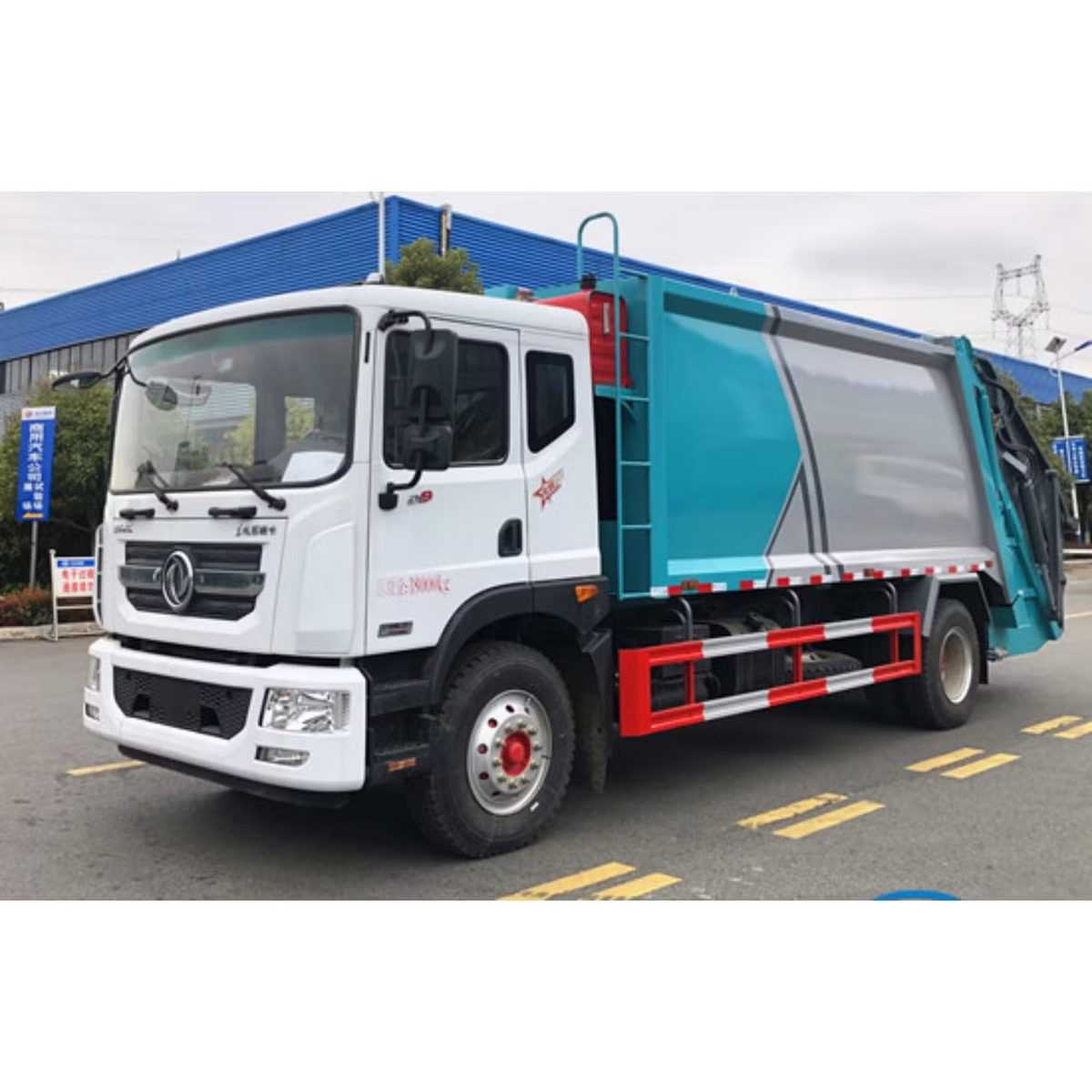
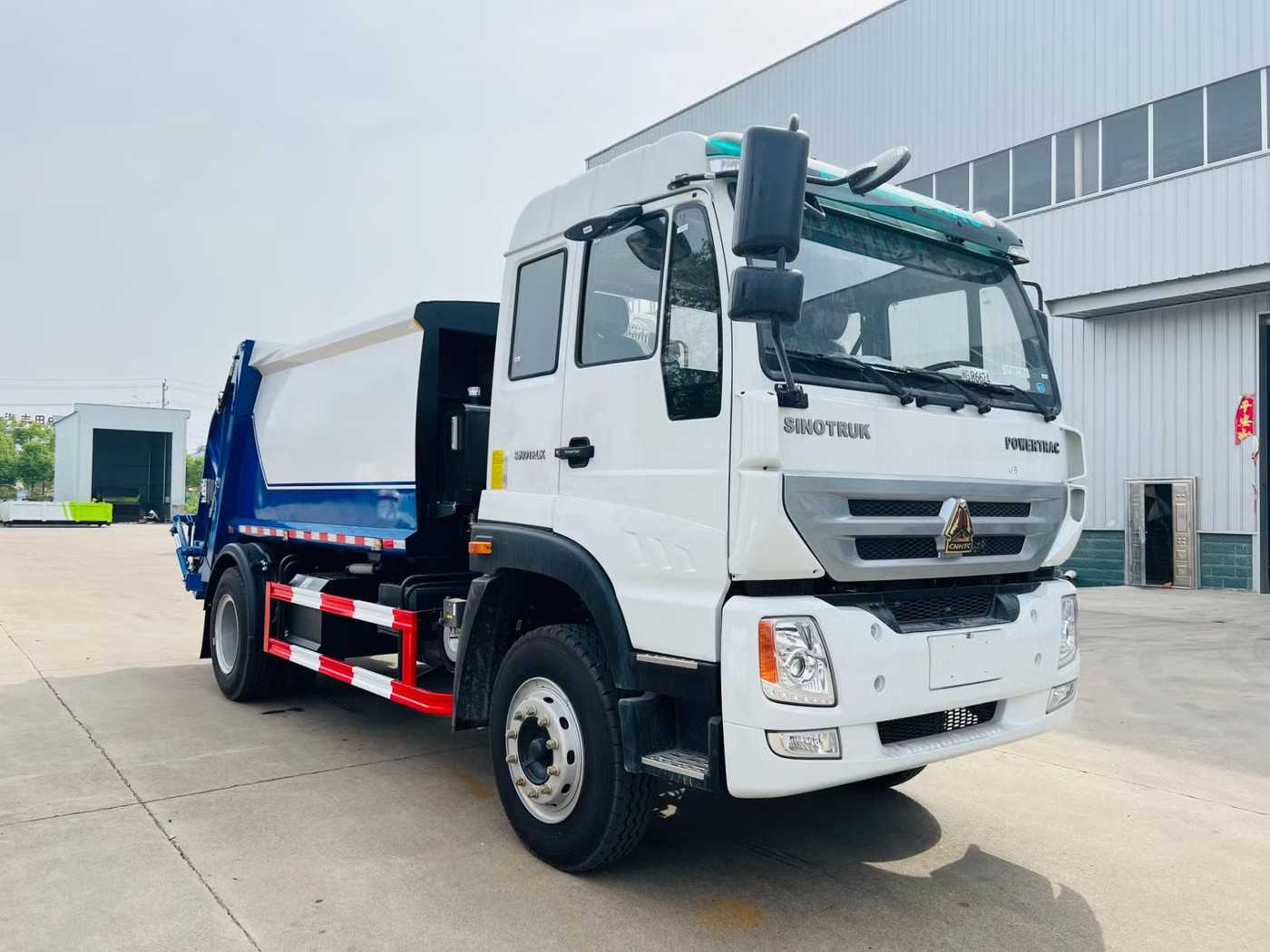
In tight market streets and older wards, turning radius and body width dictate productivity. Compact 6–8 m³ 4x2 rear loaders such as the CL 70 GX compactor garbage truck navigate narrow corners while maintaining full hydraulic compaction. For ultra-restricted alleys and gated compounds, operators pair mainline fleets with mini feeders like the 5CBM Foton Forland Star 3 rear loader sanitation truck or the 3.5CBM Dongfeng Tuyi compactor garbage truck.
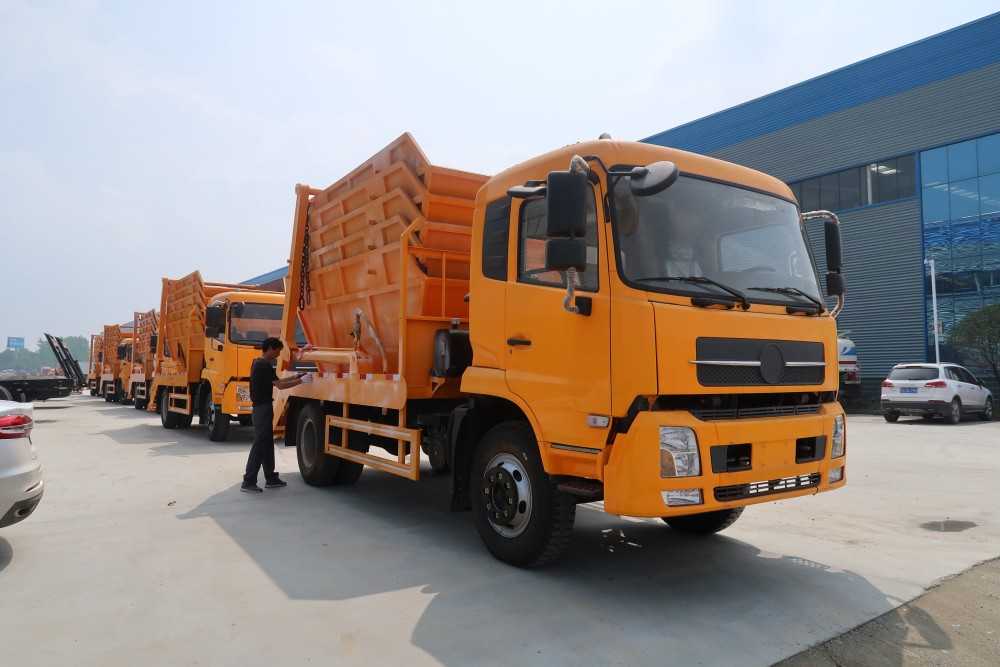
At high-volume open-air markets where organic waste piles up continuously, detachable bins often outperform curbside stops. Deploying a CL BZW skip loader truck or swing arm garbage truck allows one chassis to rotate 8–15 skips across market bays while compactor rubbish lorries focus on residential loops.
Main Urban Arterials and Suburban Estates (12 m³ to 16 m³ 4x2 / 6x4)
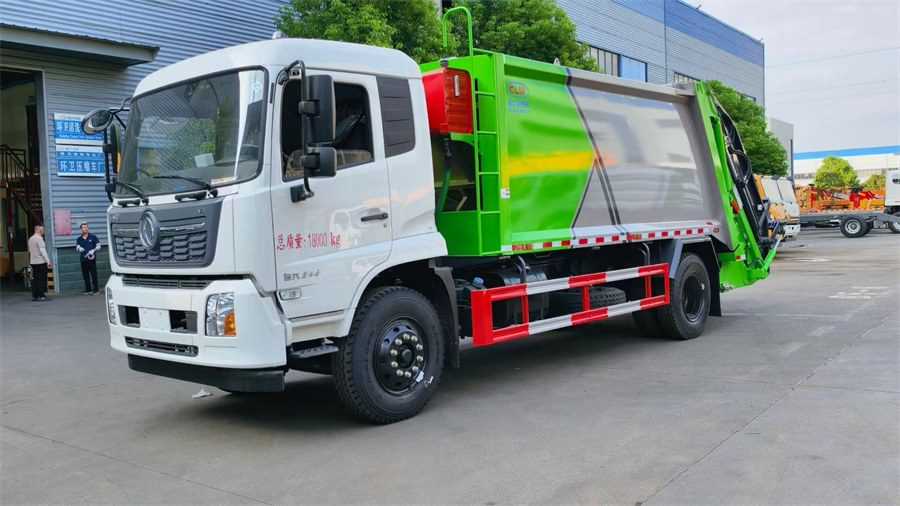
The 12–16 m³ class forms the core of most municipal bids. Up to 12–14 m³, a heavy-duty 4x2 chassis with a 10–13 tonne rear axle balances payload and tire costs well. At 16 m³, weighbridge enforcement under ECOWAS, EAC, and SADC rules becomes critical: single drive axles are typically capped at 10–11.5 tonnes, whereas tandem 6x4 bogies allow 18–21 tonnes. Loaded with 9–10 tonnes of wet tropical refuse plus a reinforced compactor body, a 16 m³ 4x2 risks rear-axle overload and wheelspin on muddy dumpsite slopes. Moving to a 6x4 platform—as used in our Foton Auman 16 CBM compactor garbage trucks batch—protects leaf springs, brakes, and weighbridge compliance.
Long-Haul Peri-Urban Landfills (18 m³ to 20 m³ 6x4)
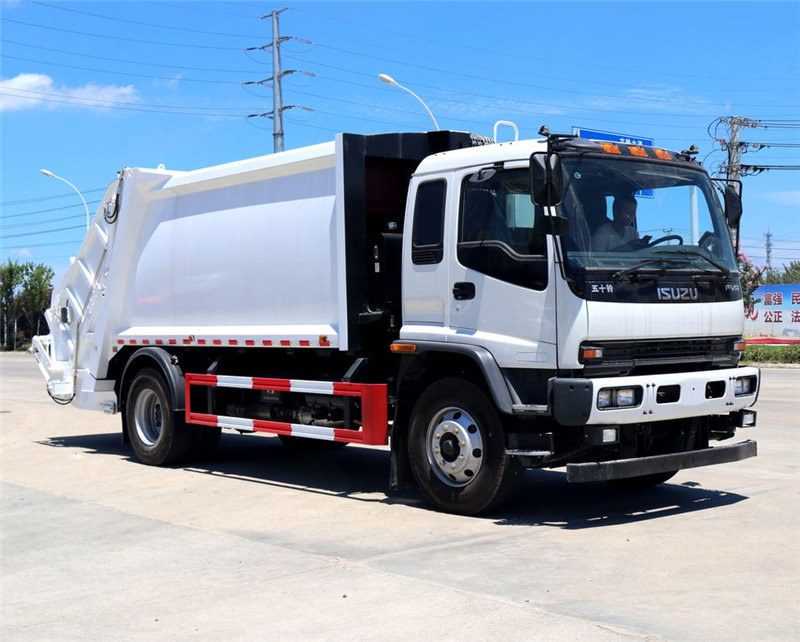
When regional landfills sit 25–45 km outside city centers, transit hours outweigh curbside loading time. Heavy 18–20 m³ 6x4 rear loaders hauling 11.5–14 tonnes per run cut daily trips per tonne by 30%–45% versus 10–12 m³ units, sharply reducing fuel spend per collected tonne.
| Body Class & Drive | Wet MSW Payload | Street & Turning Fit | Ideal Haul Radius | Primary Fleet Role |
|---|---|---|---|---|
| 3.5–5 m³ (4x2 Mini) | 2.0–3.2 t | Alleys < 3.5 m, compounds | Under 10 km | Primary feeder to transfer bays |
| 6–8 m³ (4x2 Compact) | 3.8–5.2 t | Old-town lanes, side roads | 5–15 km | Dense wards and secondary towns |
| 12–14 m³ (4x2 Heavy) | 7.0–8.5 t | Paved urban roads, estates | 10–20 km | Core urban curbside routes |
| 16 m³ (4x2 / 6x4) | 9.0–10.5 t | Arterials, suburban rings | 15–30 km | Main tender workhorse (6x4 for wet MSW) |
| 18–20 m³ (6x4 Heavy) | 11.5–14.0 t | Highways, transfer hubs | 25–45+ km | Long-haul regional landfill corridors |
Lock chassis compliance early before issuing tenders. Confirm LHD or RHD steering (LHD for Nigeria, Ghana, and Francophone West/Central Africa; RHD for Kenya, Tanzania, Uganda, Zambia, and Southern Africa) and specify practical chassis emission tiers (usually Euro II or Euro III mechanical or ruggedized common-rail engines suited to local diesel sulfur levels rather than sensitive Euro V/VI AdBlue systems).
Hydraulic, Structural, and Electrical Reliability Tips for Tough Routes
Rear loaders endure thousands of high-pressure hydraulic compaction cycles each month in 35°C–42°C ambient heat, exposed to abrasive sand and acidic organic leachate. Specifying four engineering safeguards at order stage prevents costly Year-Two downtime:
- Manual Emergency Hydraulic Override Levers: Always require dual-mode controls combining automated push-button PLC cycles with direct manual multi-way valve levers on the body side. If a proximity sensor floods or a relay fails mid-route, operators can still finish packing and eject the load at the landfill instead of towing a loaded rubbish lorry.
- Dust-Proof, Washdown-Sealed Electrical Boxes: Specify IP65/IP67 rear control enclosures, waterproof sealed connectors, and conduit-protected wiring routed high along the subframe away from hopper drips and pressure washers.
- Wear-Resistant Steel & Replaceable Slider Blocks: Street grit and broken glass destroy thin mild steel fast. Require Q345B or high-tensile wear steel (minimum 5–6 mm hopper floor, 4 mm body walls) plus replaceable UHMWPE/nylon-composite wear slider blocks on packing and ejector rails so workshops can swap wear pads in hours instead of welding torn tracks.
- Sealed Leachate Control & Tropical Cooling: Mandate reinforced EPDM/silicone tailgate gaskets clamped by hydraulic locking hooks, dual sewage tanks (front body plus rear hopper sump) with large-bore ball drain valves, and a tropical dust-proof cooling package featuring an auxiliary hydraulic oil cooler, heavy-duty radiator, and dual-stage or oil-bath air cleaner.
Low-bid quotes frequently cut FOB cost by using 3 mm mild-steel hopper floors, dropping manual hydraulic levers, and omitting the hydraulic oil cooler. In humid African cities handling wet refuse, 3 mm mild steel can rust through within 12–18 months, and overheated oil ruins cylinder seals—turning upfront savings into parked trucks and SLA penalties.
Phased Delivery, Shipping Logistics, and Spare Parts Provisioning for Government Tenders
Large municipal and PPP contracts (10 to 60+ trucks) run smoothest when production lots, port clearance, and wear-parts kits are planned inside the initial tender structure.
Staged Batch Delivery & Tender Documentation
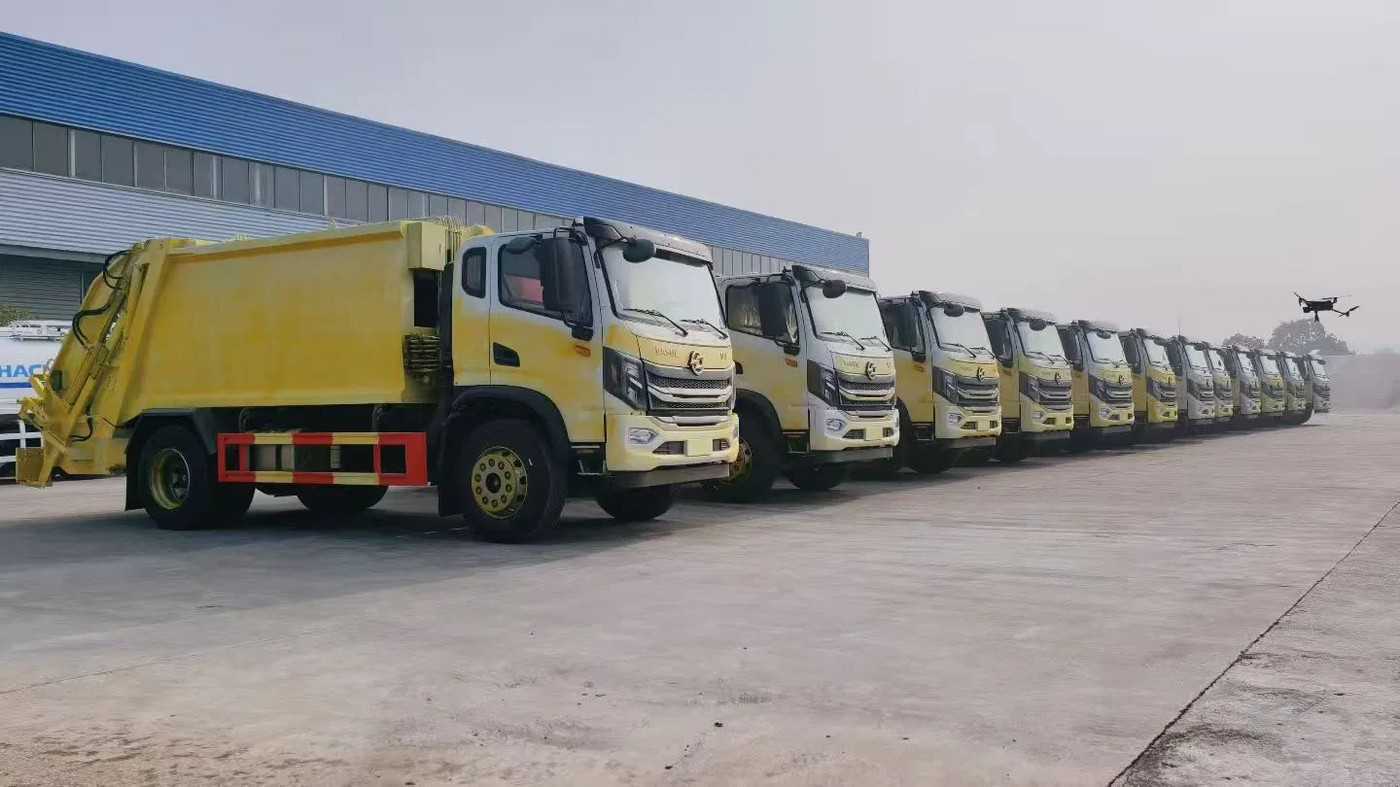
Splitting large awards into phased lots—such as delivering a 20%–30% pilot batch first for municipal acceptance, driver training, and route calibration while remaining lots complete assembly—reduces cash-flow risk and speeds commissioning. Dedicated tender support packages provide manufacturer authorization letters, CAD dimensional and axle-load drawings, hydraulic schematics, and staged build schedules, matching the rollout approach used in our 16 CBM compactor garbage truck batch delivery.
Port Shipping, Landed Cost Drivers, and Compliance
Total landed budget depends on chassis brand, 4x2 vs 6x4 drive, steel grade, bin-lifter hardware, steering side, ocean freight, marine insurance, port handling, and local duty or municipal tax exemptions. Because corridor freight and specifications vary widely, final pricing always follows a written quotation tailored to your exact chassis, body spec, steering configuration, and destination port.
Into Apapa/Tin Can Island, Tema, Mombasa, Dar es Salaam, Durban, or Beira, RORO vessels typically deliver assembled rear loaders fastest and most economically, with bulk or flat-rack sailings covering alternative ports—detailed in our payment and shipping guide. Initiate mandatory pre-shipment inspections (SONCAP, KEBS PVoC, TBS, etc.) early using our import compliance guide to avoid demurrage. While plant ISO quality management records on our certificates page verify manufacturing systems, destination roadworthiness, customs clearance, and vehicle import permits remain governed by each importing country's authorities.
12-to-24-Month Wear-Parts Kit
Waiting three to six weeks for customs clearance on small air-freighted seals can sideline an entire truck. Bundle a factory-packed consumables kit with every order—UHMWPE slider blocks, cylinder seal kits, proximity switches, tailgate rubber gaskets, PTO gasket sets, and chassis filter sets—to maintain 85%+ uptime from Month One.
Tie Lot 1 acceptance to operator training and spares handover. Training municipal mechanics on manual hydraulic overrides, greasing points, and daily leachate flushing cuts avoidable downtime dramatically during the first operating year.
Municipal Tender Spec Template
Municipal engineers and bid consultants can adapt this vendor-neutral specification baseline into Request for Proposals (RFPs) to compare bidders objectively and filter out substandard builds.
| Tender Parameter | 6–8 m³ Compact (4x2) | 12–16 m³ Mainline (4x2 / 6x4) | 18–20 m³ Long-Haul (6x4) |
|---|---|---|---|
| Chassis & Drive | 4x2 short wheelbase, reinforced leaf springs | 4x2 (12–14 m³) or 6x4 tandem (16 m³ wet MSW) | 6x4 heavy chassis, 18–21 t tandem bogie, diff lock |
| Steering & Engine | LHD/RHD per local law; Euro II/III diesel | LHD/RHD per local law; Euro II/III (Euro IV opt.) | LHD/RHD per local law; 290–380 HP Euro II/III |
| Body Steel Grade | Q345B/T420; 4 mm sides, 5 mm hopper floor | Q345B/T420; 4–5 mm sides, 5–6 mm hopper floor | High-tensile wear steel; 5 mm sides, 6 mm floor |
| Compaction Spec | 2.5:1+ ratio; cycle ≤ 25 s; eject ≤ 35 s | 2.5:1–3:1 ratio; cycle ≤ 25–30 s; eject ≤ 40 s | 2.8:1–3:1 ratio; cycle ≤ 30 s; eject ≤ 45 s |
| Controls & Hydraulics | Dual PLC + manual levers; IP65 rear box | Dual PLC + manual levers; IP65/67 box; oil cooler | High-flow pump; dual controls; auxiliary oil cooler |
| Bin Lifter / Hopper | 120 L/240 L DIN lifter or low-lip dustpan | Universal 240 L/660 L/1,100 L DIN + dustpan | Heavy 240 L–1,100 L DIN lifter / trunnion arm |
| Leachate & Dust | Dual sewage tanks; sealed tailgate gasket | Dual tanks; hydraulic locks; dual-stage air filter | High-capacity dual tanks; desert air intake |
| Spares & Handover | 12-month wear-parts kit + English manuals | 12–24 month spares + axle sheet + training | 24-month fleet spares + schematics + training |
Frequently Asked Questions
How many compactor garbage trucks do we need for 500,000 residents?
At 0.65–0.75 kg/person/day, 500,000 residents generate 325–375 tonnes daily. Using 16 m³ rear loaders averaging 9.5 tonnes per trip across 1.8 trips/day (~17 tonnes/truck/day) requires 19–22 active trucks plus 3–4 standby units—22–26 trucks total, ideally pairing 16 m³ mainliners with 6–8 m³ narrow-lane feeders.
Should our municipality specify 4x2 or 6x4 for 16 m³ rear loaders?
For wet municipal waste, steep grades, weighbridge enforcement, or muddy landfill ramps, 6x4 is strongly recommended at 16 m³. A tandem rear bogie keeps axle loads legal, prevents wheelspin on unpaved dumpsites, and extends spring and tire life compared with a heavily loaded 4x2.
Can one rear loader handle both wheelie bins and loose roadside refuse?
Yes. Specifying a universal DIN bin lifter (120 L, 240 L, 660 L, and 1,100 L bins) paired with a hinged hopper or flip-up dustpan lets one truck service containerized commercial corridors and manually loaded residential streets on the same shift.
How do we prevent leachate leaks and early hopper corrosion?
Specify a 5–6 mm wear-resistant steel hopper floor with epoxy anti-corrosion primer, an EPDM/silicone tailgate seal clamped by hydraulic locking hooks, and dual leachate tanks with large-bore ball valves flushed daily at the landfill.
Request a Municipal Fleet Sizing Check & Tender Quotation
Send five project details and our engineers will return a tailored fleet mix, axle-load sheet, and written FOB/CIF quotation:
- Target City, Country & Destination Port (plus LHD or RHD requirement)
- Covered Population or Daily Waste Tonnage (and one-way landfill distance)
- Desired Body Volumes & Unit Count (e.g., mix of 6–8 m³, 12–16 m³, or 18–20 m³)
- Loading Mechanism (240 L/660 L/1,100 L DIN bins, manual dustpan, or companion skip loaders)
- Preferred Chassis, Emission Standard & Delivery Schedule (single lot or phased rollout)