Across expanding African cities—from Nairobi, Mombasa, and Dar es Salaam to Lagos, Accra, Kampala, Lusaka, and Antananarivo—municipal sanitation directors and private waste operators face one decisive question: which waste lorry platform hauls the most tonnage per dollar of fuel, maintenance, and labor? Buying the wrong body creates immediate bottlenecks. A compactor parked at a produce market wastes shift hours idling, while an oversized hooklift sent down unpaved residential lanes risks frame stress and blocked turns.
Modern African waste fleets rely on three proven platforms: the rear-loading compactor garbage truck, the swing-arm skip loader truck (skip lorry), and the roll-on/roll-off hook lift truck. Comparing their hydraulics, container ratios, axle loads, and lifecycle economics ensures every chassis matches its true route.
Comparing the 3 Main Waste Collection Systems
All three trucks move solid waste to transfer stations or landfills, but they run on fundamentally different logistics models. A compactor is a mobile hydraulic press with a fixed sealed body, whereas skip loaders and hooklifts decouple the truck from the container so one chassis services multiple stationary bins.
Rear-Loading Compactor Garbage Trucks (Dustbin Trucks)
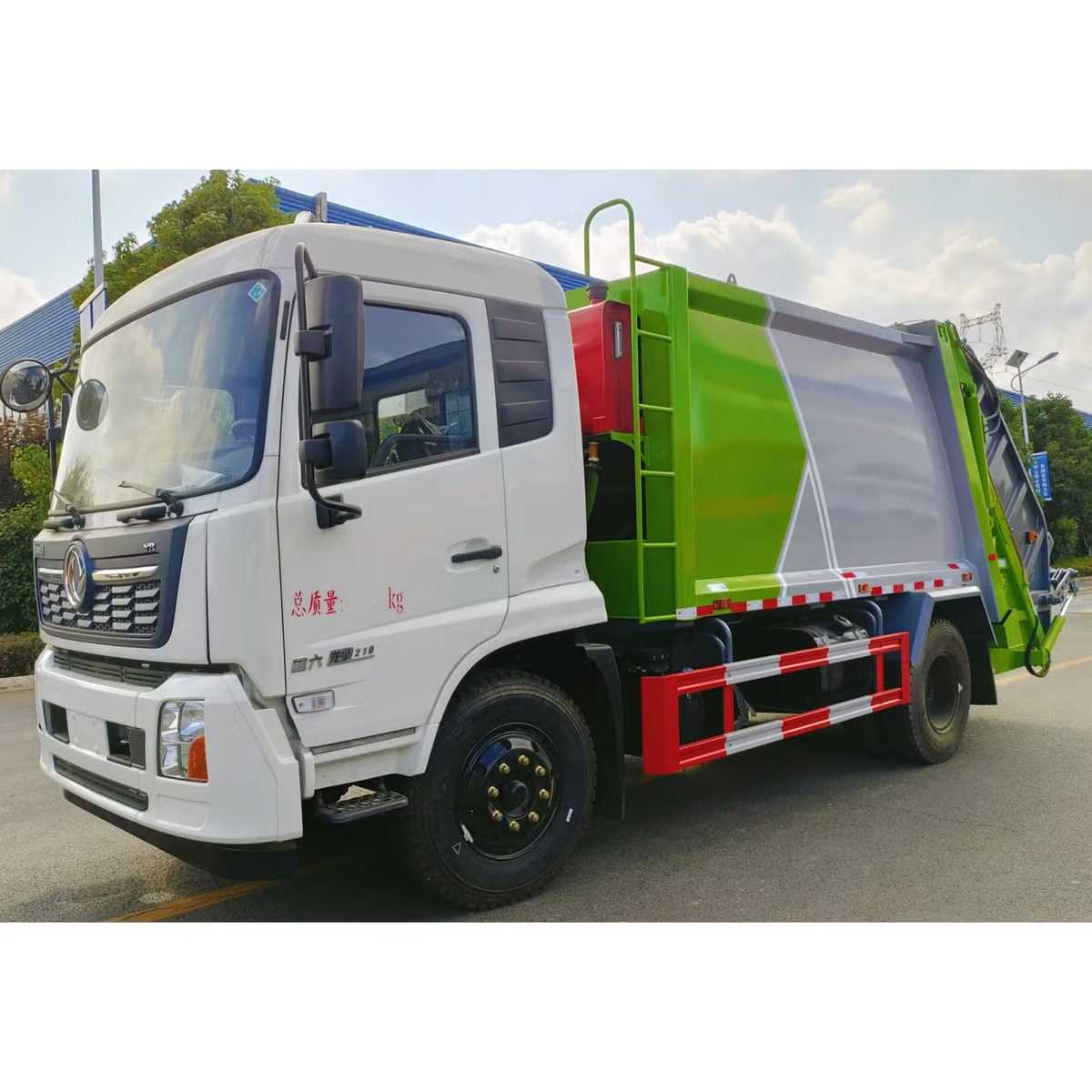
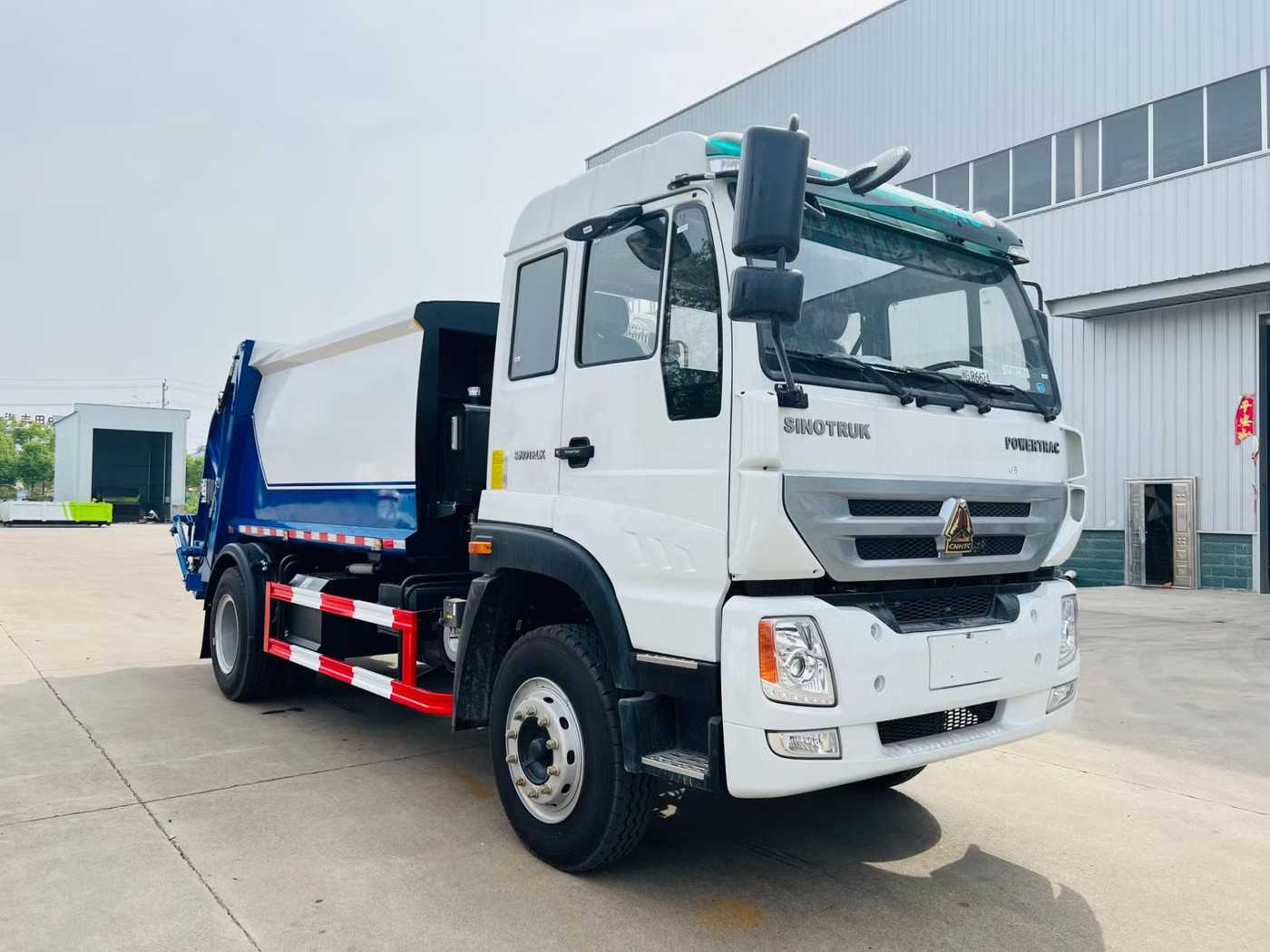
Rear-loading dustbin trucks combine a sealed steel body, tailgate hopper, hydraulic sweep-and-pack slide plate, and internal ejector blade. Crews tip 120 L–1,100 L wheelie bins via a rear hydraulic lifter—or load bagged refuse manually—triggering a 20–30 second packing cycle. Compaction ratios of 2.5:1 to 3:1 maximize payload per trip while trapping wet organic runoff inside a bottom leachate tank.
Swing-Arm Skip Loader Trucks (Skip Lorries)
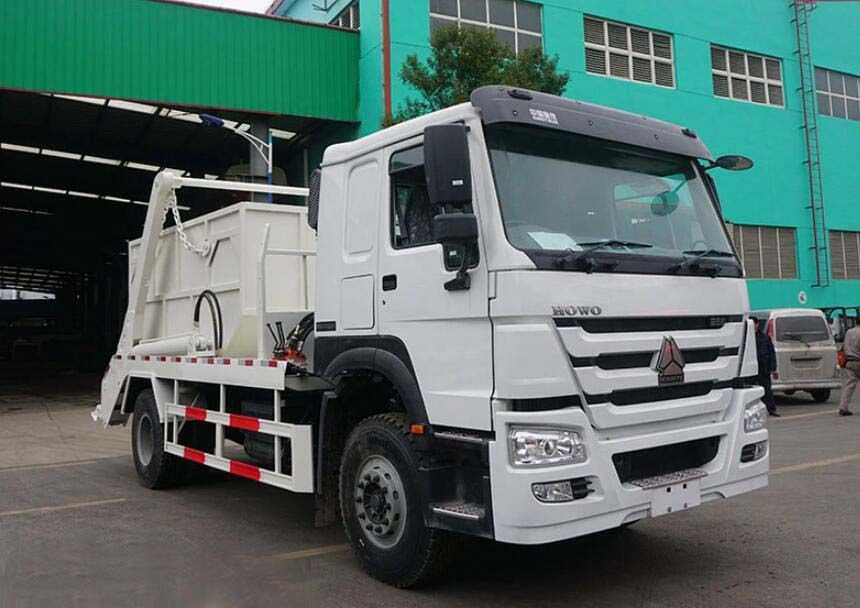
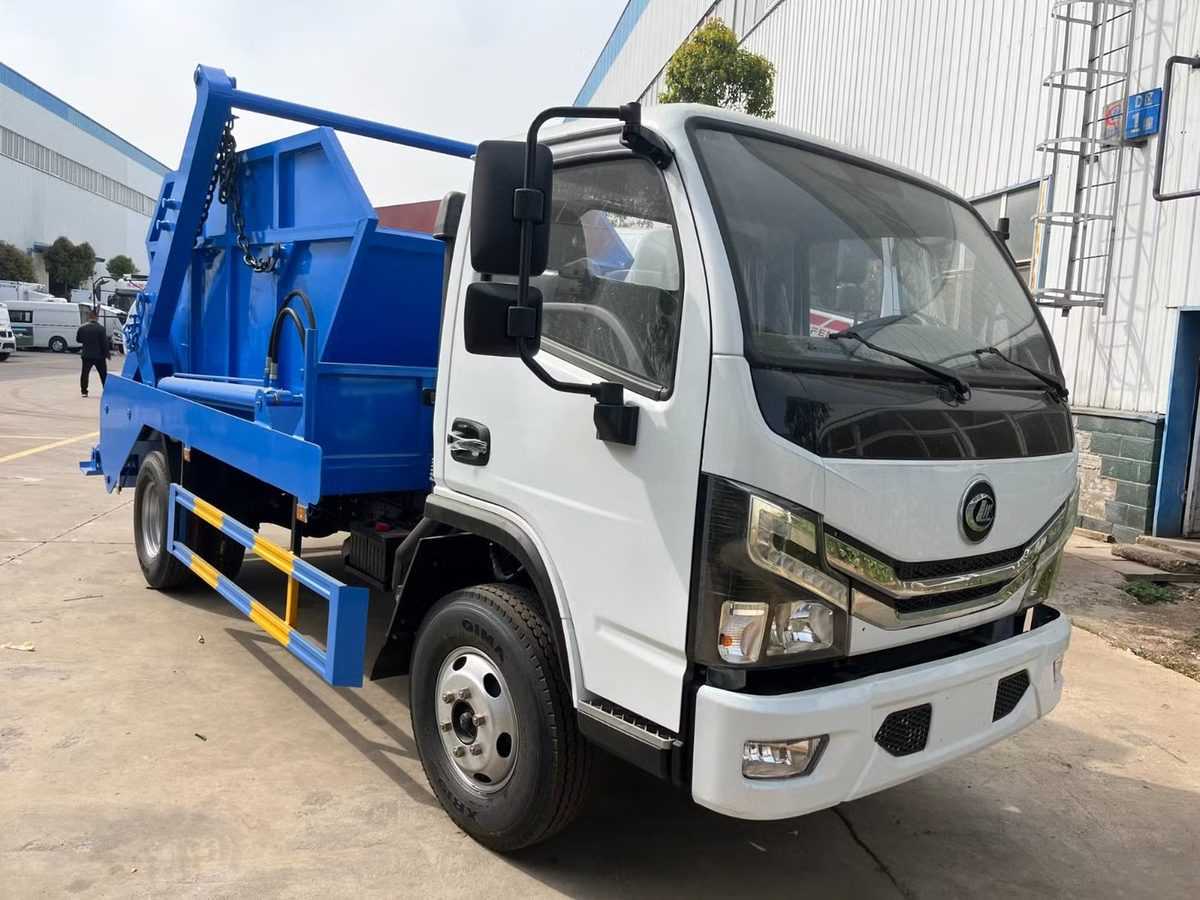
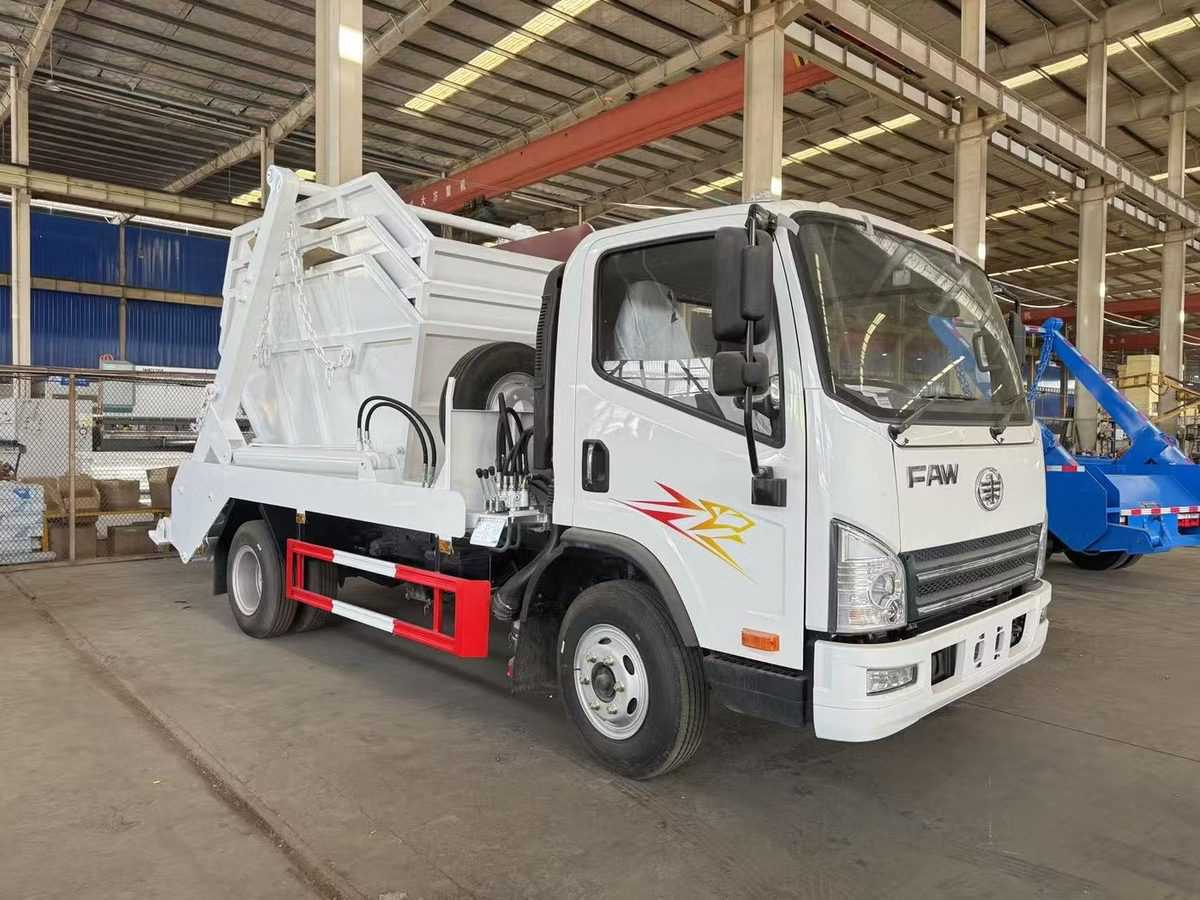
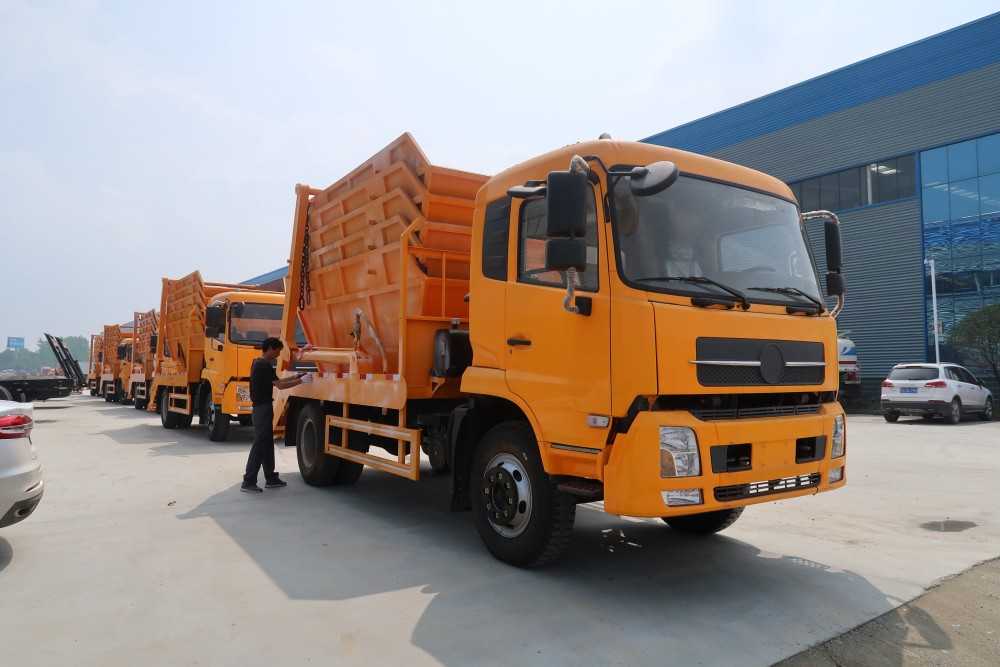
A swing-arm skip lorry mounts twin hydraulic boom arms, lifting chains, a reinforced deck with rear stops, and two rear hydraulic outriggers on a 4x2 or 6x4 chassis. Instead of waiting for hand shoveling, the driver backs up to a loaded 4 m³–10 m³ trapezoidal steel skip, deploys the outriggers, hooks four chains onto side lugs, hoists the bin in 60–90 seconds, and heads to the dumpsite. Tipping engages a rear latch hook as the boom arms swing backward.
Roll-On / Roll-Off Hook Lift Trucks
A hook lift truck replaces side chains with a central telescopic or articulated hydraulic hook arm on a heavy subframe. The arm pivots rearward, latches onto a front bail bar on a 10 m³–20 m³ rectangular roll-off container, and pulls the box onto rear guide rollers directly from the cab—without the driver stepping into mud. Handling longer, heavier containers makes hooklifts ideal for bulk transfer, industrial estates, and construction haulage.
| Factor | Rear-Loading Compactor | Swing-Arm Skip Loader | Roll-On / Roll-Off Hooklift |
|---|---|---|---|
| Logistics Mode | Curbside & door-to-door route collection | Stationary swap-bin shuttle | Bulk & heavy roll-off haulage |
| Body / Bin Volume | 5 m³–20 m³ fixed sealed body | 4 m³–10 m³ detachable skips | 10 m³–20 m³+ roll-off boxes |
| Bins per Truck | 1 fixed body (serves wheelie bins) | 4–8 skips per chassis | 3–6 heavy boxes per chassis |
| Compaction | 2.5:1–3:1; sealed leachate tank | Loose load; optional lids & drain plug | Loose (or portable compactor box) |
| Crew Size | 1 driver + 2–4 loaders | 1 driver (+ optional chain assistant) | 1 driver (full in-cab control) |
| Chassis Class | 4x2 or 6x4 (7.5–25 t GVW) | 4x2 medium duty (8–18 t GVW) | 6x4 or 8x4 heavy (18–32 t GVW) |
| Hydraulics | High (packer, slide, ejector, lifter) | Low–Moderate (2 boom + 2 outriggers) | Moderate–High (telescopic hook + locks) |
Why Skip Loaders Excel in Markets, Estates & Transfer Points
When African municipalities evaluate a skip loader truck for sale, the business case hinges on chassis utilization. Open produce markets, bus terminals, slaughterhouses, and informal settlement perimeter pads generate refuse continuously. Parking an open tipper or compactor to be hand-shoveled leaves the engine, gearbox, and cab idling for 60%–75% of the shift.
A swing-arm skip lorry eliminates idle time through a 1-truck-to-5-bin rotation cycle. While four skips sit on concrete pads absorbing organic market refuse, the truck drops an empty bin, hoists a full one, and shuttles nonstop to the landfill. One agile chassis such as the CLW swing arm garbage truck or CLW CL BZW skip loader truck runs 6–10 round trips per shift on a 10–15 km haul, replacing two or three open tippers while slashing manual labor.
Proven Benchmark: 120 Skip Loaders & 600 Skips in Madagascar
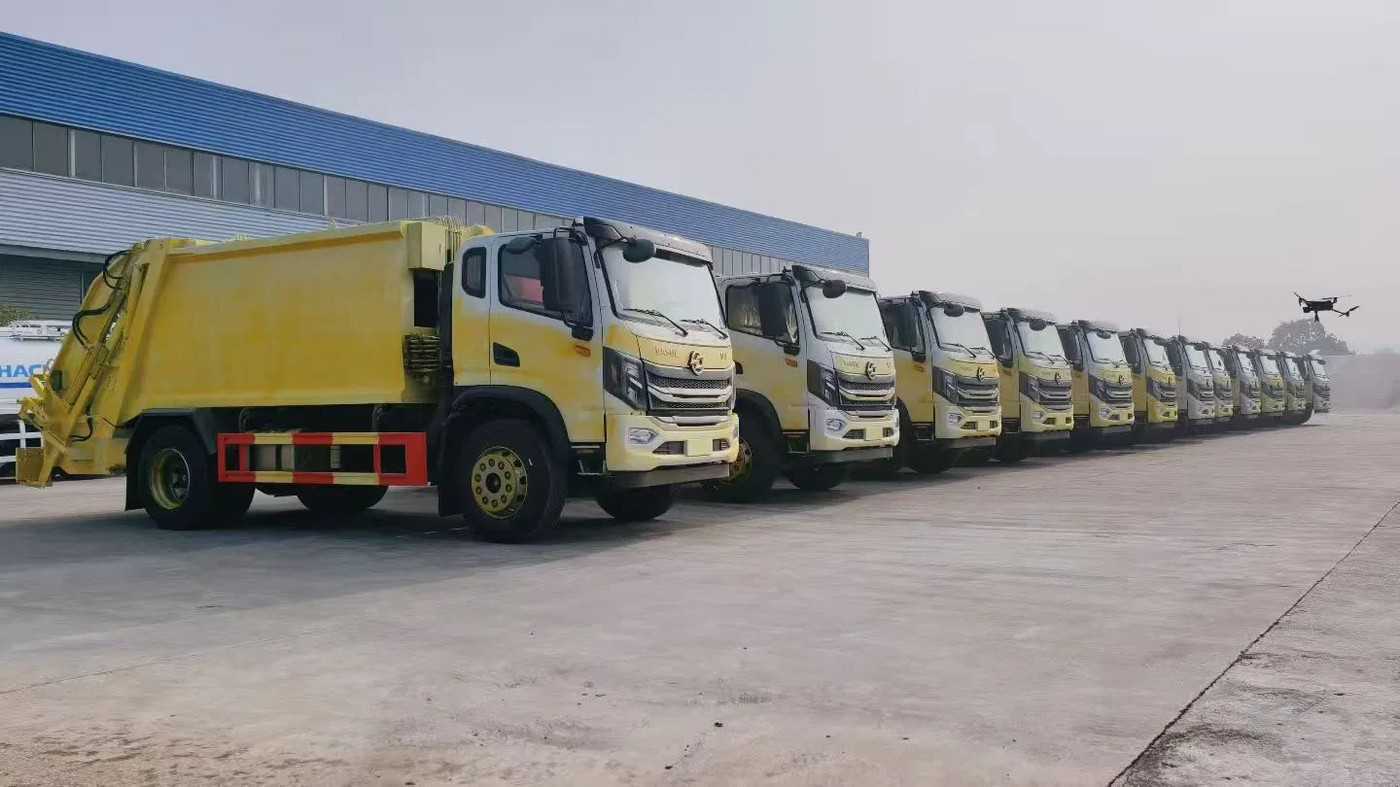
This multi-skip model is proven at national scale in CLW’s Madagascar 120 skip loader trucks and 600 skips project case. To upgrade sanitation across dense urban communes without overwhelming local workshops, the authority deployed 120 uniform swing-arm skip loaders at an exact 1:5 truck-to-skip ratio (600 detachable bins), unlocking three lasting advantages:
- Zero-downtime drop points: Every full skip hoisted onto a truck was immediately swapped for an empty bin, curbing roadside dumping during landfill trips.
- Unified parts inventory: Standardized hydraulic seals, lifting chains, PTO gearboxes, and Q235B/Q345B skip lug geometry across all 120 trucks kept workshop stocking lean.
- Dust-tolerant durability: With far fewer slide rails, wear pads, and proximity sensors than rear compactors, swing-arm hydraulics maintained high uptime despite grit and wet organic waste.
On tropical market routes, acidic organic leachate rusts thin bin floors years before the truck wears out. Specify 4 mm minimum floor plates (5 mm for heavy debris), 3 mm side walls in Q235B or Q345B steel, continuous interior seam welds, epoxy primer, and threaded drain plugs—and lock one uniform lifting-lug drawing so every skip fits every skip lorry across future tenders.
When Hooklift Trucks Fit Bulk Waste & C&D Debris
Once container volumes exceed 10 m³ or payloads climb past 8–10 metric tons, swing-arm reach and chain ratings hit their limits. A heavy 6x4 or 8x4 hook lift truck (18–32 t GVW) then becomes the stronger investment, handling 12 m³–20 m³ roll-on/roll-off containers (and up to 25 m³ for bulky packaging) across four core roles:
- Construction & demolition (C&D) debris: Low-wall 10–14 m³ rock boxes with 6 mm floors haul broken concrete, spoil, and rebar without straining lifting chains.
- Long-haul transfer stations: When landfills sit 25–50 km outside town, feeding 18–20 m³ hooklift transfer boxes (or portable hooklift compactors) cuts diesel burn per ton far below small residential trucks.
- Industrial parks, ports & mining camps: Factories and port terminals stage scrap, pallets, and sludge cleanly in lockable roll-off containers.
- Multi-body utility: One hooklift chassis swaps between a waste box, a water bowser skid, and a flatbed tray for moving compact plant.
Weighbridge Axle Rules, Steering & Tropical Specifying
Across EAC corridors (Mombasa–Nairobi, Dar es Salaam–Dodoma), SADC routes, and ECOWAS weighbridges, officers enforce individual axle-group limits—not just gross weight. Wet demolition rubble shifted rearward easily overloads tandem drive axles. Matching 6x4 wheelbase geometry, rail stop spacing, and a rear axle stabilizer roller prevents nose-lifting during heavy pulls and keeps axle loads compliant.
Local build rules are equally decisive. Right-hand-drive (RHD) markets—Kenya, Tanzania, Uganda, Zambia, Zimbabwe, and South Africa—require factory LHD or RHD steering configurations matching customs rules, while Nigeria, Ghana, Senegal, Ivory Coast, Cameroon, and Madagascar require LHD builds. Where high-sulfur diesel persists outside capitals, specifying mechanical-pump Euro II or Euro III engines via our African emission chassis guide avoids common-rail injector and DPF failures. Pair the driveline with oversized radiators, oil-bath air pre-cleaners, and heavy multi-leaf springs built for tropical heat and dusty landfill tracks.
Building a Mixed Municipal Fleet (Compactors + Skip Loaders)
High-performing African municipalities rarely buy one truck type citywide. They zone the city into tiers so each vehicle runs at peak payload and turnaround efficiency:
- Zone 1 — Residential estates & narrow streets: Gated compounds, hotels, and tight urban lanes require scheduled curbside collection from 120 L–1,100 L wheelie bins where open skips draw odor complaints. Compact rear loaders like the 5CBM Foton Forland Star 3 Compactor Garbage Truck and 5CBM Foton Forland Star 3 Refuse Compactor Truck navigate tight alleys effortlessly, compress wet refuse tightly, and retain runoff inside sealed leachate sumps.
- Zone 2 — Markets, transit hubs & peri-urban pads: Where full-size trucks cannot enter narrow footpaths, handcart pushers tip into 6 m³–8 m³ skips on concrete pads while skip lorries swap full bins on fixed morning and evening loops.
- Zone 3 — Industrial zones & transfer corridors: Once daily tonnage tops 150–200 tons or haul distance exceeds 20 km one-way, 6x4 hooklifts with 15–20 m³ boxes lower fuel cost per ton and protect compactor blades from dense industrial debris.
Landed-Cost Drivers, Ocean Freight & Import Compliance
Delivered pricing follows a written quotation tailored to chassis brand, emission tier, steering, steel thickness, hydraulic brand, and bin count. Beyond factory price, three export levers shape landed budgets:
- Ocean freight & skip nesting: Compactors and hooklifts ship via Ro-Ro or flat-rack into Mombasa, Dar es Salaam, Apapa, Tema, Durban, Beira, or Toamasina. Tapered skips nest inside one another inside 40HQ containers or on deck—cutting sea freight per bin by 40%–60%. See our payment and shipping guide for routing options.
- Pre-shipment inspections: Schedule KEBS PVoC (Kenya), TBS PVoC (Tanzania), UNBS PVoC (Uganda), SONCAP/Form M (Nigeria), or BESC/CTN waivers early via our import compliance checklist to prevent port demurrage.
- Factory verification: Review manufacturing quality credentials on CLW’s certificates page (ISO management certificates cover factory quality systems and are separate from destination vehicle homologation) and verify official bank details via our anti-fraud notice.
Low-bid waste trucks often hide three costly failures: undersized hydraulic tanks that overheat seals above 40°C; thin 2.5–3 mm skip floors perforated by acidic food leachate inside 12 months; and non-standard cylinders with no local seal-kit cross-reference. Insist on hydraulic oil coolers for heavy compactors and hooklifts, verified steel-thickness inspection before shipment, and a 12–24 month wear-parts kit (filters, seals, lifting chains, PTO bearings, and solenoids) packed inside delivery.
Fleet Ratio Planning Worksheet
Before drafting a tender, convert district waste tonnage into realistic chassis counts. African municipal refuse carries high organic moisture, averaging 350–450 kg/m³ loose—heavier than dry Western packaging waste. Size trucks by both cubic volume and legal axle payload:
- Estimate daily tonnage: Multiply served population by per-capita waste (0.45–0.75 kg/person/day) and target collection coverage (75%–90%).
- Segment by zone: Split tonnage across curbside residential (compactors), markets/pads (skip loaders), and bulk/C&D/transfer routes (hooklifts).
- Apply realistic shift productivity: Account for traffic, landfill queues, and a 15% maintenance reserve so routine servicing never halts collection.
| Service Zone Profile | Daily Load | Recommended Fleet Mix | Container Ratio | Engineering Priority |
|---|---|---|---|---|
| Secondary Town (50k–150k pop.) | 25–70 t/day | 2–3× Compactors (5–8 CBM) + 2–3× Skip Loaders (6–8 m³) | 5 skips/lorry (10–15 total) | 4x2 Euro II/III mechanical engine, tight wheelbase, sealed sump |
| Metro District (250k–500k pop.) | 120–280 t/day | 6–10× Compactors (8–14 CBM) + 6–10× Skip Loaders + 2× Hooklifts (16–20 m³) | 5–6 skips/lorry; 3–4 boxes/hooklift | 4x2 & 6x4 mix, hydraulic oil cooler, uniform bin lugs |
| Industrial Park / Port / Mine | 40–120 t/day | 1–2× Skip Loaders + 2–4× Hooklifts (14–20 m³) | 4–6 heavy skips; 4–5 roll-off bins | 6x4 heavy rear axles, 5–6 mm floor plate, oil-bath air pre-cleaner |
| C&D & Debris Contractor | 50–150 t/day | 1× Heavy Skip Loader (6 m³) + 2–3× Hooklifts (12–16 m³ rock boxes) | 3–4 low-wall boxes/hooklift | 6x4/8x4 weighbridge compliance, rear stabilizer roller, wear liners |
Agencies preparing public bids can request GA drawings and technical schedules via our tender support team, or review direct export steps in our factory buying guide.
Frequently Asked Questions
How many skips should I order per skip loader truck?
For active markets, estates, and transfer pads, 5 to 6 skips per truck is the proven benchmark—the exact 1:5 ratio deployed in CLW’s 120-truck, 600-skip Madagascar fleet. Fewer than 3 skips leaves trucks waiting, while 5–8 bins keep chassis cycling nonstop with spares for washing and welding.
Can one waste lorry handle both wet market garbage and heavy construction rubble?
Never load concrete, bricks, or scrap steel into a compactor—rigid debris bends packer blades and jams slide rails. A heavy skip loader or 6x4 hooklift can serve both streams using separate containers: sealed high-wall bins for wet market waste and thicker low-wall rock boxes for C&D rubble.
How do LHD/RHD rules and diesel quality affect African waste truck specs?
Port customs enforce steering rules strictly: specify factory RHD for Kenya, Tanzania, Uganda, Zambia, and South Africa, and LHD for Nigeria, Ghana, Senegal, Ivory Coast, Cameroon, and Madagascar. Where diesel sulfur exceeds 50 ppm, choose Euro II or Euro III mechanical engines over sensitive Euro V aftertreatment systems.
How are skip loader trucks and extra bins shipped to cut sea freight?
Trucks typically sail via Ro-Ro with one skip on deck, while tapered extra skips nest 4–6 units together inside 40HQ containers or stacked on flat racks. CLW engineers plan container nesting upfront so you avoid paying ocean freight on empty space.
Build Your Custom Municipal Waste Fleet Proposal
Share five project parameters with CLW’s African fleet engineers for GA drawings, axle-load checks, container-nesting freight plans, and a tailored FOB/CIF quotation:
- Port & Steering: Discharge port (Mombasa, Dar es Salaam, Apapa, Tema, Durban, Beira, or Toamasina) and LHD/RHD requirement.
- Fleet Mix & Quantities: Target counts of compactors, swing-arm skip loaders, hooklifts, and extra skips or roll-off boxes.
- Waste Stream & Haul Distance: Residential, wet market, industrial, or C&D loads plus one-way dumpsite distance.
- Chassis & Emission Tier: Preferred chassis brand, Euro II/III/IV/V fuel requirement, and weighbridge constraints.
- Tender & Compliance Needs: Bid documentation, PVoC/SONCAP inspection, and wear-parts kit scope.