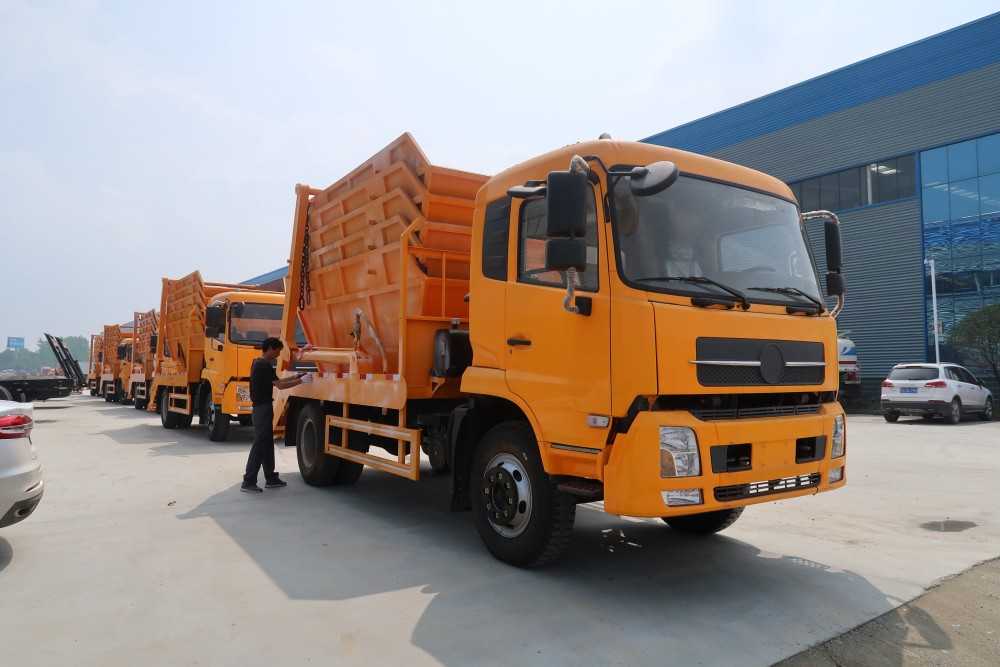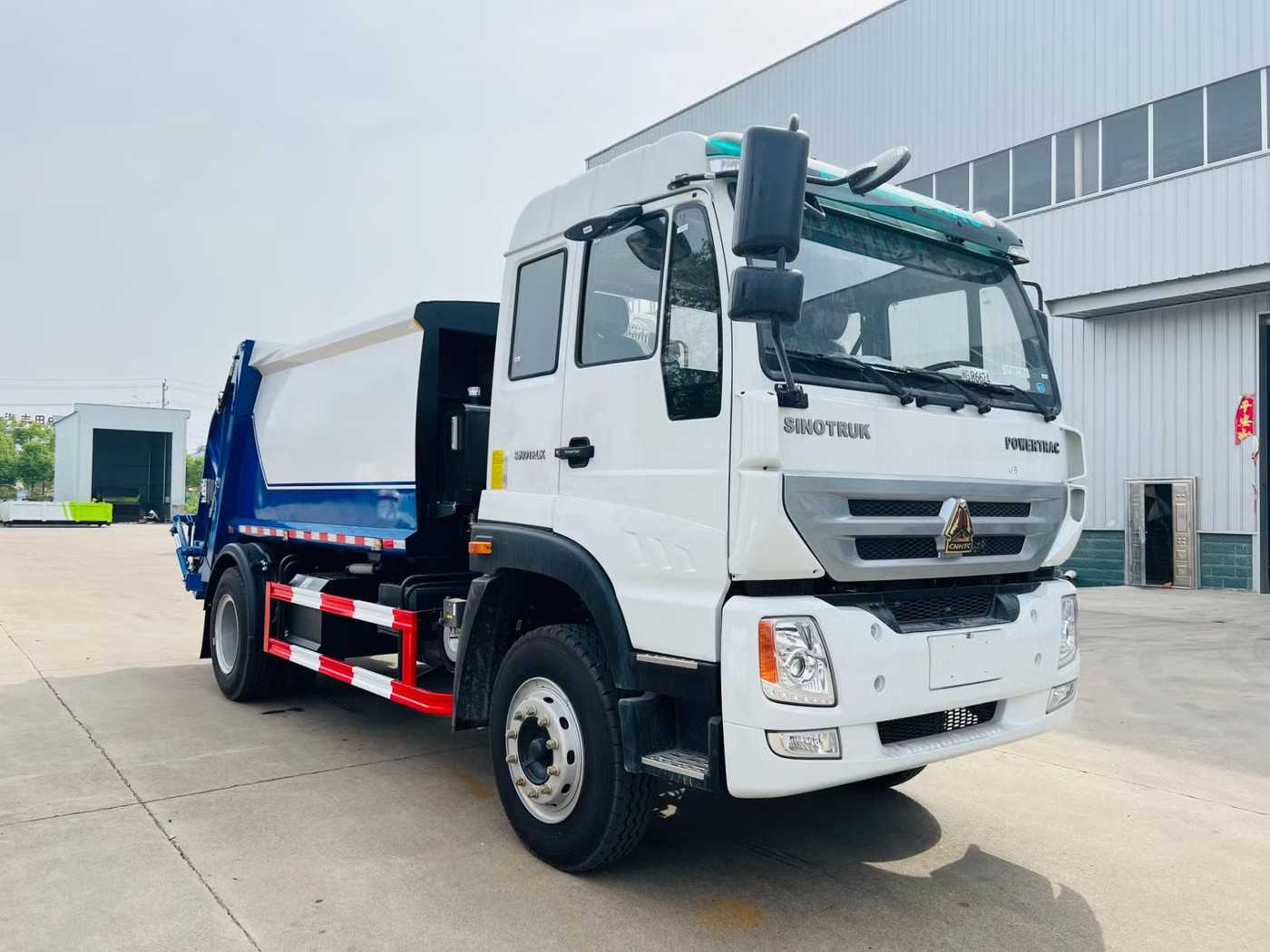
Sanitation contractors and municipal agencies across Nigeria, Kenya, and Tanzania face rising urban refuse volumes alongside longer landfill haul distances. Whether running shifts from Lekki to Olusosun, Westlands to Dandora, or Kariakoo to Pugu Kinyamwezi, choosing between an open dumpster truck and a sealed rear-loader compactor controls fuel burn, crew size, and contract margin.
Evaluating the true garbage compactor truck price requires looking past a bare factory headline. Two 16 m³ trucks sit in very different cost tiers once you compare chassis axle ratings, manganese steel thickness, hydraulic valves, rear lifters, tropical cooling, and port compliance. This guide details capacity sizing, cycle specs, corrosion protection, and landed-cost structure for African fleet buyers.
Why Rear-Loader Compactors Outperform Open Dumpster Trucks
Many waste operators first price an open tipper or dumpster truck because upfront outlay looks lower. In urban collection, however, loose household waste averages just 180–280 kg/m³—so an open tipper fills by volume well before reaching legal payload. Crews lose hours tossing sacks over high sideboards, wind scatters plastics onto avenues, and wet leachate drips onto public roads.
A sealed rear-loader garbage compactor truck solves these issues through bidirectional hydraulic compression. A sliding packer plate and sweeping blade pull refuse from the rear hopper and press it against the ejection bulkhead at 18–20 MPa working pressure. This achieves a 2.5:1 to 3:1 compaction ratio, raising in-body density to 600–800 kg/m³ and more than doubling payload per trip.
Cycle Speed and Landfill Fuel ROI
Doubling compacted tonnage per trip halves deadhead landfill runs. On congested corridors around Lagos, Nairobi, or Dar es Salaam—where one dumpsite round trip takes two to three hours—cutting daily trips from four to two immediately lowers diesel, tire, and brake costs. A well-tuned hydraulic circuit completes one compaction cycle in 18–25 seconds and ejects the full compressed load horizontally in 35–45 seconds, avoiding rollover risks on soft landfill benches.
| Operational Metric | Open Dumpster Truck | Rear-Loader Compactor | African Municipal Impact |
|---|---|---|---|
| Compaction Ratio | 1:1 (loose gravity fill) | 2.5:1 to 3:1 hydraulic | 2x+ higher tonnage per landfill trip |
| Loaded Waste Density | 180–280 kg/m³ | 600–800 kg/m³ mixed waste | Cuts half-weight runs on long hauls |
| Loading Ergonomics | High manual lift over walls | Low hopper or bin lifter | Faster stops and lower crew fatigue |
| Odor & Leachate | Open top; dripping tailboard | Sealed body & sewage sump | Meets hygiene rules; avoids fines |
| Landfill Discharge | Raised bed risks rollover | Horizontal ejection (35–45 s) | Safe unloading on uneven dumpsites |
| Lifecycle Cost / Ton | Higher fuel & labor / ton | Lowest cost / ton over 5+ yrs | Stronger margin on municipal bids |
Price Factors Across 6 m³, 12 m³, 16 m³ & 20 m³ Compactors
When buyers compare the garbage truck price in Nigeria or landed quotes into Mombasa and Dar es Salaam, offers for the same nominal volume often vary by 30%–45%. Four engineering variables govern the factory FOB cost tier before freight and duties apply.
1. Chassis Brand, Steering Hand, and Emission Match
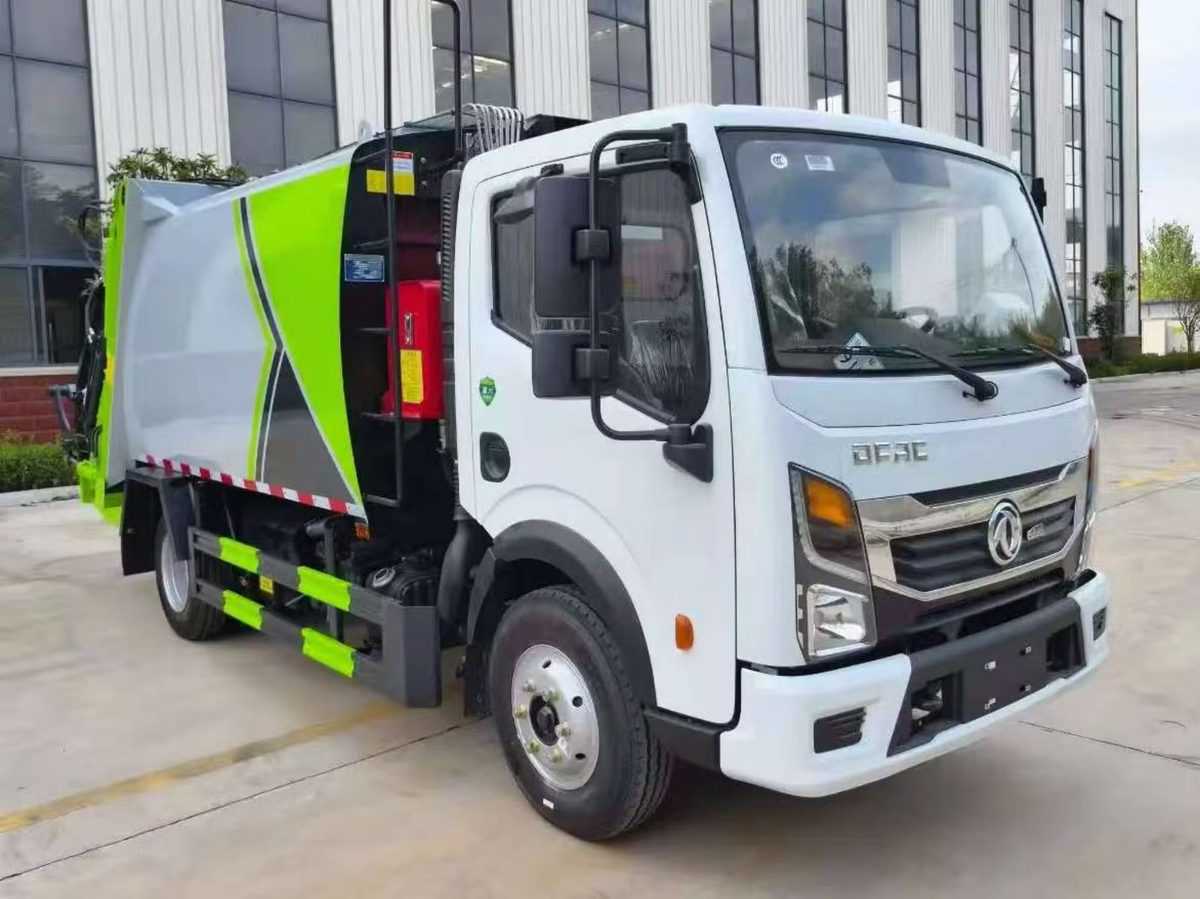
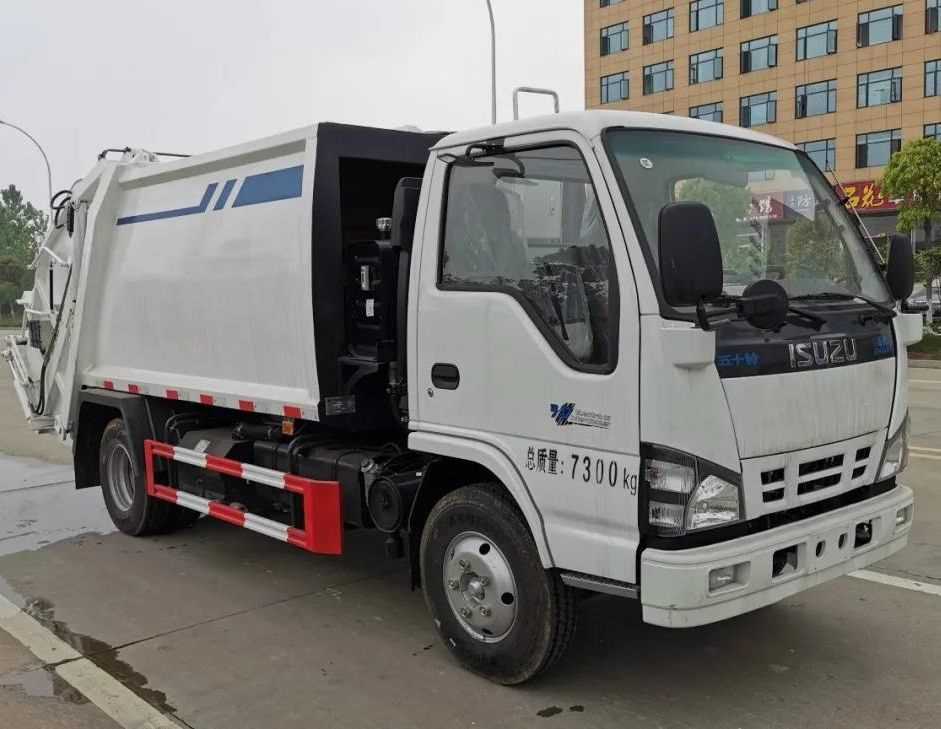
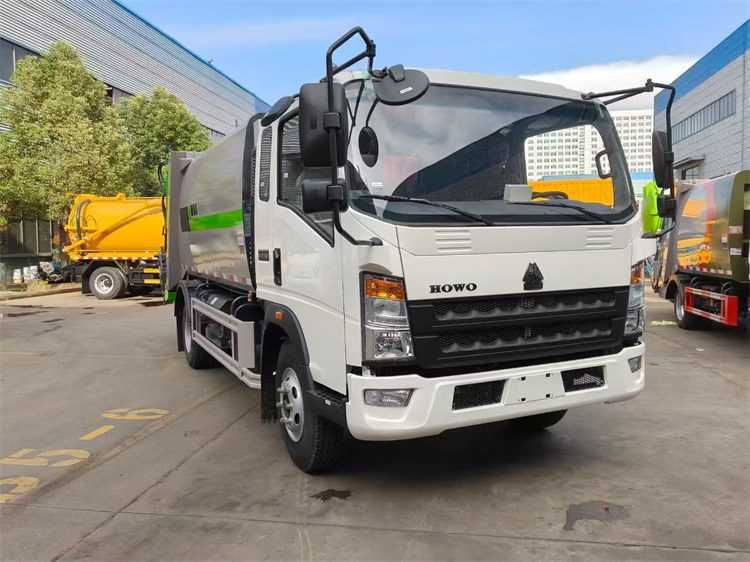
The truck chassis makes up 45%–60% of the FOB build cost. Compact 5 m³ and 6 m³ trucks on 4×2 light chassis (Isuzu ELF, Foton Forland) suit tight estates, campuses, and dense alleys. Medium 12 m³ and 16 m³ platforms (Foton Auman, HOWO, Dongfeng, Isuzu F-Series) serve core municipal wards, while 20 m³ 6×4 units handle trunk transfer corridors.
Steering and fuel-system alignment with local law is essential. Nigeria mandates left-hand drive (LHD), while Kenya and Tanzania enforce right-hand drive (RHD)—see our LHD and RHD options guide. Likewise, mechanical-pump Euro II/III engines remain practical where diesel sulfur levels vary, whereas Euro IV/V common-rail platforms need clean low-sulfur fuel. Reviewing African emission and chassis options early prevents injector failures after delivery.
2. High-Tensile Manganese Steel Body vs. Mild Steel
Compaction chambers endure heavy abrasion from sand, glass, and grit mixed with acidic leachate. Budget builders cut quotes with 2.5–3 mm Q235 mild steel, which bows under packing force and rusts through within 18–24 months. Heavy-duty export bodies use wear- and corrosion-resistant manganese steel (Q345B, Q355B, or T420) formed into a seamless curved arc—typically pairing a 4–5 mm reinforced floor and hopper with 3–4 mm side walls—preventing dead-corner build-up and doubling service life.
3. Hydraulic Valves and PLC + Manual Dual-Control Redundancy
The hydraulic circuit—PTO-driven gear or piston pump, multi-way directional valve block, bidirectional locks, and chrome cylinders—determines uptime. Buyers choose between proven Chinese heavy-duty valve blocks (low-cost seal kits, easy local service) or upgraded European proportional valves for smoother high-shift modulation.
Control redundancy matters during tropical rains. Standard rear-loaders include a PLC electrical control box with cab and rear push-buttons plus automatic engine RPM throttle during packing. Crucially, this PLC system must pair with a full manual hydraulic lever override at the rear so a wet relay or damaged sensor never strands a loaded truck mid-route.
4. Capacity Specs, Weighbridges, and Port Cost Structure
Beyond FOB manufacturing, the landed compactor truck price in Nigeria, Kenya, or Tanzania includes RORO or bulk shipping (Apapa, Tin Can Island, Onne, Mombasa, Dar es Salaam), marine insurance, pre-shipment inspection (SONCAP, KEBS PVoC, or TBS PVoC), duties, and port clearance. Because KeNHA in Kenya and TANROADS in Tanzania enforce strict axle weighbridges, dense wet-waste loads at 16–20 m³ should use properly rated 6×4 axles rather than overloading a 4×2 chassis.
| Capacity | Chassis & Drive | Cycle / Eject | Urban Application | Cost Tier & Verified CLW Reference |
|---|---|---|---|---|
| 5 m³ | 4×2 Light (Foton Forland Star 3, 95–115 hp, LHD/RHD) | 18–20 s / 30–35 s | Estate lanes, town councils, campuses | Entry tier — 5CBM Foton Forland Star 3 Compactor & 5CBM Foton Forland Star 3 Refuse Truck |
| 6 m³ | 4×2 Light-Medium (Isuzu ELF 100P, 98–120 hp, LHD/RHD) | 18–22 s / 32–38 s | High-uptime estates, hospitals, resorts | Compact premium tier — 6cbm Isuzu ELF 100P Refuse Compactor & 6cbm Isuzu ELF 100P Waste Compactor |
| 12 m³ | 4×2 Medium (Dongfeng / Foton / HOWO, 180–220 hp) | 20–24 s / 38–42 s | Municipal wards, commercial districts | Mid-fleet workhorse — balanced payload & freight |
| 16 m³ | 6×4 Heavy (Foton Auman / HOWO, 290–336 hp) | 22–25 s / 40–45 s | High-volume routes, long landfill hauls | Heavy municipal tier — Foton Auman 16 m³ export batch |
| 20 m³ | 6×4 Heavy (HOWO / Shacman / Auman, 336–380 hp) | 24–28 s / 45–50 s | Trunk collection, bulk transfer hubs | Flagship tier — maximizes legal 6×4 payload |
Note: Final FOB or CIF pricing is confirmed in a written quotation based on chassis brand, LHD/RHD build, emission level, steel thickness, rear lifter hardware, spare parts, and live ocean freight to your port.
When one quotation sharply undercuts competing factory offers, inspect four shortcuts: thin Q235 mild steel instead of Q345B/T420 manganese plate, no independent hydraulic oil cooler for 40°C heat, PLC-only controls without manual backup levers, and missing PVoC or SONCAP readiness. Rebuilding a split hopper floor locally erases upfront savings.
Essential Rear Lifter Options for African Cities
A compactor reaches its rated daily tonnage only when its rear feeder matches local waste staging. Specifying the wrong tailgate slows crews or forces costly welding modifications after delivery.
1. 240 L / 660 L / 1,100 L Plastic Bin Lifter
Built for residential estates, malls, hotels, and offices in areas like Victoria Island, Kilimani, or Oyster Bay. A hydraulic comb-and-trunnion lifter clamps two 240 L EN-840 wheelie bins simultaneously—or one 660 L / 1,100 L container—tips waste cleanly into the hopper, and returns the bins smoothly. Dual-compatibility arms let one truck service both 240 L curbside bins and 1,100 L apartment containers on one shift.
2. Large Ground-Level Tipping Hopper (Triangle Shovel)
Where markets and peri-urban districts rely on woven sacks, wheelbarrows, and roadside heaps rather than wheelie bins, a hydraulic wide tipping dustpan lowers flush to the street. Crews shovel or toss loose refuse easily, then tip 1.2–2.0 m³ at once into the chamber. During transit, the bucket folds up to seal the rear opening.
3. Swing-Arm Skip Lifter and Crew Safety Features
For municipal hubs using 3–5 m³ steel skips, a reinforced swing-arm lifter hooks chains onto skip lugs and dumps containers straight into the hopper. Across all configurations, specify non-slip folding rear riding steps with grab rails, dual rear emergency-stop buttons, LED night work lamps, and a cab rear-view camera with reverse alarm to protect crews in busy streets.
Leachate (Sewage) Tank & Anti-Corrosion Design for Wet Tropical Waste
Unlike dry European trash, municipal waste across West and East Africa routinely holds 50%–70% organic and food moisture, climbing higher during rainy seasons in Lagos, Nairobi, Mombasa, and Dar es Salaam. Compressing wet market refuse at 18 MPa immediately squeezes out acidic leachate.
Dual-Chamber Sewage Sump Architecture
Without liquid containment, leachate leaks past the tailgate onto city roads—drawing fines—and runs over chassis rails, corroding wiring and suspension brackets. Tropical export compactors use a dual leachate tank system: a front floor drainage trough paired with a large rear tailgate sump (typically 200–450 liters combined). Internal baffle plates separate sludge from liquid, while brass or stainless ball valves enable quick drainage at landfills.
Labyrinth Tailgate Seals and Coastal Rust Protection
Leak-free sealing depends on hydraulic tailgate locking hooks compressing the tailgate against a replaceable EPDM or nitrile labyrinth rubber gasket. For humid coastal cities like Lagos, Port Harcourt, Mombasa, and Dar es Salaam, specify sandblasted steel prep, zinc-rich epoxy primer, tar-epoxy internal lining, and an optional SUS304 stainless-steel hopper bottom liner to resist acid pitting.
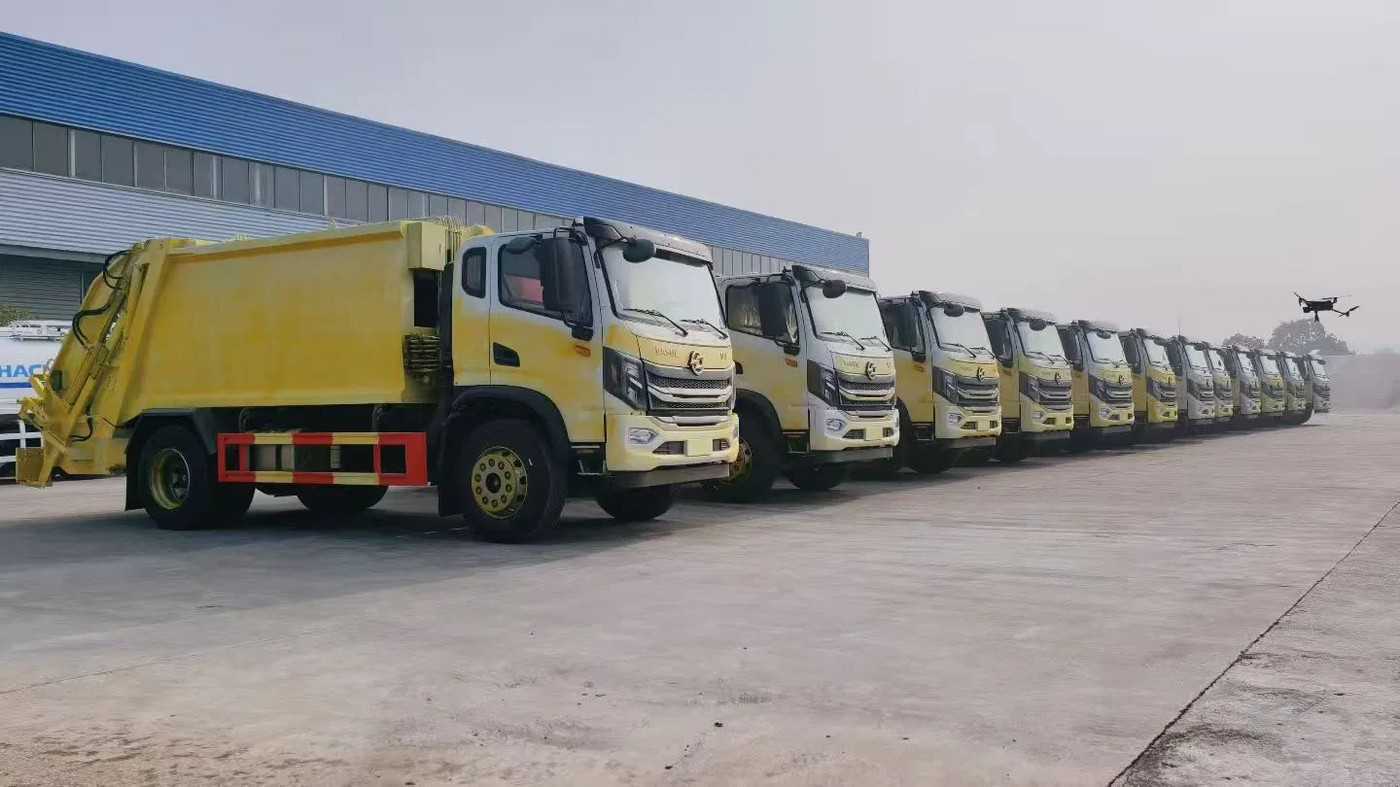
These measures were proven in our Foton Auman 16 m³ compactor garbage truck export batch, pairing reinforced manganese steel chambers, dual sewage tanks, and upgraded cooling systems. Fleets working dusty landfills and high ambient heat should also review our tropical dust-proof design package, covering cyclonic air pre-cleaners, enlarged radiators, and hydraulic oil coolers.
Have crews drain both sewage sumps at the landfill after the final shift, rinse trapped sand and glass from the tailgate rubber seal channel, and grease packer slide-block wear pads weekly. Flushing acidic leachate daily in coastal cities prevents most premature hopper corrosion.
Frequently Asked Questions on Compactor Truck Procurement
What shapes the landed garbage compactor truck price in Nigeria, Kenya, and Tanzania?
Total landed cost combines four items: factory FOB build (chassis, body steel, hydraulics, rear lifter, tropical upgrades), RORO or bulk freight plus insurance to Apapa, Tin Can Island, Mombasa, or Dar es Salaam, pre-shipment inspection (SONCAP, KEBS PVoC, or TBS PVoC), and local customs duties and clearing. See our payment and shipping guide for FOB vs. CIF details.
Should I specify LHD or RHD, and which emission standard fits local diesel?
Nigeria requires LHD vehicles, while Kenya and Tanzania mandate RHD registration. Match engine emissions to national rules and local diesel sulfur: mechanical-pump Euro II/III engines tolerate variable fuel reliably, whereas Euro IV/V common-rail models require low-sulfur diesel and scheduled filtration.
Can one compactor truck handle both 240 L / 1,100 L bins and loose manual loading?
Yes. A dual-purpose rear lifter clamps 240 L, 660 L, and 1,100 L wheelie bins while folding back so crews can load loose bags manually. For unbinned open markets, a wide ground-level tipping hopper delivers faster throughput.
What spare parts and export documents should accompany a new compactor order?
Bundle a 1-year wear kit: nylon slide blocks, hydraulic filters, tailgate labyrinth seals, proximity switches, solenoid coils, and cylinder seal kits. Confirm your supplier supplies commercial invoice, packing list, Bill of Lading, Certificate of Origin, factory QC records, and destination PVoC/SONCAP support—noting that factory ISO management certificates verify manufacturing quality systems rather than replacing destination import approvals. Review our import compliance guide and factory certificates page.
Garbage Compactor Quote Brief Checklist
Whether pricing one 6 m³ estate truck or preparing a multi-unit government bid, sharing five operational details upfront delivers an accurate factory quote without delays. For public RFPs needing compliance matrices and technical drawings, our tender support desk and buying guide assist from specification review through port handover.
5-Point Garbage Compactor Quote Brief
Send these five details to our export engineers for a tailored FOB or CIF spec sheet and written quotation within 24 hours:
- Destination Country & Port: Confirm Nigeria (LHD — Apapa/Tin Can/Onne), Kenya (RHD — Mombasa), Tanzania (RHD — Dar es Salaam), or inland transit corridor.
- Capacity & Chassis: Specify 5 m³, 6 m³, 12 m³, 16 m³, or 20 m³, preferred brand (Isuzu, Foton, HOWO, Dongfeng, Shacman), and emission standard.
- Rear Lifter Setup: Choose 240 L / 660 L / 1,100 L bin lifter, wide tipping hopper, swing-arm skip lifter, or dual-purpose frame.
- Waste & Climate Profile: Flag wet coastal routes or dusty unpaved landfills for upgraded leachate sumps, stainless liners, and tropical coolers.
- Quantity & Compliance: State fleet volume, spare-parts kit preference, and SONCAP/PVoC inspection or formal tender requirements.