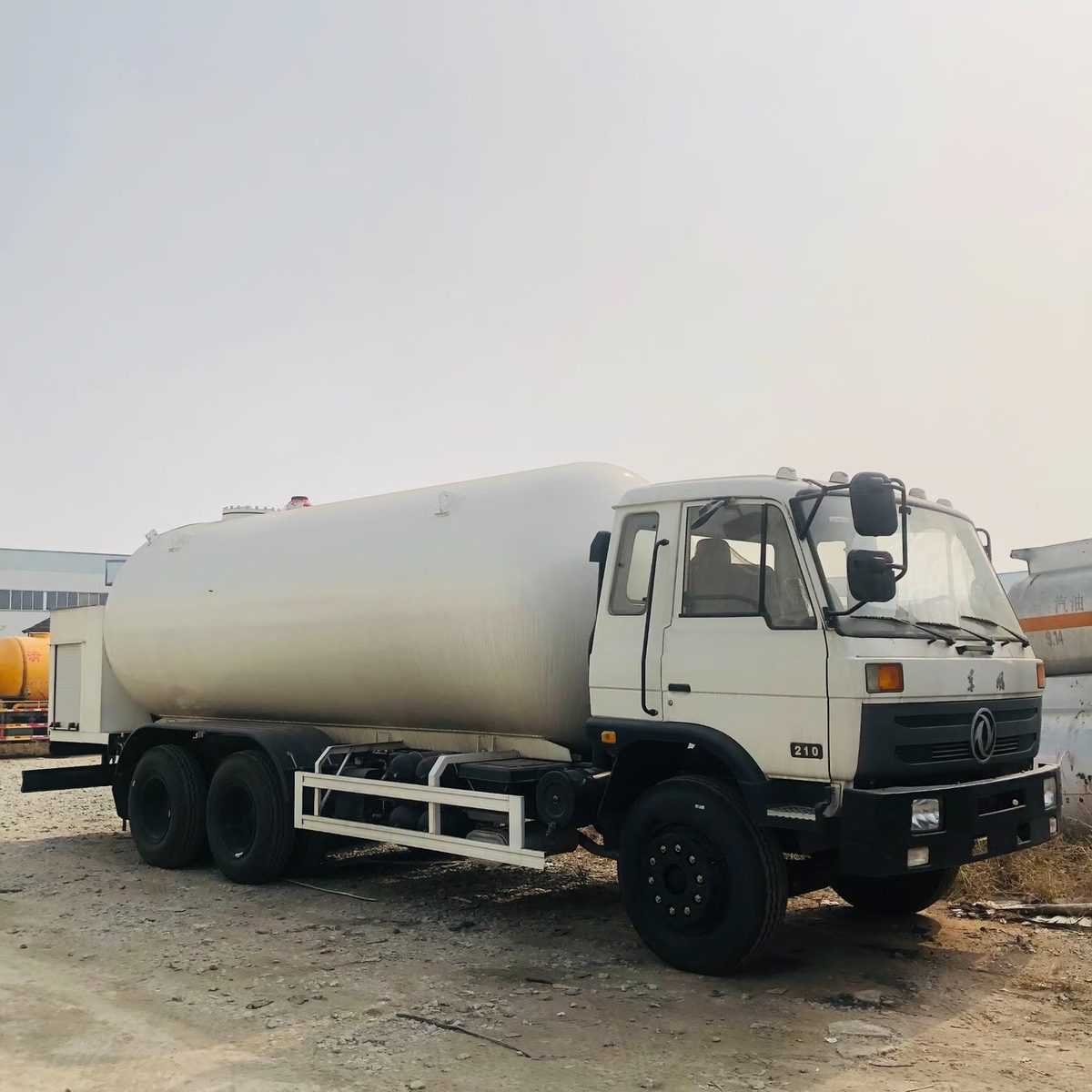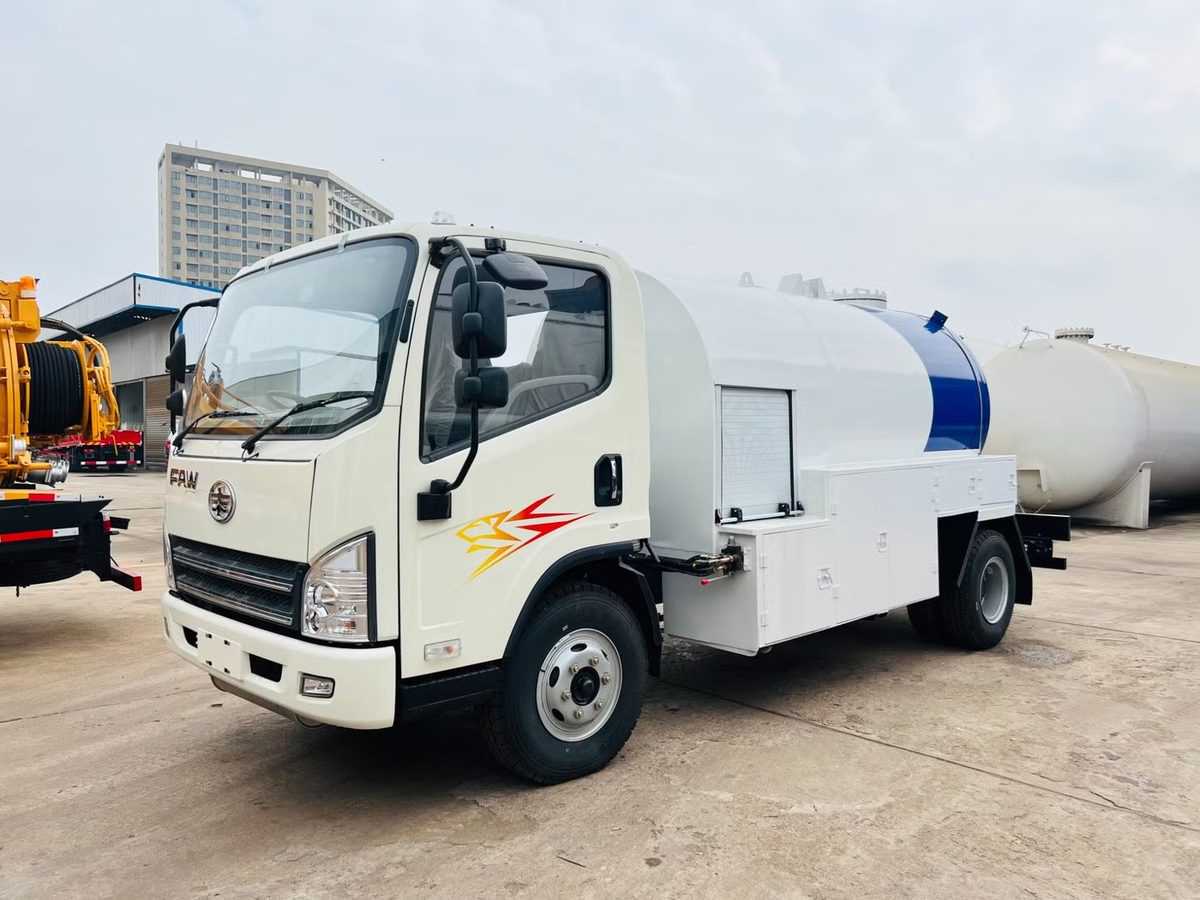
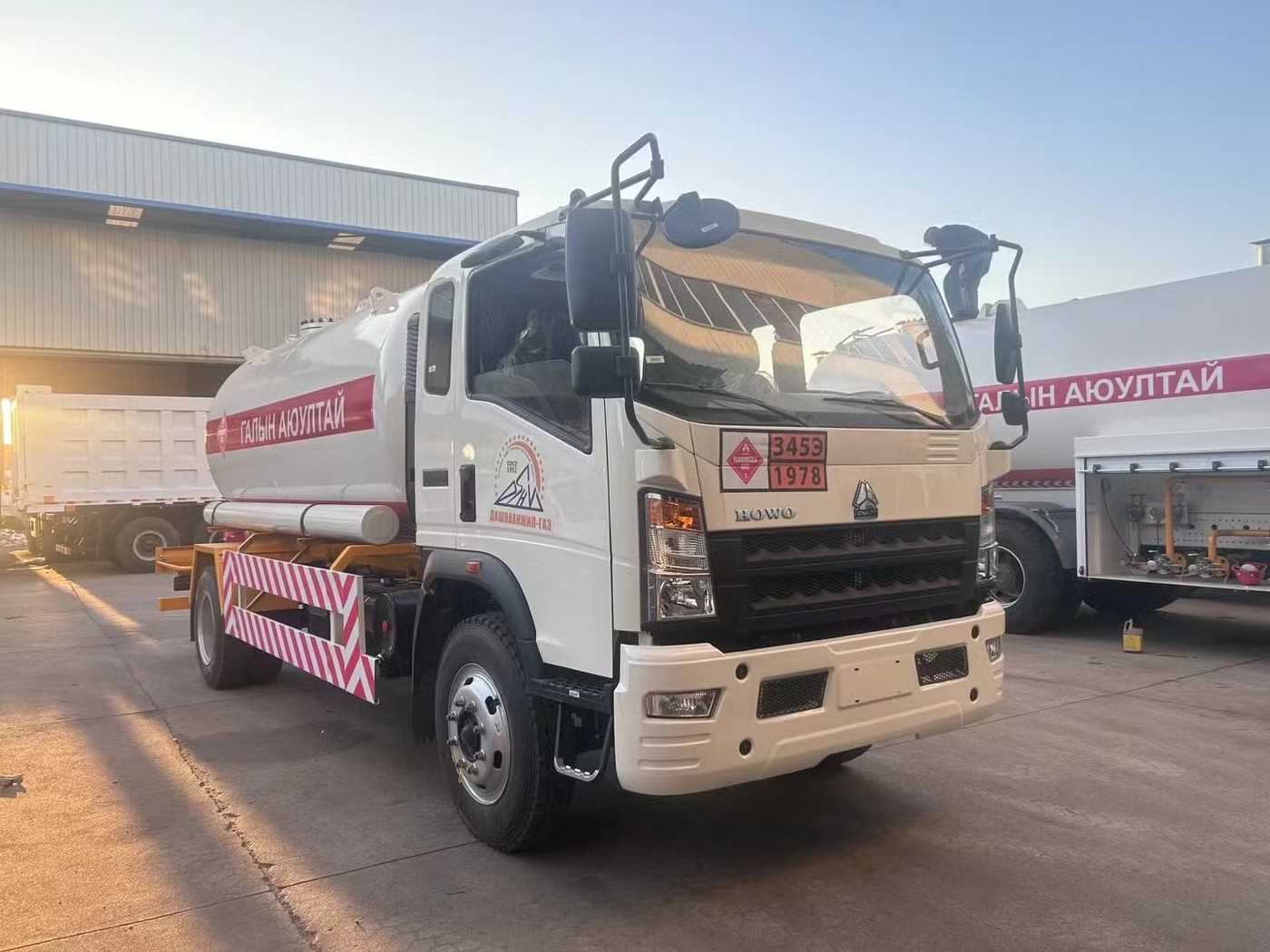
Buyers at African LPG bottling plants, gas distributors, and industrial estates quickly learn that sourcing LPG trucks is nothing like buying a diesel or water tanker. A pressurized LPG tanker truck is a mobile hazardous-gas pressure vessel governed by certified steel metallurgy, 100% radiographic weld testing, explosion-proof dispensing gear, and national gas-regulator approval.
Two quotes for the same 20 m³ bobtail can differ sharply because steel grade, design pressure, imported pump-and-meter packages, steering side, and inspection codes shape both build cost and ROI. This guide explains tank sizing, vessel fabrication, safety valves, pricing drivers, and country compliance for African buyers.
Rigid LPG Bobtail Sizes (5 m³ to 30 m³) for Urban & Regional Distribution
Liquefied petroleum gas expands rapidly in tropical heat, so international rules cap every rigid LPG road tanker at an 85% maximum liquid fill ratio, reserving a 15% vapor expansion cushion.
Net metric-ton payload depends on regional propane-to-butane ratios. Pure propane (~0.51 kg/L at 15°C) sets a conservative design factor of 0.42 t/m³ at 85% fill, while butane-rich African domestic blends (70/30 or 80/20 butane-to-propane, ~0.55–0.57 kg/L) yield practical payloads of 0.46 to 0.48 t/m³ within axle limits.
| Tank Size | Net Payload (85% Fill) | Typical Chassis & Engine | African Distribution Role | Weighbridge & Route Fit |
|---|---|---|---|---|
| 5 m³ – 8 m³ | ~2.1 – 3.8 t | 4x2 light/medium (130–190 HP) | Urban hotels, restaurants, hospitals, compact skid stations | Narrow estate gates, low stop-start fuel burn |
| 10 m³ – 15 m³ | ~4.2 – 7.2 t | 4x2 heavy (190–260 HP) | Commercial kitchens, poultry farms, bakeries, small bottling plants | Fits EAC, ECOWAS & SADC two-axle limits |
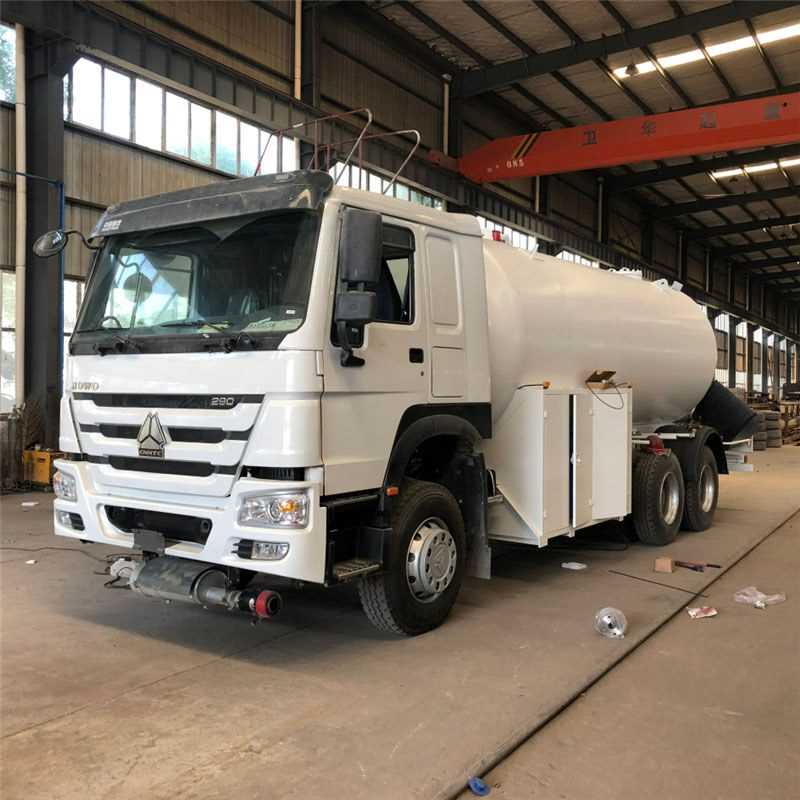
| 20 m³ – 25 m³ | ~8.4 – 12.0 t | 6x4 tandem (290–380 HP), e.g. CLW LPG Tanker Truck · HOWO | Multi-drop regional bottling depots and industrial parks | Balances tandem bogie loads across highway scales |
| 25 m³ – 30 m³ | ~10.5 – 14.5 t | 6x4 heavy or 8x4 (340–420 HP) | Inter-city bulk haulage where 50 m³ semi-trailers cannot turn | 8x4 layout protects legal payload on strict corridors |
Axle-Load Compliance & Factory-Native Steering
Weighbridges across EAC (Kenya, Tanzania, Uganda), ECOWAS (Nigeria, Ghana, Côte d'Ivoire, Senegal), and SADC enforce strict per-axle caps—typically 8 t steering, 10 t single drive, and 18 t tandem drive. Mounting a 20 m³ pressure vessel on an undersized frame invites overload fines and spring fatigue.
For multi-drop fleets hauling 8 to 12 metric tons per trip, a 6x4 rigid bobtail such as the CLW LPG Tanker Truck · HOWO distributes vessel tare weight safely while reversing cleanly into walled bottling yards. Always specify factory-native LHD or RHD chassis options—LHD for West/Central Africa, RHD for East/Southern Africa—because aftermarket steering conversions fail hazardous-goods inspections.
Pressure Vessel Fabrication Standards & CLW Engineering Credentials
An LPG shell operates under 1.61 MPa to 2.16 MPa design pressure while absorbing shock loads on rough roads. Vessel longevity relies on certified metallurgy, tropical thermal design, and traceable testing.
Q345R vs. Q370R Steel & Tropical Thermal Protection
Export LPG bobtails use dedicated pressure-vessel steel—primarily Q345R or Q370R (or SA-516 Gr. 70 / P355NL2 where mandated by local codes):
- Q345R Steel: The proven carbon-manganese standard offering reliable weldability and balanced cost, typically 10–14 mm shell thickness on 20 m³ vessels depending on diameter and pressure rating.
- Q370R High-Strength Steel: Higher yield strength allows thinner walls at the same design pressure, cutting bare vessel tare weight by roughly 10%–15% to maximize legal payload on strict weighbridges.
When ambient heat reaches 45°C–50°C across northern Nigeria, the Sahel, or East African dry-season corridors, LPG vapor pressure climbs sharply. Engineers match design pressure (1.61 MPa for butane-rich mixes up to 1.77–2.16 MPa for higher propane content), apply reflective white polyurethane topcoats with optional aluminum sun-shields, and weld internal anti-surge baffles. Combining the vessel with tropical dust-proof chassis upgrades—oversized radiators, desert air pre-cleaners, and reinforced leaf springs—prevents overheating and chassis fatigue.
NDT Inspection, Hydrostatic Testing & CLW Credentials
CLW's fabrication workshop is backed by the Hubei Provincial Pressure Vessel Engineering Technology Research Center and specialized hazardous-chemical pressure vessel manufacturing licenses shown on our certificates and credentials page. Every shell passes four mandatory quality gates:
- Ultrasonic Plate Check & SAW Welding: Plates are screened for laminations prior to rolling; main seams use automated submerged-arc welding (SAW).
- 100% Non-Destructive Testing (NDT): Class A and B butt welds receive 100% radiographic X-ray testing (RT), plus magnetic particle (MT) or ultrasonic (UT) inspection on nozzle fillets.
- Post-Weld Heat Treatment (PWHT): Furnace stress-relieving removes residual weld stresses that could propagate under rough-road vibration.
- Hydrostatic & Airtightness Proof Tests: Witnessed water-pressure testing (typically 1.25× design pressure) followed by pneumatic leak testing after primary valves are fitted.
Factory ISO management-system certificates govern consistent manufacturing control, not individual destination vehicle approvals; each exported bobtail ships with its own serialized vessel QA dossier for local registration.
Critical LPG Safety & Metering Equipment Included
In daily distribution, the dispensing skid—not the tank shell—governs turnaround speed, safety pass rates, and profit protection on an LPG delivery truck.
Corken & Blackmer Pumps: PTO vs. Hydraulic Drive
A properly sized sliding-vane or turbine LPG pump transfers 200 to 450 L/min, unloading a 10 m³ bobtail in 25 to 40 minutes. Fleets choose between economical Chinese LPG vane pumps and globally standardized Corken or Blackmer pumps prized for durable mechanical seals and readily stocked rebuild kits. Drive choice also affects uptime:
- PTO Mechanical Shaft Drive: Lower cost and easy for local mechanics to service, though severe unpaved-road frame twist requires routine cardan-shaft and U-joint checks.
- Hydraulic Motor Drive: Gearbox-mounted hydraulic pump and oil cooler drive a motor coupled to the LPG pump—eliminating long shafts, resisting chassis flex, and enabling smooth speed control when hydraulic fluid and coolers stay clean.
Rochester Level Gauges, Flow Meters & Emergency Safety Valves
Loading cool dawn LPG and discharging in 42°C heat expands liquid volume and distorts uncompensated volumetric meters—creating silent margin loss. A Coriolis mass flow meter bills true kilograms regardless of temperature or blend, while a positive-displacement (PD) meter with automatic temperature compensation (ATC) and a ticket printer offers a balanced commercial tier.
Every CLW bobtail integrates layered safety hardware inside a sealed explosion-proof electrical control cabinet: pneumatic or hydraulic internal emergency shut-off valves (ESV) on liquid and vapor ports with fusible links and dual cab/rear-bumper trips; Rochester magnetic float or flap gauges with 85% bleeder valves; dual safety relief valves (SRVs), excess-flow valves, grounding reel, spark arrestor, battery cut-off, dry-powder extinguishers; and dual-reel filling hoses with dispensing guns (liquid nozzle, vapor-return line, and optional cylinder-filling scale).
| Subsystem | Standard Export Spec | Heavy-Duty / Brand Tier | Operational & ROI Impact | Maintenance & Spares Note |
|---|---|---|---|---|
| LPG Pump & Drive | Chinese sliding-vane pump (PTO drive) | Blackmer or Corken pump (PTO or cooled hydraulic drive) | Faster offload cycles and sustained differential pressure | Stock spare vanes, mechanical seals & bypass springs |
| Level Gauging | Magnetic flap column + 85% bleeder valve | Rochester magnetic float gauge + high-level alarm | Prevents overfills in tropical heat with clear sight readout | Rochester dials and gaskets are widely stocked regionally |
| Flow Metering | PD volumetric meter, mechanical register | Coriolis mass flow meter or PD meter with ATC & printer | Eliminates thermal shrinkage and prints auditable receipts | Calibrate annually with local weights-and-measures office |
| Safety Valves | Pneumatic internal ESV, dual SRVs, Ex switches | Fisher / RegO valves, dual fusible trips, Ex d cabinet | Secures regulator approval and rapid emergency isolation | Inspect air lines and relief-valve caps monthly in dust |
| Hose Reels & Guns | Manual/spring liquid reel + vapor-return line | Ex-proof motor-rewind dual reels + filling scale | Cuts drop time and prevents vapor lock at bullet tanks | Replace ACME/Euro nozzle O-rings proactively |
Low-ball quotes often substitute cast-iron fittings for forged-steel LPG valves, omit internal emergency shut-off valves, or drop the vapor-return line. Beyond severe fire risk, missing ESVs trigger instant rejection by national gas regulators. Always attach a signed valve P&ID schematic and brand list to your contract.
What Determines LPG Bobtail Price & Lead Time?
Evaluating an LPG gas tanker price or LPG tanker truck price requires looking past generic estimates—final pricing always follows a written quotation tailored to exact chassis, tank code, pump/valve package, steering side, and discharge port. Five levers control landed cost and schedule:
- 1. Chassis Tier, Drivetrain & Fuel Emissions: The chassis typically accounts for 40%–52% of factory value because pressurized upper-body costs are much higher than atmospheric tankers. Widely supported platforms like SINOTRUK HOWO (on the CLW LPG Tanker Truck · HOWO), FAW, Dongfeng, and Isuzu ensure fast parts access in Lagos, Accra, Nairobi, and Dar es Salaam. Match engine tiers to local diesel sulfur via our emission and chassis options guide.
- 2. Tank Volume, Steel Grade & Design Code: Stepping from 10 m³ to 25–30 m³, upgrading to Q370R steel, or building to ASME Section VIII Div. 1 / ADR / EN 12493 equivalents raises plate tonnage, NDT film volume, and Authorized Inspector witness fees over standard GB 150 builds.
- 3. Imported vs. Domestic Pump & Metering Tier: Specifying Blackmer/Corken pumps, Rochester gauges, Fisher/RegO valves, and Coriolis mass meters increases upper-body spend meaningfully, yet high-utilization distributors recover that spread quickly through lower metering loss and fewer seal failures.
- 4. Longer Pressure-Vessel Production & Inspection Cycle: Plate ultrasonic screening, 100% RT radiography, PWHT furnace slots, hydro-testing, valve calibration, and nitrogen purging take longer than atmospheric HOWO 30 m³ diesel refueling bowsers. Plan 45 to 75 days for standard LHD builds and 60 to 100+ days for RHD chassis, imported metering skids, or international code stamps.
- 5. FOB vs. CIF Shipping & Landed Costs: Review our payment and shipping guide and buying process overview early. Ro-Ro or flat-rack freight to Apapa/Tin Can Island (Lagos), Tema, Mombasa, Dar es Salaam, Durban, or Beira bills by CBM—so compact top-valve packaging saves freight. Budget separately for mandatory nitrogen purging and gas-free certification, insurance, pre-shipment inspection, duties, and local gas-authority re-verification.
One torn ACME gasket, worn pump vane, or leaking ESV seal can park an LPG bobtail for weeks awaiting air-freighted parts. Packing a factory 12-month wear kit (pump seals, vanes, ESV seals, nozzle O-rings, gauge dial glass, and chassis filters) inside the side cabinet ships at zero extra ocean freight.
Preparing Your Country Gas-Authority Compliance Brief
An imported LPG road tanker must clear both automotive import conformity (Nigeria SONCAP/Form M, Kenya KEBS PVoC, Tanzania TBS PVoC, Zambia ZABS) and national gas-regulator approval (Nigeria's NMDPRA, Ghana's NPA, Kenya's EPRA, Tanzania's EWURA, Zambia's ERB, or South Africa's SANS pressure-equipment rules).
Always submit preliminary tank drawings and valve schematics to your national regulator before steel plate is cut. Discovering a local flange or code discrepancy after arrival triggers costly demurrage. Supported by our import compliance team and tender support engineers, CLW supplies a complete serialized compliance dossier:
- General assembly drawings, axle-load distribution sheets, and pressure-vessel strength calculations for pre-build approval.
- Steel-plate Material Test Certificates (MTCs), welding procedures, and welder qualification records.
- 100% RT radiographic reports, MT/UT fillet checks, and PWHT furnace heat-treatment curves.
- Witnessed hydrostatic and pneumatic airtightness certificates plus safety relief valve calibration records.
- Official gas-free / nitrogen-purging certificate certifying an inert vessel for ocean transport.
- Third-party pre-shipment inspection coordination (SGS, Bureau Veritas, or Intertek)—verifying company banking details against our anti-fraud verification notice before remitting funds.
Frequently Asked Questions
1. How many metric tons of LPG fit in a 10 m³, 20 m³, or 30 m³ bobtail?
At the mandatory 85% fill cap, net payload spans 0.42 t/m³ (propane-heavy) to ~0.48 t/m³ (butane-rich African blends). A 10 m³ bobtail holds ~4.2–4.8 t, a 20 m³ bobtail holds ~8.4–9.6 t, and a 30 m³ tanker holds ~12.6–14.4 t within legal axle limits.
2. Why do LPG tanker trucks take longer to manufacture than diesel fuel tankers?
Unlike atmospheric 25–30 m³ diesel fuel tankers, pressurized LPG vessels require ultrasonic plate screening, 100% X-ray weld testing, PWHT stress-relieving, hydro-testing, specialized pump/valve integration, and nitrogen inerting—typically 45–75 days for standard builds and 60–100+ days for RHD or imported metering skids.
3. Can CLW supply RHD LPG delivery trucks with imported pumps and flow meters?
Yes. CLW builds factory-native LHD bobtails for West/Central Africa and RHD units for Kenya, Tanzania, Uganda, Zambia, Zimbabwe, Mozambique, and Southern Africa, configurable with Blackmer/Corken pumps, Rochester gauges, Fisher/RegO valves, and Coriolis mass or ATC PD meters.
4. What shipping and compliance documents come with an exported LPG bobtail?
Every unit ships nitrogen-purged with an official gas-free certificate for Ro-Ro or breakbulk transit to Apapa, Tema, Mombasa, Dar es Salaam, Durban, or Beira, plus its serialized QA dossier (MTCs, NDT reports, PWHT chart, hydro-test, and SRV calibration). Factory certifications on our certificates page confirm workshop quality control, while destination vehicle conformity and gas approvals follow national rules.
Send Your 5-Point Brief for an LPG Tanker Truck Quotation
Share five parameters and our pressure-vessel export engineers will prepare an itemized FOB/CIF quotation with preliminary drawings and valve schematics:
- Tank Volume & Gas Blend: Capacity (5–30 m³), propane/butane ratio, and design pressure or national pressure code.
- Steering & Chassis Spec: LHD or RHD, preferred chassis brand (HOWO, FAW, Dongfeng, Isuzu), and Euro II–V emission tier.
- Pump, Valve & Metering Tier: Domestic or Blackmer/Corken pump, PTO vs. hydraulic drive, Coriolis mass vs. PD-ATC meter, and optional filling scale.
- Country Gas-Authority Rules: Regulator requirements (NMDPRA, NPA, EPRA, EWURA, ERB, SANS), witness inspection, and PVoC/SONCAP needs.
- Quantity & Destination Port: Unit count plus discharge port (Apapa/Lagos, Tema, Mombasa, Dar es Salaam, Durban, or Beira).