Fleet enquiries for Africa[email protected]

LPG Tanker Truck CLW

HOWO 5,000–30,000 L LPG Tanker Truck for African Bulk Gas & Cylinder Refilling

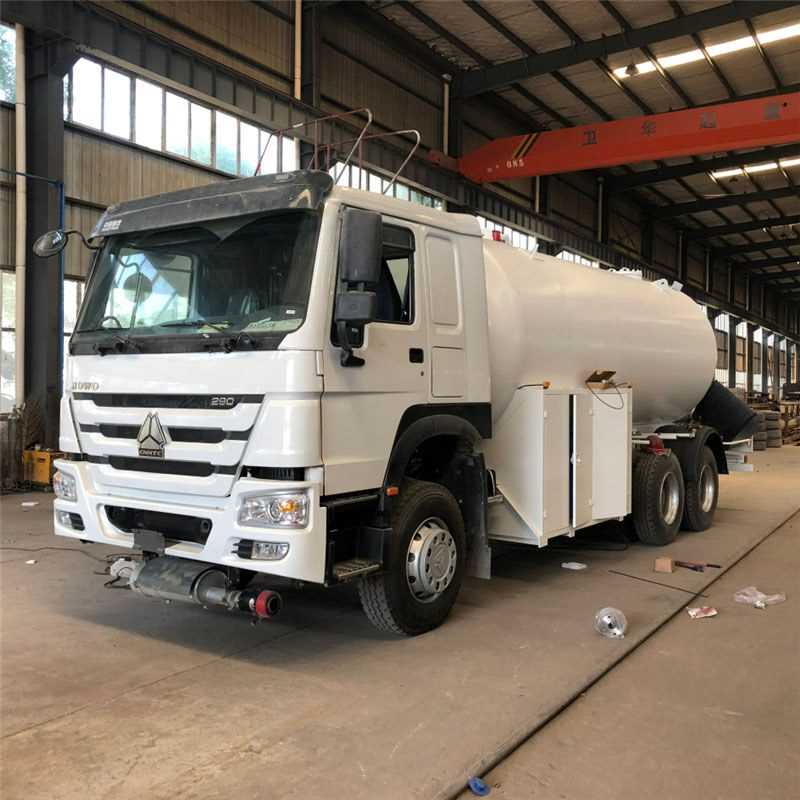
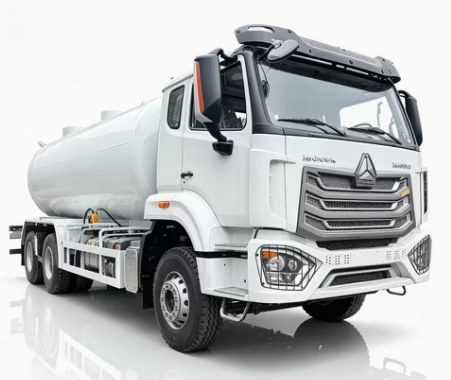
Built on the HOWO diesel chassis across 4×2 to 8×4 layouts, the CLW HOWO LPG Tanker Truck delivers 5,000 to 30,000 L of liquefied petroleum gas across African regional and urban supply routes. Purpose-built for bulk depot-to-skid transfers and cylinder refilling, it pairs a 10–14 mm pressure tank with Euro 2–6 engines for tarmac and graded-gravel service.

01 / Capability

Understand what the specification means.

Scalable LPG Tank Volume & Load Range

5,000–30,000 L tank (5–30 t load range; 0.42–0.55 filling ratio)

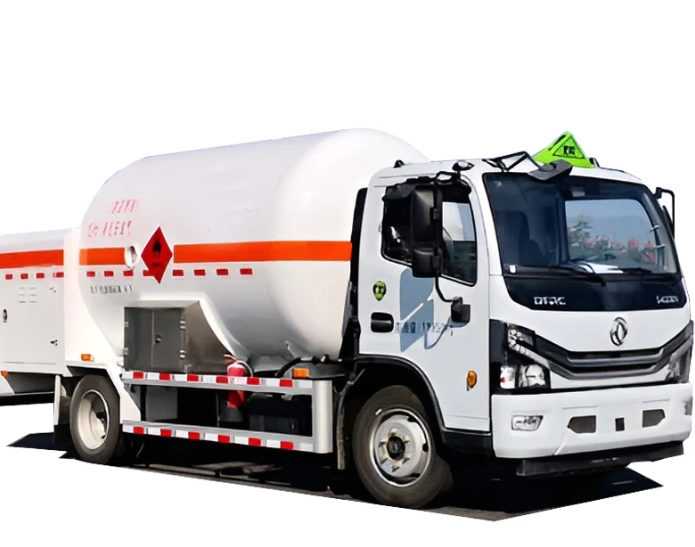
Allows gas distributors to deploy compact 5–10 CBM bobtails (~2.1–5.5 t LPG) for urban cylinder-refilling routes alongside 15–30 CBM 8×4 tankers (~6.3–15.0 t LPG) for regional bulk skid replenishment on one familiar chassis platform.

Operating conditions
Estimated delivered gas mass assumes commercial LPG liquid density (~0.50–0.56 kg/L) and standard ~80–85% vapor-headspace fill limits consistent with the 0.42–0.55 filling ratio.
What affects the result
Local propane-to-butane blend ratio, daytime ambient temperature expansion margin, tank steel thickness (10–14 mm), and national axle-load weighbridge limits.

Hot-Climate Pressure Vessel Margin

1.61–1.71 MPa design pressure; 10–14 mm shell; -40°C to 50°C design temp

Supports safe containment of pressurized propane-butane blends across hot African highway corridors and unshaded depot yards without exceeding vessel design envelopes.

Operating conditions
Assumes pressure-vessel steel grade (Q345R, SA-516, SA-612, or P460) and relief valve setpoints match the buyer's LPG composition and destination pressure-vessel regulations.
What affects the result
Peak solar heating on stationary tanks, higher-vapor-pressure propane mixes, periodic hydrostatic testing schedules, and upkeep of reflective white exterior paint.

Highway Cruising & Multi-Axle Stability

150–350 hp diesel (6–8 L); up to 102 km/h; ABS braking

Maintains steady turnaround times between coastal LPG import terminals and inland bottling plants while keeping braking response controlled under partial-load liquid surge.

Operating conditions
Performance assumes engine output is matched to chassis layout (251–350 hp for heavy 8×4 builds) and gross weight stays within axle ratings.
What affects the result
Highway elevation climbs, heavy-ply radial tire condition (10.00R20–12R22.5), fleet speed limiters, and local diesel fuel quality.

Multi-Emission Fleet Standardization

HOWO 4×2–8×4 chassis; Euro 2–6; Manual or Automatic

Streamlines spare-parts stocking and workshop servicing across expanding African gas fleets by aligning multiple capacity classes to widely supported HOWO drivetrain components.

Operating conditions
Emission tier, steering side (LHD or RHD), and transmission preference must be finalized before chassis production allocation.
What affects the result
Local diesel sulfur content (ppm), national import emission thresholds, workshop diagnostic tooling, and off-tarmac traction needs.

02 / Specification

The vehicle, system by system.

The CLW HOWO LPG Tanker Truck is engineered for African liquefied petroleum gas marketers, bottling plants, and regional bulk distributors moving pressurized cooking and industrial gas from coastal import terminals or inland storage spheres to retail skid stations, commercial kitchens, and cylinder-refilling yards. Offered across a scalable 5,000 to 30,000 L tank range—with heavy-duty 8×4 bobtail builds shown for high-volume 15,000–30,000 L corridors—the platform lets fleet managers standardize chassis maintenance on familiar HOWO components while sizing each unit to local bridge and axle-load limits.

Chassis Integration and Pressure-Vessel Design

Buyers can specify 4×2, 4×4, 6×2, 6×4, 6×6, or 8×4 drive configurations with 6–8 L diesel engines spanning 150–350 hp, paired with manual or automatic transmissions and Euro 2 through Euro 6 emissions to match local diesel sulfur levels. The cylindrical LPG vessel uses 10–14 mm pressure-vessel steel plate—selectable in Q345R, Q370R, Q420R, SA-516, SA-517, SA-612, or P460—engineered for 1.61–1.71 MPa design pressure, 1.61–2.21 MPa hydraulic test pressure, and -40°C to 50°C design temperatures suited to hot African ambient conditions. Front-mounted exhaust routing, headlight stone guards, ABS braking, and enclosed side equipment cabinets support safer hazardous-gas transport.

Field Workflow and Fleet Procurement

  • Dual Bulk and Refilling Utility: High-pressure hoses and rigid manifold piping support both bulk storage tank replenishment and direct LPG cylinder-refilling routes.
  • Suspension and Tire Matching: Configurable leaf-spring, mechanical, or air suspension with heavy-ply radial tires (10.00R20, 11R22.5, 11.00R20, 12R22.5) adapts the chassis to tarmac highways and graded depot access roads.
  • Flexible Fleet Ordering: Orders start from 1 unit with tiered volume pricing—larger quantities lower the unit FOB cost, and multi-truck LPG fleet expansions support phased batch delivery aligned with vessel sailings and site commissioning.

Chassis & powertrain
Chassis Brand
HOWO heavy-duty commercial truck chassis
Drive Layout
8×4 shown (4×2, 4×4, 6×2, 6×4, 6×6, and 8×4 configurable)
Engine Output & Displacement
Diesel, 150–350 hp (6–8 L class; 251–350 hp for heavy 8×4 builds)
Emission Standard
Euro 2 / Euro 3 / Euro 4 / Euro 5 / Euro 6
Transmission
Manual or Automatic (configuration-dependent)
Overall Dimensions (L×W×H)
10,590 × 2,495 × 3,350 mm (8×4 build); 8,800–10,400 × 2,462–2,600 × 3,550–3,980 mm across variants
Tires
Radial tires: 10.00R20 18PR, 11R22.5 18PR, 11.00R20 18PR, or 12R22.5 (10+1 units on multi-axle build)
Body & tank
Tank Volume Range
5,000–30,000 L (15,001–30,000 L heavy 8×4 range; customizable up to 70 CBM on larger configurations)
Storage Medium
LPG (Liquefied Petroleum Gas)
Tank Shell Thickness
10 mm – 14 mm
Pressure-Vessel Steel Options
Q345R, Q370R, Q420R, SA-516, SA-517, SA-612, or P460
Load Capacity Class
5 t – 30 t (1–10 t on compact bobtail builds; medium-to-heavy bearing capacity)
Exterior Tank & Cabinet Finish
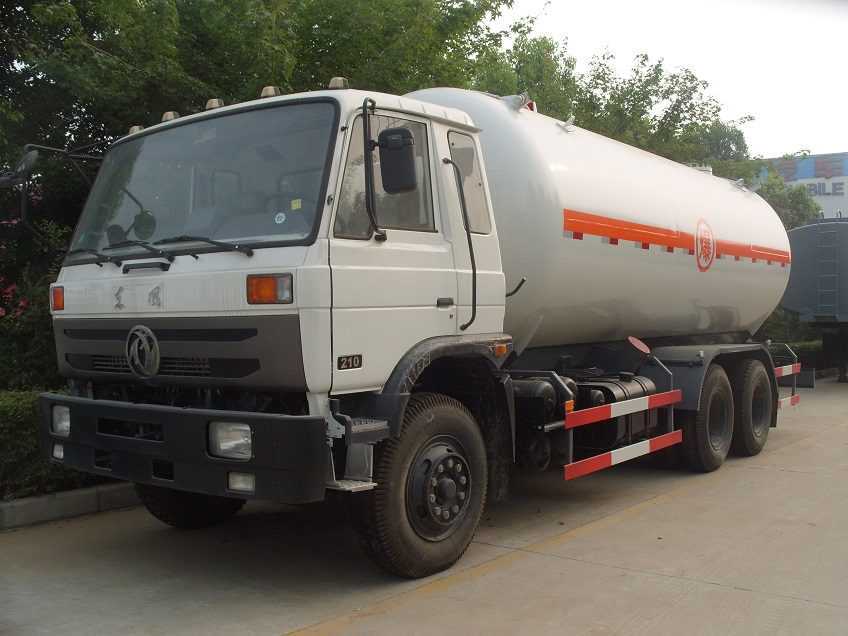
Corrosion-resistant white cylindrical pressure vessel with orange hazard stripe and side roll-up shutter cabinet
Working equipment
Design Pressure
1.61 – 1.71 MPa
Hydraulic Test Pressure
1.61 – 2.21 MPa
Temperature Range
-40°C to 80°C operating range (-40°C to 50°C design temperature)
Filling Ratio
0.42 – 0.55 (LPG liquid fill allowance)
Pipeline & Transfer System
High-pressure hoses and rigid piping for bulk LPG transportation and cylinder refilling
Operating performance
Gross Vehicle Weight (GVW)
18,000 kg (standard reference build; scales upward on 6×4 and 8×4 axle layouts)
Maximum Road Speed
102 km/h
Compact Bobtail Geometry
4,500 mm wheelbase; 1,940 / 1,860 mm track; 12° approach / 25° departure angle (4×2 reference)
Compact Bobtail Reference Weights
6,800 kg tare weight and 5,000 kg payload on 4×2 reference (higher payloads on 6×4 and 8×4 chassis)
Safety equipment
Braking Safety
ABS Anti-Lock Braking System
Hazardous-Cargo Chassis Protection
Front-mounted exhaust muffler routing and protective metal headlight stone guards
Side & Equipment Protection
Steel side underrun protective guard rails and enclosed side equipment compartment
Configuration options
Axle Brand Options
BPW, Fuwa, HJ, L1, or York axles
Suspension System
Leaf spring, mechanical, or air suspension
Drive & Steering Layout
4×2, 6×2, 6×4, 8×4, or 8×6 drive; LHD or RHD cab configuration
Tank Volume & Steel Upgrade
Custom 5,000–30,000 L+ vessel sizing in Q345R, SA-516, SA-612, or P460 steel
Emission & Export Preparation
Euro 3–6 chassis tuning, custom fleet color, and waxed Ro-Ro or bulk-freighter export finish

03 / Applications

Choose for the work ahead.

Suitable duties

  • Bulk LPG replenishment from coastal import terminals or railheads to inland bottling plants and retail skid stations
  • Commercial LPG cylinder-refilling routes serving hotels, bakeries, estates, and suburban gas dealers
  • Inter-city tarmac highways and graded gravel depot approaches suited to 4×2, 6×4, or 8×4 HOWO drivetrains
  • Hot African ambient corridors requiring a 1.61–1.71 MPa, 10–14 mm pressure vessel engineered for up to 50°C design temperature
  • Regional LPG marketers standardizing multiple tanker capacities (5,000–30,000 L) on one widely serviced chassis brand

Outside the intended duty

  • Liquid diesel, petrol, or water haulage where lighter atmospheric tankers offer higher payload and lower purchase cost
  • Cryogenic LNG service at -162°C, which requires vacuum-insulated stainless steel cryogenic tanks rather than ambient LPG pressure steel
  • Deep mud, loose desert sand, or ungraded quarry tracks unless explicitly configured on an all-wheel-drive 4×4 or 6×6 chassis
  • Ultra-high-volume 45–60 CBM long-haul cross-border trunking better handled by an articulated LPG semi-trailer combination

04 / Procurement

A clearer brief. A better fleet fit.

  • Required tank capacity (5,000–30,000 L), preferred drive layout (4×2, 6×4, or 8×4), and national axle-load limits
  • Local LPG propane/butane blend ratio and preferred pressure-vessel steel grade (Q345R, SA-516, SA-612, or P460)
  • Required steering side (LHD or RHD), emission standard (Euro 2–6), and manual or automatic transmission preference
  • Primary field duty—bulk skid unloading, direct cylinder refilling, or dual-purpose—plus required hose/coupling standards
  • Destination sea port and preferred shipping method (waxed Ro-Ro or bulk freighter)
  • Total fleet order quantity and whether phased batch delivery is needed for staged rollout
How do I choose between a 5,000–10,000 L bobtail and an 8×4 15,000–30,000 L HOWO LPG tanker?

Compact 5,000–10,000 L configurations on 4×2 frames maneuver easily into crowded urban yards, hotels, and suburban cylinder-refilling points with lower 1–10 t payload footprints. Heavy-duty 15,000–30,000 L builds on 6×4 or 8×4 chassis—paired with 251–350 hp engines and 10+1 radial tires—lower per-ton transport cost on regional depot-to-skid highways while distributing weight across multiple axles.

Can this HOWO LPG tanker handle both bulk storage replenishment and direct cylinder refilling?

Yes. The transfer system supports bulk LPG transportation, skid tank unloading, and direct cylinder refilling through high-pressure hoses and rigid manifold piping. Let CLW know your primary workflow at quotation so the side equipment cabinet and fittings match your receiving couplings and filling operation.

How is the LPG tank built to handle high daytime temperatures in Africa?

The cylindrical pressure vessel is fabricated from 10–14 mm pressure-vessel steel (Q345R, Q370R, Q420R, SA-516, SA-517, SA-612, or P460) with a 1.61–1.71 MPa design pressure, 1.61–2.21 MPa hydraulic test pressure, and a -40°C to 50°C design temperature rating. Specifying your local propane/butane blend ensures the tank wall thickness and safety fittings match regional vapor pressures.

How do tiered pricing and batch delivery work for multi-unit LPG fleet orders?

Minimum order quantity starts at 1 unit, and tiered volume pricing applies—ordering more vehicles lowers the FOB China unit price. For regional gas marketers scaling up multiple depots, production and waxed Ro-Ro or bulk-vessel shipments can be divided into phased batches aligned with site commissioning and customs clearance.

Buying guide

Plan the right specification.

Your fleet. Your requirements.

Let’s configure your next vehicle.

Share the duty, destination and quantity. Include the details below so CLW can prepare a configuration and quotation for your project.

[email protected] ↗