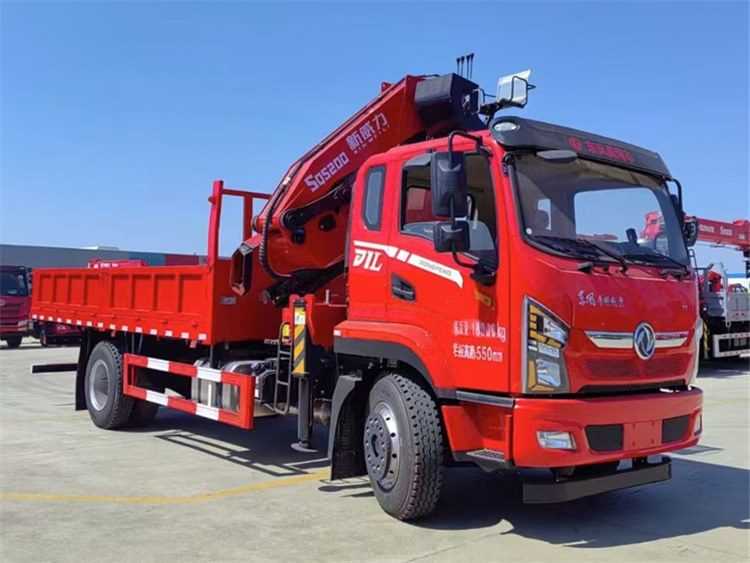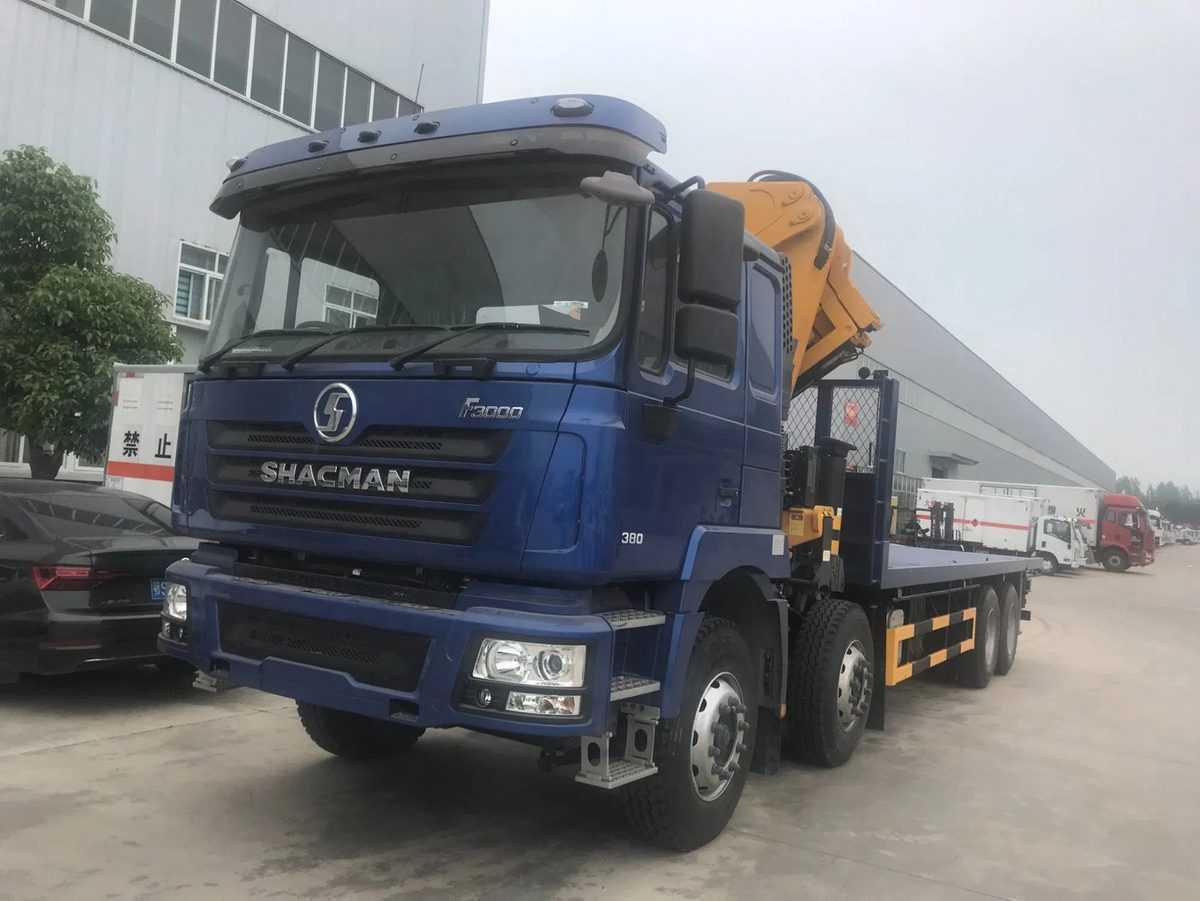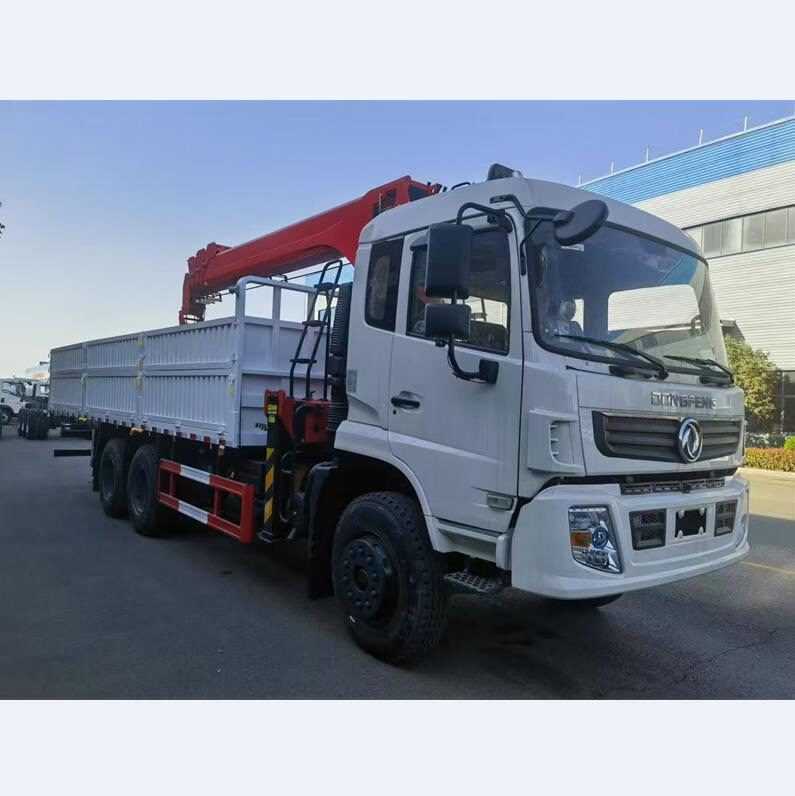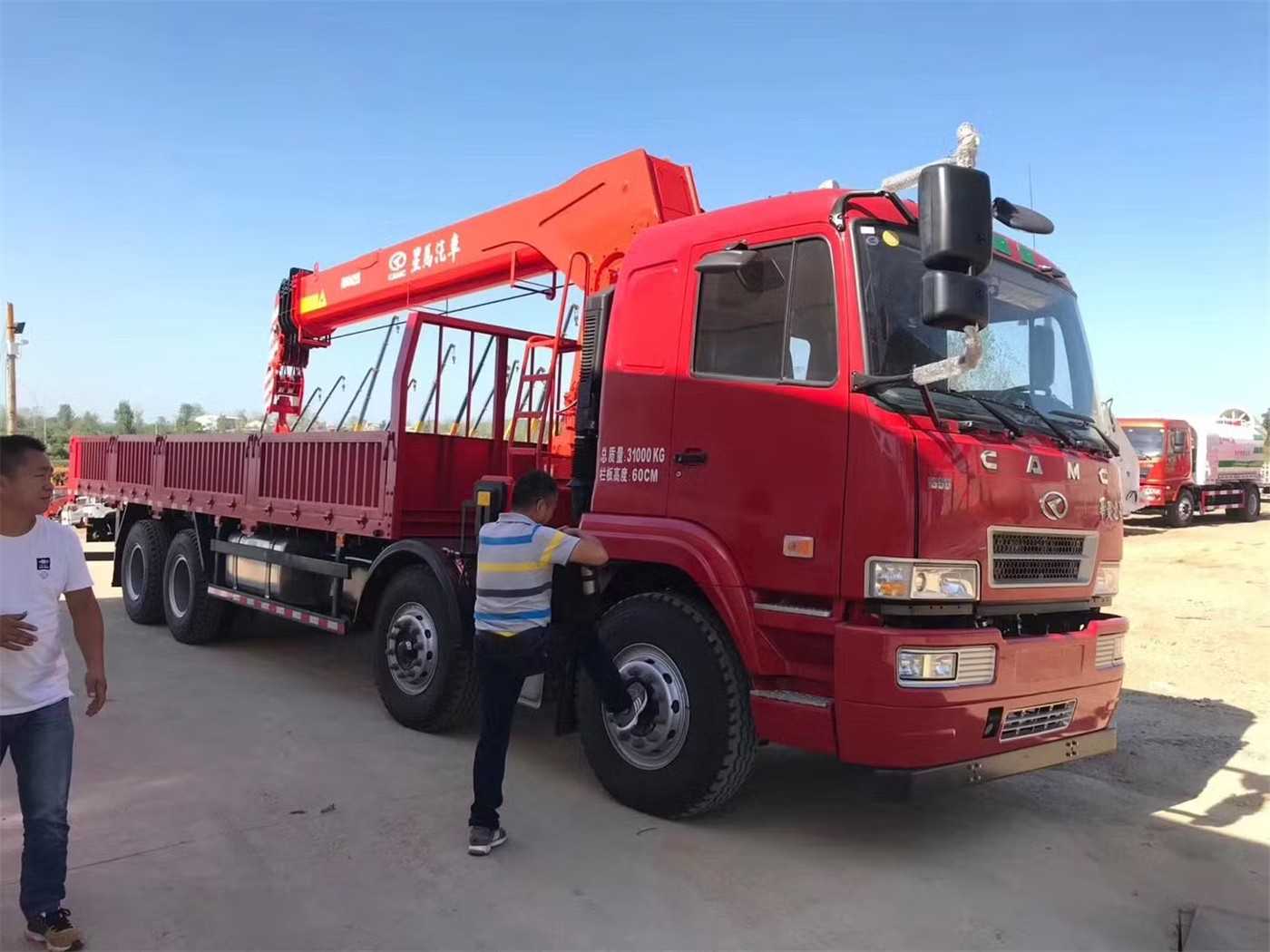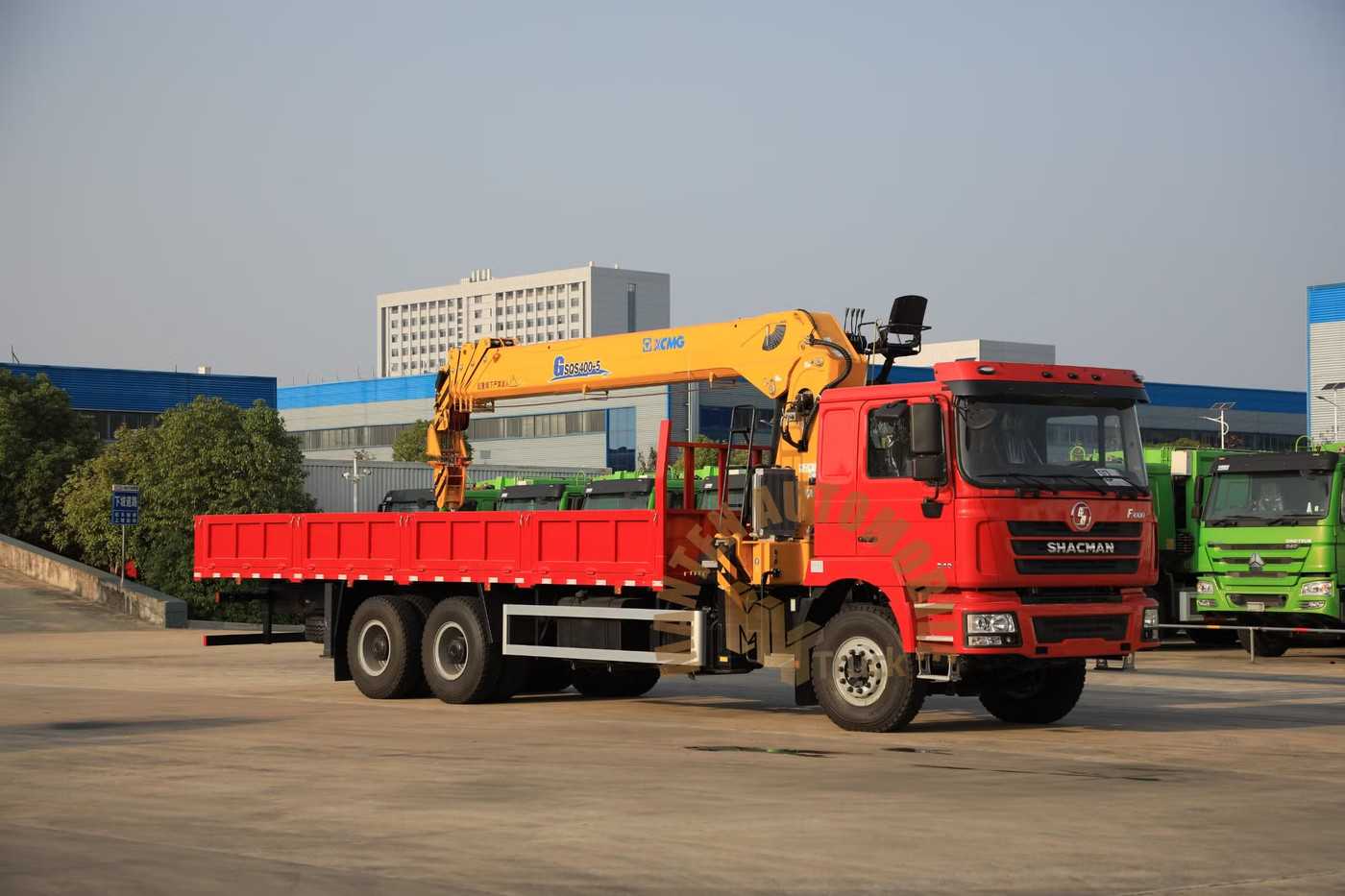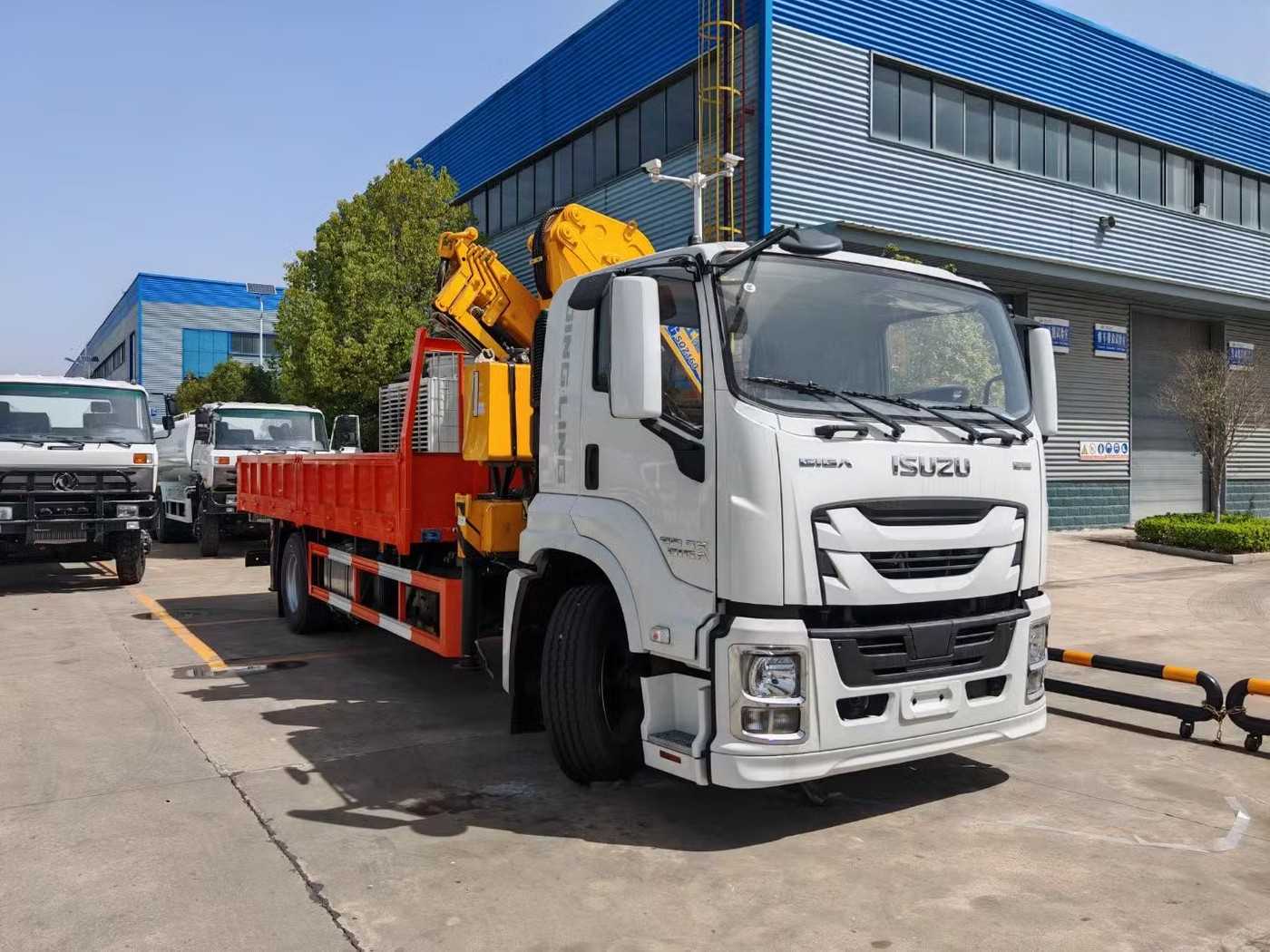
Across Nigeria, Ghana, and Kenya, self-loading crane trucks keep power utilities, telecom contractors, building-materials suppliers, and port hauliers moving without waiting hours for hired mobile cranes. A properly specified HIAB truck—a cargo chassis integrated with a hydraulic truck-mounted crane—combines haulage and hoisting in one asset. Yet mismatching crane tonnage and chassis GVW triggers KeNHA front-axle fines on the Mombasa–Nairobi highway, cracked leaf springs in Lagos, or insufficient lifting moment at real working reach. This guide breaks down boom architecture, lifting charts, GVW pairing, regional steering and axle rules, safety gear, and landed-cost drivers.
Why Buyers Across Africa Call Truck-Mounted Cranes “HIAB Trucks”
From Apapa and Tema to Mombasa, buyers routinely call any self-loading truck-mounted crane a “HIAB truck” or “truck and HIAB,” named after Swedish hydraulic crane pioneer Hydrauliska Industri AB. When requesting factory quotes, however, clarify whether you need a telescopic straight-boom crane (winch boom truck) or an articulated knuckle-boom crane (folding-arm loader). Both run off the transmission PTO, yet they serve different jobsites.
Straight-Boom (Telescopic) vs. Knuckle-Boom (Folding) Cranes
Telescopic straight-boom cranes extend linearly and lift via steel wire rope and hydraulic winch. They lead African utility and construction fleets because:
- Below-grade & over-wall reach: Vertical winch pay-out lowers borehole pumps into pits, sets trench culverts, and lifts switchgear over compound walls.
- Greater working radius: Straight booms typically reach farther horizontally when soft road shoulders keep trucks away from drop pads.
- Simpler upcountry servicing: Fewer pivot pins and exposed cylinder seals simplify field repairs in depots like Kano, Tamale, or Eldoret.
- Controlled positioning: Winch lowering reduces load swing when setting generators or transformers.
Articulated knuckle-boom cranes fold sideways behind the cab and lift directly from the boom tip. They excel in tight urban delivery—offloading palletized blocks, cement, or rebar in Ikeja, Accra, or Nairobi Industrial Area under low power lines or warehouse roofs—maximizing cargo deck length and accepting pallet forks, though multi-joint high-pressure seals require stricter hydraulic oil cleanliness.
Choosing Crane Lifting Capacity (3.2T, 5T, 8T, 10T, 12T & 16T)
The biggest mistake African fleet buyers make is choosing a crane by nominal maximum tonnage alone—assuming an “8-ton crane” lifts 8 tons at full reach. In practice, nominal tonnage applies only at minimum radius beside the column (around 2.0–2.5 m). Real site performance depends on maximum lifting moment (ton-meters, t·m) and the load chart at working radius.
For example, placing a 2.4-ton 500 kVA transformer 6.5 meters from the truck centerline across a storm drain will overload a 5-ton crane (roughly 12 t·m) before the load clears the deck; you need an 8-ton to 10-ton class crane (20–25 t·m) to keep safe working margins. Similarly, lifting an empty 20-foot container (2.2–2.4 tons plus spreader rigging) requires an 8-ton to 12-ton crane depending on outreach.
| Crane Capacity | Typical Lifting Moment | Max Working Radius | Approx. Capacity at 7–8 m | Best-Fit African Cargo & Jobs |
|---|---|---|---|---|
| 3.2T – 5T | 8 – 12 t·m | 7.5 – 11.0 m | 0.8 – 1.4 t | Water tanks, 30–100 kVA gensets, streetlight poles, urban building supplies. |
| 6.3T – 8T | 15 – 20 t·m | 11.5 – 14.5 m | 1.6 – 2.4 t | 200–500 kVA transformers, 150–300 kVA gensets, concrete utility poles, rebar bundles, telecom mast sections. |
| 10T | 25 – 28 t·m | 13.0 – 16.0 m | 2.6 – 3.5 t | 500–800 kVA transformers, quarry crusher parts, empty 20-ft containers (short reach), steel beams. |
| 12T | 30 – 36 t·m | 14.5 – 18.5 m | 3.4 – 4.5 t | Substation transformers, 350–650 kVA acoustic gensets, empty 20-ft container shuttles, oilfield pipes. |
| 16T+ | 40 – 48 t·m | 16.0 – 20.5 m | 4.8 – 6.2 t | 1,000 kVA+ transformers, mine maintenance components, site cabins, heavy plant relocation. |
Across Nigeria, Ghana, and Kenya, the 8-ton and 12-ton telescopic classes deliver the highest fleet utilization. Contractors carrying mixed utility and steel loads often start with a high-payload four-axle CLW 8x4 8-Ton Boom Truck or the versatile CLW5250JSQASZ Truck-Mounted Crane. When substation tenders or container shuttles require heavier outreach without mobile crane hire, stepping up to a CLW 6x4 12-Ton Boom Truck or alternative 6x4 12-Ton Crane Truck build provides critical structural margin.
Matching Crane Weight to Chassis GVW & Cargo Deck Length
Never treat a crane as a bolt-on accessory. A 12-ton crane assembly weighs roughly 4.2 to 5.2 tons with pedestal, oil, and outriggers. Mounting it on an undersized chassis causes three predictable failures: steering front-axle overload even when unladen, chassis rail fatigue cracks behind the cab during lateral slewing, and a cargo bed too short for 6-meter steel pipes or 20-ft containers. Use the baseline below to audit any quote.
| Crane Class | Drive Layout | Min. Chassis GVW | Front Axle Rating | Usable Cargo Deck | Structural Pairing Notes |
|---|---|---|---|---|---|
| 3.2T – 5T | 4x2 | 10 – 16 t | 4.5 – 6.0 t | 4.5 – 6.1 m | Compact urban turning; reinforced single-layer subframe. |
| 6.3T – 8T | 4x2 / 6x4 / 8x4 | 18 – 31 t | 6.5 – 7.5 t (or twin 7 t) | 5.8 – 8.5 m | 6x4 for unpaved power-line tracks; 8x4 8-ton boom truck for 7.5–8.5 m decks and high legal payload. |
| 10T – 12T | 6x4 / 8x4 | 25 – 31 t | 7.5 – 9.0 t (single or twin) | 6.5 – 8.5 m | Full-length double-layer subframe, 300 mm+ double frame rails, rear stabilizers; see 6x4 12-ton builds. |
| 16T | 8x4 | 31 – 40 t | Twin 7.5 – 9.0 t | 7.2 – 8.6 m | Twin steering axles absorb crane deadweight legally on long highway hauls. |
LHD vs. RHD Steering and Weighbridge Axle Rules
Nigeria and Ghana mandate Left-Hand Drive (LHD) vehicles, whereas Kenya mandates Right-Hand Drive (RHD) for road registration. Reviewing our LHD & RHD chassis options upfront guarantees compliant steering, exhaust routing, and PTO shift layout.
Axle-group weighbridges are equally unforgiving. Along Kenya’s Northern Corridor (Mariakani, Mlolongo, Gilgil, Busia), KeNHA enforces EAC axle limits strictly, including ~8-ton front steering axle limits. Placing a heavy crane pedestal immediately behind the cab on a short 6x4 wheelbase easily triggers front-axle detention before cargo is even loaded; specifying a 7.5–9 ton front axle or an 8x4 twin-steer chassis eliminates this penalty. In Nigeria and Ghana, ECOWAS axle standards (11.5 t single drive axle) enforced on the Lagos–Ibadan and Tema–Kumasi–Paga corridors similarly penalize overloaded 4x2 trucks hauling dense rebar or paving blocks.
Tropical Heat, Dust Protection & Engine Emission Trade-Offs
During continuous loading shifts in 38–44°C heat in northern Nigeria, northern Ghana, or Mombasa yards, hydraulic oil over 80°C thins out, slows boom cycling, and hardens seals. Specify an oversized oil tank, electric-fan air-cooled hydraulic oil cooler, and return-line filtration. Against Harmattan dust and laterite grit that abrade boom wear pads and slewing bearings, factory tropical and dust-proof chassis packages—with desert air pre-cleaners, upgraded radiators, and sealed connectors—cut downtime sharply. Finally, match Euro II, Euro III, or Euro IV engines to each country’s import rules and upcountry diesel sulfur levels via our emission and chassis options so sensitive after-treatment systems never strand trucks far from dealer diagnostics.
Bolting a secondhand crane onto an imported used truck locally without factory subframe reinforcement, matched PTO torque ratios, and center-of-gravity verification often leads to cracked frame rails behind the cab, overheating pumps, and weighbridge failures within a year. Always insist on factory-integrated full-length subframes and documented axle-load calculations.
Essential Stability & Safety Features
Power utilities, telecom tower firms, and oilfield EPCs routinely audit crane safety systems before issuing site permits. Missing safety hardware creates both rollover risk and tender disqualification:
- Front Dual-Stage Outriggers + Rear Hydraulic Stabilizers: Always pair front H-type outriggers with rear hydraulic stabilizers on 8T–16T builds to prevent chassis twist and rear-end tipping when lifting over the tailgate on unpaved ground.
- Load Moment Indicator (LMI): Continuously tracks boom angle, extension, and hydraulic pressure against the load chart, alarming and locking out unsafe movements before overload.
- Anti-Two-Block (Over-Hoist) Cut-Off: Stops the winch automatically before the hook block strikes the boom head sheave, preventing snapped wire ropes.
- Hydraulic Counterbalance & Pilot Check Valves: Mounted on luffing, telescoping, and outrigger cylinders so a burst hose never drops a suspended generator or transformer.
- Ground, High-Seat & Wireless Remote Controls: Dual-side ground levers are rugged and simple. An elevated high-seat station (popular on 6x4 crane trucks) gives clear visibility into the cargo deck and over walls, while a proportional wireless remote keeps one operator safely away from live power lines or swinging loads.
Before balance payment, request factory video proof of static (125% rated load) and dynamic (110% load) stability tests, full 360-degree slewing, and outrigger pressure-hold checks. Order a 12-month wear pack—hydraulic filters, cylinder seal kits, spare wire rope, PTO crosses, and valve O-rings—stowed in the toolboxes so minor leaks never wait on airfreight.
Landed Cost Drivers, Port Shipping & Operational ROI
Because every HIAB truck combines a specific chassis, crane moment, subframe, and country compliance package, final pricing always follows a written factory quotation matched to your build sheet and destination port. Fleet managers control total landed cost across four drivers:
- Chassis & Drivetrain Spec: Drive formula (4x2, 6x4, 8x4), horsepower (180–400 hp), LHD/RHD layout, and emission tier drive the largest share of ex-factory FOB cost.
- Crane Class & Controls: Upgrading from 8T to 12T—or adding rear outriggers, an oil cooler, LMI display, high-seat, or wireless remote—increases upfront build value while expanding billable contract classes.
- Ocean Freight & Stowage Envelope (FOB vs. CIF): Most units ship via Ro-Ro or breakbulk/flat-rack. Because Ro-Ro rates scale by cubic meters (CBM), stowed boom height and overall bed length directly affect freight into Apapa / Tin Can Island / Onne (Nigeria), Tema / Takoradi (Ghana), and Mombasa (Kenya). Compare FOB and CIF options in our payment and shipping guide.
- Port Clearance & Compliance: Plan ahead for Nigeria’s Form M, PAAR, and SONCAP rules; Ghana’s ICUMS customs process; and Kenya’s mandatory pre-shipment PVoC inspection plus NTSA registration. Note that factory ISO quality management credentials on our certificates page verify manufacturing discipline rather than substituting for destination-country import or road approvals.
Working factory-direct with documented import compliance support, EPC tender documentation, and verified bank channels (see our anti-fraud notice) protects both delivery schedules and capital. In daily operation across Lagos, Accra, and Nairobi, replacing flatbed-plus-hired-crane workflows with a dedicated HIAB truck typically boosts completed daily trips by 35%–60% while qualifying fleets for multi-year utility contracts. Review regional deliveries on our projects page and ordering milestones in How to Buy.
Frequently Asked Questions
Should I choose a straight-boom or knuckle-boom HIAB truck for Africa?
Pick a straight-boom crane for generators, transformers, poles, and trench work needing vertical winch control, longer horizontal reach, and straightforward field servicing. Pick a knuckle-boom crane for high-cycle pallet or block offloading in tight urban yards with low overhead obstructions.
Can an 8-ton or 12-ton HIAB truck handle a 20-foot shipping container?
An empty 20-ft container weighs roughly 2.2–2.4 tons. A 10-ton or 12-ton 6x4 boom truck with a 6.5–7.2 m deck (or twist-lock frame) and rear stabilizers handles empty 20-ft containers reliably. Loaded 20-ft containers require dedicated side-lifters or reach stackers.
How do I avoid Kenyan weighbridge fines on a crane truck?
Confirm RHD steering, review factory axle-load calculations before fabrication, and avoid heavy 10T–12T cranes on light front axles. A 7.5–9 t front axle on a long-wheelbase 6x4—or an 8x4 twin-steer chassis—keeps front weight legally within KeNHA limits at Mariakani and Mlolongo.
What is the typical production and shipping lead time to West or East Africa?
Chassis integration, subframe fabrication, crane mounting, and load testing typically require 30–45 working days depending on spec. Ocean transit via Ro-Ro or breakbulk to Apapa, Tema, or Mombasa adds roughly 35–50 days, plus pre-shipment inspection time such as Kenya PVoC.
HIAB Truck Specification Brief for West & East Africa
Share five concrete operating inputs with our engineering team to receive verified load charts, axle-distribution drawings, and accurate FOB or CIF quotations on the first round.
Prepare Your 5-Point HIAB Truck Quotation Brief
Include these five project parameters when requesting a tailored factory-direct proposal from CLW Fleet Africa:
- Heaviest Cargo & Working Radius: State maximum load weight (e.g., 500 kVA transformer, 250 kVA genset, or empty 20-ft container) and farthest horizontal reach in meters.
- Boom Geometry & Controls: Choose telescopic straight-boom or folding knuckle-boom, plus ground levers, elevated high-seat, or wireless radio remote.
- Cargo Deck Length & Road Payload: Confirm longest items hauled (6 m pipes, utility poles, or pallets) and target legal payload.
- Destination Country, Port & Steering: Specify LHD (Nigeria / Ghana — Apapa, Tin Can, Onne, Tema, Takoradi) or RHD (Kenya — Mombasa), required inspections (SONCAP / PVoC), and emission tier.
- Site Conditions & Safety Package: Note off-road access, hydraulic oil cooler for tropical heat, rear outriggers, LMI display, and 12-month spare-parts kit.