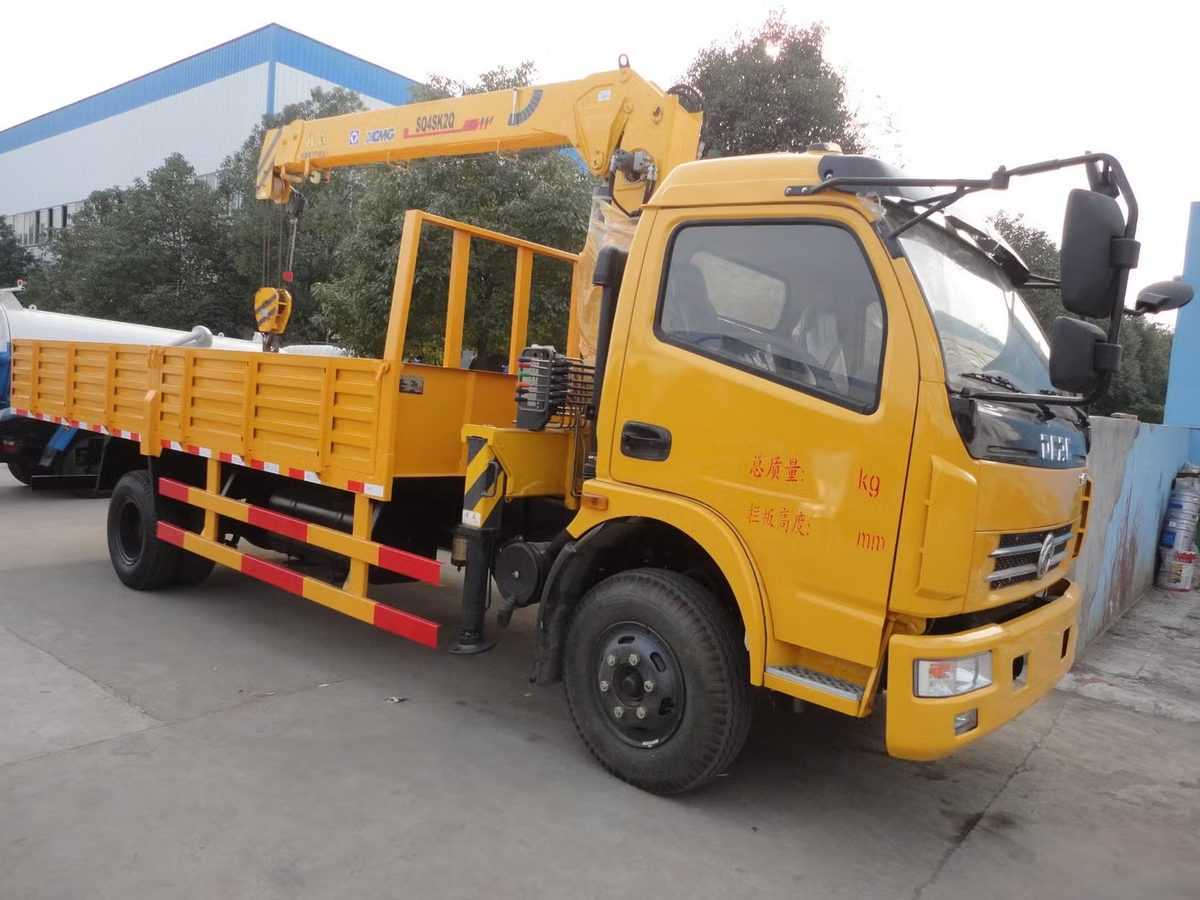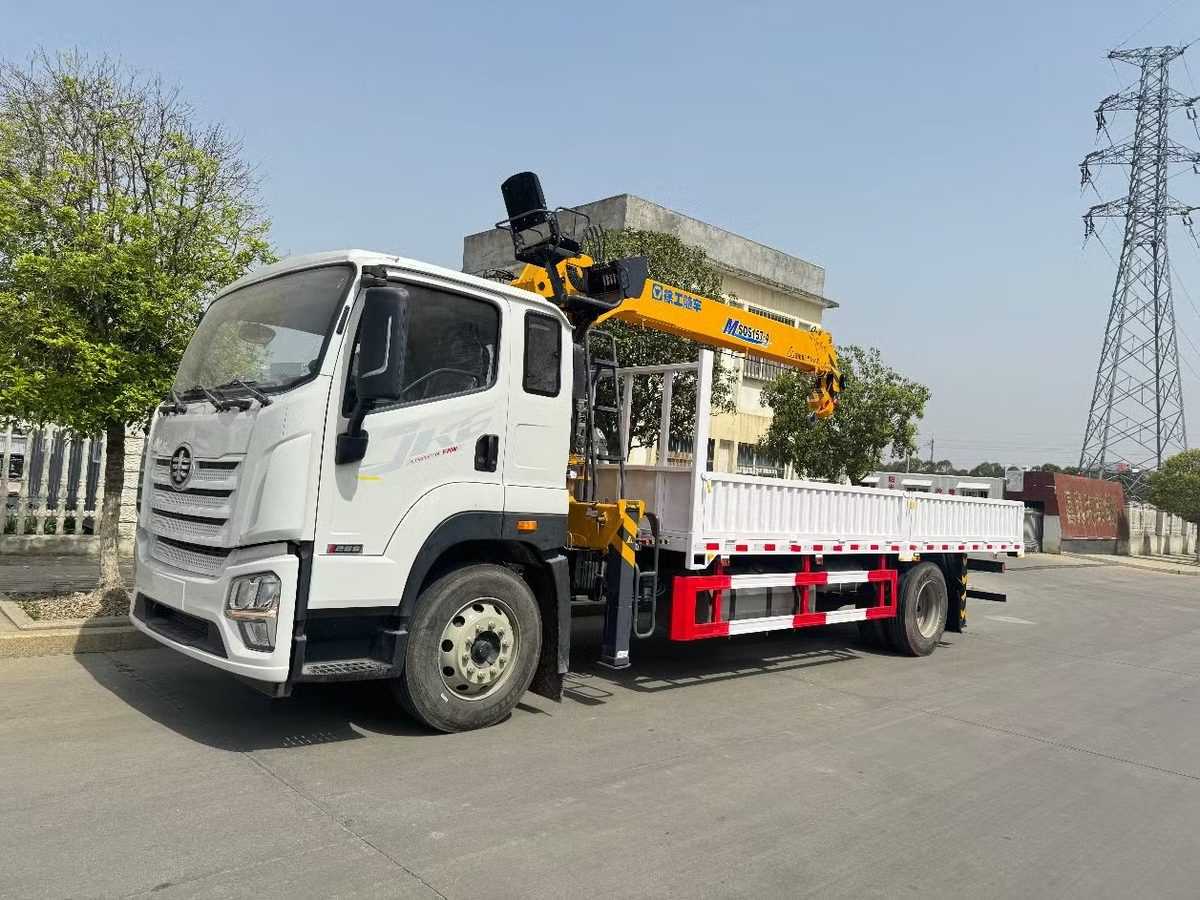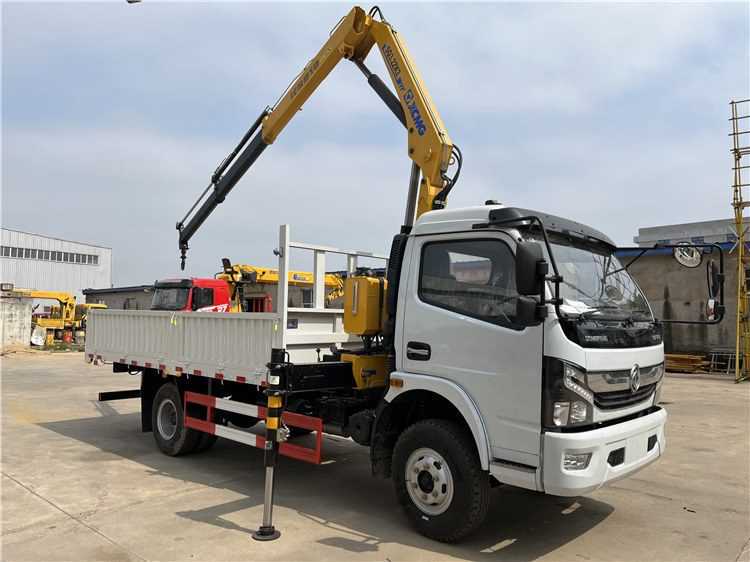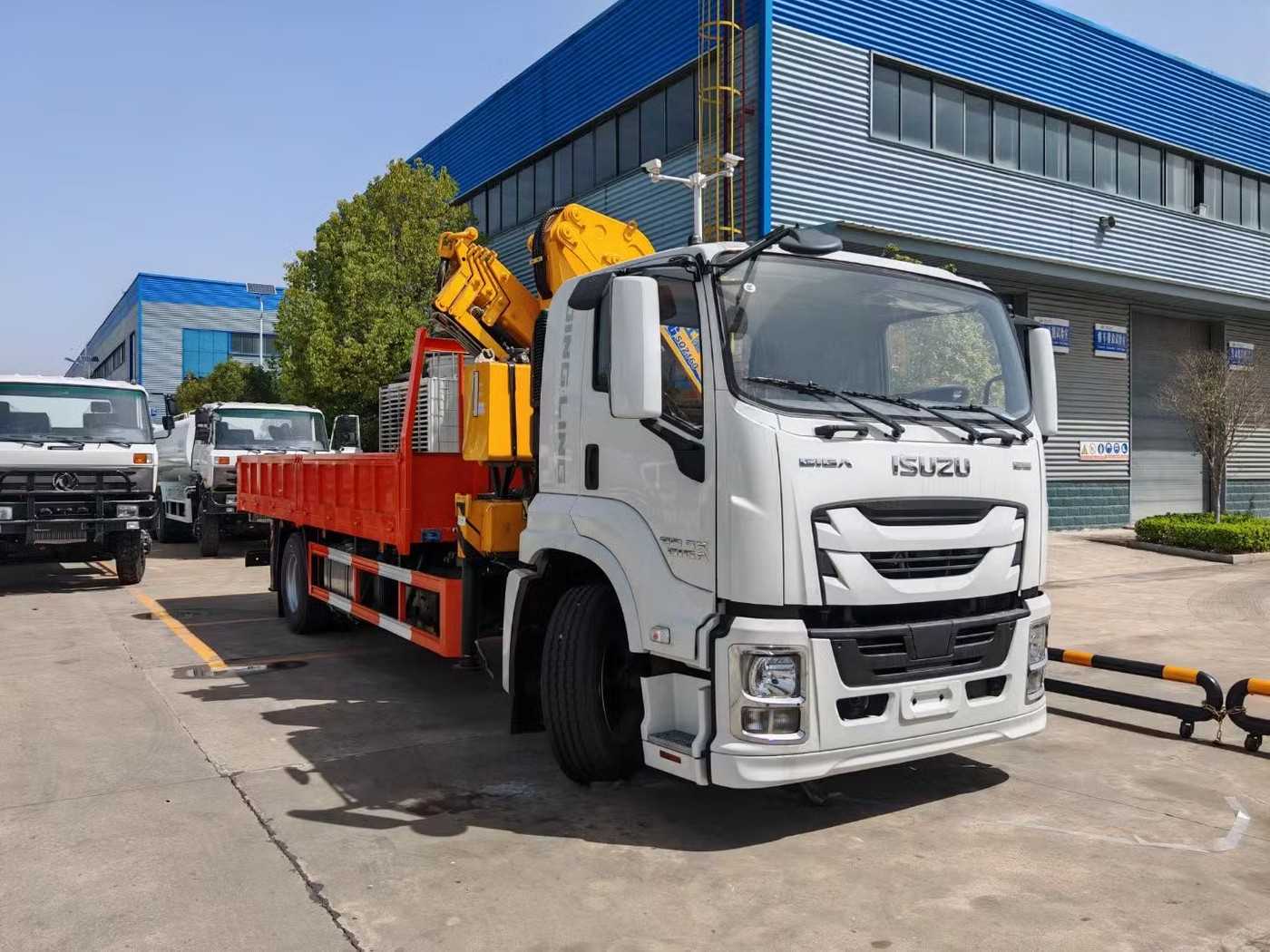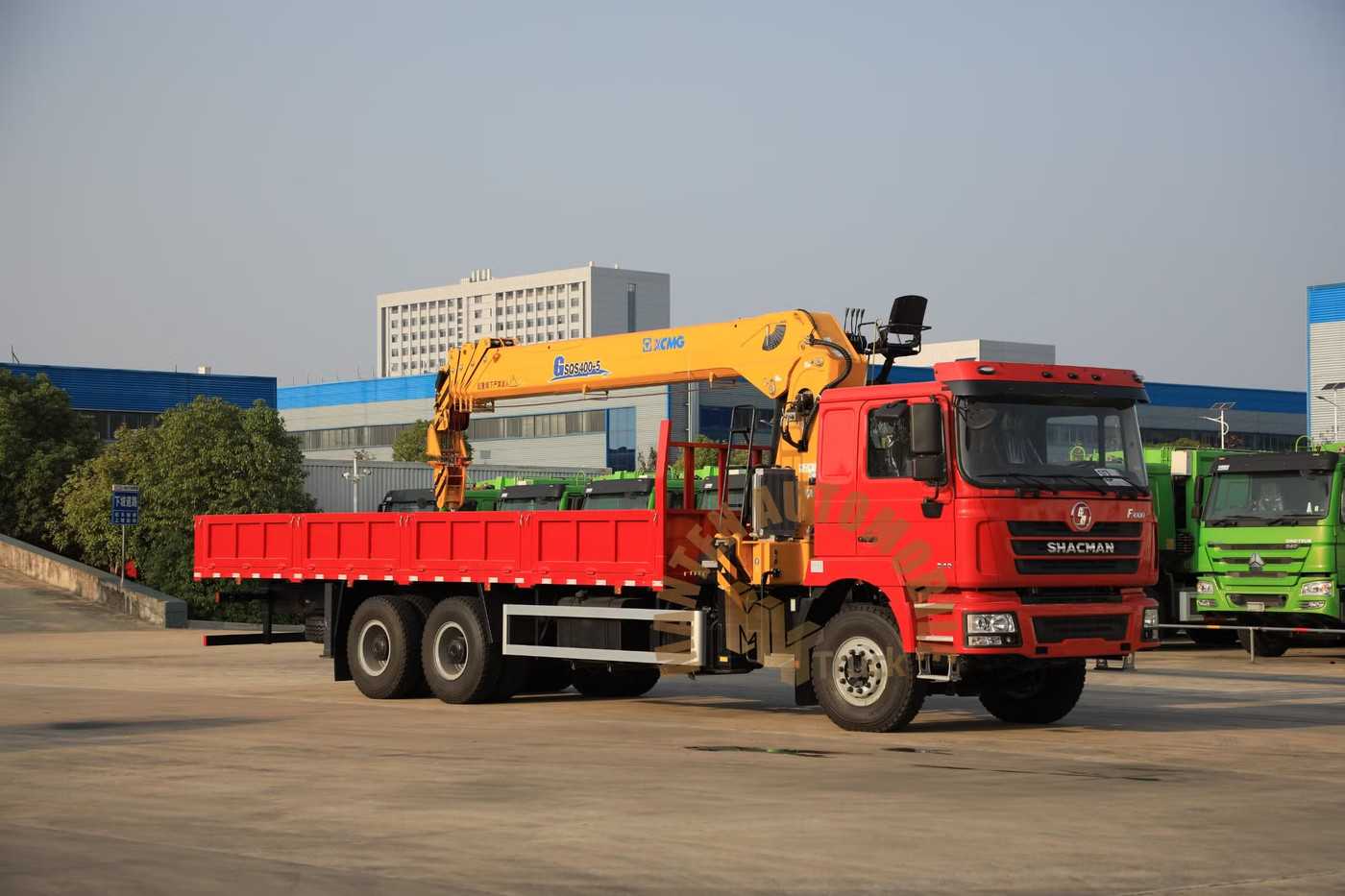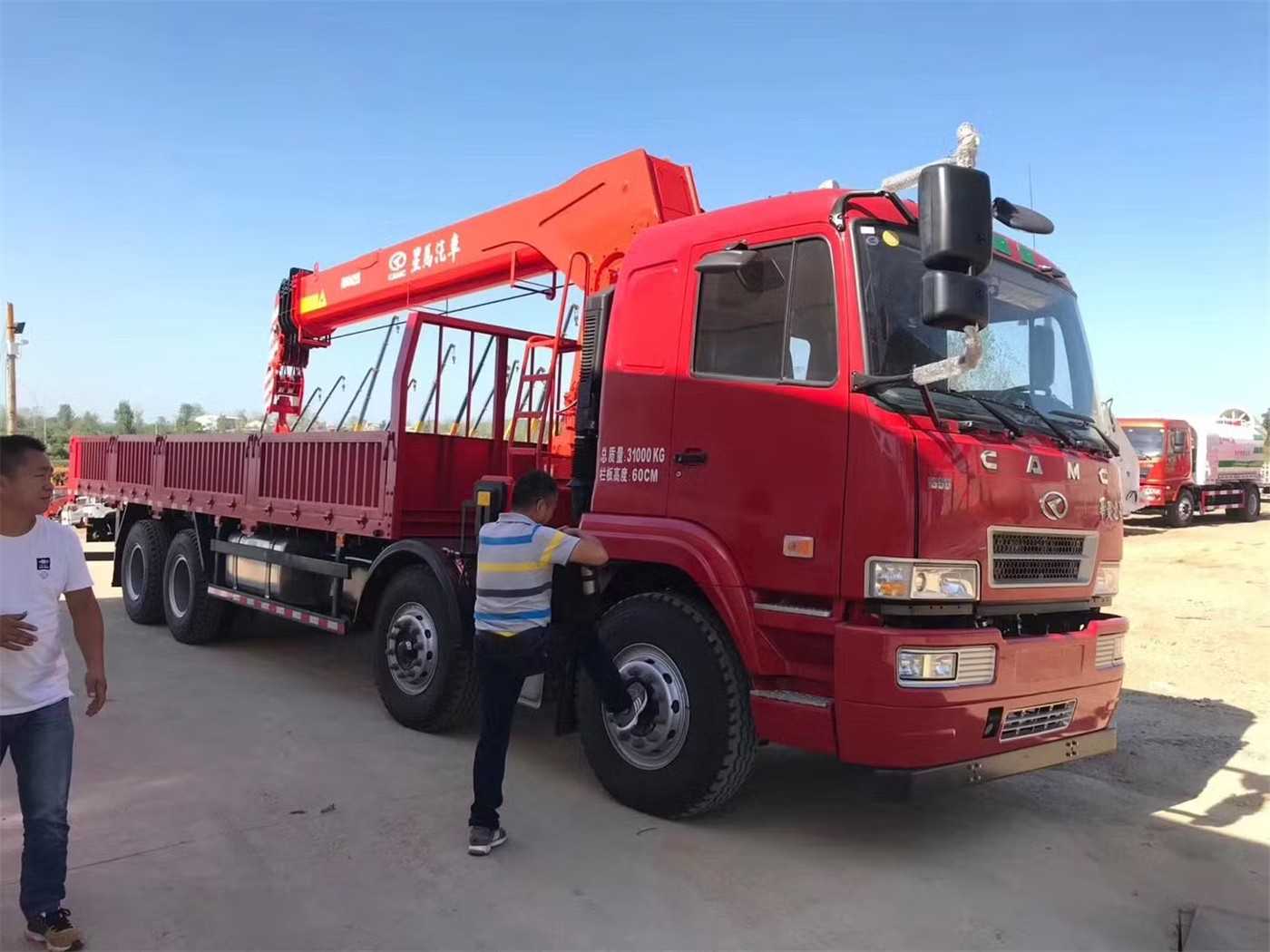
When African contractors, power utilities, and logistics fleets budget for a truck-mounted crane, the first decision shapes every cost line that follows: foldable knuckle boom (commonly called a HIAB-style crane across Africa) or straight telescopic boom? Both self-loading machines replace a separate mobile crane and flatbed trailer, cutting dispatch costs on highway corridors and remote sites, yet their factory cost, maintenance profile, cargo usability, and ocean freight volume differ sharply.
Because final crane truck pricing is confirmed in a written quotation tied to chassis brand, lifting moment, steering hand, body length, and destination port, this guide breaks down the structural cost drivers that shape true landed value across Africa.
Knuckle Boom (Foldable) vs Telescopic (Straight) Boom: Cost & Use-Case Trade-Offs
Two cranes rated at identical nominal tonnage—such as 8 tons or 10 tons at close radius—perform very differently on African job sites because of their mechanical geometry.
Knuckle Boom: Higher Purchase Cost, Greater Urban & Attachment Versatility
A knuckle boom articulates through hinged main and outer arms, folding compactly behind the cab in transit. That geometry requires heavy pivot linkages, dual luffing cylinders, precision pins, bronze bushings, and multi-function hydraulic valve blocks. At equal lifting moment, a knuckle boom crane typically adds 15% to 35% to upper-crane cost compared with a straight telescopic model.
That premium pays back in tight urban jobsites—swapping transformers beneath overhead lines in Lagos, placing precast culverts in Nairobi estates, or unloading pallets inside Accra warehouses. Because the articulating tip applies controlled hydraulic force without a swinging cable, operators can fit powered attachments directly onto the boom: clamshell grabs for aggregate, timber grapples, brick forks, or earth augers for utility poles. Stowing behind the cab also leaves the cargo deck clear overhead.
Telescopic Boom: Lower Cost per Ton-Meter & Simpler African Field Maintenance
A straight telescopic (stiff-boom) truck crane pairs a rigid multi-section box boom with a hydraulic wire-rope winch. Fewer hinged joints and flexing hoses mean a lower initial cost per rated ton-meter and faster troubleshooting in regional workshops outside capital cities.
On site, telescopic booms win wherever straight reach or vertical cable drop matters: hoisting generators over compound walls, lowering pumps into deep trenches, or setting steel trusses at height. For civil contractors, mining support teams, borehole crews, and crane-hire fleets across Nigeria, Kenya, Ghana, Tanzania, and Zambia, telescopic rigs typically deliver the fastest return on capital.
| Comparison Factor | Knuckle Boom (HIAB-Style) | Telescopic Boom (Straight) |
|---|---|---|
| Relative Upper-Crane Cost | +15% to +35% higher at equal lifting moment | Lower baseline cost per rated ton-meter |
| Core Job-Site Strength | Tight urban access, low clearance, powered grabs/augers/forks | Longer horizontal reach, cable winch over walls or into trenches |
| Cargo Deck Space | Folds behind cab; clear overhead deck space | Boom stows over cargo bed; restricts tall forward loads |
| Workshop Maintenance | More pivot pins, flexing hoses, and proportional seals | Simpler hydraulics and winch; widely serviced locally |
| Ro-Ro Shipping Height | Lower stowed profile; curbs CBM ocean freight | Higher turret/winch column on 12t–25t rigs |
| Best-Fit Sectors | Power utilities, waste grabs, timber, palletized supply | Civil contracting, mining support, boreholes, machinery yards |
Breakdown of Crane Truck Cost Components
Requesting a lump-sum “10-ton crane truck price” often returns wide price gaps because a factory-built unit combines five engineered layers.
1. Chassis, Axle Formula, Emissions & LHD/RHD Steering
The truck chassis usually accounts for 40% to 55% of total FOB cost, matched to crane deadweight and regional weighbridge rules:
- 4x2 Chassis (5t–8t Cranes): Built for urban delivery and utility fleets, such as the CLW Truck Mounted Crane · DF 4x2 8Tons Boom Truck, balancing tight turning radius with low fuel and tire spend.
- 6x2 & 6x4 Chassis (8t–12t Cranes): The core contracting class—including the CLW Truck Mounted Crane · FAW 6x2 10 Tons Boom Truck and CLW Truck Mounted Crane · CLT5140JSQFV6—spreading behind-cab crane weight cleanly across three axles to clear EAC and ECOWAS weighbridges.
- 8x4 Heavy Chassis (16t–25t Cranes): Essential when heavy booms weigh 6 to 9 tons on their own. Twin steering front axles on the CLW Truck Mounted Crane · Shacman 8x4 25 Tons Boom Truck prevent front-axle overload on unpaved haul roads.
Steering hand and emissions also move pricing and lead time. Left-Hand Drive (LHD) serves Nigeria, Ghana, Senegal, Cote d’Ivoire, Cameroon, DRC, and Ethiopia, while Right-Hand Drive (RHD) serves Kenya, Tanzania, Uganda, Zambia, South Africa, Zimbabwe, Botswana, and Mozambique; review our LHD and RHD options. Euro II and Euro III diesel drivetrains cost less upfront than Euro IV/V SCR systems and handle higher-sulfur fuel better, as detailed in our African emission chassis guide.
2. Crane Tonnage, Boom Sections & Tropical Hydraulic Cooling
The upper crane accounts for 30% to 42% of FOB cost and rises sharply with boom extension stages. Stepping from a 3-section to a 5-section boom adds nested high-tensile steel sections, sequencing cylinders, and heavier slewing rings. In 40°C to 46°C ambient heat, standard hydraulic oil overheats rapidly during continuous lifting; specifying an oversized oil tank, electric-fan oil cooler, and desert air intake under a tropical dust-proof specification protects pumps and seals at modest extra cost.
3. Reinforced Subframe & Chassis Integration
Heavy lifts transfer severe torsional twist into the truck frame rails. A durable Africa-spec mount uses a full-length Q345B or Q550 manganese-steel subframe, inner rail liners behind the cab, and shear-plate bolting rather than light U-bolts alone. Skipping subframe reinforcement saves little upfront but cracks chassis rails quickly on corrugated laterite roads.
4. Cargo Body Spec & Usable Bed Length
Crane installation consumes 0.9 m to 1.6 m of wheelbase length. Cargo bed pricing scales with floor thickness (4 mm to 6 mm checkered steel), drop-side height, heavy lashing rings, and retractable twist locks for 20-foot containers or generator skids.
5. High-Value Options That Shift the Quote
Options add 5% to 18% to total crane truck cost, with several directly governing safety and uptime:
- Rear Hydraulic Stabilizers: Single- or double-chamber rear outriggers are strongly advised at 8 tons and mandatory from 10 to 25 tons to stop rear-frame twist on sloped ground.
- Wireless Proportional Remote: Lets operators position loads up close with clear sightlines.
- High-Seat Controls & Dual-Pump Hydraulics: Deliver faster simultaneous slewing, hoisting, and luffing on heavy telescopic units.
- Load Moment Indicator (LMI): Enforces automated overload shutoff required on mining, oilfield, and EPC tenders.
| Capacity Tier | Chassis & CLW Reference | Approximate FOB Cost Share | Recommended Spec | Primary African Uses |
|---|---|---|---|---|
| Light–Medium (5t–8t) | 4x2 (DF 4x2 8Tons Boom Truck) | ~48% Chassis / ~34% Crane / ~18% Body & Options | Front hydraulic outriggers; rear single-chamber stabilizers | Urban transformers, block delivery, municipal utilities |
| Mid-Heavy (8t–12t) | 6x2 / 6x4 (FAW 6x2 10 Tons & CLT5140JSQFV6) | ~44% Chassis / ~38% Crane / ~18% Body & Options | Double-chamber rear outriggers, oil cooler, 5 mm floor | Civil contracting, steel & pipes, borehole logistics, crane hire |
| Heavy Duty (16t–25t) | 8x4 (Shacman 8x4 25 Tons Boom Truck) | ~40% Chassis / ~42% Crane / ~18% Body & Options | Dual-pump hydraulics, full rear outriggers, LMI, Q550 subframe | Quarry gear, precast culverts, substations, mine support |
Two quotes labeled “10-ton telescopic crane truck” can hide major engineering cuts. Always verify front-axle load rating, full-length subframe steel grade, hydraulic rear outriggers versus manual legs, and an oil cooler. Cutting those items upfront routinely causes cracked frames and costly downtime on African sites.
Popular Chinese Crane Brands Mounted by CLW (XCMG, SANY, CLW)
CLW mounts three proven Chinese upper-crane brands onto Sinotruk HOWO, Shacman, Dongfeng, FAW, Foton, or Isuzu chassis based on fleet budget and local parts support.
XCMG Cranes
XCMG holds the broadest African aftermarket presence across Nigeria, Kenya, Ghana, Tanzania, Angola, and Zambia. Local mechanics know XCMG hydraulics well, and seal kits, balance valves, slewing bearings, and wire ropes are widely stocked near major ports. Its moderate brand premium generally supports strong resale value.
SANY (SANY Palfinger & SANY Stiff-Boom)
SANY Palfinger knuckle booms and SANY heavy telescopic cranes target EPC contractors, utilities, and mines needing refined proportional control and strict overload safety. For formal bids, our tender support team prepares matching technical compliance packs alongside factory quality documentation on our certificates page (management-system certificates verify factory processes and remain distinct from destination vehicle import approvals).
CLW Factory-Integrated Cranes
CLW’s in-house crane line delivers sharp direct-factory value with single-roof accountability across crane fabrication, PTO matching, subframe welding, and load testing. Standard-size hydraulic pumps, valves, and seals let regional African workshops service units without waiting on proprietary modules.
Spare Parts & Warranty Coverage
Across all three brands, bundle a 2,000-hour spare-parts kit inside the locked toolbox: hydraulic filters, cylinder seal kits, boom wear pads, PTO seals, pressure gauges, plus spare hoist cable and sheave bearings for telescopic units. Factory warranty covers structural and hydraulic manufacturing defects per contract, supported by remote diagnostics and air-courier critical parts dispatch.
Shipping Height & Width Rules for Exported Crane Trucks
Comparing FOB China quotes alone misses a major landed-cost driver: Ro-Ro (Roll-on/Roll-off) and break-bulk freight into Apapa/Tin Can Island (Lagos), Tema, Mombasa, Dar es Salaam, Durban, Walvis Bay, or Beira is billed on exterior volume (CBM = Length × Width × Height) and vessel deck height brackets.
Knuckle Boom Folding Height Advantage on Ro-Ro Freight
Because a knuckle boom folds compactly behind the cab, stowed height stays close to cab-roof level (typically 3.30 m to 3.65 m). A heavy telescopic crane’s vertical column and winch often reach 3.65 m to 3.95 m. On a 9.5 m × 2.5 m truck, just 0.30 m of extra height adds over 7 CBM of chargeable Ro-Ro volume—and crossing a vessel’s lower-deck clearance can trigger higher main-deck tariffs. For tall telescopic rigs, engineers can evaluate low-profile seat mounts, subframe height tuning, or break-bulk shipping.
Width Compliance, Salt-Spray Protection & Import Clearance
Export crane trucks stay within the 2.50 m to 2.55 m highway width envelope with outriggers retracted, avoiding abnormal-load port surcharges and escort permits. Before vessel loading, units receive anti-rust export waxing, greased hydraulic rods, and waterproof wrapping to survive 30 to 45 days of ocean salt spray. Schedule mandatory pre-shipment inspections early—KEBS PVoC (Kenya), TBS PVoC (Tanzania), SONCAP/Form M (Nigeria), or ZABS (Zambia); review our payment and shipping guide and import compliance overview to avoid demurrage.
Because African port duties and VAT are calculated on CIF value, a knuckle boom’s lower Ro-Ro CBM volume and shorter wheelbase can narrow its factory price gap against a telescopic boom once ocean freight and clearance are included.
Requesting a Side-by-Side Knuckle vs Telescopic Quote
For an apples-to-apples budget decision, request a parallel quotation mounting a knuckle boom and a telescopic boom onto the exact same chassis, steering hand, and destination port. Specify your real lifting envelope—such as “lifting 2,500 kg at 8.5 meters radius”—rather than nominal tonnage alone, so engineers match the lifting chart accurately.
Browse delivered African fleets in our project showcase, check ordering steps in How to Buy, and always verify official bank details via our anti-fraud notice before remitting deposits.
Frequently Asked Questions on Crane Truck Costs
Why does a knuckle boom (HIAB-style) crane truck cost more upfront than a telescopic unit?
Knuckle booms require extra articulated steel arms, dual luffing cylinders, precision pivot pins, flexing knuckle hoses, and multi-function hydraulic valve blocks. Those components raise upper-crane cost over a straight telescopic unit of equal tonnage, though lower Ro-Ro shipping height and powered attachments can offset the gap in urban utility fleets.
Which crane boom style is cheaper to maintain in remote African regions?
Straight telescopic cranes are generally more economical and faster to maintain outside capital cities. They have fewer articulated joints and exposed hoses, and regional mechanics routinely service telescopic wear pads, hydraulic winches, and wire ropes with standard seal kits.
Can a 10-ton truck crane actually lift 10 tons at full boom extension?
No. Nominal tonnage applies only at minimum working radius—typically 2.0 to 2.5 meters from the crane column with outriggers fully deployed on level ground. At 10 to 12 meters reach, a 10-ton crane typically lifts 1.2 to 2.0 tons depending on model and boom stages.
How do steering hand and destination port affect final landed crane truck cost?
LHD versus RHD steering governs eligible chassis platforms and lead times, while your destination port sets Ro-Ro CBM freight tariffs, vessel frequency, pre-shipment inspection costs (PVoC/SONCAP), and local port fees—all itemized transparently in a formal CIF quotation.
Request a Side-by-Side Knuckle vs Telescopic Quotation
Send these five details for an itemized FOB and CIF comparison matched to your lifting chart, axle limits, and destination port:
- Target Lift at Radius: Heaviest load (kg/tons) and horizontal working reach (meters), plus winch hook or grab/auger needs.
- Boom Style & Brand: Knuckle boom, telescopic boom, or both side by side, plus preference among XCMG, SANY, or CLW.
- Port & Steering Hand: Destination port (e.g., Lagos, Tema, Mombasa, Dar es Salaam, Durban, Beira) and LHD or RHD requirement.
- Chassis & Bed Spec: Preferred drive (4x2, 6x4, or 8x4), minimum cargo bed length, and emission standard (Euro II, III, or higher).
- Site & Compliance Needs: Urban utility, mining, or highway duty, plus rear hydraulic outriggers, LMI, wireless remote, or PVoC/SONCAP inspection.