Across power utilities in Kenya and Tanzania, civil contractors in Nigeria and Ghana, and mining fleets in Zambia and Zimbabwe, lifting equipment buyers face one recurring decision: invest in a self-loading truck mounted crane (boom truck) or a dedicated mobile crane? Choosing poorly slows site handovers, doubles mobilization fuel burn, and leaves crews unable to reach a transformer plinth or culvert trench safely.
Even more costly is misreading rated tonnage. Many buyers order a 10-ton crane truck expecting it to swing a 5-ton generator six meters from the roadside, unaware that 10 tons applies strictly at a 2.0–2.5 m close-in radius. Drawing on field deployments from our African project deliveries, this guide compares boom trucks against mobile cranes, decodes 10-ton and 15-ton load charts, and specifies the chassis, cooling, and compliance build required across Africa.
Boom Truck (Crane Lorry) vs Dedicated Mobile Crane
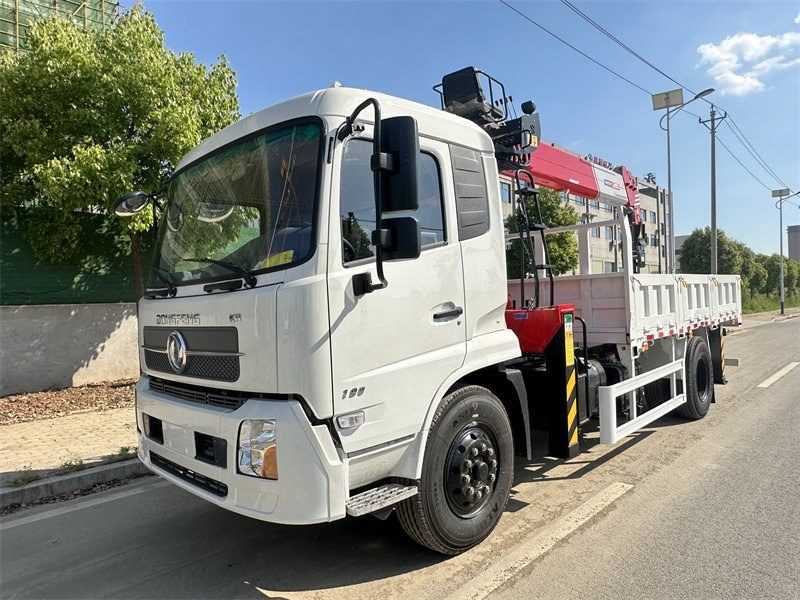
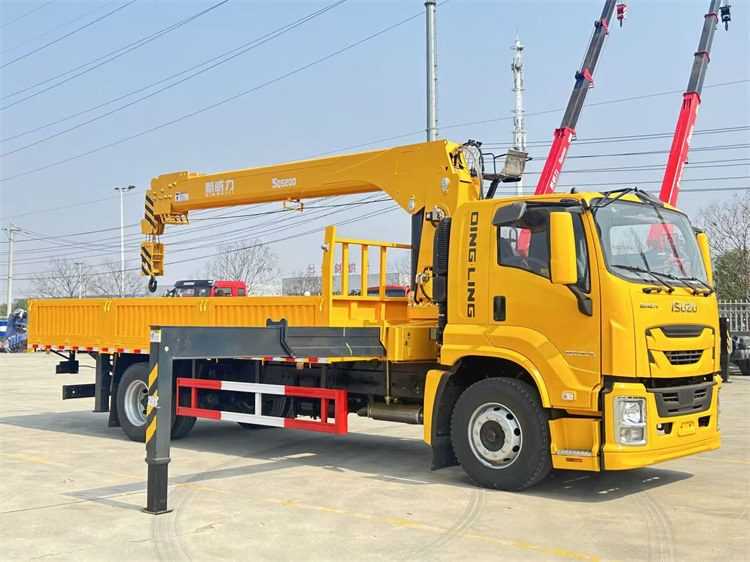
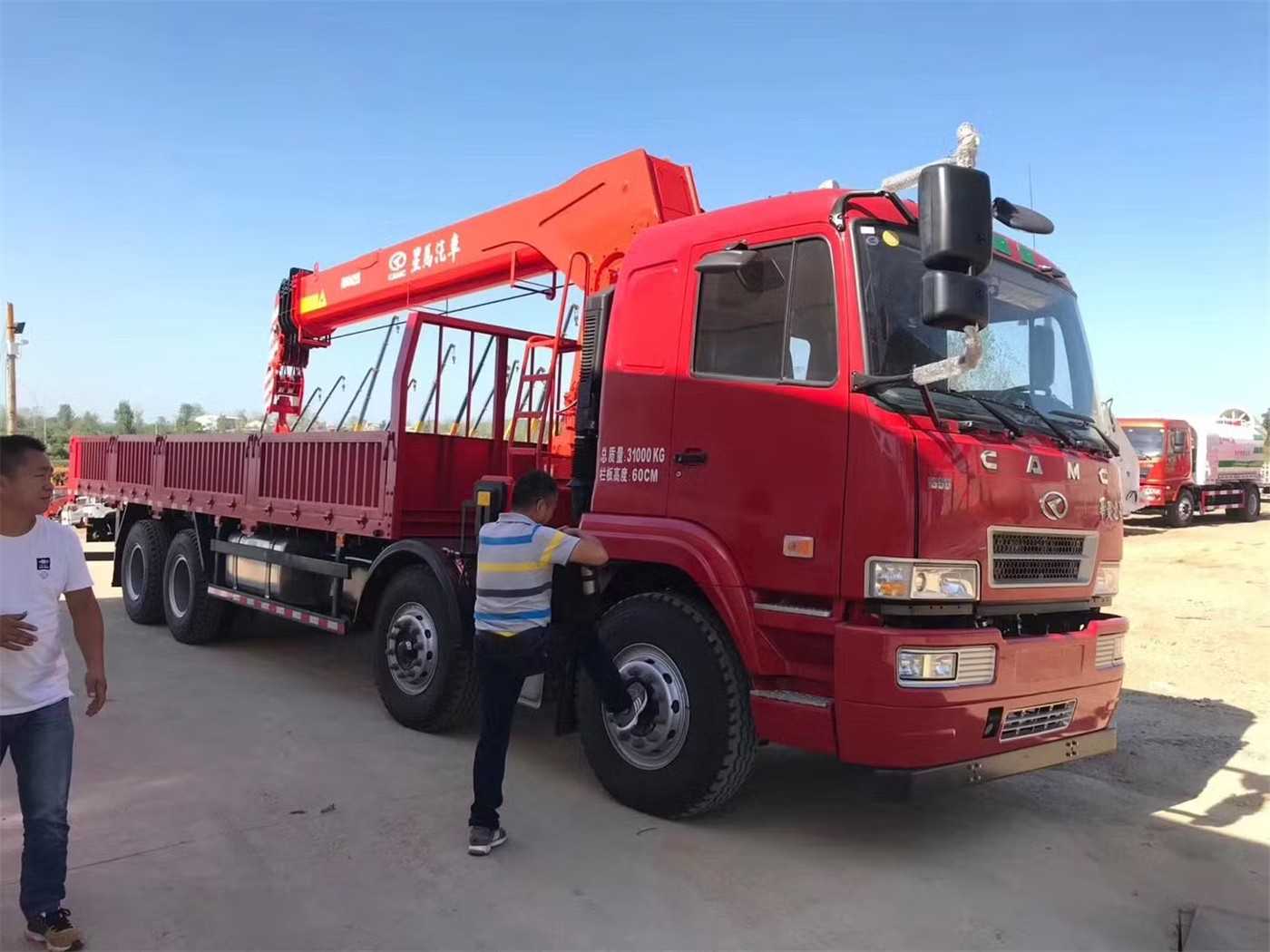
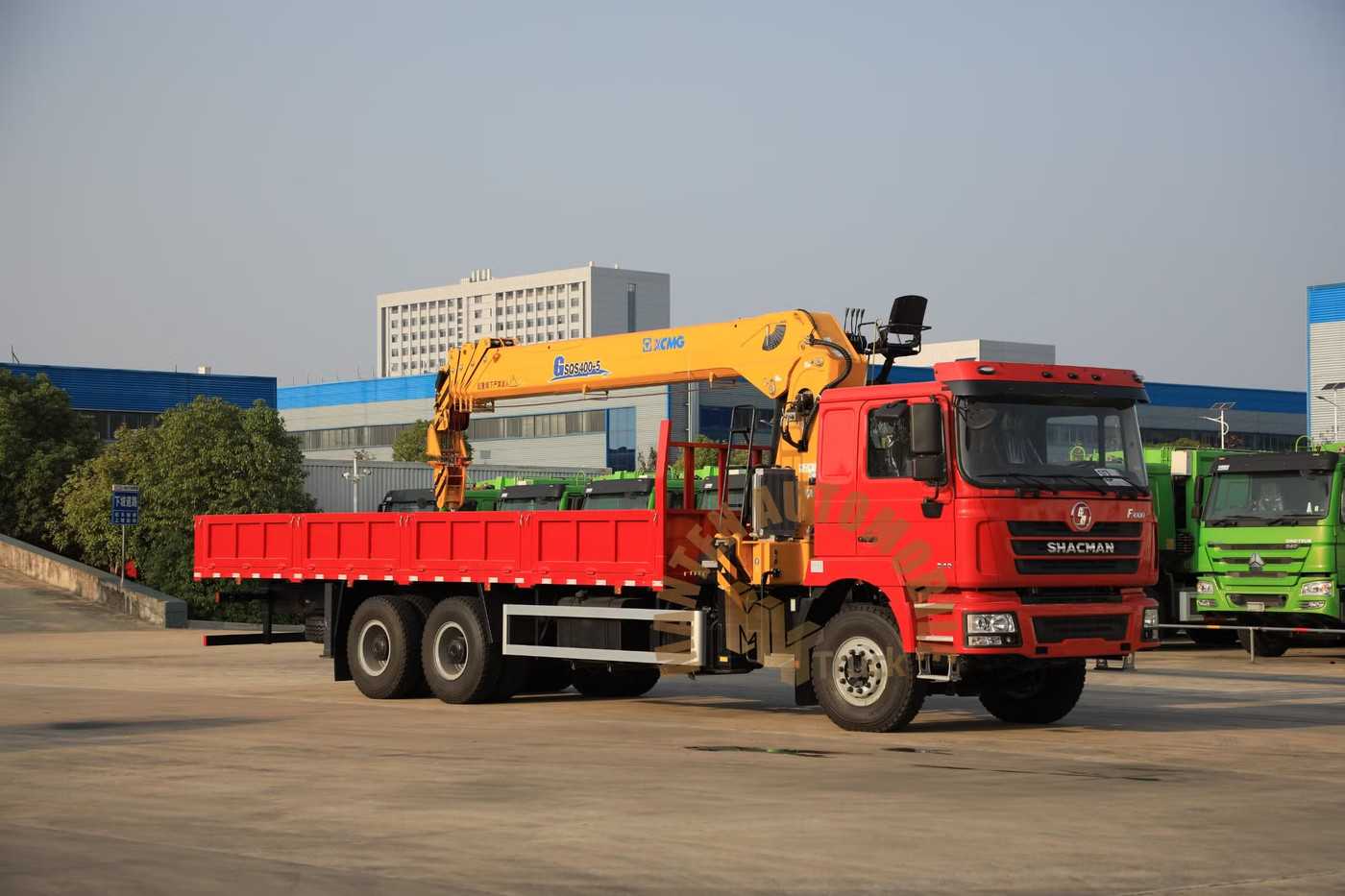
The core trade-off is workflow consolidation versus specialized static lifting. A boom truck mounts a hydraulic crane behind a commercial truck cab while retaining a full cargo deck. One driver-operator loads materials at the depot, travels at highway speed, deploys outriggers, sets the load, and moves directly to the next jobsite.
A dedicated mobile crane carries zero payload. Every pole-planting, borehole-pump, or generator delivery requires dispatching a second flatbed truck, a second driver, and two fuel budgets—eroding daily margins on multi-stop utility and contractor routes.
| Factor | 10–15T Boom Truck | Mobile Crane (25–30T) | Best African Fit |
|---|---|---|---|
| Self-Loading Cargo | Hauls 8–18 t on a 6.5–8.5 m deck | Zero deck; needs support flatbed | Boom truck for utilities & multi-site runs |
| Mobilization | 1 truck, 1 operator-driver | 2 vehicles, separate crane operator | Boom truck cuts daily fuel & crew cost |
| Reach & Height | 13–20 m boom; best at 2–12 m | 30–40 m boom + jib | Mobile crane for high-rise & bridge steel |
| Site Footprint | Standard truck width & turning | Wider carrier & counterweight swing | Boom truck for narrow urban substations |
| ROI & Spares | Lower capital; commercial truck parts | Higher outlay; specialized spares | Boom truck gives faster rental payback |
Dedicated mobile cranes remain indispensable for multi-story steel erection, rooftop chillers, or sustained 15–20 t lifts at 10 m radius. For distribution transformers (100–500 kVA), concrete poles, generators, precast culverts, telecom masts, and general hire fleets, a boom truck completes most lifts at far lower operating cost. Mixed fleets frequently pair a compact municipal unit like the CLW CLT5140JSQFV6 truck mounted crane with a heavy CLW Shacman 8x4 25-ton boom truck for high-payload self-loading contracts.
How to Read a 10-Ton or 15-Ton Boom Truck Load Chart Properly
Headline capacity—10 ton, 12 ton, or 15 ton—is solely the peak rating at minimum radius (2.0–2.5 m horizontally from the slewing ring center) with the boom retracted. Once the boom telescopes across a ditch or boundary wall, lifting capacity drops rapidly according to rated load moment.
Load moment (ton-meters, t·m) defines true lifting strength: a 10-ton telescopic crane typically runs 25–28 t·m, a 12-ton crane 30–35 t·m, and a 15-ton crane 37.5–45 t·m. Doubling working radius cuts safe capacity by more than half once extended boom weight is deducted.
Buyers also underestimate radius because it is measured from the slewing column centerline to the hook—not the cargo bed edge. On a 2.5 m wide truck, a load sitting 2.5 m beside the deck is already at 3.75 m radius; reaching across a 1.5 m roadside drain pushes true radius to 5.5–6.5 m.
| Radius (Turret Center) | 10T Crane (~14 m) | 12T Crane (~16 m) | 15T Crane (~19 m) | Field Lift Example |
|---|---|---|---|---|
| 2.0–2.5 m | 10,000 kg | 12,000 kg | 15,000 kg | Heavy pump skid beside outriggers |
| 4.0 m | 4,800–5,500 kg | 6,200–7,000 kg | 7,500–8,800 kg | 315–500 kVA transformer or 10 ft box |
| 6.0 m | 2,800–3,300 kg | 3,800–4,400 kg | 4,800–5,600 kg | Precast culvert across road shoulder |
| 8.0 m | 1,800–2,200 kg | 2,600–3,100 kg | 3,300–4,000 kg | Steel trusses or telecom shelter |
| 10.0 m | 1,200–1,500 kg | 1,800–2,200 kg | 2,400–2,900 kg | Concrete utility pole or roof steel |
| 12.0 m | 850–1,100 kg | 1,300–1,650 kg | 1,800–2,250 kg | Borehole casing pipes or solar racks |
| 14.0–16.0 m | 550–750 kg (~14 m) | 850–1,150 kg | 1,200–1,550 kg | Lighting masts or roofing sheets |
Engineering note: Values above are typical reference curves for straight telescopic booms with fully extended front and rear outriggers on firm, level ground. Exact ratings depend on crane brand, boom sections, and wire-rope falls—always confirm the stamped metallic load chart for the quoted model.
Chart ratings include the hook block, spreader bar, and slings (150–400 kg). Full capacity applies over the sides and rear; over-cab lifting is restricted without a front fifth stabilizer. On soft laterite or marram soil, always use hardwood or composite outrigger pads and derate dynamic picks by 15–20%.
Stiff Boom (Winch) vs Knuckle Boom in Africa
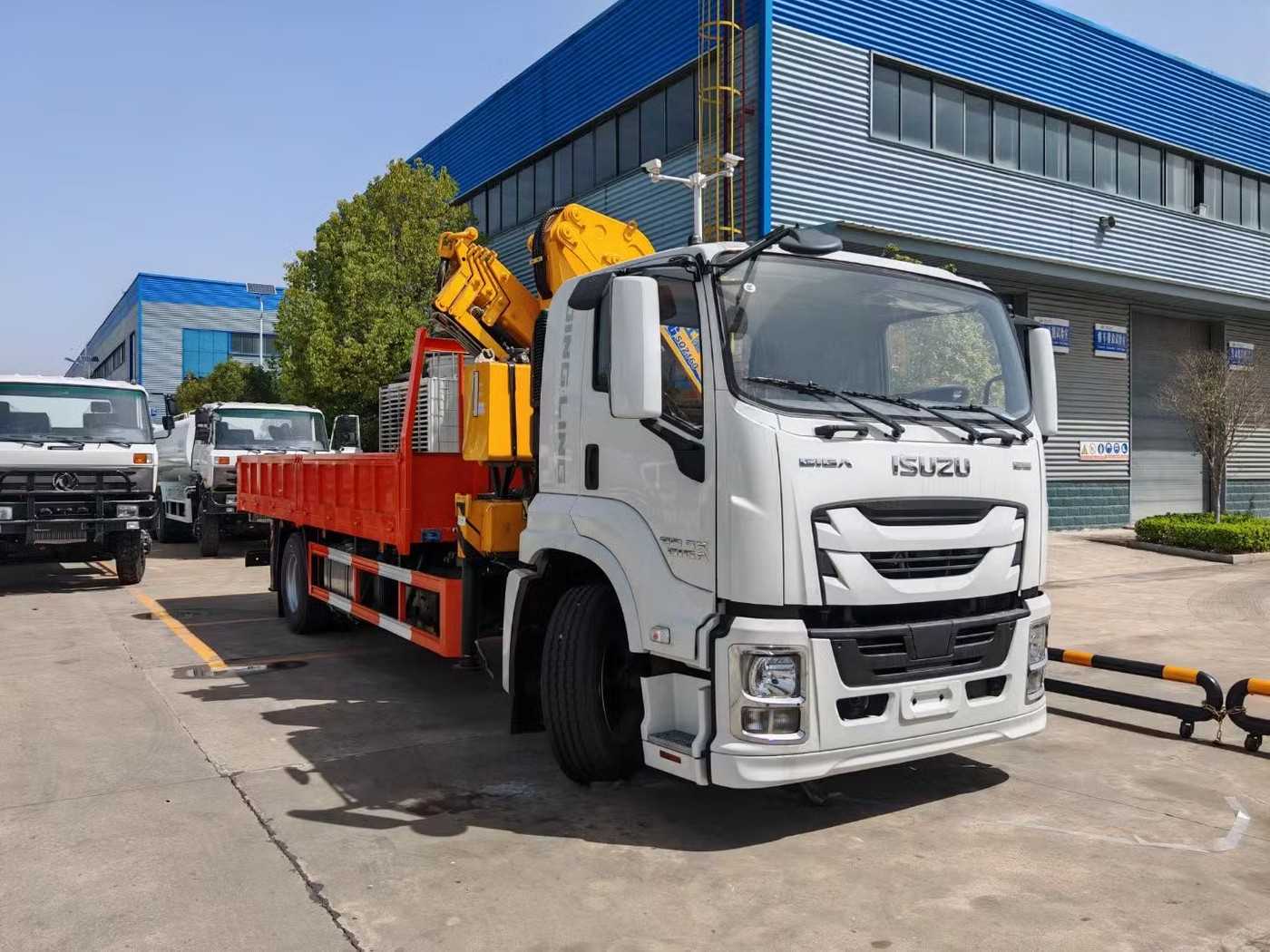
Across Nigeria, Ghana, Kenya, Tanzania, and Zambia, telescopic stiff-boom cranes with hydraulic winches dominate contractor fleets. Cable winches smoothly lower pumps into deep boreholes and culvert rings into trenches below grade, while simpler hydraulics speed up field repairs. Because stepping from 10 to 12 tons on the same 6x4 chassis adds modest cost relative to landed price, many contractors select a CLW 6x4 12-ton boom truck or our heavy-frame CLW 6x4 12-ton boom truck to secure 800–1,100 kg of extra margin at 6–8 m radius. Knuckle booms mainly suit cramped urban depots with low overhead cables.
Typical Dimensions & Chassis Requirements for 10T and 15T Crane Trucks
Mounting a heavy crane on an underspecified single-layer frame causes behind-cab cracks, sagging front springs, and weighbridge penalties. Chassis design must handle both slewing torque and highway axle laws.
6x4 vs 8x4 Chassis & Axle-Load Compliance
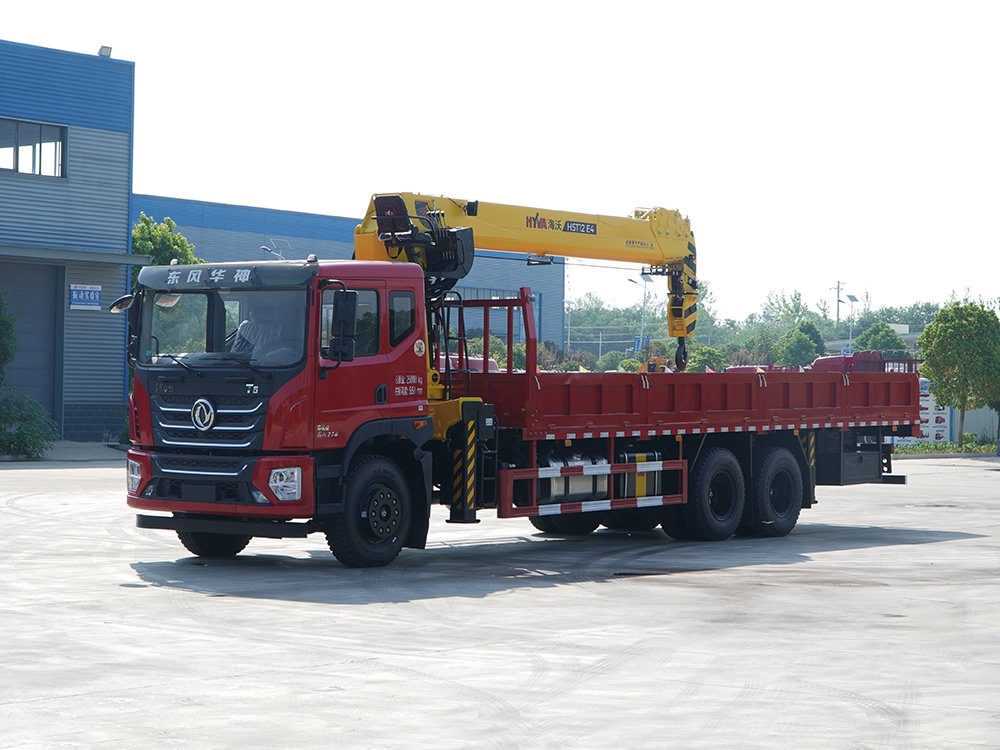
A 10-ton or 12-ton crane weighs roughly 3,600–4,600 kg dry before subframe and body. Mounted on a reinforced 6x4 chassis (25–26 t GVW, 300–340 hp, 7.5–9 t front axle), weight distribution stays legal across East African Community (EAC), SADC, and ECOWAS weighbridges.
A 15-ton crane weighs 5,000–6,200 kg directly behind the cab, pushing a single 6x4 front steer axle close to or past 7.5–8.0 t limits enforced at KeNHA, TANROADS, and Zambian checkpoints before loading cargo. For highway-going 15-ton boom trucks, an 8x4 chassis with twin front steer axles (31–32 t GVW, 340–400 hp) spreads crane deadweight safely and protects legal payload.
Align steering and fuel systems with local rules: Kenya, Tanzania, Uganda, Zambia, Zimbabwe, and South Africa use right-hand drive, while Nigeria, Ghana, Senegal, Ivory Coast, Ethiopia, and DRC use left-hand drive—see our LHD and RHD options. Match engine electronics to local diesel sulfur via our emission chassis options.
Double-Layer Frame Reinforcement, Deck Length & Outriggers
Side-lifting torsion concentrates directly beneath the crane pedestal. Specify a full-length double-layer high-tensile main frame (300 mm web, 8+5 mm or 8+6 mm) plus a localized third inner reinforcement plate across the mounting zone, coupled to a bolted full-length box subframe—never weld directly onto heat-treated chassis flanges.
Because the turret uses 1.15–1.40 m behind the cab, a 6x4 truck yields a 6.8–7.4 m cargo deck (suited to 6 m steel pipes or rebar), while an 8x4 provides 7.8–8.5 m for power poles and long beams. Pair dual-chamber front outriggers with mandatory rear hydraulic outriggers on all 12T and 15T trucks to prevent rear chassis twist during slewing.
| Parameter | 10T Crane (6x4) | 12T Crane (6x4) | 15T Crane (8x4) |
|---|---|---|---|
| Drive Layout | 6x4 (10-wheeler) | 6x4 heavy-duty (or 8x4) | 8x4 (twin front steer) |
| Engine Power | 290–336 hp diesel | 300–340 hp diesel | 340–400 hp diesel |
| Main Frame | 300 mm (8+5) + local 3rd | 300 mm (8+6) + local 3rd | 300–320 mm double + subframe |
| Cargo Deck | 6,800–7,400 mm | 6,800–7,500 mm | 7,800–8,500 mm |
| Hydraulic Reach | 13.5–14.5 m (4-sec) | 15.5–16.5 m (4-sec) | 18.5–20.5 m (4–5 sec) |
| Front Outriggers | 5.3–5.8 m dual-chamber | 5.5–6.2 m dual-chamber | 6.0–7.2 m dual-chamber |
| Rear Outriggers | Recommended | Strongly recommended | Mandatory for full chart |
| Hydraulic Cooling | Oil cooler + pump | Electric-fan radiator | Oversized radiator + dual pump |
Hydraulic Oil Cooling & Wire Rope Care in Tropical Heat
In 38–46 °C heat across northern Nigeria, Ghana, northern Kenya, or the Zambian Copperbelt, continuous winching pushes hydraulic oil past 80 °C. Standard ISO VG 46 thins out rapidly, causing internal pump leakage, slow telescoping, and blown cylinder seals.
Order an oversized air-to-oil hydraulic radiator with electric fan, a 180–240 L reservoir, and a 10-micron return filter with clogging indicator. Run anti-wear ISO VG 68 hydraulic fluid in hot zones, alongside dual-stage engine air pre-cleaners from our tropical dust-proof design to protect against Harmattan sand and quarry dust.
Fine red dust mixed with heavy open grease turns into grinding paste on hoist ropes and nylon boom slide pads. Enforce four shift rules:
- Use penetrating wire-rope oil: Lubricates inner strands without trapping abrasive sand on cables or wear pads.
- Inspect ropes weekly: Replace cables immediately upon spotting birdcaging, kinks, crushed strands, or broken wires near the socket.
- Keep three dead wraps on the drum: Never pay out cable to the bare clamp during deep borehole lifts.
- Test the anti-two-block (A2B) switch daily: Stops operators from pulling the hook block into the boom tip sheave.
Specify standard metric hose fittings, common PTO pumps, and industry-standard seal kits so hydraulic shops in Lagos, Accra, Nairobi, Dar es Salaam, or Lusaka can service lines locally without air-freight delays.
Pre-Order Load Check Worksheet & Landed-Cost Planning
Run five checks before signing a purchase order or tender spec to eliminate under-sizing and port delays:
- Confirm your critical pick: Add heaviest object weight plus 250–400 kg rigging, measure exact distance from turret center to set-down point, and verify a 20% buffer on the stamped load chart.
- Verify deck and axle compliance: Match bed length (6.8–8.5 m) and 6x4 vs 8x4 axles to regular cargo and local weighbridge laws.
- Check shipping mode and height: Most 10T–12T and compact 15T trucks ship via Ro-Ro into Apapa/Tin Can Island, Tema, Mombasa, Dar es Salaam, Durban, Beira, or Walvis Bay if stowed height stays within deck limits (~3.85–3.95 m); taller 15T–25T builds use breakbulk or flat-rack freight. See our payment and shipping guide.
- Lock in import compliance early: Arrange SONCAP, PVoC, TBS, or ZABS inspection and steering compliance before production finishes via our import compliance guide, ordering process, or tender support desk.
- Require pre-shipment load tests and verification: Demand dated videos of 110% dynamic and 125% static overload tests, outrigger cycling, A2B cut-off checks, and VIN/serial photos before final payment. Factory ISO 9001 credentials on our certificates page verify manufacturing quality management, while destination roadworthiness and statutory lifting certificates are issued separately per country rules. Always verify bank accounts via our anti-fraud notice before wiring deposits.
Landed cost depends on chassis brand and layout (6x4 vs 8x4, LHD/RHD, Euro II/III), crane tonnage and boom sections, tropical upgrades (oil radiator, triple-reinforced frame, rear outriggers), spare-parts kit, shipping mode (Ro-Ro vs breakbulk), and destination customs duties. Because chassis and ocean freight fluctuate monthly, exact FOB and CIF figures are confirmed in a written factory quotation.
Frequently Asked Questions on 10-Ton and 15-Ton Boom Trucks
Can a 10-ton boom truck lift a 5-ton transformer at 6 meters radius?
No. A 10-ton boom truck typically lifts 2,800–3,300 kg at 6 m from the turret center. Lifting a 5,000 kg transformer plus rigging at 6 m requires parking closer (3.5–4.0 m) or stepping up to a 15-ton or 16–25 ton boom truck.
Should I choose a 6x4 or 8x4 chassis for a 15-ton crane truck?
Choose an 8x4 twin-steer chassis for highway-going 15-ton boom trucks. It prevents front-axle weighbridge overloads from the 5+ ton crane mass and supports a 7.8–8.5 m cargo bed, whereas reinforced 6x4 chassis suit 10T–12T cranes best.
How are boom trucks shipped to Mombasa, Dar es Salaam, Tema, and Lagos?
Standard 10T, 12T, and compact 15T trucks ship assembled via Ro-Ro vessel when overall height fits deck clearance, avoiding port lifting charges. Spares and pads are locked or crated on deck; tall 25T builds ship via breakbulk or flat-rack.
Which spare parts should I include in the first factory order?
Bundle a 12–24 month kit: hydraulic suction and 10-micron return filters, boom slide pads, cylinder seal kits, an A2B limit switch, PTO solenoid/cable, certified slings, and chassis air, oil, and fuel-water separator filters.
Request a Matched Load Chart & Factory Quotation
Share five quick details below to receive a verified crane load chart, axle layout, and itemized FOB/CIF factory quotation:
- Heaviest lift & radius: Peak weight (kg) and horizontal distance (m) from truck centerline.
- Crane class & boom: 10T, 12T, 15T, or 25T telescopic stiff boom (or knuckle boom).
- Chassis & deck: Bed length, 6x4 or 8x4 drive, LHD/RHD steering, and emission tier.
- Site duty: Urban utilities, highway freight, quarry/mining, or off-road construction.
- Destination port: Target African port (Mombasa, Dar es Salaam, Tema, Lagos, Durban, Beira) and timeline.