Selecting the wrong fuel tanker capacity quickly erodes margins in African downstream oil distribution. A tank that is too small inflates per-liter haulage cost on every depot turnaround; an oversized body triggers weighbridge fines, cracks station forecourts, or forces chronic partial-load runs that destabilize the truck on corrugated roads.
Whether you supply filling stations in Nigeria or Ghana, move bulk distillates across Kenya and Tanzania, or refuel remote mines in Zambia, DRC, or Senegal, sizing a rigid petroleum tanker comes down to four engineering variables: legal axle limits, fuel specific gravity and thermal expansion, multi-product compartment splits, and local repairability. This guide explains how to specify 10,000L, 20,000L, and 30,000L rigid tankers for both left-hand drive (LHD) and right-hand drive (RHD) African fleets.
Standard Rigid Fuel Tanker Capacities in Africa (5,000L to 30,000L)
While 35,000L to 45,000L+ three-axle semi-trailer tankers dominate cross-border trunk corridors—such as Mombasa–Kampala, Dar es Salaam–Lusaka, or Tema–Ouagadougou—rigid trucks remain essential wherever tight urban forecourts, steep mine ramps, or smaller station storage volumes make articulated rigs impractical.
Matching tanker truck capacity to chassis layout keeps your fleet compliant with EAC, ECOWAS, and SADC weighbridge axle-group rules:
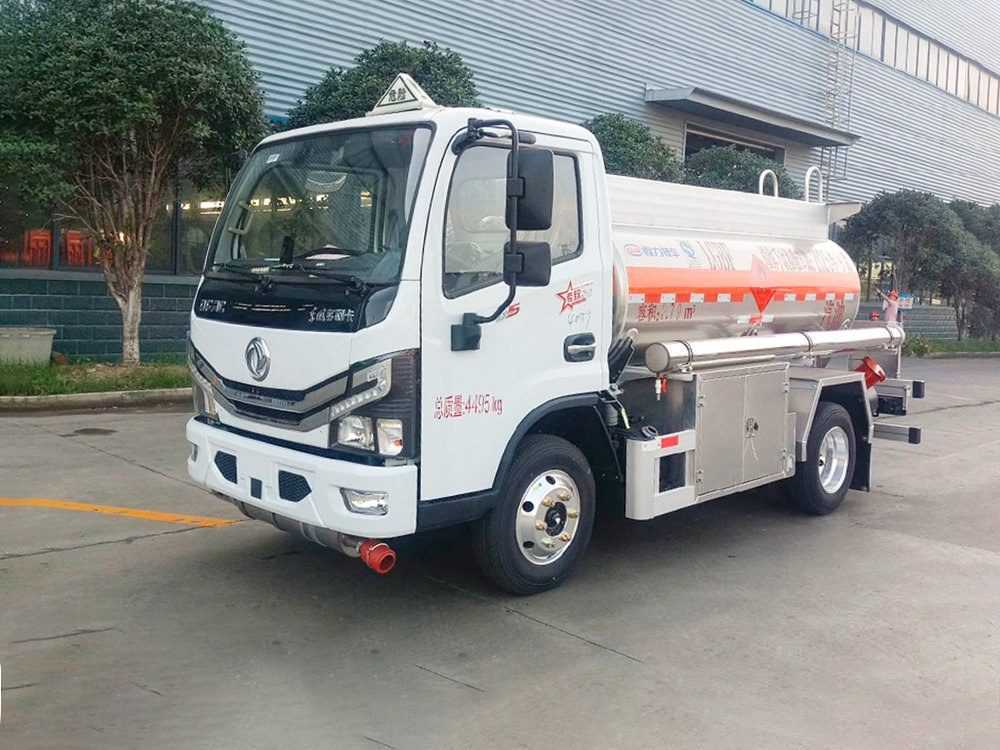
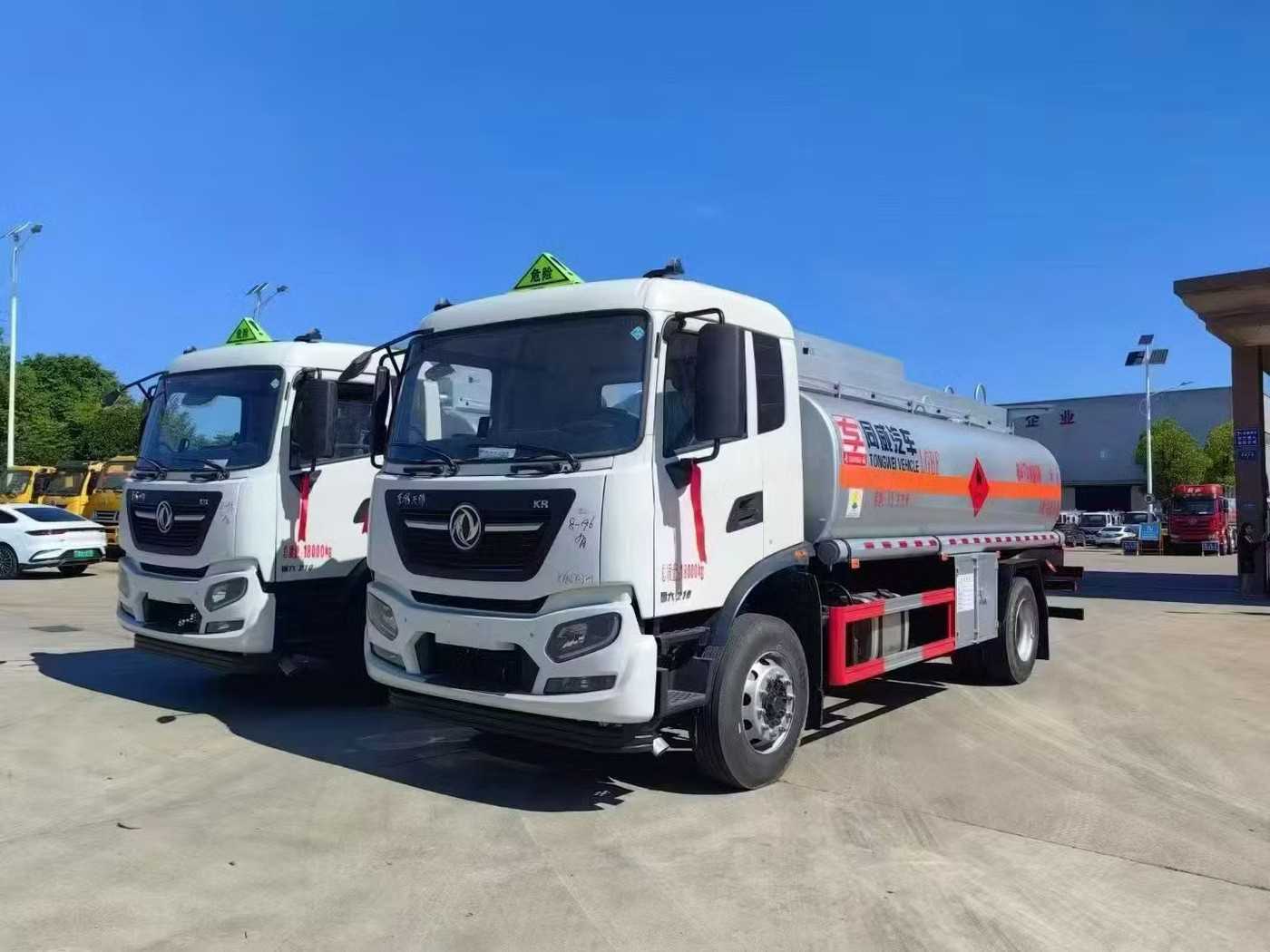
- 4x2 Rigid Tankers (5,000L to 12,750L): Built on medium-duty chassis for tight city filling stations and civil works where narrow streets limit wheelbase length. The Dongfeng Dolica D7 9.9CBM Diesel Fuel Tank Truck maneuvers cleanly under low canopies, while mid-range operators often select the Dongfeng Dolica D9 12.75CBM Mobile Fueling Tank Truck or CL5122GYY6 fuel tanker.
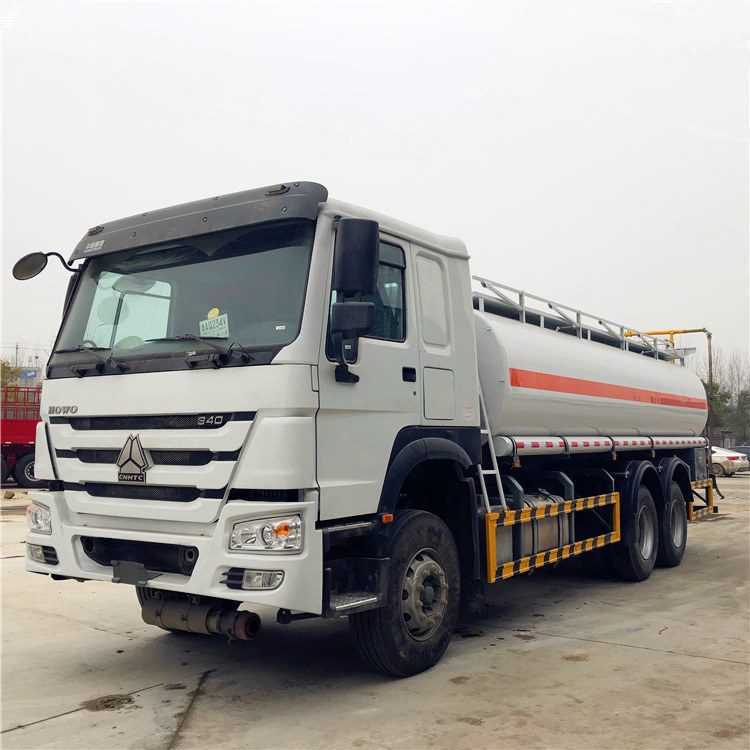
- 6x4 Rigid Tankers (15,000L to 20,000L): The Pan-African workhorse for retail distribution and quarry or mine diesel supply. Tandem rear drive axles provide traction on muddy laterite roads while hauling roughly 16.8 tons of diesel (~0.84 kg/L) or 14.8 tons of petrol (~0.74 kg/L) within tandem-axle limits.
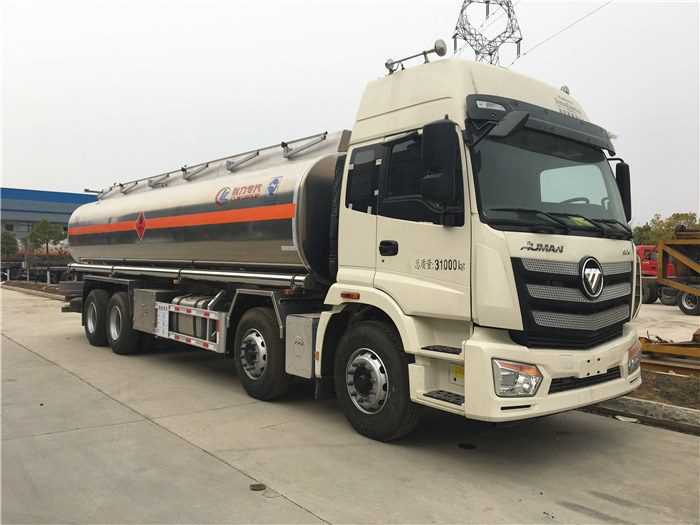
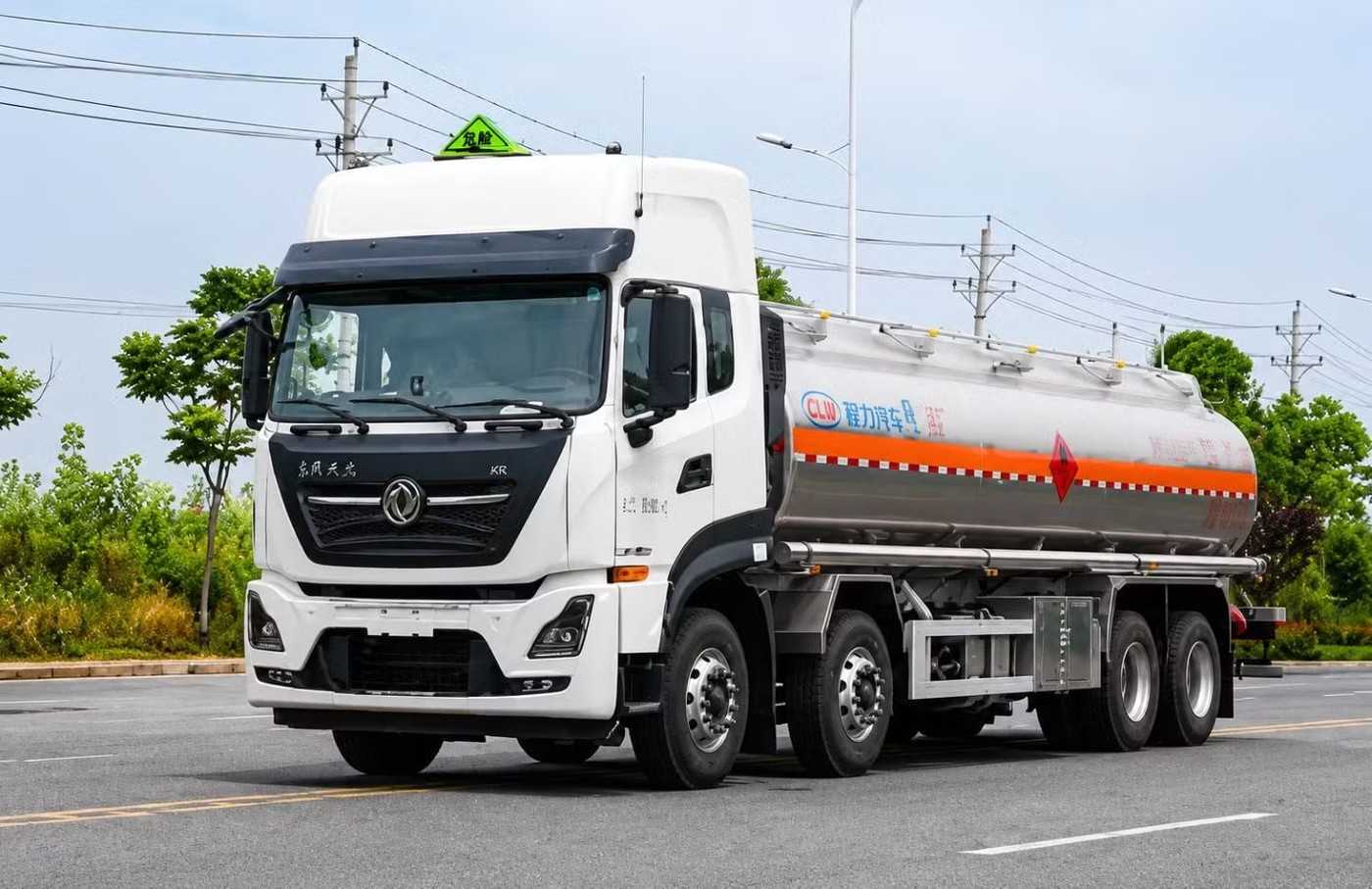
- 8x4 Rigid Tankers (25,000L to 30,000L): Built for high-volume regional marketers and industrial depots needing near-semi-trailer volume on a rigid footprint. Twin front steer axles distribute forward load evenly, reducing tire wear and clearing multi-axle weighbridges.
Specific Gravity and the 5% Thermal Ullage Rule
Never confuse geometric tank volume with legal payload. Automotive diesel (AGO) weighs 0.82 to 0.85 kg/L, whereas petrol (PMS) weighs 0.72 to 0.75 kg/L. A truck sized strictly around petrol tanker capacity will overload its drive axles if later filled completely with denser diesel. Because African tarmac and gantry temperatures routinely reach 40°C to 48°C, every tank must also retain 5% to 7% vapor expansion space (ullage) above the calibrated fill mark so heated fuel never forces open pressure-vacuum vents.
| Chassis & Drive | Effective Capacity | Diesel Payload | Typical Compartments | Primary African Operating Role |
|---|---|---|---|---|
| 4x2 Rigid | 5,000L – 12,750L | 4.2 – 10.7 tons | 1 to 2 | Urban station top-ups, tight city deliveries, civil works refueling |
| 6x4 Rigid | 15,000L – 20,000L | 12.6 – 16.8 tons | 2 to 4 | Multi-station petrol & diesel drops, mining diesel haulage, rural routes |
| 8x4 Rigid | 25,000L – 30,000L | 21.0 – 25.2 tons | 3 to 5 | High-volume retail chains, bulk industrial depots, tight fuel farms |
| 6x4 Tractor + Semi-Trailer | 35,000L – 45,000L+ | 29.4 – 37.8+ tons | 4 to 6 | Port-to-inland depot trunking and long cross-border corridors |
Confirm local steering and fuel-sulfur rules before locking chassis drawings. CLW builds every capacity class in both LHD and RHD steering layouts and matches Euro II through Euro V engine specs to regional diesel sulfur grades so fuel injectors survive real-world operating conditions.
Single vs Multi-Compartment Tank Design
Single-compartment tanks cost less to fabricate, carry slightly lower tare weight, and simplify loading—making them ideal for dedicated mining fleets hauling only diesel from bulk storage directly to excavators, dump trucks, and power generators.
Retail oil marketing companies (OMCs), however, rarely deliver a single grade. A typical filling station orders 10,000L of petrol alongside 10,000L of diesel, or a 5,000L / 5,000L / 10,000L mix covering petrol, diesel, and kerosene. Consolidating those grades into one multi-compartment trip cuts driver wages, fuel burn, and highway tolls nearly in half.
Engineering Safeguards Inside Multi-Compartment Tanks
- Dished Bulkheads & Double-Wall Cofferdams: Fully welded dished bulkheads separate adjacent chambers. Where national petroleum rules prohibit a single weld seam between low-flashpoint petrol and diesel, a double-wall bulkhead with a vented drain cofferdam provides physical isolation and instant leak detection.
- Anti-Surge Baffle Plates: Any compartment longer than 1.6 to 1.8 meters requires perforated internal wave-breaker baffles. These plates absorb longitudinal liquid surge during hard braking or sudden maneuvers on rutted highways, protecting end-heads and chassis mounts from fatigue cracking.
- Independent Bottom Valves & Dedicated Outlets: True mixed-product haulage requires one pneumatic foot valve, one dedicated discharge pipe, and one independent API coupler or ball valve per compartment. Shared collector manifolds invite accidental cross-drops—mixing petrol into a station's diesel tank creates both an ignition hazard and costly pump-out liability.
- Grade Tagging & Vapour Isolation: Mechanical grade indicator wheels (AGO, PMS, DPK) at each outlet and valved vapor-recovery branches prevent operator confusion and vapor cross-contamination during gantry loading.
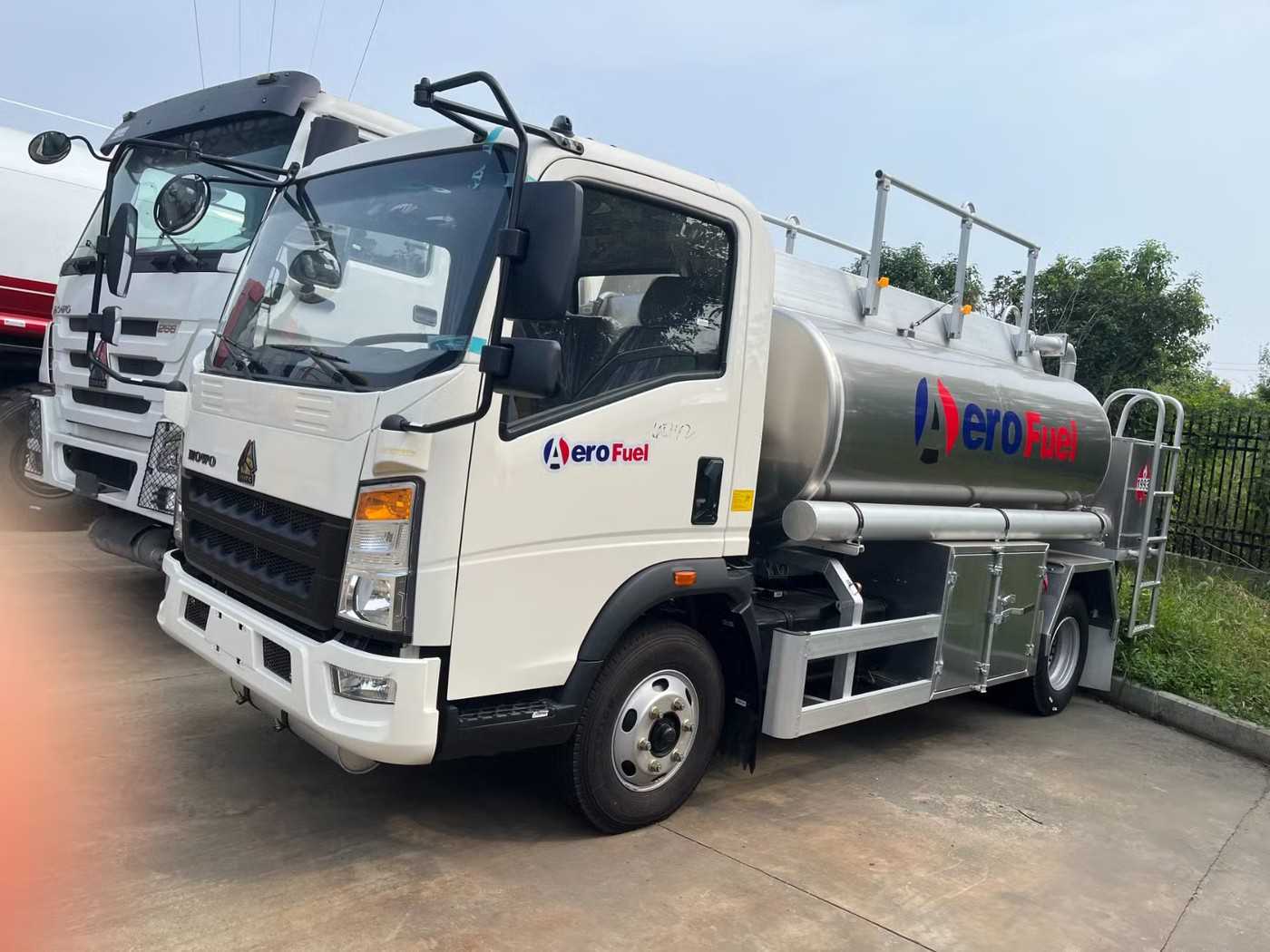
For mines, road contractors, and aviation hubs that dispense fuel directly into machinery rather than dropping into underground station tanks, a fuel bowser truck adds a PTO-driven self-priming pump, calibrated flowmeter, water-separating filtration, and a 15m to 20m retractable hose reel. Popular factory builds include the Dongfeng Dolica D9 13CBM Refueling Tank Truck for agile jobsite servicing and the twin-tank HOWO Double Tank Refueling Truck for dual-grade heavy equipment fleets. For aviation filtration and stainless-steel piping standards, see our Senegal aircraft refuelling trucks project case.
Never run a large single compartment half-full across corrugated dirt roads—free-surface slosh sharply elevates rollover risk. On multi-compartment tankers, always sequence drops so front and center chambers do not empty completely while the rearmost chamber remains full, which lifts weight off the steer axle and reduces steering grip on wet gradients.
Tank Shape & Material: Carbon Steel vs Aluminium Alloy
Tank cross-section and shell metallurgy directly govern rollover stability, legal payload margin, and workshop repairability in remote African districts.
Tank Cross-Section Geometry
Most African rigid tankers use an elliptical or modified rectangular (D-shape) shell. Elliptical tanks resist fatigue cracking on rough, cambered roads because internal loads distribute evenly across curved walls. Modified D-shape shells pack 8% to 12% more volume into the same wheelbase and height envelope, lowering the center of gravity on 20,000L and 30,000L trucks while staying within depot gantry and Ro-Ro deck height limits. Circular cylindrical tanks are mainly reserved for pressurized vessels or specialized aviation refuelers requiring complete gravity drainage.
Carbon Steel (Q235B / Q345B) vs. Aluminium Alloy (5083 / 5454)
- Carbon Steel (4mm–5mm shell, 5mm–6mm heads & bulkheads): The practical standard across Sub-Saharan Africa. Upfront cost sits in a lower tier, heavy-gauge steel tolerates unpaved road shock well, and regional workshops can degas and weld cracked brackets using standard MIG or stick equipment. An internal anti-static epoxy lining prevents rust flaking that clogs common-rail diesel injectors.
- Aluminium Alloy (5mm–6mm shell): Cuts 1.2 to 2.2 tons of tare weight on 20,000L to 30,000L rigid bodies. On strict highway weighbridge corridors in Kenya, Tanzania, or South Africa, that weight savings adds 1,500L to 2,500L of legal payload per trip while eliminating internal rust and cutting empty-return fuel burn. However, upfront capital cost is higher, and structural repairs require certified TIG aluminium welders mostly concentrated in major hubs like Lagos, Accra, Nairobi, Dar es Salaam, or Johannesburg.
For high-ambient Sahelian and interior corridors, pair either shell with tropical dust-proof upgrades: reflective white polyurethane topcoats to limit solar heating, oversized radiators for prolonged PTO pumping at 45°C idle, cyclone/oil-bath air pre-cleaners, and heavy-duty multi-leaf springs.
Mandatory Safety Hardware on Modern Fuel Tankers
National petroleum regulators and international oil company (IOC) coastal terminals inspect safety hardware rigorously before clearing any truck for loading. Missing a single valve or spark arrestor can sideline a new tanker at the depot gate.
- European-Standard (EN/ADR-Style) Manhole Covers: Each compartment requires a 16-inch or 20-inch explosion-proof manhole with an integrated pressure-vacuum (P/V) breathing valve, fusible emergency pressure-relief vent, and overturn anti-spill seal.
- Pneumatic Emergency Shut-Off Bottom Valves: Flush-mounted spring-loaded subsea valves stay closed unless air pressure holds them open during transfer. A machined shear groove below the tank flange ensures external piping snaps off cleanly upon ground impact while keeping the internal seal intact. Dual emergency shut-off controls (cab and rear bumper) close all compartments immediately.
- Bottom-Loading API Couplers, Vapour Recovery & Overfill Probes: Major depots in Mombasa, Dar es Salaam, Tema, Apapa, and Durban increasingly mandate closed-loop bottom loading. Installing 4-inch API adapters, optical overfill prevention sockets, and vapor-recovery piping accelerates gantry turnaround while preventing splash-loading static fires.
- Front-Routed Exhaust & Anti-Static Controls: Essential chassis safety modifications include a front-routed exhaust pipe with a stainless spark arrestor (keeping hot exhaust forward of the front axle), a retractable copper-core grounding reel plus conductive drag strap, fire-retardant rear wiring conduits, a battery master isolator switch, and dual 8 kg ABC dry-powder extinguishers in weatherproof brackets.
Every CLW hazardous-goods tank undergoes weld non-destructive testing, hydrostatic water-pressure testing, and pneumatic airtightness checks before dispatch. You can review factory manufacturing qualifications and quality-system documentation on our certificates page—noting that plant management certifications confirm production quality control, while national road registration, tank calibration charts, and energy-authority permits are completed under destination import compliance procedures.
Before production starts, confirm whether your discharge port (Apapa, Tema, Mombasa, Dar es Salaam, Durban, or Beira) requires pre-shipment inspection (PVoC, SONCAP, or TBS) and verify Ro-Ro deck height thresholds. Packing a 12-month wear-parts kit—PTO pump mechanical seals, pneumatic foot-valve O-rings, API coupler gaskets, and filter cartridges—inside the side toolboxes prevents costly air-freight downtime.
Capacity & Compartment Selection Table for Your Quotation
Match your daily route profile, fuel mix, and workshop capability against the matrix below before finalizing your factory specification.
| Buyer Operating Profile | Recommended Capacity | Chassis & Steering | Ideal Compartment Split | Material & Pumping Package |
|---|---|---|---|---|
| Urban Station / Civil Contractor | 9,900L – 13,000L | 4x2 (LHD or RHD) | 1 chamber (diesel) or 2 chambers (5KL + 5KL) | Carbon steel; PTO gear pump + optional reel & meter |
| Regional Multi-Station OMC | 18,000L – 20,000L | 6x4 (LHD or RHD) | 3 or 4 chambers (e.g., 5KL × 4 or 6KL + 6KL + 8KL) | Carbon steel (rough roads) or Aluminium (strict weighbridges); API bottom-loading |
| Mining & Quarry Site Bowser | 15,000L – 20,000L | 6x4 Heavy-Duty Off-Road | 1 or 2 chambers (diesel + optional lube oil tank) | 5mm carbon steel; high-flow 60–80 m³/h pump, water separator, heavy reel |
| High-Volume Retail Chain | 25,000L – 30,000L | 8x4 (LHD or RHD) | 4 or 5 chambers (e.g., 6KL × 5 or 5KL + 5KL + 10KL + 10KL) | Aluminium alloy for maximum highway payload or epoxy-lined carbon steel |
When evaluating total landed cost, note that scaling from a 10,000L 4x2 truck to a 20,000L 6x4 or 30,000L 8x4 shifts not only the tank fabrication tier, but also engine horsepower class, Ro-Ro cubic-meter (CBM) ocean freight, marine insurance, and destination import duty brackets. Final pricing always follows an itemized written FOB or CIF quotation tailored to your chassis, steering side, safety valve package, and destination port. Review our step-by-step buying process, payment and ocean shipping guide, and tender documentation support to plan procurement smoothly.
Frequently Asked Questions
Can a 20,000L rigid fuel tanker carry diesel and petrol legally on the same trip?
Yes, when built with sealed compartments—such as four 5,000L chambers or a 5,000L + 5,000L + 10,000L split—each fitted with its own manhole, pneumatic bottom valve, dedicated outlet pipe, and vapor-recovery branch. Verify whether local rules mandate single-wall or double-wall cofferdam bulkheads between petrol and diesel.
Should African distributors choose carbon steel or aluminium alloy tanks?
Select epoxy-lined Q235B/Q345B carbon steel for rough unpaved routes or remote districts served only by MIG/stick workshops. Select 5083 aluminium alloy for paved weighbridge corridors near major hubs with certified TIG welders, turning tare-weight savings into extra legal liters per trip.
What is the difference between a fuel tanker truck and a mobile fuel bowser?
A bulk fuel tanker transfers depot loads into underground station tanks via 3-inch or 4-inch API hoses. A mobile fuel bowser adds a calibrated dispenser or flowmeter, water-separating filtration, and an automatic nozzle on a 15m to 20m reel to refuel site machinery directly.
How does tank capacity affect Ro-Ro shipping and port clearance in Africa?
Ro-Ro and breakbulk freight depends on cubic-meter volume (length × width × height) and weight tier. A 10,000L 4x2 ships in a lower CBM bracket than a 30,000L 8x4, and overall height must clear vessel deck thresholds. Confirming your port—Apapa, Tema, Mombasa, Dar es Salaam, Durban, or Beira—enables an accurate CIF quote.
Get an Engineered Fuel Tanker Quotation Built for Your Corridor
Share five details below for a tailored capacity drawing, axle-load layout, and itemized FOB/CIF quotation:
- Capacity & Compartment Split: e.g., 10,000L single-grade, 20,000L (4 × 5,000L), or 30,000L (5 compartments).
- Fuel Grades & Delivery Mode: Diesel only, mixed petrol/diesel, API bottom-loading bulk drop, or mobile bowser dispenser.
- Steering Side & Chassis: LHD or RHD, preferred brand (Dongfeng, HOWO, Shacman, FAW, Isuzu), and Euro emission standard.
- Tank Material & Safety Spec: Lined carbon steel vs. aluminium alloy, pneumatic bottom valves, vapor recovery, and overfill sensors.
- Destination Port & Quantity: Discharge port (Mombasa, Dar es Salaam, Tema, Apapa, Durban, Beira, etc.) and unit count.