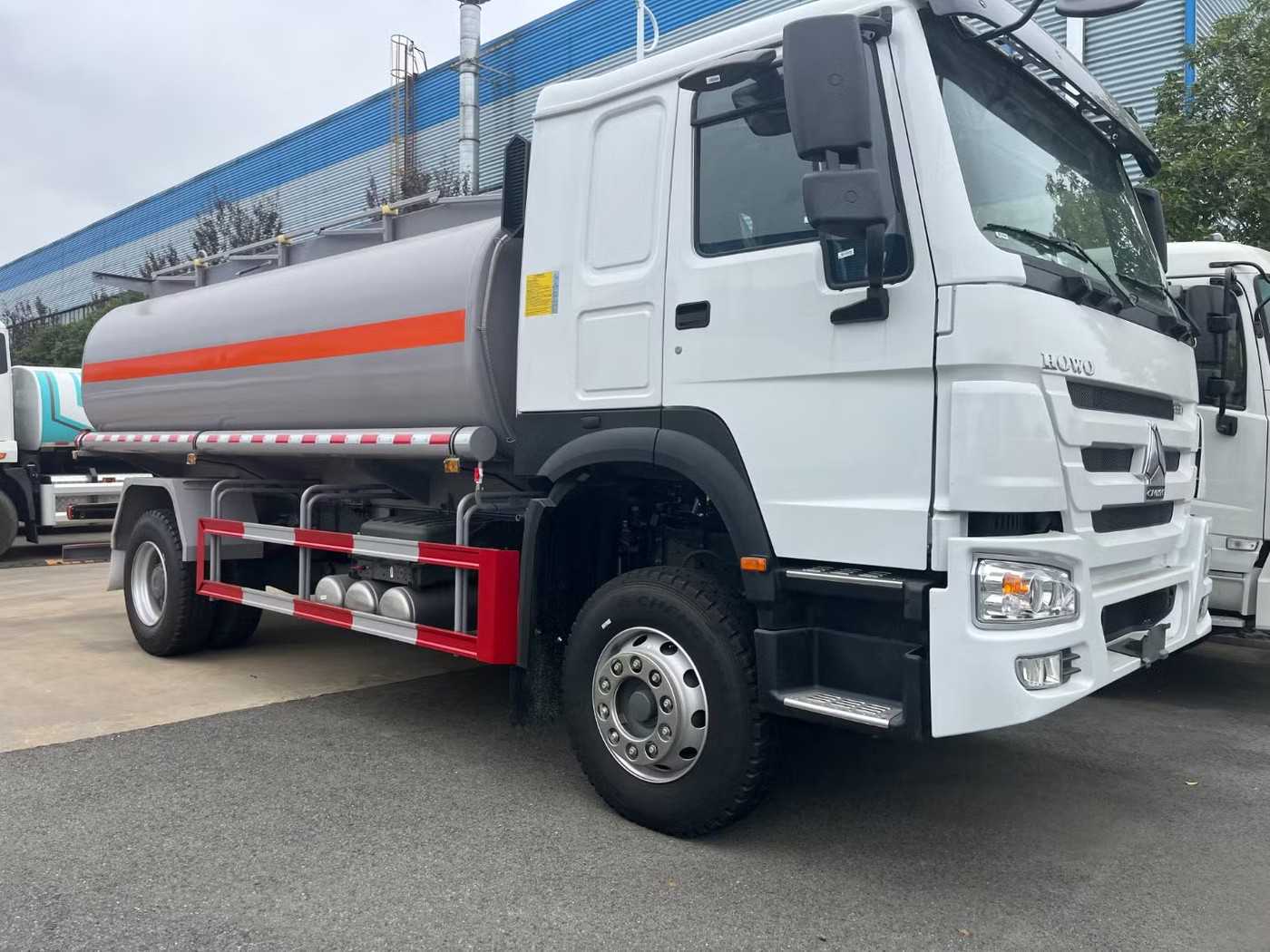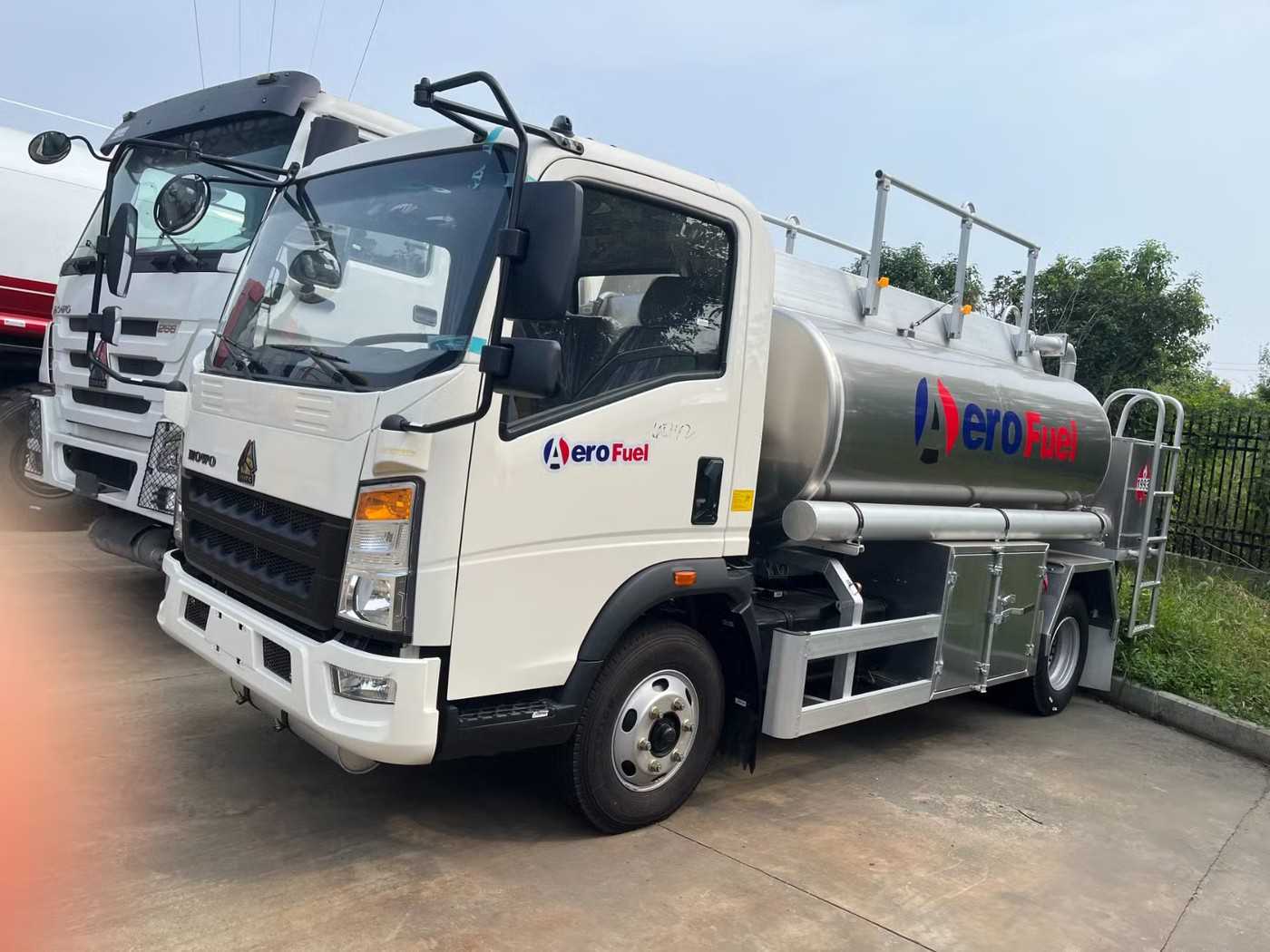
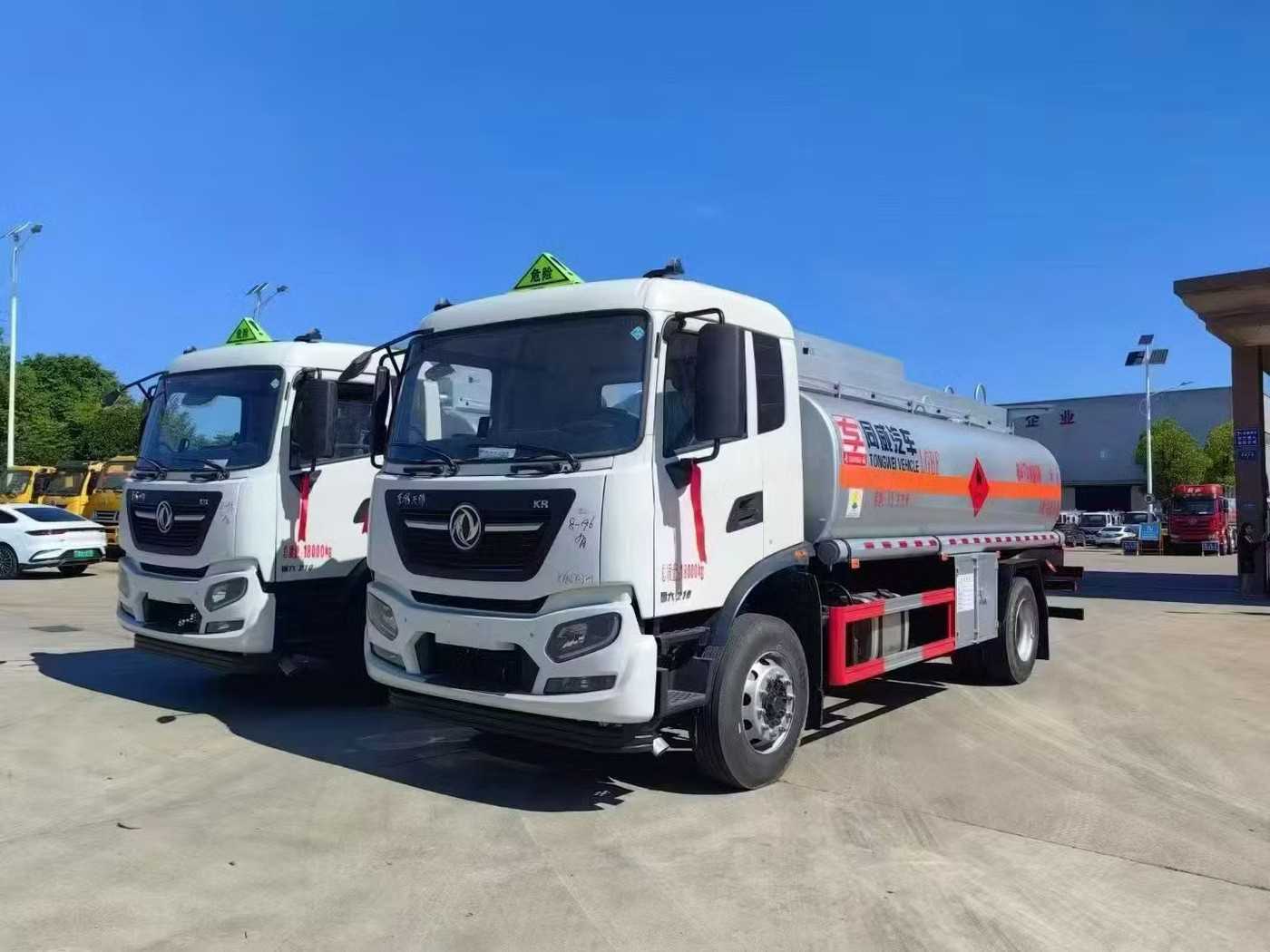
Across Africa's growing international hubs, regional airports, charter strips, and defense airbases, safe into-plane fuel delivery is mission-critical. One contaminated Jet A-1 load or pressure surge can ground an airliner, damage wing tanks, or halt airport operations. Specifying a dedicated aircraft refueling truck therefore demands far stricter engineering than buying a commercial road fuel tanker truck.
Whether you represent a civil aviation authority, fuel marketer, airline, or defense buyer, procuring a 20 m³ airport refueling truck hinges on tank metallurgy, sub-micron water separation, precision metering, interlock safety, and tropical chassis durability. This guide details the specifications, coupling options, West African delivery lessons, and pre-shipment calibration tests needed for confident procurement.
Why Aviation Fuel Trucks Are Engineered Far Beyond Standard Diesel Tankers
Outwardly, an aircraft fuel bowser resembles a highway fuel tanker: a truck chassis carrying a vessel, PTO pump, hoses, and meter. Internally, however, the two classes operate under vastly different safety margins.
Jet A-1 powers turbine engines cruising above 35,000 feet, where wing temperatures drop below -40°C. Trace free or emulsified water freezes into ice crystals that choke fuel controls mid-flight, while coastal humidity at airports like Dakar, Lagos, Mombasa, and Dar es Salaam accelerates condensation and microbial growth. Mild-steel road diesel tankers with coarse mesh strainers cannot meet aviation cleanliness rules.
- Corrosion-Free Vessel & Piping: Aviation tanks use marine-grade aluminum alloy or internally blasted steel with aviation light-epoxy lining. Wetted piping and valves are aluminum or stainless steel—excluding bare carbon steel, zinc, copper, and brass that degrade Jet A-1.
- Micro-Water & Particulate Separation: Every litre from an aviation fuel bowser passes through a filter water separator (FWS) with coalescer/separator elements, differential pressure monitoring, water-slug shut-off, and daily clear-and-bright sampling ports.
- Surge-Protected, Regulated Pressure: Aircraft wing tanks are thin structural cavities engineered for 35–50 psi (2.4–3.5 bar) fueling pressure. Aviation bowsers pair centrifugal pumps with primary/secondary pressure regulators and surge suppressors to absorb abrupt aircraft valve closures.
- Static Grounding & Brake Interlocks: High-velocity kerosene generates static charge. Earthing reels, bonding leads, flame-arrested vents, explosion-proof electrics, and pneumatic brake interlocks lock the brakes whenever any nozzle, reel, bottom coupler, or lift platform is unstowed.
Well-run African airports separate their fuel fleets into two layers. Purpose-built 20 m³ aviation refuellers handle direct-to-wing Jet A-1 delivery, while bulk port-to-depot haulage relies on road tankers like the HOWO 30CBM Refueling Tank Truck. Airside diesel for baggage tractors, tugs, and generators is served separately by units like the Dongfeng 4x2 Fuel Bowser Fuel Tank Truck or Dongfeng Dolica D7 9.9CBM Diesel Fuel Tank Truck, eliminating cross-contamination.
Bolting a filter onto a mild-steel diesel tanker fails aviation fuel audits and introduces severe flight-safety hazards. Rust scale, incompatible seals, unlined baffle welds, missing brake interlocks, and uncontrolled pump surge make converted diesel trucks unusable on commercial aprons.
Inside a 20 m³ Civil Aircraft Refueller: Key Specs
Across African regional hubs and international airports, 20 m³ (20,000 litres) is the benchmark civil refueller volume. Carrying ~16 metric tons of Jet A-1 (at ~0.80 kg/L), it turns around a narrow-body airliner (Boeing 737 or Airbus A320) or multiple turboprops in one trip, while its 6x4 chassis maneuvers cleanly around tight apron stands.
| Subsystem | 20 m³ Civil Refueller Spec | Apron Operational Role | African Climate & Service Benefit |
|---|---|---|---|
| Tank & Lining | 20,000 L aluminum alloy (5083/5182) or epoxy-lined shell; full baffles; conical sump | Preserves fuel purity, damps surge, enables daily bottom water draw-off | Resists coastal salt air and condensation; bright interior aids inspection |
| Pump & Flow | PTO aviation centrifugal pump up to 72,000 L/h (1,200 L/min) with dual pressure control | Speeds turnarounds while shielding wing tanks from hydraulic shock | Non-pulsing low-wear design handles sustained 45°C stationary PTO duty |
| Filtration (FWS) | 0.1-micron precision filter water separator with coalescer/separator, ΔP gauge & slug shut-off | Strips fine solids and free/emulsified water before the hose | Essential defense against Harmattan dust and tropical tank moisture |
| Metering | ±0.01%-class digital meter with temperature compensation, batch preset & printer | Produces auditable into-plane receipts for billing and reconciliation | Prevents airline billing disputes and tracks depot shrinkage |
| Interlocks | Pneumatic brake interlocks (nozzles, reel, lift, bottom loader), deadman & earthing reel | Stops drive-away hose tears, static sparks, and unattended flow | Straightforward pneumatic circuit eases local airport troubleshooting |
| Chassis & Cooling | 6x4 heavy chassis (290–380 HP), oversized radiator, cyclone pre-cleaner, LHD or RHD | Supports 20 m³ loaded apron weight and stationary tarmac heat soak | Prevents thermal derating and fits local African parts networks |
Tank Hygiene, Bottom Loading & 72,000 L/h Precision Circuit
A sloped tank floor feeds a conical sump so technicians draw a daily clear-and-bright glass sample before the first flight. Top manholes carry pressure/vacuum breathers and emergency vents, while a 4-inch dry-break bottom-loading coupler with an overfill sensor eliminates splash static and dust entry during depot fills.
Inside the equipment module, Jet A-1 routes through the emergency foot valve, centrifugal pump (up to 72,000 L/h), air eliminator, 0.1-micron filter water separator, pressure regulator, and ±0.01%-class electronic meter. A panel ΔP gauge tracks element loading, Millipore ports support membrane cleanliness checks, and the digital register prints dual-copy receipts for flight crews.
Chassis Adaptation for African Aprons & Local Diesel
Apron uptime depends equally on the carrier truck. Specify factory-native LHD or RHD chassis options—RHD for Kenya, Tanzania, Uganda, Zambia, Zimbabwe, Botswana, and South Africa; LHD for Senegal, Ghana, Nigeria, Côte d'Ivoire, Cameroon, Ethiopia, and DRC. Pair native steering with tropical dust-proof upgrades (oversized radiator, viscous fan, cyclone pre-cleaner, IP65+ electrics) and Euro II–V engines matched to local diesel sulfur levels so after-treatment faults never sideline a refueller.
Overwing Gravity Nozzle vs Underwing Pressure Coupling
Choosing the right dispensing circuit—or combining both on one 20 m³ chassis—determines which aircraft your airport refueling truck can service across mixed African traffic.
| Criterion | Overwing Gravity Mode | Underwing Pressure Mode | Dual-Mode 20 m³ Build |
|---|---|---|---|
| Aircraft Served | Turboprops (Caravan, Beechcraft, King Air), light bizjets & helicopters | Commercial airliners (B737, A320, E-Jet, B787, A330) & large bizjets | Mixed-fleet aprons handling jets, charters, cargo & helicopters |
| Coupling Type | Trigger overwing nozzle with flat selective Jet A-1 spout | 2.5-inch API / ISO 45 twist-lock dry-break coupling with HEPCV | Underwing deck/reel coupling plus throttled overwing reel |
| Flow Rate | 150–300 L/min (9,000–18,000 L/h) to prevent splash and overflow | 600–1,200 L/min (up to 72,000 L/h) for fast airline turnarounds | Up to 72,000 L/h underwing; 150–300 L/min overwing |
| Operator Access | 15–25 m retractable reel, bonding clip & wing step | Optional hydraulic scissor-lift platform or twin deck hoses | Hydraulic platform with twin couplers plus side overwing reel |
| Safety Controls | Deadman trigger (no latch), spout screen & earthing clip | Hose-end pressure control valve, inline regulator & deadman | Selector manifold with pressure limiter & full brake interlocks |
| Airport Fit | General aviation fields, safari/mining strips & helipads | Major hubs serving scheduled narrow- and wide-body jets | Secondary international airports, FBOs, airbases & fuel marketers |
For Boeing 737, Airbus A320, or wide-body jets, single-point underwing pressure refuelling is mandatory: the API dry-break coupler seals mechanically before flow starts, minimizing vapor release. An optional hydraulic elevating platform lets one operator reach tall A330 or B787 wing manifolds without separate stairs, saving five to eight minutes per turnaround.
Where aviation fuel marketers also supply regional depots or fleet yards, pairing the apron refueller with commercial road bowsers—like the Dongfeng Dolica D7 9.9CBM Oil Tanker Truck or Dongfeng Dolica D9 12.75CBM Refueling Tank Truck—maximizes capital ROI while keeping Jet A-1 strictly segregated.
Real West African Delivery Spotlight: Senegal 20 m³ Refuellers
Proven airport deployments matter far more than catalog claims. Our Senegal 20 m³ aircraft refuelling trucks project case shows how factory-direct builds handle demanding West African conditions.
Senegal's coastal and Sahelian airports face twin stresses: fine Harmattan dust and corrosive Atlantic salt air. The delivered 20 m³ refuellers met both with corrosion-resistant tankage, 72,000 L/h pumping, 0.1-micron filter water separators, ±0.01%-class digital metering, pneumatic interlocks, and factory LHD chassis for Francophone West Africa. Uniform 20 m³ builds also standardized spare cartridges and mechanic training across peak flight banks.
Across Africa, total landed-cost planning must account for three post-factory realities:
- Ro-Ro & Bulk Freight CBM: Refuellers ship via Ro-Ro or bulk vessels to Dakar, Tema, Apapa/Tin Can Island, Mombasa, Dar es Salaam, Beira, and Durban. Low-profile lifting platforms and folding guardrails trim chargeable cubic meters.
- Import Conformity & Duty Relief: Schedule pre-shipment checks (PVOC in East Africa; SONCAP/Form M in Nigeria) alongside factory testing; consult our import compliance guide early when claiming aviation duty exemptions.
- Port-to-Airport Transit: Inland hubs (Nairobi JKIA, Entebbe, Kigali, Addis Ababa, Lusaka) require driving the empty 6x4 refueller overland; unladen tare weight sits well inside regional tandem weighbridge limits.
An airport refueling truck rarely stops for major engine failure—it waits on air-courier coalescer elements, API nose seals, ΔP O-rings, or deadman switches. Stowing a 24-month spares kit in the lockable side bay before shipment adds zero sea freight and protects apron uptime.
Airport Tender Support & Pre-Delivery Calibration Tests
Civil aviation authorities, fuel marketers, and defense tenders evaluate compliance line by line. Through our airport tender support team, CLW prepares compliance matrices, GA drawings, piping and interlock schematics, spares lists, and operator manuals.
Before port dispatch, every 20 m³ refueller completes a four-stage Factory Acceptance Test (FAT), witnessed in person, via live video, or by SGS, Bureau Veritas, or Intertek:
- Hydrostatic & Cleanliness Check: Pressure-testing the vessel, baffles, and manholes for zero leaks, plus bright-light inspection of aluminum welds or cured epoxy lining.
- Flow & Surge Regulation Test: Closed-loop running to 72,000 L/h while logging primary/secondary pressure control, surge suppression, and deadman closure speed.
- Filtration & Interlock Audit: Verifying FWS vessel integrity, ΔP zeroing, earthing continuity, and trip testing every pneumatic brake-interlock switch.
- Proving-Tank Meter Calibration: Calibrating the ±0.01%-class digital meter and printer against a certified proving tank across low and high flow rates for local weights-and-measures sign-off.
Project budgets scale across five levers: chassis brand and emission tier, aluminum vs. epoxy-lined metallurgy, single vs. dual dispensing circuits, elevating platform inclusion, and FOB vs. CIF freight (see our payment and shipping guide and buying process). Final pricing always follows a formal written quotation matched to your fleet mix, steering side, and port. Verify official remittance accounts via our anti-fraud verification notice before wiring any deposit.
For tender files, note that credentials on our certificates page—including ISO 9001—certify our manufacturing quality management system rather than acting as individual country vehicle approvals or local airport apron licenses, which follow destination conformity and civil aviation audits.
Frequently Asked Questions
1. Can a standard diesel tanker be converted into an aircraft refueling truck for Jet A-1?
No. Mild-steel diesel tankers lack corrosion-free aviation tank metallurgy, 0.1-micron filter water separators, wing-safe pressure regulation, and brake interlocks. Keep diesel bowsers strictly for depot haulage or ground-support equipment, and use purpose-built refuellers for direct-to-wing Jet A-1 delivery.
2. What spare parts should African airport operators stock with a 20 m³ aviation fuel bowser?
Stock 12–24 months of consumables: matched coalescer and separator cartridges, vessel lid gaskets, 2.5-inch API nose seals, overwing spout screens and caps, deadman cords and pilot valves, earthing clamps, PTO pump seals, plus routine chassis filters and belts.
3. How is a 20 m³ airport refueling truck delivered to inland African airports?
Units ship complete via Ro-Ro or bulk vessel to Mombasa, Dar es Salaam, Beira, Durban, Dakar, Tema, or Apapa. Driven unladen to inland hubs like Nairobi, Entebbe, Kigali, or Lusaka, a 6x4 refueller stays comfortably within regional tandem weighbridge limits.
4. Does CLW supply both LHD and RHD refuellers with institutional tender documents?
Yes. We build native LHD and RHD 20 m³ aircraft refuellers for East, Southern, and West Africa, backed by compliance matrices, GA and piping drawings, FAT calibration dossiers, third-party inspection coordination, and T/T or irrevocable L/C terms.
Send Your 5-Point Aviation Refueller Brief for an Itemized Quotation
Share five operational parameters and our export engineers will prepare a tailored FOB/CIF quotation, GA drawing, and calibration plan:
- Aircraft Mix & Coupling: Underwing pressure coupling (airliners), overwing gravity nozzle (turboprops/helicopters), or dual-mode manifold, plus optional lifting platform.
- Volume & Metallurgy: 20 m³ civil refueller (or 10–30 m³ custom), aluminum alloy vs. epoxy-lined tank, and Jet A-1 or Avgas duty.
- Filtration, Flow & Metering: Up to 72,000 L/h flow, 0.1-micron FWS, ±0.01%-class digital metering with ticket printer, and sampling ports.
- Chassis, Steering & Climate: LHD or RHD, preferred chassis (HOWO, Dongfeng, FAW, Isuzu), Euro II–V emission tier, and tropical dust/cooling package.
- Quantity, Spares & Port: Unit count, 12–24 month filter/seal kit, FOB or CIF port (Dakar, Tema, Lagos, Mombasa, Dar es Salaam, Beira, Durban), and tender schedule.