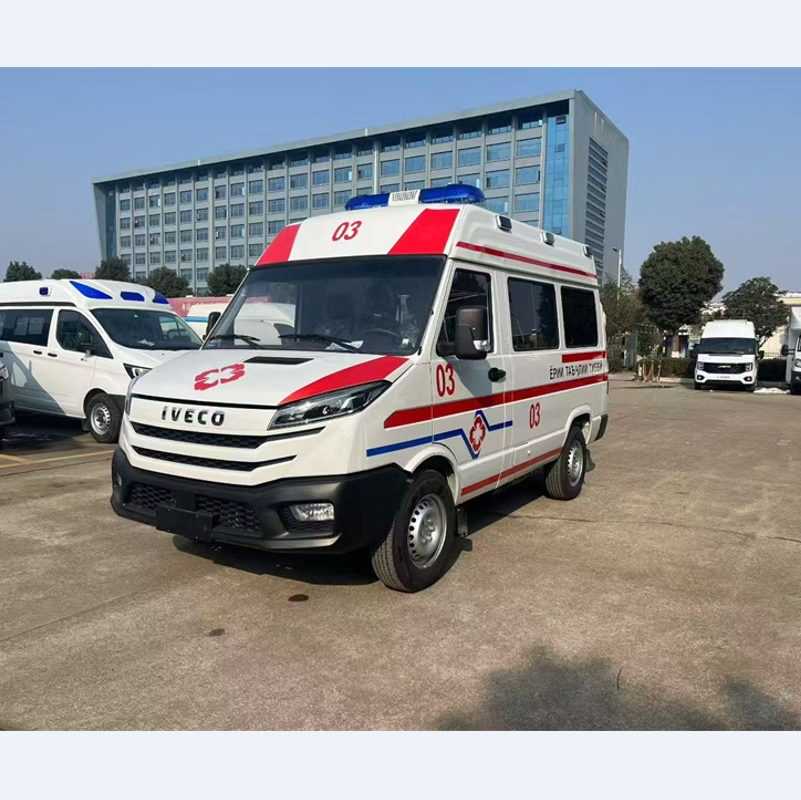
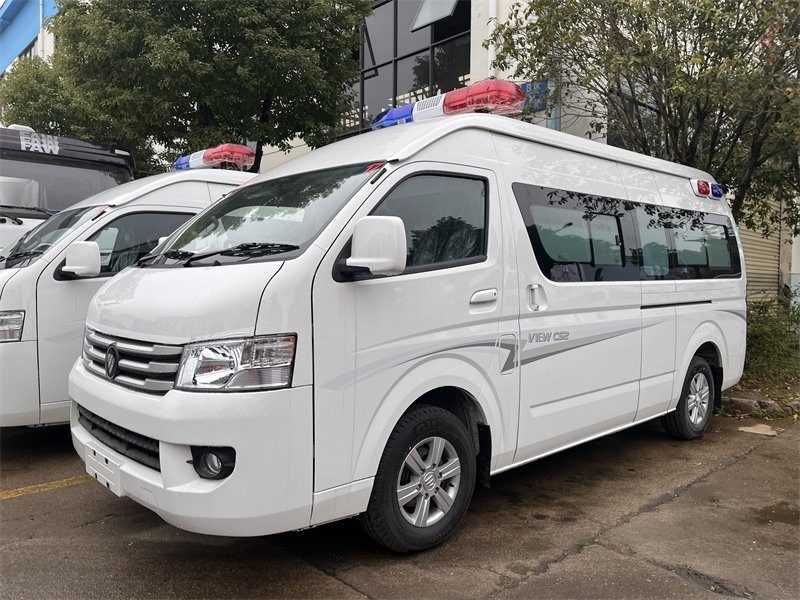
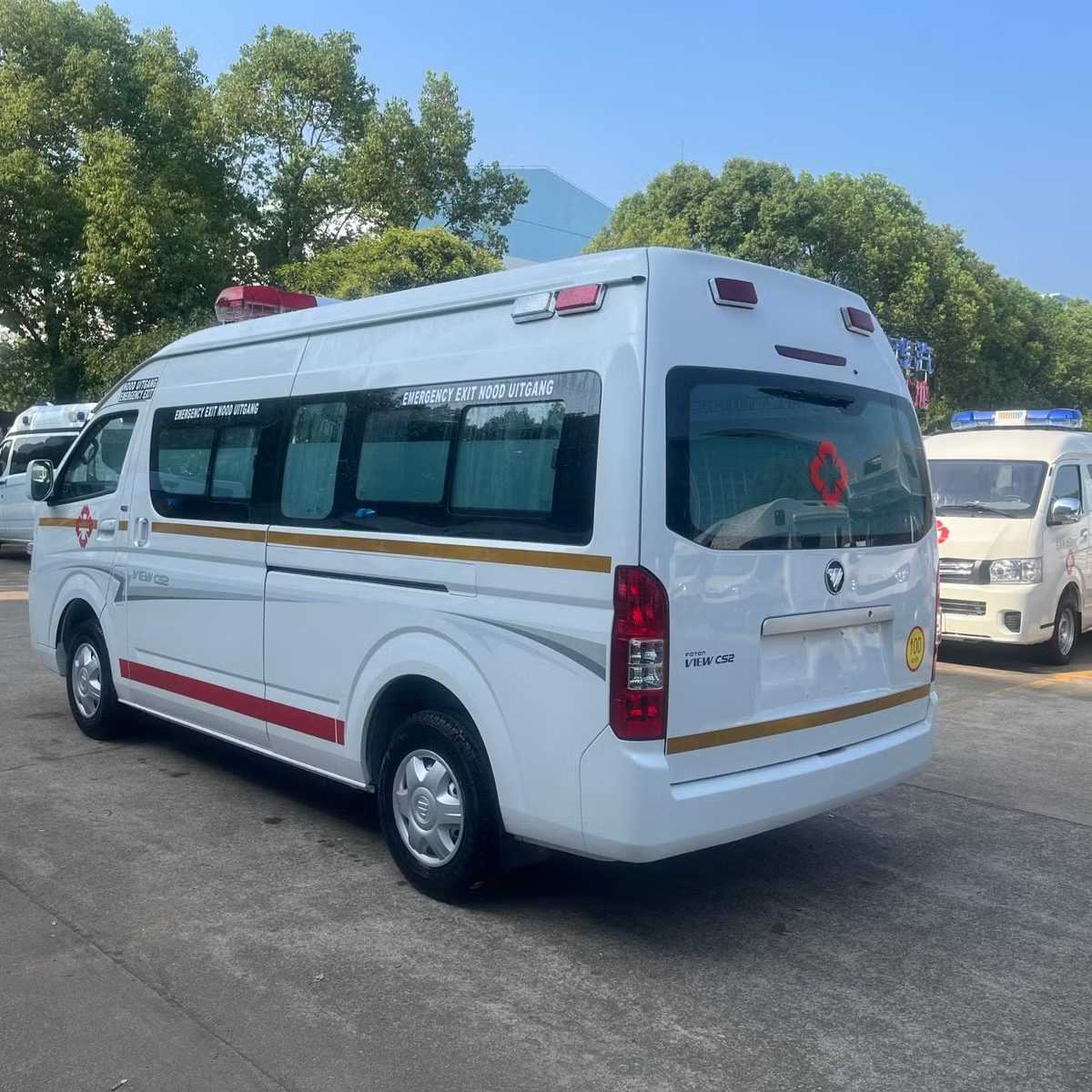
Built for high-utilization African municipal EMS fleets, referral hospitals, and port health authorities, the CL5043XJH6BYS integrates a SAIC Iveco NJ6546FDC5C long-wheelbase 4x2 front-wheel-drive platform with a full monitoring and patient-transfer compartment. Powered by the SC20M125.1Q6 2.0 L diesel engine rated at 93 kW and paired with a 6-speed manual transmission—with an optional 9-speed automatic gearbox—the vehicle balances responsive highway speed with economical daily fuel consumption from its 80 L tank.
Chassis Stability and Medical Cabin Integration
Its steel-reinforced body frame combines a right-side sliding access door with wide dual-opening rear doors so medics can roll stretchers in and out smoothly at crowded emergency bays. Inside the 2,710 × 1,730 × 1,710 mm patient bay, a lightweight center partition with an observation window separates the cab from care personnel. Waterproof, antibacterial solid plastic flooring, a full left-side equipment cabinet, an enclosed oxygen cylinder locker, and blue faux-leather seating accommodate up to seven occupants including stretcher crew.
Practical Patient-Care Workflow
- Oxygen and Stretcher Readiness: An aluminum alloy autoloading stretcher rated to 181 kg pairs with dual 10 L steel oxygen cylinders at 15 MPa, pressure regulators, German-style terminals, a ventilator interface, and a humidified wall inhaler.
- Clean Power and Climate Control: A 500 W sine-wave inverter feeds dual 220 V/12 V AC/DC outlet sets alongside four 12 V LED cabin lights, independent rear air conditioning and heating, and an HTD-8W timed UV disinfection lamp.
- Active Road Safety: Front and rear hydraulic disc brakes, an integrated LED lightbar with 100 W siren, six side and rear blue strobes, and Bosch ESP 9.3 active stability control protect crews during urgent runs.
Fleet Ordering Flexibility
Procurement teams can tailor exterior livery, transmission choice, and optional monitoring devices to local Ministry of Health tenders. Tiered unit pricing lowers per-vehicle acquisition cost on multi-ambulance orders, and large regional rollouts support phased batch delivery aligned with hospital commissioning schedules.