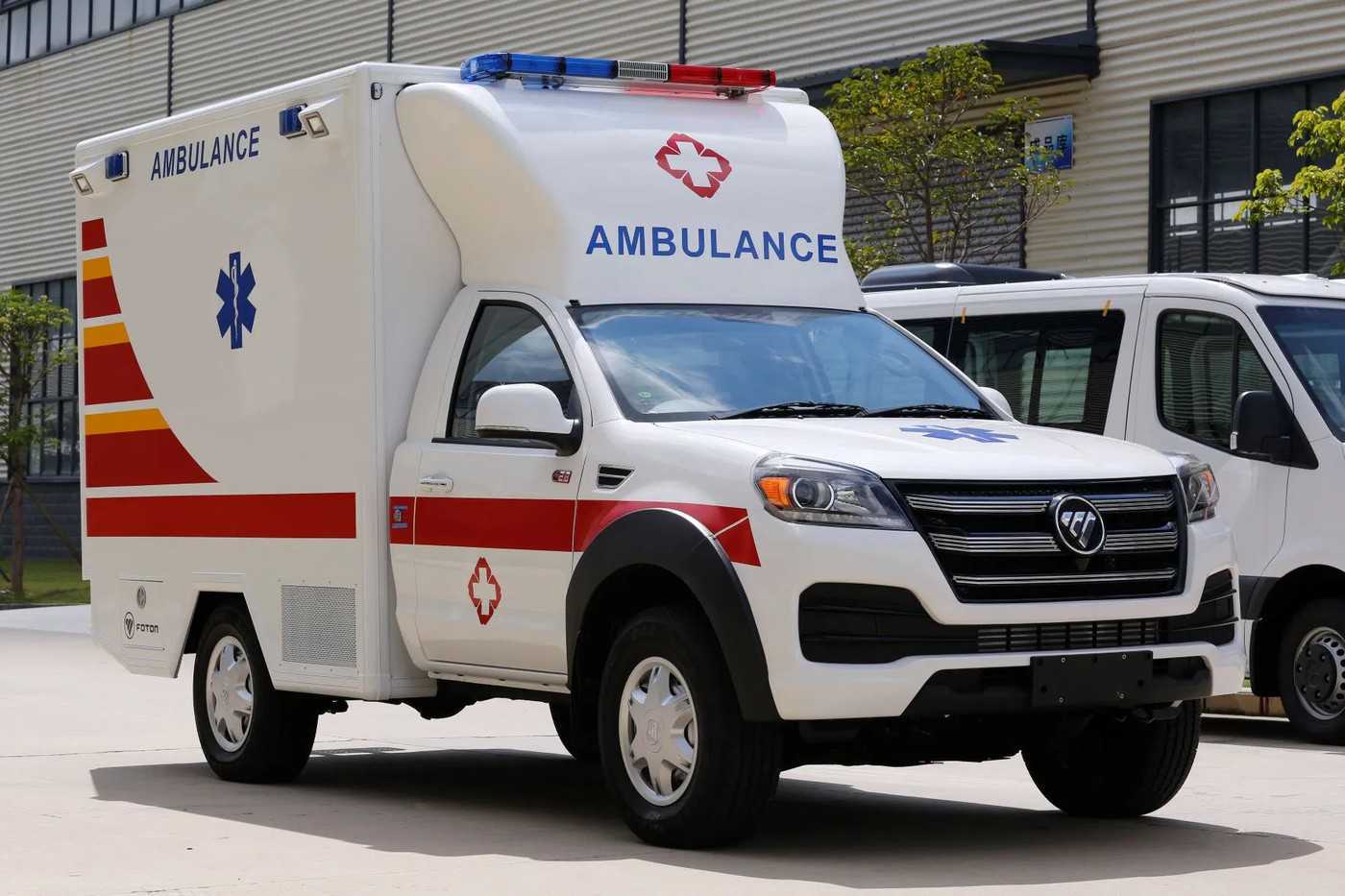
Specifying an ambulance fleet for Africa demands matching vehicles to two contrasting environments: congested urban corridors in Lagos, Nairobi, Kampala, Accra, and Lusaka where Advanced Life Support (ALS) requires a cool, spacious clinical bay, and unpaved rural tracks where rainy-season mud and washboard laterite stop 4x2 vans cold.
Buying one generic specification for both zones causes first-year breakdowns—cracked leaf springs, cabin overheating at 45°C, dead starter batteries, and customs delays from mismatched steering or emissions. This guide covers chassis architecture, BLS versus ALS/ICU cabins, tropical cooling and electrical isolation, LHD/RHD chassis, and a medical fleet tender checklist.
Urban Road Ambulance (Van / Type III Box) vs. Rural 4x4 Off-Road Ambulance
African Ministries of Health, hospital groups, NGOs, and mining clinics choose among three platforms: Type II high-roof vans, Type III modular box ambulances, and heavy-duty 4x4 off-road units.
Type II High-Roof Vans & Type III Modular Box Units
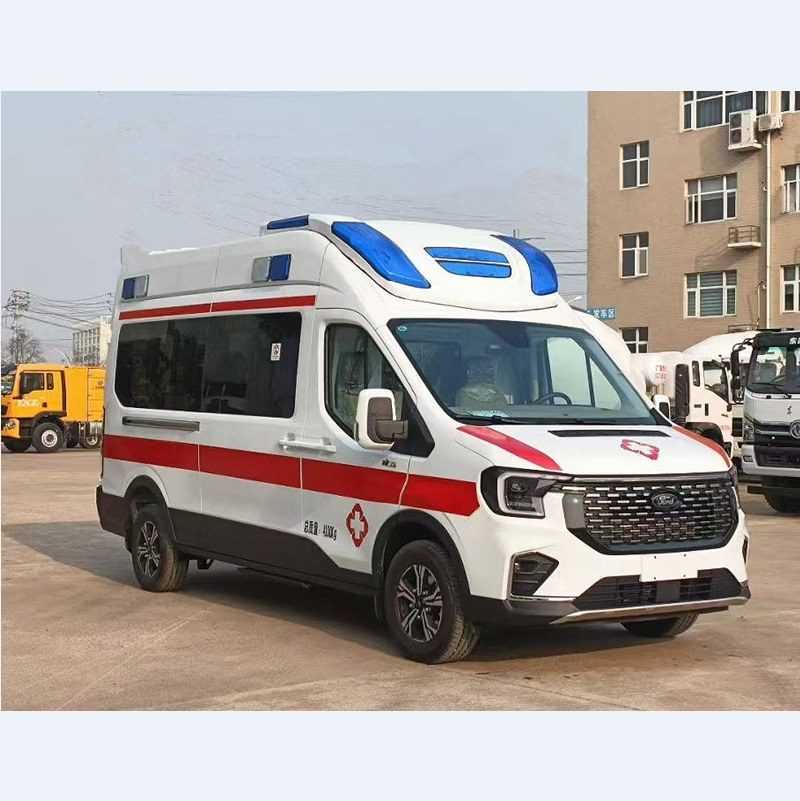
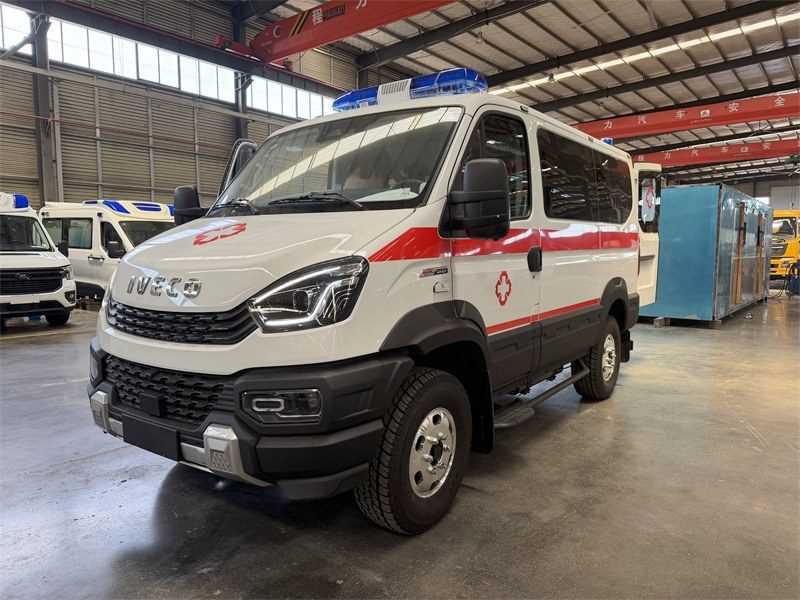
Type II vans convert factory commercial vans—such as the CLW Iveco Daily Ambulance and CLW Foton G9 Ambulance—into fuel-efficient city response units with tight turning radii, easy local garage repairs, and 40ft High-Cube container shipping compatibility once roof beacons are detached.
For tertiary referral hospitals requiring full standing headroom, 360-degree stretcher access, and space for multiple medics treating a ventilated patient, a Type III ambulance is superior. Built on a cutaway van or light-truck cab-chassis carrying an insulated aluminum-alloy or composite box, Type III units deliver wider aisles, external storage lockers, and higher GVW reserves for ICU hardware and dual 40-liter oxygen cylinders. Taller box dimensions typically shift ocean freight to Roll-on/Roll-off (Ro-Ro) vessels.
Rural 4x4 / 4WD Off-Road Ambulances & Outreach Pairing
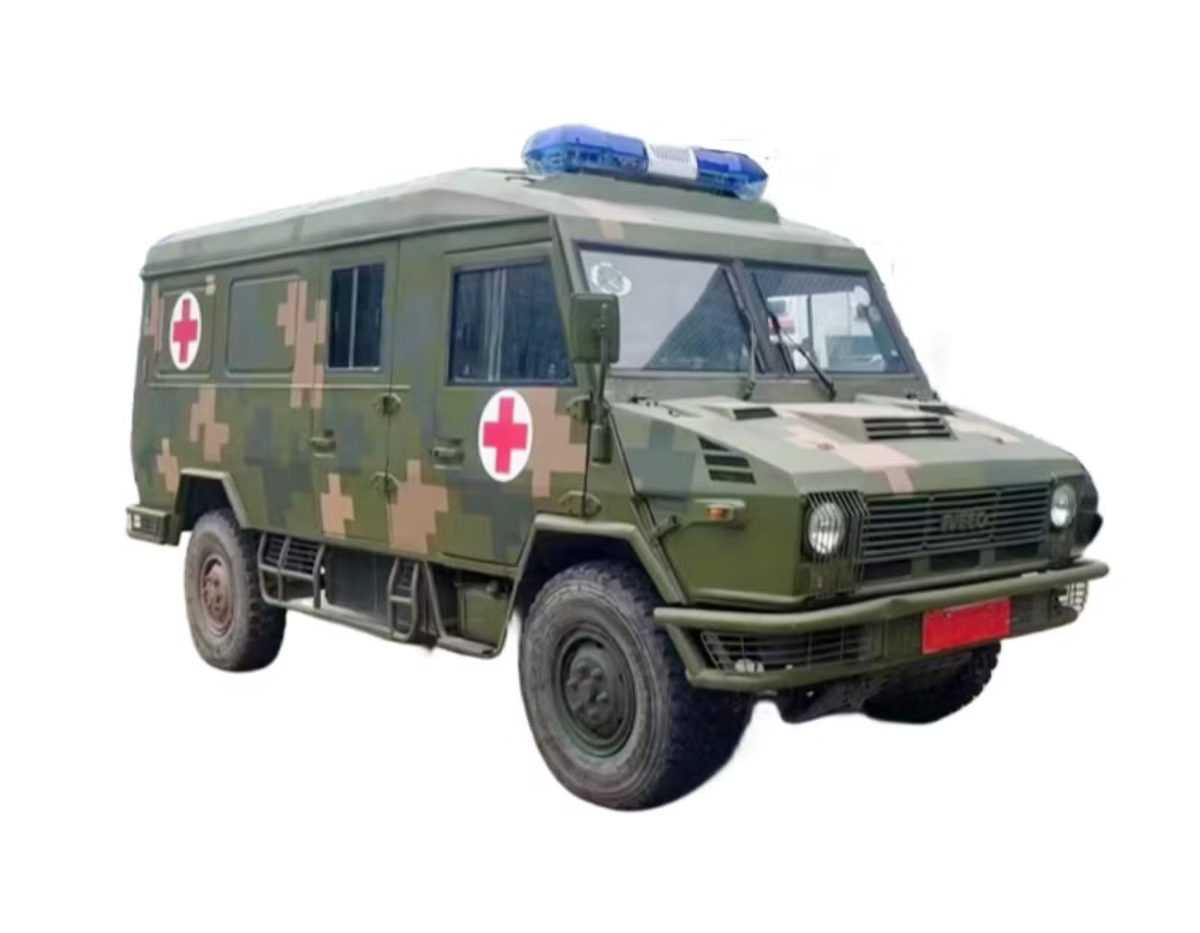
Across rural Uganda, northern Kenya, Zambia's Copperbelt, Zimbabwe, and West African mining concessions, asphalt ends quickly. A rugged 4x4 ambulance for sale like the CLW Dongfeng M-Hero 4WD Ambulance pairs high-torque diesel power with a 4H/4L transfer case, locking differentials, reinforced frame rails, heavy-duty suspension, skid plates, and a snorkel intake for seasonal floodwaters and red laterite dust.
To keep trauma ambulances free for emergencies, pair 4WD units with dedicated outreach vehicles such as the CL5120XYL6BZ Mobile Clinic or multi-room CL5120XYL6BZ Outreach Medical Truck from our mobile clinic range for scheduled village health campaigns.
| Specification | Type II High-Roof Van | Type III Modular Box | Rural 4x4 / 4WD Off-Road |
|---|---|---|---|
| Chassis & Drive | 4x2 van (Iveco Daily / Foton G9) | 4x2 (or 4x4) cutaway/light truck + composite box | Body-on-frame 4WD (Dongfeng M-Hero 4WD) |
| Terrain Fit | City streets, paved highways, graded roads | Urban corridors, inter-hospital highways | Deep mud, washed-out laterite, mine ramps |
| Cabin Space | 1.65–1.85 m height; 1 cot + squad bench | Wide ICU aisle; 1.85–1.95 m height; outer lockers | Compact rugged box/hardtop; low center of gravity |
| Clinical Fit | BLS, urban response, stable transfers | Full ALS, Mobile ICU, neonatal referrals | Rural trauma extraction, mine medevac, maternal referral |
| Clearance | ~170–195 mm; standard load springs | ~180–210 mm; heavy-duty rear leaf/air assist | 220–300+ mm; off-road dampers, skid plates, snorkel |
| Shipping & Tier | 40ft HC or Ro-Ro; entry-to-mid capital tier | Ro-Ro; mid-to-upper tier (box + ICU fit-out) | 40ft HC or Ro-Ro; mid-to-upper tier (4WD driveline) |
Basic Life Support (BLS) vs. Advanced Life Support (ALS / ICU) Cabin Layouts
A strong chassis still fails clinically if cabinets rattle open on washboard roads, oxygen cylinders block stretcher loading, or fluids seep beneath cheap plywood subfloors and corrode wiring looms.
Stretcher Systems, Oxygen Architecture & Medical Mounting
Specify an aluminum-alloy auto-loading roll-in stretcher with adjustable backrest, IV mount, and a crash-tested floor locking track bolted to structural crossmembers—not sheet metal. Add a folding scoop stretcher, spine board with head immobilizer, and stair chair for multi-story buildings.
Size medical gas around local refilling access. BLS units typically house two 10-liter oxygen cylinders inside an externally vented cabinet with steel straps and manual changeover. Long-distance ALS and Type III ICU units should carry dual 10-liter to 40-liter cylinders (within GVW limits), pressure-tested medical piping, two head-end wall outlets with flowmeters and humidifiers, and a transport-ventilator gas port. For critical care, integrate wall electric suction (plus portable backup), swivel defibrillator/monitor brackets, an overhead stainless IV rail with syringe-pump clamps, a three-seat folding squad bench, and a head-end swivel clinician seat.
Washdown Anti-Bacterial Flooring & Dust-Sealed Cabinetry
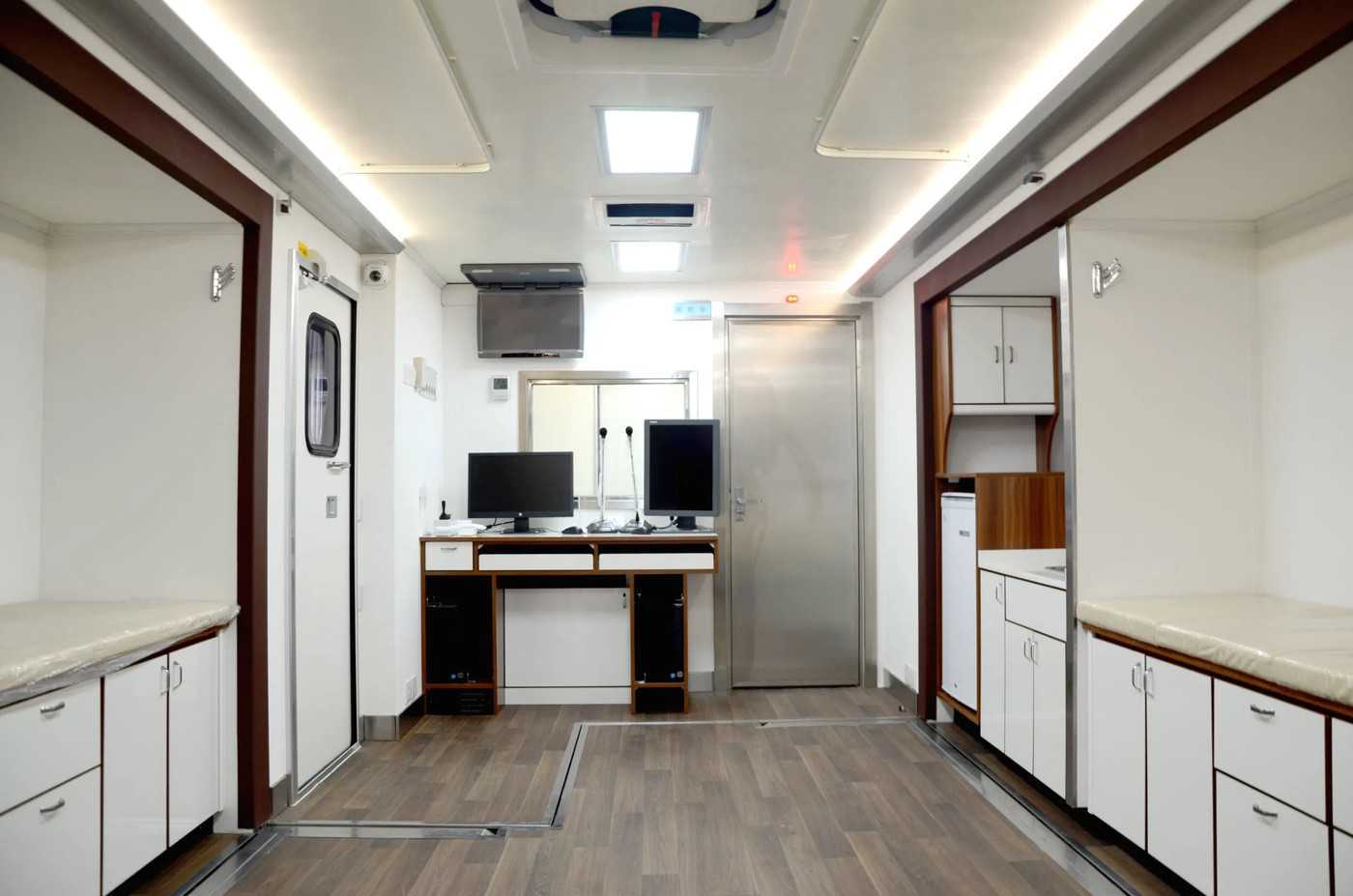
Tropical EMS crews require fast decontamination between shifts. Specify seamless one-piece anti-bacterial PVC or marine aluminum-composite flooring with heat-welded seams and 100 mm coved wall skirting so crews can wash out mud or bio-fluids with chlorine disinfectants without subfloor seepage.
Use vacuum-formed antimicrobial ABS or fire-retardant composite interior panels with rounded edges to prevent medic injuries during sudden braking. Fit every medicine cabinet with positive-locking marine slam latches—never magnetic catches—and shatter-resistant clear acrylic doors so consumables stay visible and secured on corrugated rural roads. For infectious-disease transfers, add optional negative-pressure HEPA filtration isolated from the driver's cab.
| Subsystem | Basic Life Support (BLS) | Advanced Life Support (ALS / Mobile ICU) |
|---|---|---|
| Patient Handling | Auto-loading cot, scoop stretcher, spine board, squad bench | Multi-level ICU cot, stair chair, scoop stretcher, vacuum mattress, swivel doctor seat |
| Oxygen System | 2 × 10L cylinders, manual changeover, 2 wall outlets | 2 × 10L or 2 × 40L cylinders (Type III), auto changeover, 3+ outlets + ventilator port |
| Clinical Mounts | Portable suction, wall sphygmomanometer, AED mount | Wall electric + portable suction, defibrillator/monitor swivel mount, ventilator & pump rails |
| Cabin Power | Dual-battery isolator, 1,000W pure sine wave inverter, 2 AC + 2 DC sockets | 180A–220A+ alternator, auxiliary deep-cycle bank, 2,000W–3,000W pure sine wave inverter, 4–6 AC sockets, shoreline charger |
| Hygiene | Seamless coved anti-bacterial PVC floor, ABS walls, exhaust fan | Coved washdown floor, antimicrobial cabinetry, UV lamp, optional negative-pressure HEPA |
| Best Fit | District clinics, municipal EMS, mining first-aid, rural NGOs | Tertiary hospitals, private hospital chains, highway trauma, air-ambulance ground links |
Oxygen standards vary across Africa: British Standard (BS) prevails in East/Southern Africa and Nigeria, DIN appears in German-equipped NGO clinics, and AFNOR dominates Francophone West/Central Africa. Specify your exact gas outlet standard, valve thread, and 220V–240V / 50Hz AC plug type (Type G, C/E/F, or M) before build freeze so hospital gear plugs straight in.
Tropical Insulation, Dual A/C & Independent Cabin Electrical Power
Temperate-climate ambulances fail rapidly in Sahelian and lowland African heat where shade reaches 42°C–48°C and uninsulated roofs exceed 65°C. If the patient bay cannot hold 20°C–24°C while idling in urban gridlock or parked at a crash scene, drugs degrade, monitors alarm, and critical patients destabilize.
Tropical Insulation & Dedicated Rear A/C
Following our tropical and dust-proof design standards, specify high-density closed-cell polyurethane foam or rock-wool insulation across the roof, walls, wheel arches, and bulkhead, paired with UV-tinted privacy glass and white reflective paint. Never rely on a front-cab A/C blowing through a bulkhead window—install a dedicated tropical rear evaporator with directional ceiling louvers, independent rear thermostat, an oversized roof or under-chassis condenser with high-CFM fans, and a secondary belt-driven compressor where layout allows. On rural 4x4 units, add protective condenser stone screens with quick-wash access.
Independent Cabin Power & Dual-Battery Protection
Electrical failures sideline more African hospital ambulances than engine faults. Protect uptime with four essentials:
- Dual-Battery Bank with Automatic Isolator: Deep-cycle AGM/gel medical batteries run cabin loads through a voltage-sensitive relay (VSR), isolating the starter battery when parked so medical gear never prevents engine start.
- High-Output Alternator: Specify 180A–220A+ alternators on ALS and Type III units to sustain positive charging at city idle.
- Pure Sine Wave Inverter: Clean 220V–240V / 50Hz pure sine wave output (1,000W BLS; 2,000W–3,000W ALS) protects monitors, ventilators, and defibrillators from harmonic damage.
- Waterproof 220V Shoreline Inlet: An exterior recessed AC inlet with smart charger and breaker panel keeps parked ambulances charged on hospital grid or generator power without idling diesel engines.
Low-cost conversions often tap inverters into the starter battery or install modified sine wave units that distort ECG traces, shorten defibrillator life, and cause night-shift dead batteries. Demand a numbered wiring schematic, flame-retardant loom routing, a master breaker panel, and a pure sine wave test sheet during pre-shipment inspection.
Left-Hand Drive vs. Right-Hand Drive Ambulance Chassis Options & Emission Fit
Steering configuration is legally mandatory for registration across Africa:
- Right-Hand Drive (RHD): Uganda, Kenya, Tanzania, Zambia, Zimbabwe, Malawi, Botswana, Namibia, Mozambique, and South Africa require factory RHD chassis. Reject aftermarket LHD-to-RHD dashboard conversions—relocated steering columns and spliced wiring fail national inspections and risk crew safety.
- Left-Hand Drive (LHD): Nigeria, Ghana, Côte d'Ivoire, Senegal, Cameroon, Benin, Togo, DRC, Angola, Ethiopia, Egypt, and Morocco require LHD chassis.
CLW builds on both factory LHD and RHD chassis—check our LHD and RHD chassis guide before freezing specifications. Also align diesel emission tiers with local fuel sulfur: where national import rules allow, rugged Euro II or Euro III engines with dual fuel/water separators prevent the DPF clogging and AdBlue supply lockouts seen on Euro V units in remote districts (see our emission and chassis guide). Standardize on chassis with local wear-part support and include a 24-month preventive maintenance kit (filters, drive/A/C belts, brake pads, stretcher casters, beacon modules, fuses, and gas O-rings).
Medical Fleet Tender Spec Checklist, Compliance & Landed Cost Planning
Ministries of Health, donor-funded NGOs, and mining EPC buyers need crisp technical specifications to pass evaluation and clear customs without demurrage. Lock these seven items—and consult our tender support team or view delivered regional fleets on our project cases page:
- Chassis, Steering & Driveline: Fix Type II van, Type III box, or 4x4 (4H/4L), LHD/RHD, engine displacement, transmission (manual preferred for rural 4x4 durability), fuel range, and legally permitted emission tier.
- Axle Weight & Weighbridge Margin: Confirm curb weight plus full medical payload (stretcher, dual oxygen cylinders, cabinetry, rear A/C, and four crew) stays safely inside rear axle limits and GVW to clear regional highway weighbridges without spring sag.
- Cabin Safety & Hygiene: Define interior dimensions, 100 mm coved anti-bacterial washdown floor, flame-retardant ABS/composite walls, crash-anchored stretcher rail, and marine-latch cabinetry.
- Tropical Cooling & Electrical Load: State 20°C–24°C cooling at 45°C ambient, alternator amperage, auxiliary battery Ah rating, VSR isolator, pure sine wave inverter wattage, socket standard, and 220V shoreline inlet.
- Fixed vs. Portable Medical Scope: Separate factory-mounted medical infrastructure from portable diagnostic devices with brand-neutral specs and local warranty support.
- Factory Quality & Destination Import Compliance: Factory management records on our certificates page verify manufacturing quality control, whereas destination customs clearance and registration follow national conformity programs—such as SONCAP and Form M in Nigeria, KEBS PVoC in Kenya, TBS PVoC in Tanzania, UNBS PVoC in Uganda, ZABS in Zambia, or NRCS/SABS homologation where applicable. Follow our import compliance guide to schedule pre-shipment inspection (PSI) and VIN checks before vessel booking.
- Landed-Cost Structure & Payment Security: Budget total landed cost beyond bare FOB—covering chassis and conversion, ocean freight (40ft HC container for vans/4x4 hardtops versus Ro-Ro for tall Type III boxes into Apapa, Tema, Mombasa, Dar es Salaam, Durban, or Beira), marine insurance, PSI, port handling, and inland transport. Secure MoH or NGO customs duty and VAT exemptions before vessel arrival to avoid daily demurrage. Execute orders through our how-to-buy guide and payment and shipping process, verifying bank details against our anti-fraud notice.
Final pricing follows an itemized written factory quotation based on chassis model, steering, BLS/ICU equipment scope, spare-parts depth, and destination port shipping mode.
Frequently Asked Questions
How do we decide between a Type III box ambulance and a 4x4 off-road ambulance?
Deploy Type III modular boxes or high-roof Type II vans on paved urban corridors and inter-hospital ICU transfers where interior workspace and ride comfort matter most. Assign true 4x4 off-road ambulances to rural districts, rainy-season dirt roads, and mine sites where traction and ground clearance guarantee patient access.
Can CLW supply factory Right-Hand Drive (RHD) ambulances for Uganda, Kenya, Zambia, and Zimbabwe?
Yes. CLW builds on factory-original RHD chassis for East and Southern Africa alongside factory LHD chassis for West, Central, and North Africa, matched to local diesel emission rules and PVoC inspection standards.
What cooling and electrical specs prevent device shutdowns in 45°C African heat?
Combine closed-cell insulation, an independent tropical rear A/C with oversized condenser and auxiliary fans, a 180A–220A+ alternator, a deep-cycle medical battery with automatic VSR isolator, a 2,000W–3,000W pure sine wave inverter for ALS gear, and a 220V shoreline charger.
How are ambulances shipped to African ports without customs demurrage?
High-roof vans and compact 4x4 hardtops often ship in 40ft HC containers (lightbars stowed inside), while tall Type III boxes ship via Ro-Ro to Mombasa, Dar es Salaam, Durban, Beira, Tema, or Apapa. Complete PVoC/SONCAP checks and MoH or NGO duty-exemption letters before vessel arrival.
Request a Factory-Direct Ambulance Specification & Written Quotation
Share five project details with CLW Fleet Africa's engineers for a matched chassis proposal, cabin CAD layout, equipment schedule, and FOB/CIF quotation:
- Destination Port & Steering: Country, port (Mombasa, Dar es Salaam, Apapa, Tema, Durban, Beira), and LHD or RHD requirement.
- Body Type & Quantity: Type II high-roof van, Type III ICU box, rural 4x4 ambulance, or mixed fleet split.
- Clinical Level: BLS or ALS/ICU build, oxygen outlet standard (BS, DIN, AFNOR), and portable device scope.
- Climate & Terrain Add-Ons: Peak ambient heat, diesel emission tier, and options (snorkel, winch, HEPA isolation).
- Tender & Support Needs: Compliance sheets, PVoC/SONCAP coordination, or a 2-year spare-parts kit.