Across Africa’s busiest transport corridors—from the Lagos–Ibadan Expressway and Accra–Kumasi highway to Kenya’s Northern Corridor between Mombasa and Nairobi—a single immobilized vehicle can halt commercial traffic for hours. Whether you run a private roadside assistance business, manage a highway concession, procure vehicles for traffic police, or support a haulage fleet, selecting the right recovery truck determines both response speed and long-term profitability.
Many buyers search broadly for tow trucks, towtrucks, or a basic tow van without separating light-vehicle recovery from heavy commercial salvage. Deploying a light flatbed on corridors frequented by overturned 40-foot semi-trailers leaves high-margin jobs behind and risks frame damage, while running an oversized 8x4 wrecker for urban sedan callouts wastes fuel in tight streets. This engineering guide compares the three core wrecker architectures and explains how to specify the right 4x2, 6x4, or 8x4 chassis for African operating conditions.
3 Core Tow Truck Types Used Across African Highways
Commercial breakdown trucks fall into three structural categories, each with distinct hydraulics and load transfer paths between the casualty vehicle and carrier chassis.
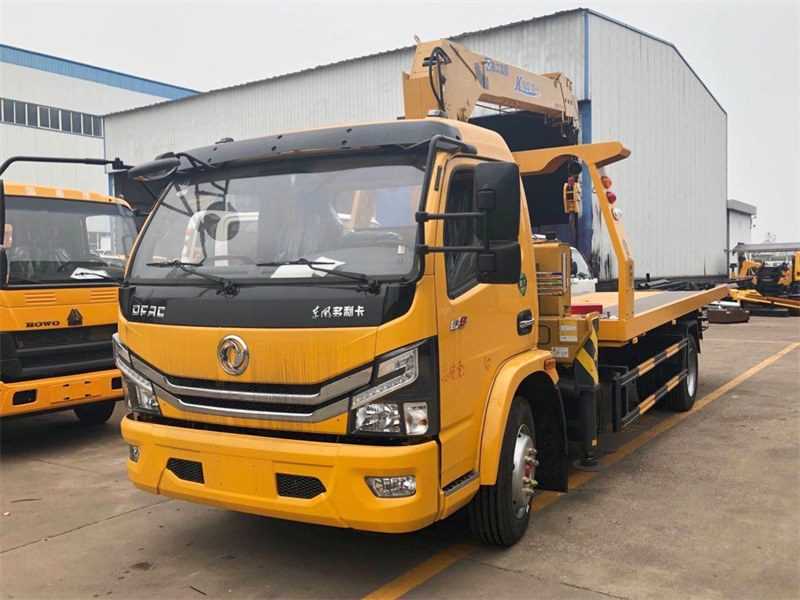
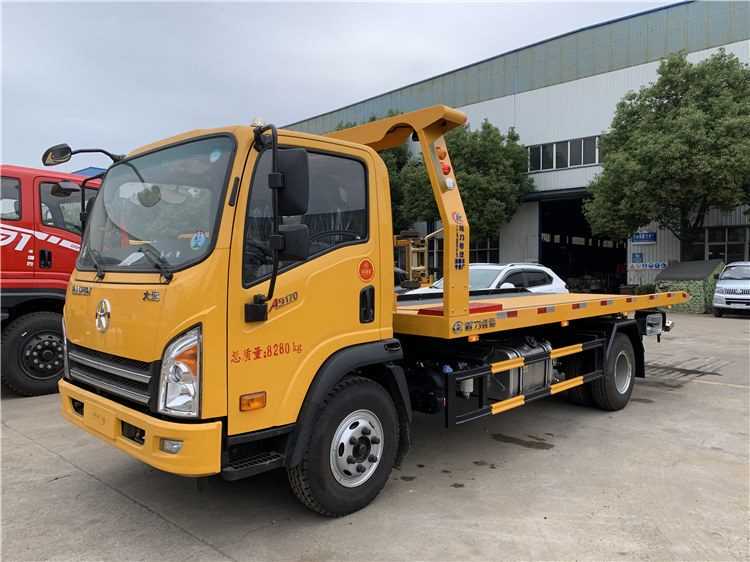
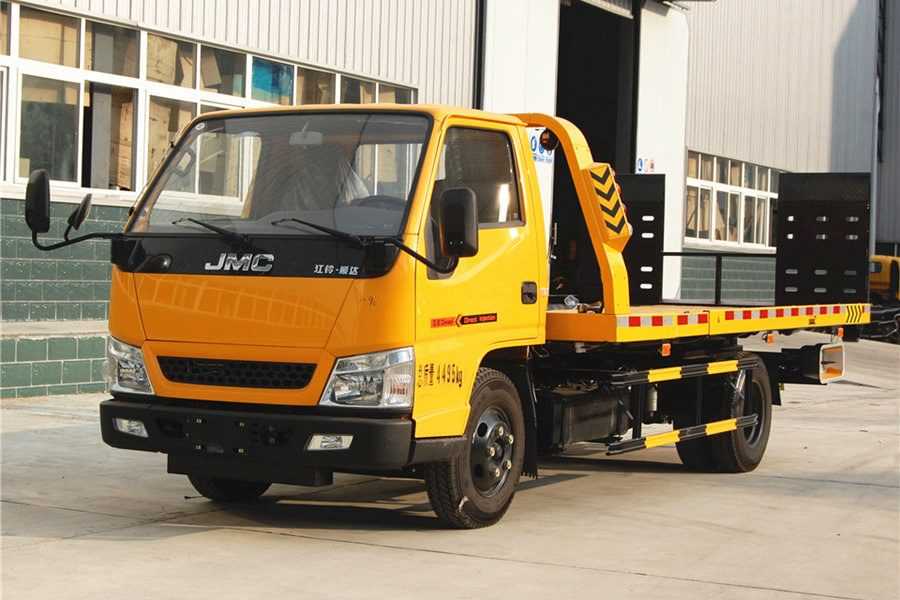
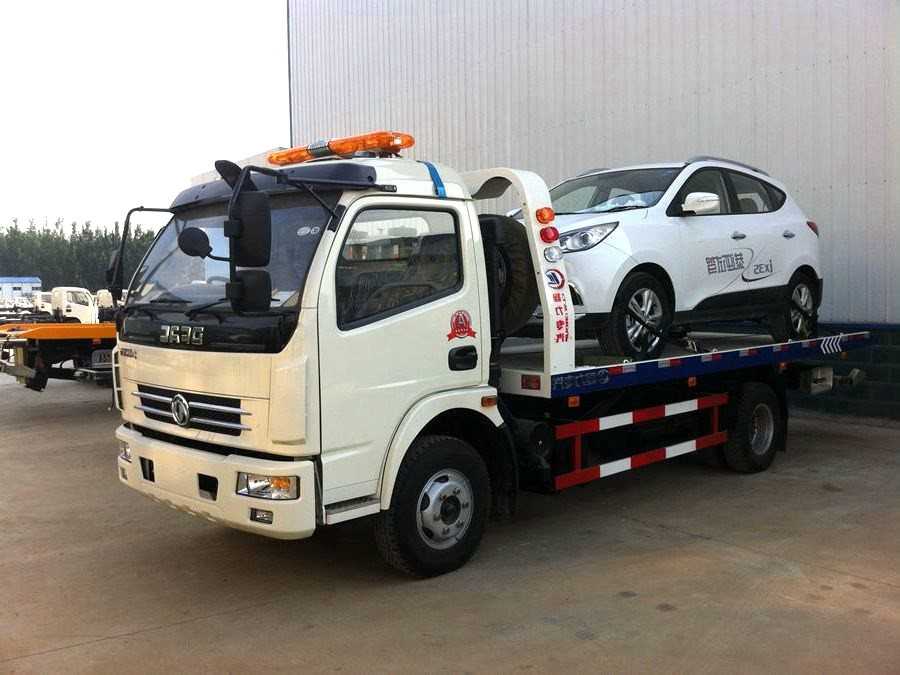
- One-Drag-Two Flatbed Wrecker Truck (Roll-Back): Uses a hydraulically sliding, tilting deck that lowers to ground level so sedans, SUVs, pickups, and light vans winch cleanly onto the bed. A rear hydraulic underlift lets the crew carry one vehicle on deck while towing a second behind.
- Split-Type Tow-and-Lift Wrecker: Separates the upper lifting boom from the lower rear towing arm. Because the boom articulates independently of the wheel lift, split wreckers handle rolled-over medium trucks in roadside ditches or angled multi-vehicle crashes where straight access is blocked.
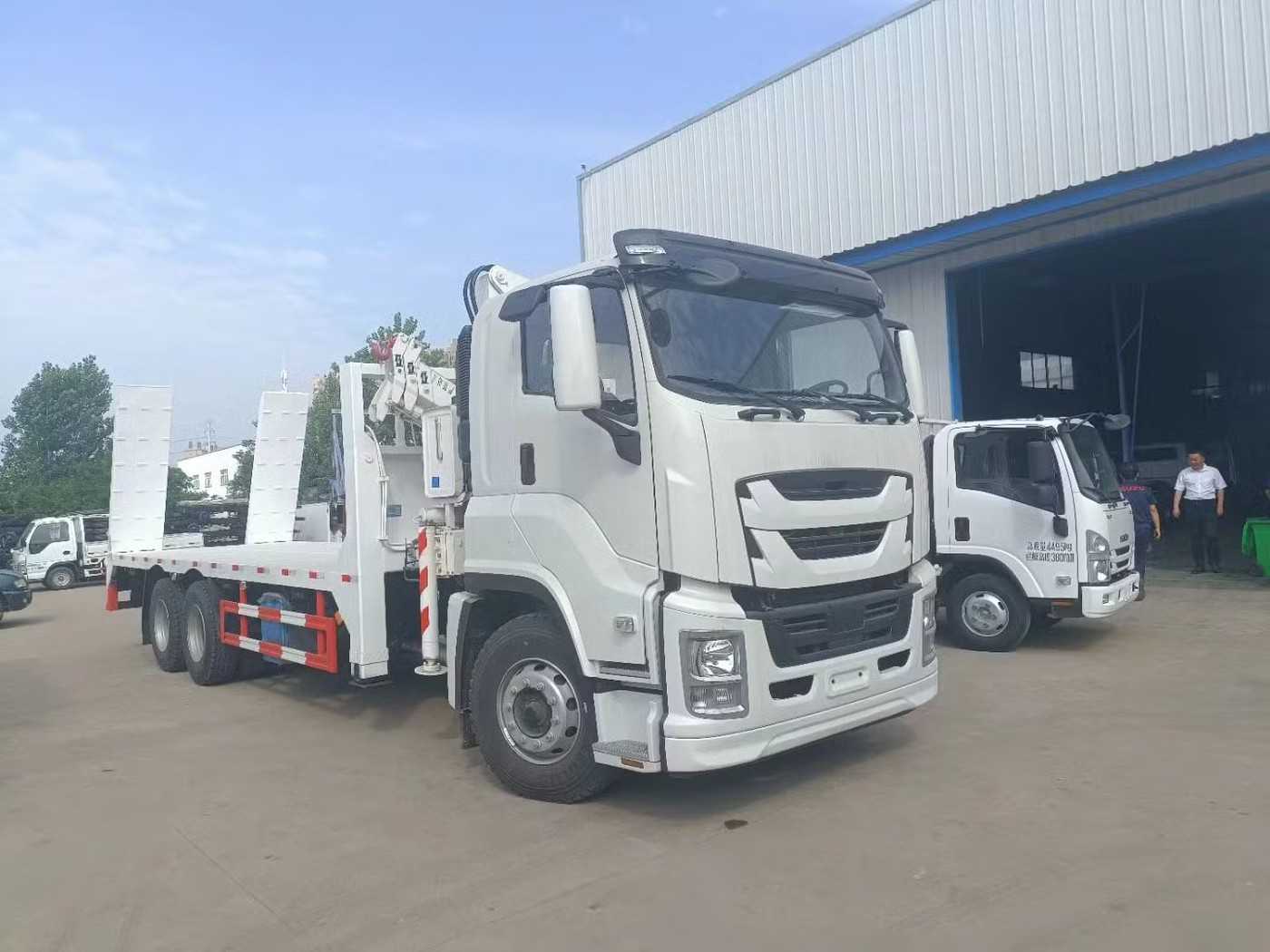
- Heavy-Duty Integrated Wrecker: Combines a high-tensile telescopic crane boom and heavy hydraulic underlift into one unified rear assembly over a rigid sub-frame. Built for loaded 6x4 tippers, 40-ton tractor-trailers, fuel tankers, and 65-seat coaches, it maximizes lifting tonnage and longitudinal stability within a compact overhang.
| Architecture | Rated Capacity | Target Vehicles | Drive Config | Best African Use Case |
|---|---|---|---|---|
| Flatbed Recovery (Carry 1, Tow 1) | 3T–8T deck + 1.8T–3.5T underlift | Sedans, luxury SUVs, 4x4 pickups, minibuses, light vans | 4x2 light & medium | Urban roadside assistance, dealerships, insurance callouts, toll plazas |
| Split-Type Tow & Lift | 10T–20T boom + 8T–16T underlift | Medium rigid trucks, box vans, tractors, wrecked commercial vans | 4x2 heavy or 6x4 | Mixed rural-highway salvage, ditch uprighting, traffic police depots |
| Integrated Heavy Wrecker | 20T–50T+ boom + 16T–35T+ underlift | Loaded semi-trailers, tankers, tippers, mining haulers, intercity buses | 6x4 or 8x4 heavy | Trans-African freight corridors, port access roads, mining fleets, highway authorities |
For most African buyers, the core decision narrows to choosing between a high-utilization flatbed wrecker truck for light-to-medium volume and an integrated heavy wrecker for freight corridor salvage—or pairing both in a two-tier fleet.
Flatbed Recovery Trucks for Sedans, SUVs & Light Vans (3T–8T)
In cities such as Lagos, Nairobi, Accra, Kampala, Lusaka, and Harare, insurance assistance and private breakdown operators earn their daily cash flow from sedans, 4x4 SUVs, and minibuses. Purpose-built flatbeds—such as the CLW Foton 4x2 Flatbed Wrecker Truck for agile urban junctions or the heavier CLW CL5186TQZ6BZQ Recovery Truck and CLW CL5185TQZ6YJ Recovery Truck for longer highway runs—prevent drivetrain or bumper damage while accelerating dispatch turnaround.
Full Ground-Touching Tilt Angle & Deck Construction
Steep decks scrape low sedan spoilers and snag crossover underbodies. Specify a full ground-touching slide-bed or hydraulically hinged rear tail-flip plate achieving an 8°–11° approach angle. Cold-formed punched anti-slip tread plates (4–6 mm thick, depending on 3T–8T rating) drain storm runoff and red laterite mud while giving tie-down straps multiple anchor slots. Reinforced slide rails with high-molecular-weight wear pads resist abrasion in dusty roadside environments.
4T–8T Hydraulic Winch & Roadside Safety Ergonomics
Even a 2.2-ton SUV with a locked automatic gearbox or collapsed ball joint demands far more pulling force than its static weight once mud and incline resistance add up. Specify a 4-ton planetary hydraulic winch on 3T–4T light flatbeds and a 5-ton to 8-ton winch (21–30 m steel wire rope plus free-spool clutch) on 5T–8T units. On busy African ring roads, dual-side hydraulic control banks are essential: mirrored manual levers on both sides allow the operator to work from the shoulder away from oncoming traffic, and an optional wireless remote shortens night exposure.
Auxiliary Dolly Wheels & Carry-One-Tow-One Economics
Casualty vehicles with seized electric parking brakes or broken steering knuckles cannot roll onto a deck unaided. Equip every flatbed with heavy-duty auxiliary skate dolly wheels, wheel straps, snatch blocks, and rubber chocks in lockable side toolboxes. Combined with the rear hydraulic L-arm underlift, one truck performs carry-one-tow-one recoveries—loading one vehicle onto the upper deck while towing a second behind. Handling two breakdowns per round trip lowers fuel burn per job and accelerates toll-plaza clearance.
Roadside temperatures across Sahelian corridors and coastal ports routinely exceed 42°C while unsealed shoulders coat cylinder rods in abrasive grit. Specify oversized hydraulic reservoirs with return-line micron filtration, chrome-plated rods with heavy wiper seals, and an auxiliary oil cooler for high-cycle fleets. Review our tropical and dust-proof engineering standards when finalizing body specifications.
Heavy-Duty Integrated Wreckers for Loaded Trucks & Buses (20T–50T+)
When a loaded 6x4 tipper, 45,000-liter fuel tanker, or 40-foot container semi-trailer breaks an axle or rolls on an escarpment, no flatbed or light tow van can clear the lane. Restoring highway flow safely requires an integrated heavy wrecker built to lift, upright, and tow multi-axle loads without twisting its own frame.
Proven Deployment: CLW Shacman 8x4 Heavy Wrecker Batch Export
Highway concessionaires and national transport agencies avoid untested builds. In our Shacman 8x4 heavy-duty integrated wrecker batch delivery, operators standardized on multi-unit 8x4 integrated wreckers—in the same heavy class as the CLW CL5310TQZ6BZQ Heavy Recovery Truck—to keep strategic freight corridors open under strict lane-clearance SLAs. Batch standardization gives multi-station fleets identical valve layouts, shared axle forks, and streamlined mechanic training.
Integrated Boom, Twin Winches & Heavy Underlift Engineering
- High-Tensile Boom & Underlift: Fabricated from Q345B / BS700 structural steel, a 20T–50T telescopic boom pairs with a 16T–35T+ multi-stage underlift fitted with interchangeable U-forks, leaf-spring brackets, bus frame forks, and fifth-wheel adapters—allowing crews to tow loaded tractors without decoupling trailers during emergency clearances.
- Dual 15T–25T Planetary Winches: Independent twin winches let operators anchor one line for stability while pulling or uprighting rolled trucks out of gullies and wet shoulders with the second cable and snatch blocks.
- Two-Stage Rear Stabilizer Outriggers: Vertical and angled hydraulic legs with spade-tooth pads anchor crane forces directly into tarmac or compacted earth instead of overloading rear springs and tires.
Inside the hydraulic circuit, specify a full-power PTO matched to transmission torque, dual pumps for simultaneous boom and winch movement, heavy-duty multi-way proportional valves, and pilot-operated counterbalance lock valves on every lifting cylinder so a ruptured hose never drops a suspended load.
Choosing Between 4x2, 6x4 & 8x4 Recovery Chassis
The carrier chassis governs weighbridge legality, grade traction, steering balance under tow, and five-year spare parts availability. Buyers must also match regional steering law: Left-Hand Drive (LHD) across West and Central Africa (Nigeria, Ghana, Côte d’Ivoire, Senegal, Cameroon, DRC) versus Right-Hand Drive (RHD) across East and Southern Africa (Kenya, Tanzania, Uganda, Zambia, Zimbabwe, Mozambique, South Africa). See our LHD and RHD chassis guide for country-level steering compliance.
| Chassis Config | GVW & Power | Matched Wrecker Body | Front-Axle Stability | Spare Parts & Ideal Fit |
|---|---|---|---|---|
| 4x2 Light Flatbed | 6T–10T; 115–160 HP | 3T–5T flatbed (Foton 4x2 Flatbed) | Tight turning radius; ideal for cars & 4x4 pickups | Lowest fuel & tire cost; urban tow operators & dealerships |
| 4x2 Medium Flatbed | 14T–18T; 180–240 HP | 6T–8T flatbed (CL5186TQZ6BZQ, CL5185TQZ6YJ) | Longer wheelbase resists pitch when towing minibuses | High intercity utilization & insurance contracts |
| 6x4 Heavy Wrecker | 25T–31T; 336–400 HP | 16T–30T integrated or split wrecker | Dual drive axles for mud/grades; needs front ballast on max lift | Broad HOWO, Shacman & Dongfeng parts network for haulage fleets |
| 8x4 Super-Heavy | 31T–40T+; 380–460 HP | 30T–50T+ integrated wrecker (CL5310TQZ6BZQ) | Dual-steer front axles + heavy front counterweight keep steering planted | Toll highway concessions, ports, mines & loaded semi-trailer recovery |
Front-Axle Unloading & Engine Emission Trade-Offs
Lifting a 30-ton truck on a rear underlift turns the wrecker’s rear axles into a fulcrum, unloading the front steering tires. An 8x4 chassis counters this physics with twin front steering axles, longer frame rails, and a cast-iron front bumper counterweight—preserving steering traction on wet tarmac and steep climbs like the Rift Valley or Ethiopian highlands.
Equally important is fuel compatibility. Because diesel sulfur varies widely inland, overly sensitive Euro V/VI SCR systems can trigger AdBlue faults during remote night recoveries. Where local regulations permit, proven Euro II or Euro III engines (Weichai, Cummins, or Yuchai paired with Fast Gear manual gearboxes and hub-reduction axles) minimize downtime because roadside mechanics stock their filters, injectors, and clutches locally. Confirm legal tiers early via our African emission and chassis options guide.
EAC, COMESA, and ECOWAS weighbridges strictly enforce single-axle and tandem-axle limits. Mounting an oversized boom onto an unreinforced used cargo truck causes cracked frame rails, weighbridge fines, and rejected claims. Always specify a factory-built recovery chassis with double-layer frame rails and verified axle-load distribution.
Recovery Fleet Spec & Quotation Checklist
Evaluate every recovery truck procurement on total landed cost and uptime rather than headline factory price alone:
- Budget Full Landed Cost (FOB vs. CIF): Final pricing follows a written quotation tailored to chassis brand, emission tier, LHD/RHD layout, winch/boom tonnage, and discharge port. Beyond FOB China production, include ocean freight—typically Ro-Ro vessel for intact units (verifying deck height for lightbars and booms) or 40-foot flat-rack container where Ro-Ro sailings are limited—plus marine insurance and port clearance at Apapa/Tin Can Island, Tema, Mombasa, Dar es Salaam, Beira, or Durban. See our payment and shipping guide.
- Verify Destination Import Compliance: Schemes such as Kenya KEBS PVoC, Nigeria SONCAP, Tanzania TBS, Zambia ZABS, and South African NRCS/SABS require pre-shipment certificates before customs release. Remember that factory ISO quality management certificates cover manufacturing systems rather than individual destination vehicle approvals; align country paperwork early via our import compliance service.
- Mandate Factory Pre-Shipment Load Testing: Require video-witnessed inspection before vessel booking covering rated boom lift, full slide-bed tilt cycles, winch pull, and a static cylinder lock test confirming zero drift on outriggers and underlift rams.
- Ship First-Year Spares & Rigging Together: Pack hydraulic seal kits, spare high-pressure hoses, hydraulic and engine filter sets, extra wireless remote transmitter, interchangeable axle U-forks, snatch blocks, and rated tie-down straps inside the initial shipment to prevent air-freight downtime.
- Verify Factory Accounts & Tender Specs: Highway authorities and municipal buyers can draw on our tender support team, follow our direct factory ordering steps, and confirm beneficiary details using our anti-fraud verification notice.
Frequently Asked Questions About Choosing Tow Trucks for Africa
Can one recovery truck handle both passenger sedans and loaded 30-ton trucks?
No single vehicle handles both profitably. A 30-ton integrated wrecker has heavy rear underlifts built for truck axles that risk damaging low sedans, while its fuel burn makes light callouts uneconomical. Most growing African fleets pair two or three 4x2 flatbeds for daily car/SUV volume with one 6x4 or 8x4 integrated heavy wrecker for commercial truck and bus salvage.
Should African recovery fleets choose Euro II/III or Euro IV/V chassis engines?
Destination import law sets the legal floor, while local diesel sulfur dictates reliability. Where permitted, Euro II or Euro III heavy diesels remain favored across African corridors because they tolerate higher-sulfur fuel, avoid AdBlue bottlenecks, and are serviced easily by roadside workshops. Where Euro IV/V is mandatory, secure ultra-low-sulfur diesel and OEM diagnostics.
How are heavy 8x4 integrated wreckers shipped to Mombasa, Apapa, Tema, or Durban?
Most 6x4 and 8x4 integrated wreckers ship intact via Roll-on/Roll-off (Ro-Ro) vessels directly from major Chinese export ports to Mombasa, Dar es Salaam, Durban, Apapa, or Tema, minimizing port handling risk. On corridors without direct Ro-Ro schedules, break-bulk or 40-foot flat-rack shipping is used with lightbars and tools crated securely.
What essential rigging tools and spare parts should ship with a new breakdown truck?
For flatbeds, include auxiliary skate dolly wheels, four heavy wheel-tie strap sets, a snatch block, and hydraulic filter/seal kits. For heavy integrated wreckers, bundle interchangeable axle forks (U-forks, leaf-spring brackets, bus adapters), heavy chain slings, shackles, spare hydraulic hoses, and engine service filter kits for the first 1,000 hours.
Build Your African Recovery Fleet Spec With CLW Factory Engineers
Share five quick project details to receive a tailored chassis-and-body configuration sheet, axle-load layout, and written FOB/CIF quotation direct from Suizhou:
- Target Vehicles & Tonnage: Sedans/SUVs (3T–8T flatbed), medium trucks (10T–20T split), or loaded semi-trailers/buses (20T–50T+ integrated wrecker).
- Destination Country & Steering: LHD or RHD requirement plus discharge port (Apapa, Tema, Mombasa, Dar es Salaam, Beira, or Durban).
- Chassis & Emission Tier: Preferred brand (Shacman, HOWO, Foton, Dongfeng, Isuzu) and legal emission standard (Euro II, III, IV, or V).
- Terrain & Accessories: Urban asphalt, steep escarpments, or unsealed laterite roads—plus options like wireless remote, dollies, or extra forks.
- Fleet Quantity & Timeline: Single commercial unit or multi-unit highway authority batch and target delivery window.